Adult admission to Menshikov Palace costs about 700 rubles as of 2026, with a reduced rate of around 300 rubles for students and pensioners and free entry for visitors under 18. Prices are set by the State Hermitage, so confirm the current rate on the Hermitage website before your visit. The palace operates as a branch of The State Hermitage Museum, meaning your Hermitage ticket does not grant automatic access here. Visitors must purchase separate entry at the palace ticket office or through the Hermitage online booking system.
Ticket queues typically move quickly on weekday mornings. Weekend afternoons see longer waits, particularly during the May-September tourist season when international groups arrive from cruise ships docked along the Neva embankment. The palace accepts both cash rubles and major credit cards at the entrance kiosk located in the ground-floor vestibule.
Audio guides rent for an additional 200 rubles and cover twenty rooms across two floors. English, German, French, Italian, Spanish and Chinese versions explain the Dutch tile collections, Peter the Great's diplomatic gifts, and Alexander Menshikov's rise from pie seller to imperial governor. The commentary runs approximately ninety minutes if visitors stop at every marked station.
Where exactly is Menshikov Palace located?
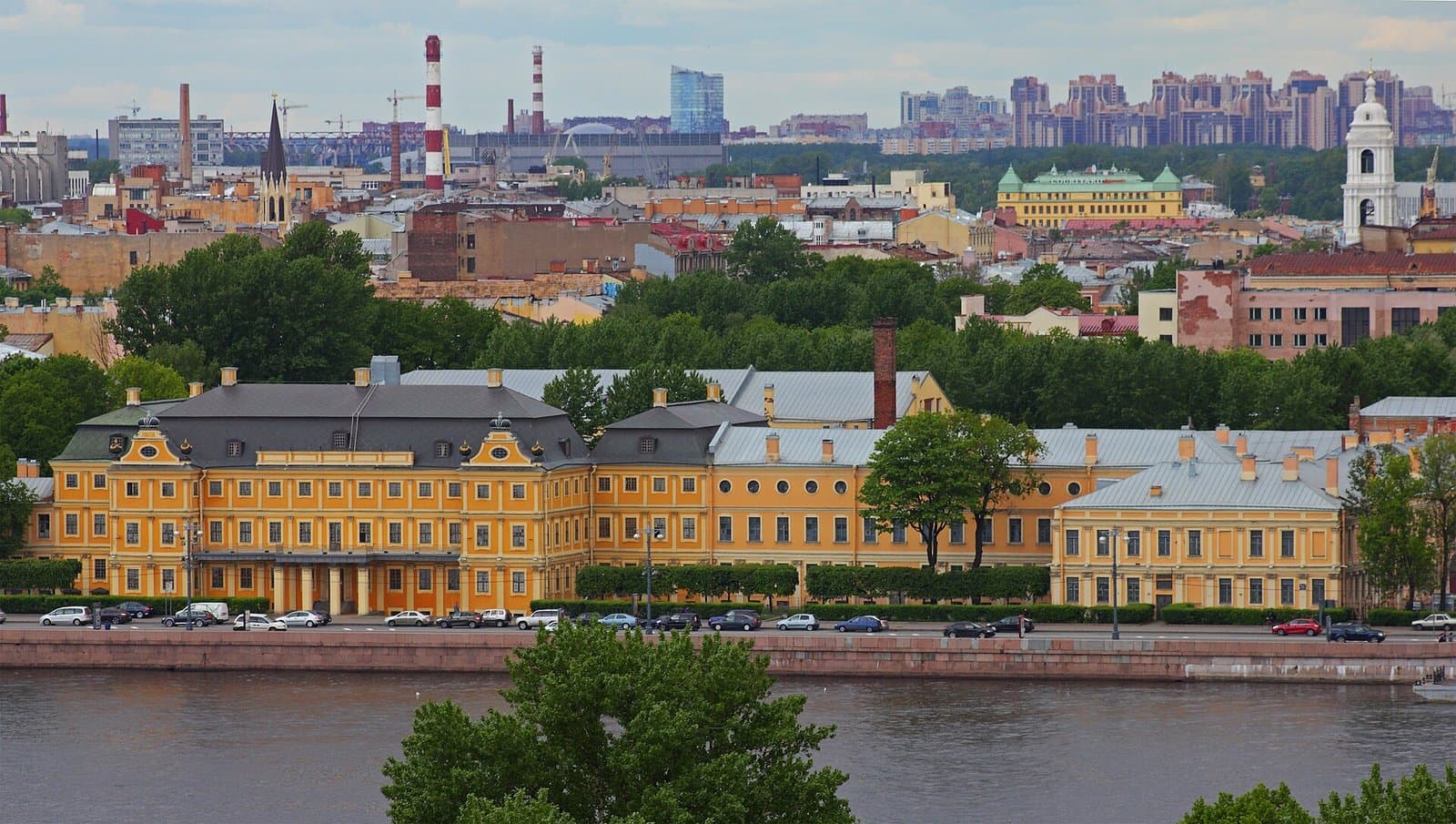
Menshikov Palace stands at 15 Universitetskaya Embankment on Vasilyevsky Island, directly facing the Winter Palace across the Neva River. Note that this is the Menshikov Palace on Vasilyevsky Island — a branch of the State Hermitage — not the Grand Menshikov Palace in Oranienbaum (Lomonosov), which is a separate day-trip site south-west of the city. The nearest metro station is Vasileostrovskaya on the green Line 3, positioned 1.2 kilometers west of the palace entrance. Walking from the metro takes fifteen minutes along the embankment past the Twelve Collegia building and the Academy of Arts.
Visitors walking from Nevsky Prospekt can cross Palace Bridge and turn right onto the embankment, passing the Kunstkamera's blue-and-white tower before reaching the yellow baroque facade. Trolleybus routes 1 and 10 stop at Universitetskaya Embankment, depositing passengers fifty meters from the main gates. Taxis from Pulkovo Airport take forty-five minutes in normal traffic and cost 1,200-1,500 rubles.
The palace occupies the eastern tip of Vasilyevsky Island between the Neva's main channel and the Malaya Neva branch. Its riverside location made it strategically important in the 1700s when Menshikov supervised shipbuilding at the nearby Admiralty. Today the embankment offers unobstructed views of the Hermitage, the Admiralty spire, and the Peter and Paul Fortress across the water.
Menshikov Palace opening hours and best visiting times
The palace opens Tuesday through Saturday from 10:30 to 18:00, with ticket sales ending at 17:00. Sunday hours run 10:30 to 17:00 with final admission at 16:00. The museum closes Mondays and the last Tuesday of each month for maintenance, following the standard schedule established by The State Hermitage Museum for its branch locations throughout the city.
Day
Opening Hours
Ticket Sales Until
Tuesday-Saturday
10:30-18:00
17:00
Sunday
10:30-17:00
16:00
Monday
Closed
—
Last Tuesday/month
Closed
—
Arriving between 11:00 and 12:00 on weekdays typically offers the smallest crowds and best natural light in the state rooms. The palace receives fewer visitors than the main Hermitage complex. Photography without flash is permitted in all exhibition spaces except temporary displays marked with prohibition signs.
Late afternoon visits after 16:00 offer solitude in the upper galleries but sacrifice viewing time. The palace requires at least ninety minutes to see the principal rooms thoroughly, including the Walnut Study, the Grand Hall, and the Secretary's Room with its Delft tile stove. Budget two hours to read all explanatory panels in the restored servants' quarters.
at the Bank of Russia rate on 16.10.2026 · powered by tutkakdoma
Interior highlights: Dutch tiles and Peter's diplomatic gifts
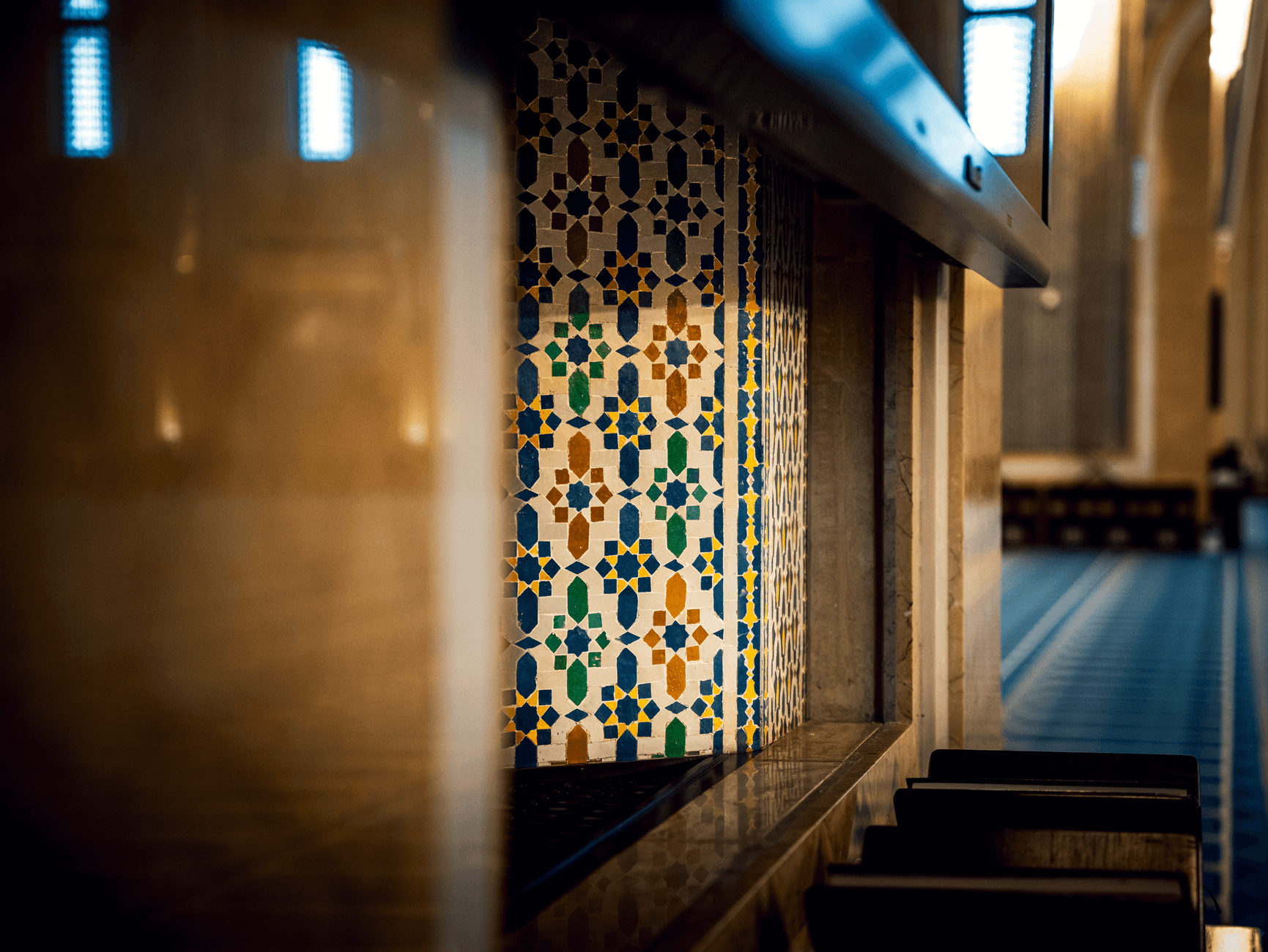
The palace contains a substantial collection of Dutch tiles covering walls, stoves, and decorative panels throughout restored rooms. These hand-painted ceramic squares depict biblical scenes, maritime battles, and pastoral landscapes imported from Delft and Rotterdam between 1710 and 1720. The Secretary's Room showcases fine examples, with blue-and-white tiles forming floor-to-ceiling narratives around a massive heating stove.
The Walnut Study's tile panels show Dutch windmills and canal scenes. The room's wooden paneling came from England, while the marble fireplace originated in Italy, demonstrating Menshikov's taste for Western European luxury goods. Crystal chandeliers hang from painted ceilings depicting classical mythology, restored using 18th-century techniques by Hermitage conservators.
The Grand Hall occupies the palace's central section with windows overlooking the Neva. Peter the Great personally gifted Menshikov the room's Venetian mirrors and French tapestries after the 1709 Battle of Poltava. Display cases hold diplomatic presents including Chinese porcelain, Turkish weapons, and German scientific instruments. According to The State Hermitage Museum, these objects represent one of Russia's earliest systematic collections of European decorative arts.
The Bedroom Chamber features a canopied bed with silk curtains and a portable writing desk where Menshikov drafted administrative orders. Servants' quarters on the ground floor show contrast with simple wooden furniture and plain whitewashed walls. The kitchen displays copper cookware and a brick oven used to prepare banquets for large gatherings during Peter's reign.
How does Menshikov Palace connect to Peter the Great's reforms?
Alexander Menshikov served as Peter the Great's closest advisor from 1703 until 1727, overseeing Saint Petersburg's construction and implementing Western reforms across Russian society. His palace became the city's unofficial diplomatic center where Peter hosted foreign ambassadors, military officers, and merchants. The building's European architectural style demonstrated Peter's determination to transform Russia into a modern maritime power facing westward rather than maintaining Moscow's traditional orientation.
The palace hosted the wedding of Peter's niece Anna Ioannovna in 1710, the first major imperial celebration in the new capital. Peter himself lived in modest wooden quarters nearby while Menshikov occupied this stone mansion, reflecting the governor's administrative importance. The building's Dutch baroque design by Giovanni Fontana and Gottfried Schädel introduced Russian craftsmen to Western construction techniques including load-bearing brick walls and symmetrical facades.
The palace cafe serves period-appropriate refreshments including honey cakes and kvass in ceramic mugs matching 18th-century designs. The museum shop sells reproductions of Delft tiles and illustrated books about Petrine reforms. Educational programs explain how Menshikov's household employed numerous staff members and maintained the city's first private art collection, setting standards for aristocratic life that persisted throughout the imperial period.
Combining Menshikov Palace with nearby Vasilyevsky Island attractions
The Kunstkamera anthropological museum stands 400 meters west of Menshikov Palace at 3 Universitetskaya Embankment, housing Peter the Great's anatomical collection and ethnographic exhibits. Adult tickets cost 300 rubles with the same opening hours as Menshikov Palace except Mondays. The distinctive blue tower contains an 18th-century observatory and offers views across the Neva to the Hermitage complex.
Saint Petersburg State University's Twelve Collegia building sits between the two museums, its 400-meter-long facade representing Peter's government ministries. The Academy of Arts occupies a neoclassical building 600 meters further west, displaying Russian paintings and sculptures with free admission on Thursdays. The Strelka spit at Vasilyevsky Island's eastern tip provides photo opportunities of the Peter and Paul Fortress and the Winter Palace across converging water channels.
Cardholders skip ticket lines at all participating venues and receive discounts at partner restaurants near Universitetskaya Embankment. Visitors can explore Menshikov Palace in the morning, then walk to the Strelka for lunch before taking trolleybus 10 back to Nevsky Prospekt.
The palace provides cloakroom service for coats and bags larger than 30x40 centimeters, charging 50 rubles per item. Restrooms are located on the ground floor near the ticket office. The building has wheelchair access through a side entrance with an elevator serving both exhibition floors, though some doorways in the historic rooms measure only 75 centimeters wide.
Guided tours in English operate at 13:00 daily except Mondays, lasting sixty minutes. For current pricing and booking, please check the museum's official website. Private tours must be booked two weeks in advance through the Hermitage website. The palace cafe opens 11:00-17:00 serving sandwiches, pastries, and hot beverages with prices to be checked on site.
Photography rules permit smartphone and camera use without flash or tripods. Professional equipment requires a 500-ruble filming permit purchased at the ticket office. The museum shop stocks English-language guidebooks for 800 rubles and reproduction tiles for 1,200-3,000 rubles depending on size. Staff members speak Russian and English, with German and French available during peak summer months when European tour groups arrive.
Cover photo: A.Savin / Wikimedia Commons, CC BY-SA 3.0