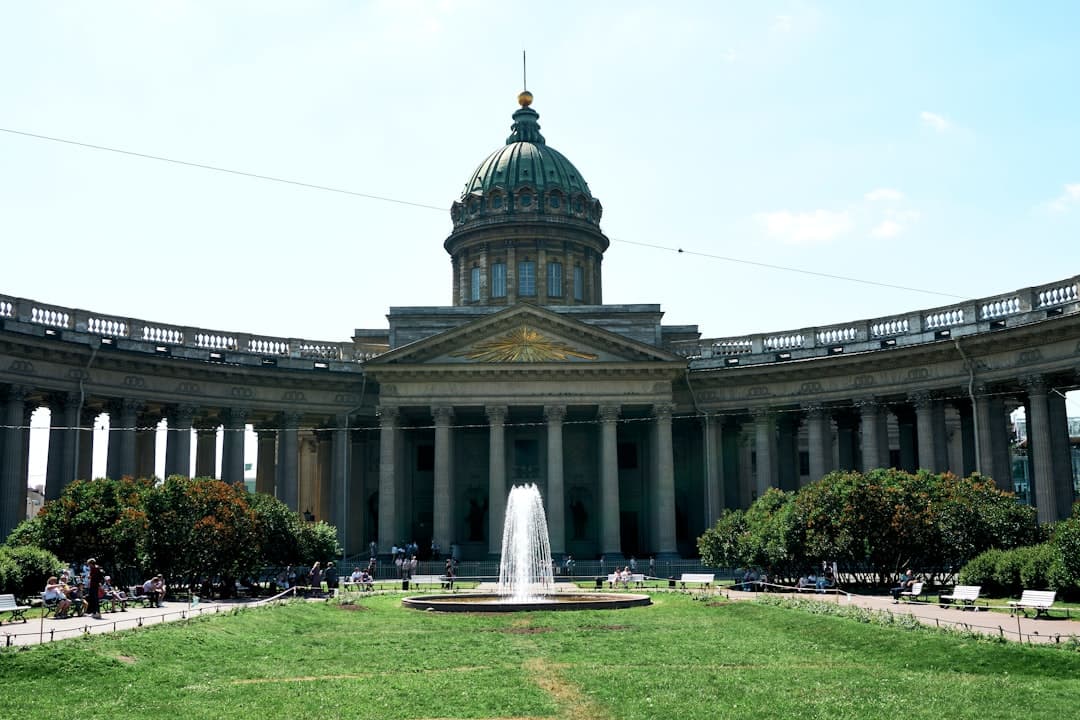
Standing right on Nevsky Prospekt, the massive colonnade of the Kazan Cathedral commands attention with a grandeur that rivals the Louvre. This neoclassical masterpiece is not merely a place of worship but a monumental symbol of Russian military history and spiritual resilience. For the 2026 traveler, understanding how to approach this iconic landmark is essential, as it sits at the very heart of Saint Petersburg’s cultural artery. The cathedral is free to enter, making it an accessible yet profound stop on any itinerary through the Russian north.
Historical Significance and Architectural Grandeur
The Kazan Cathedral is a testament to the imperial ambition of Tsar Alexander I. Commissioned in the early 19th century, it was designed by the renowned architect Andrei Voronikhin to celebrate Russia’s victory over Napoleon. The structure is a deliberate echo of St. Peter’s Basilica in Rome, yet it possesses a distinctively Russian severity and scale. When I walked from Nevsky to the Hermitage, the sheer length of the colonnade struck me as a visual anchor that defines the entire street’s perspective. The cathedral’s orientation is unique; its main entrance faces Nevsky Prospekt, while the altar faces the Winter Palace, symbolically connecting the spiritual power of the church with the secular power of the state.
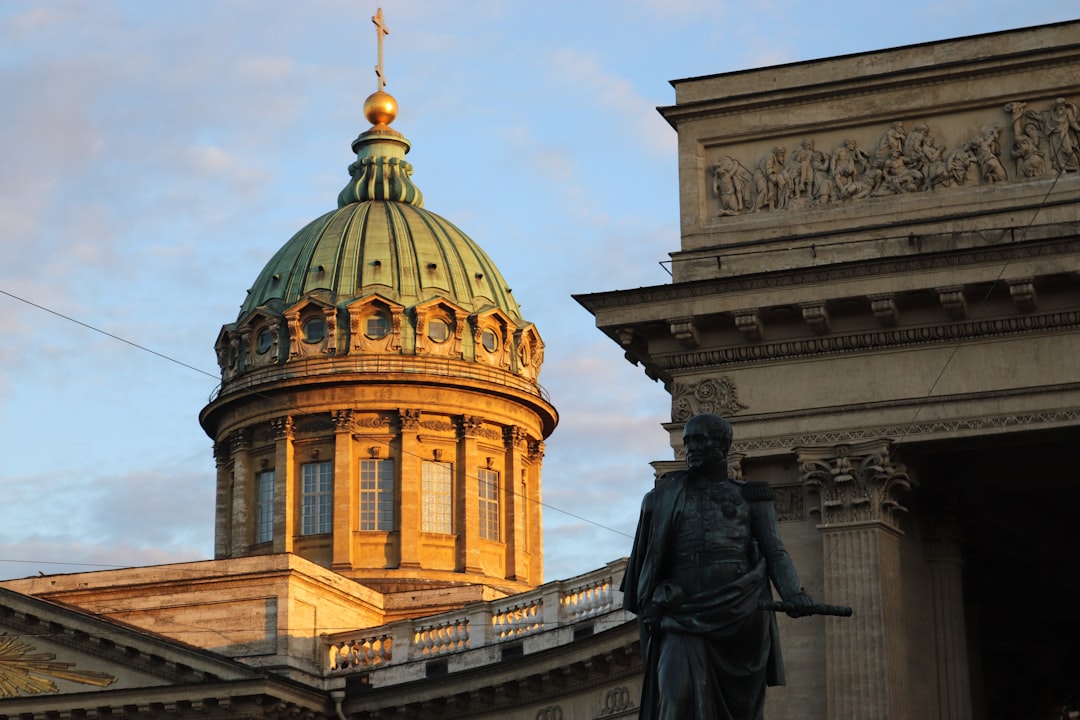
During the Soviet era, the cathedral suffered a dark period. It was closed in 1932 and repurposed as a museum of atheism and later a storage facility for the Hermitage. This misuse caused significant damage to the interior. However, in the 1990s, the building was returned to the Russian Orthodox Church. Today, it serves as a functioning cathedral — the mother church of the Saint Petersburg diocese. Understanding its dual identity of living church and historic monument is crucial for visitors. You are entering a space that is both a living place of prayer and a preserved historical monument. The restoration efforts have been meticulous, aiming to return the interior to its 19th-century splendor while respecting its modern religious function.
Free Entry and What to See Inside
One of the most appealing aspects of visiting the Kazan Cathedral is that entry to the main nave is free. This allows visitors to experience the awe-inspiring scale of the interior without any financial barrier. Inside, the space is vast and airy, supported by massive columns that rise to a high ceiling. The light floods in through the large windows, illuminating the white walls and gold accents. I noticed that the atmosphere shifts dramatically as you cross the threshold; the noise of Nevsky Prospekt fades, replaced by a hushed reverence. Visitors should take time to appreciate the floor, which is made of polished marble in intricate patterns, a detail that is often overlooked but speaks to the craftsmanship of the era.

Unlike St Isaac’s Cathedral or the Church of the Savior on Spilled Blood, the Kazan Cathedral has no paid museum sections — the whole cathedral is free to enter. Its most venerated treasure is a revered copy (list) of the icon of Our Lady of Kazan, long considered a protector of the Russian army; the original icon was stolen in 1904 and never recovered. Military history is woven into the building itself: Field Marshal Mikhail Kutuzov, commander of the Russian army in the war against Napoleon, is buried inside the cathedral, and captured French banners and keys of surrendered cities are displayed by his tomb. Guided tours can be arranged for those who wish to explore these historical layers in depth.
Dress Code and Etiquette Guidelines
As an active Orthodox cathedral, the Kazan Cathedral follows traditional church etiquette. For women, covering the head with a scarf is a pious tradition and a strong recommendation rather than a strictly enforced rule; shoulders and knees are best kept covered too. Men should remove their hats upon entering. If you are dressed in summer attire that does not meet these standards, do not worry. There are often cloths or shawls available at the entrance for visitors to borrow or purchase. However, it is better to come prepared. I always carry a lightweight scarf in my bag when visiting religious sites in Saint Petersburg, as it can be used for both modesty and warmth in the cool, stone interiors.

Beyond clothing, behavior inside the cathedral should be respectful. Photography is generally allowed in the main nave, but flash photography is prohibited. Do not take photos of people who are praying or of the services if they are being conducted. Silence is expected. The cathedral is a place of worship, not just a tourist attraction. When I visited during a service, the sense of community and devotion was palpable. Even if you are not religious, observing the rituals with quiet respect enhances the experience. Avoid loud conversations, running, or any behavior that might disrupt the peace. The staff and clergy are usually polite but firm about these rules, so it is best to comply willingly. Remember that you are a guest in a sacred space, and your conduct reflects on all visitors.