Pskov is the trip you take when Peterhof and Pushkin start to feel like the same afternoon repeated. It is a genuinely medieval city — a fortress at a river confluence, churches with 12th-century frescoes, and a border position that shaped everything about it. At around 280 kilometres southwest, it is the one destination on our list that really wants a night.
Getting there
Direct Lastochka trains run from Baltiysky station and take around three and a half hours each way. That is doable as a very long day, but it leaves perhaps five hours in the city, and Pskov rewards more. Timetables shift seasonally, so check before you commit to a same-day return.
The Krom
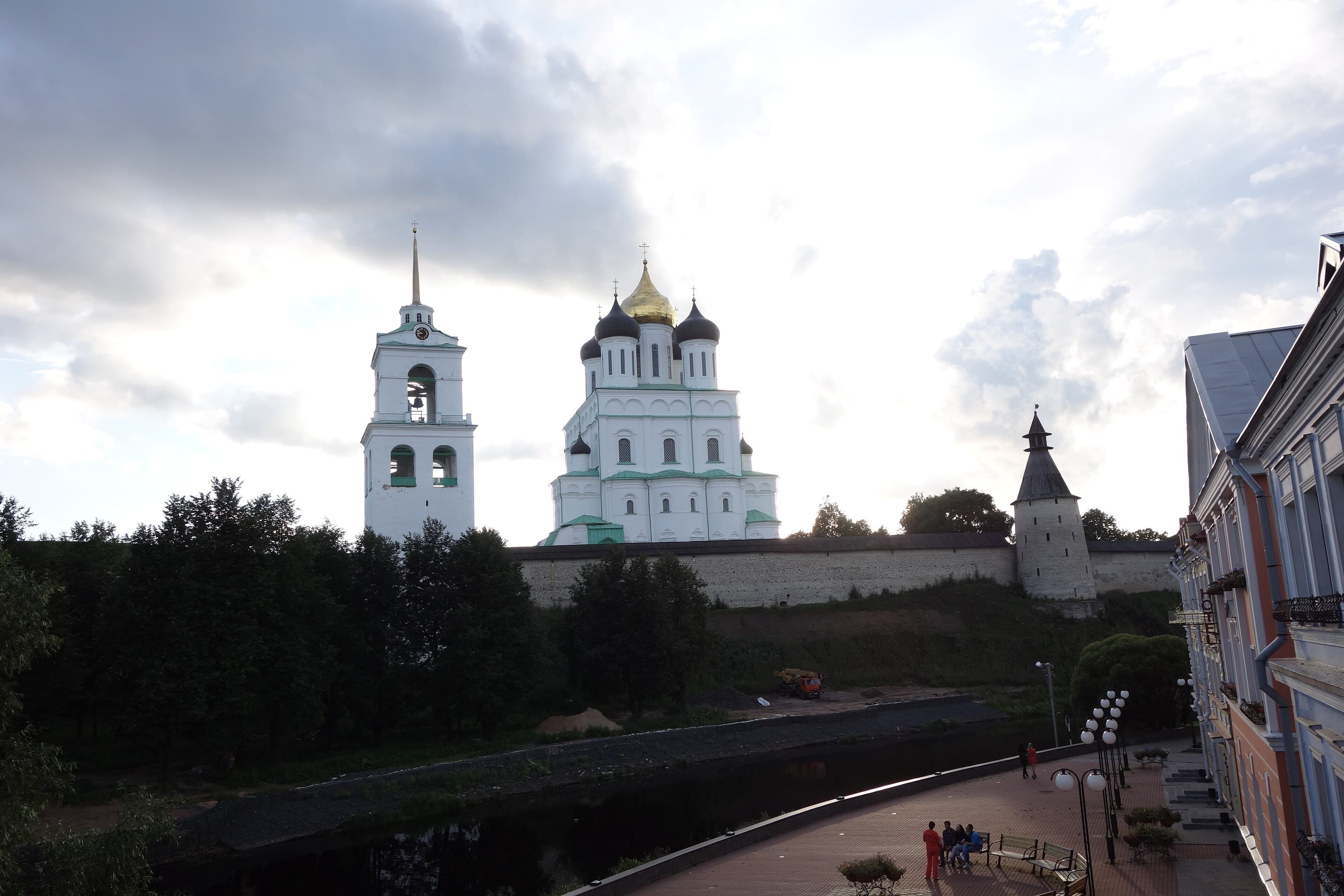
The Pskov Krom — the local word for kremlin — sits on a spit where the Pskova river meets the Velikaya. It is stark rather than pretty: high whitewashed walls, almost no decoration, built to be defended rather than admired. That plainness is the point. Pskov spent centuries as the western frontier, and the fortress was besieged more often than any other in Russia.
Inside stands the Trinity Cathedral, tall and white and visible from most of the city. The current building is the fourth on the site.
Churches of the Pskov School
In 2019 UNESCO inscribed the Churches of the Pskov School of Architecture on the World Heritage list — a group of buildings from the 12th to 17th centuries scattered through the city rather than gathered in one place. Our guide to Russia's UNESCO sites covers where this sits among the country's thirty-three.
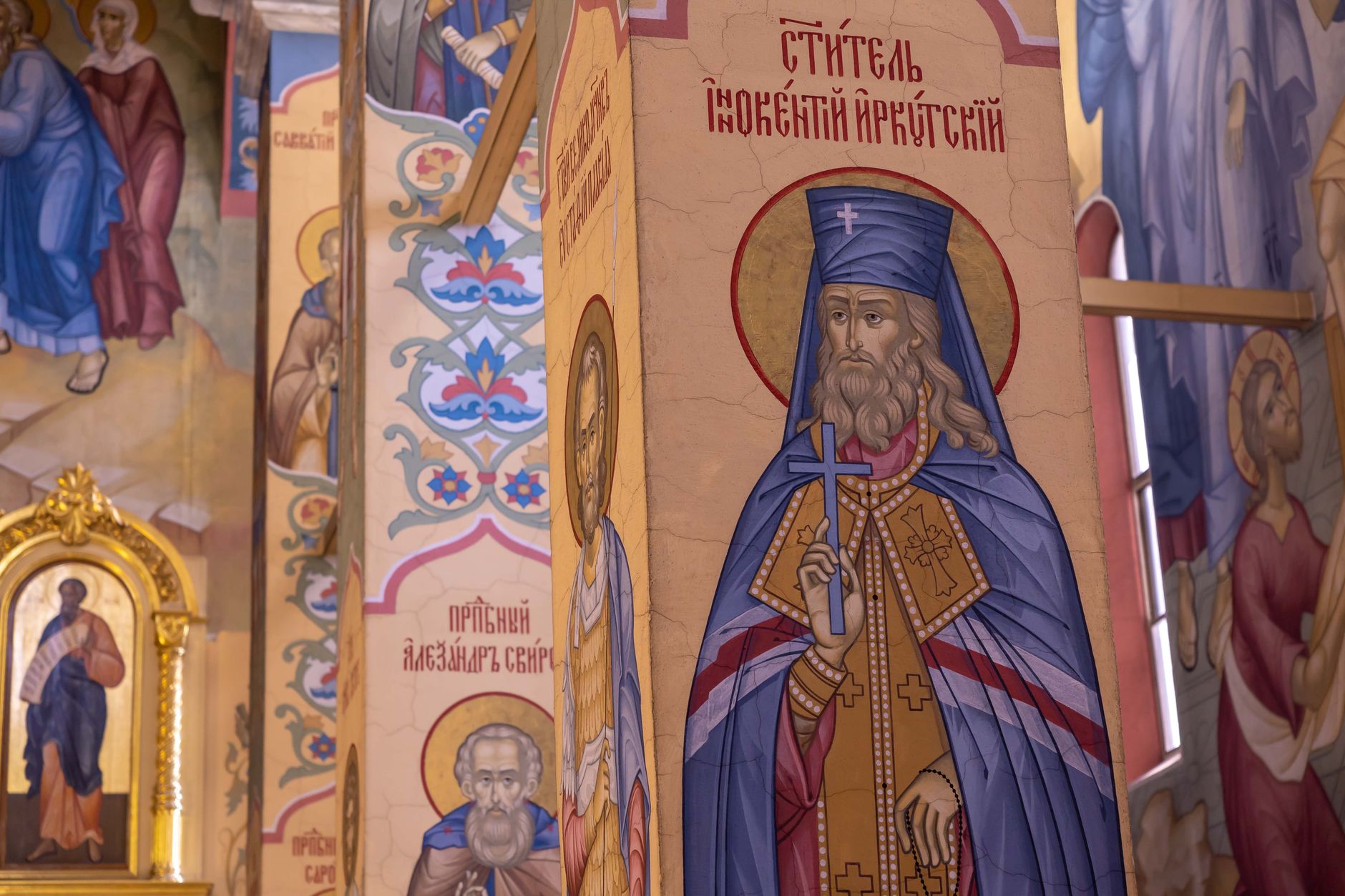
The style is easy to recognise once you have seen two or three: low, thick-walled, whitewashed, with belfries built as walls rather than towers. It grew out of local stone and a local need for buildings that could take a siege.
The Mirozhsky Monastery, across the Velikaya from the centre, holds the reason many art historians come to Pskov at all: a nearly complete cycle of 12th-century frescoes, painted by Byzantine masters and largely undisturbed since. There are few comparable survivals anywhere.
Beyond the city
Three places within an hour or so make Pskov worth the second day.
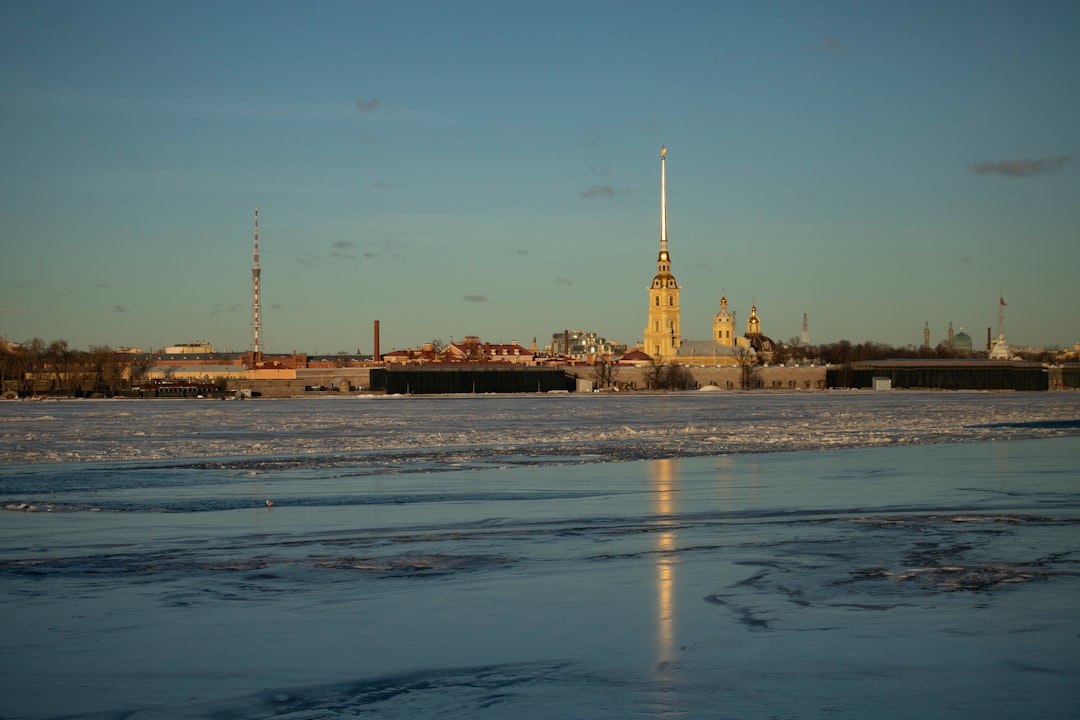
Izborsk, about thirty kilometres west, is a stone fortress on a ridge above a valley of springs — older than Pskov itself and, on a clear day, one of the best views in northwest Russia.
Pechory, near the Estonian border, has a working cave monastery founded in the 15th century. Its underground galleries are still in use, and unlike most Russian monasteries it was never closed in the Soviet period.
The Pushkin Hills — Mikhailovskoye and the surrounding estates — lie about 110 kilometres south. Pushkin was exiled here and wrote a good deal of his best work in the house; the estate museum and the surrounding countryside are treated as a single memorial landscape.