What are the must-try traditional Russian dishes in Saint Petersburg?
Saint Petersburg serves Russian cuisine shaped by centuries of tradition. The essential dishes to try are borscht (beetroot soup), pelmeni (meat dumplings), blini (thin pancakes), beef stroganoff, and shchi (cabbage soup). These staples appear on almost every menu in the city, from budget stolovayas to upscale dining rooms near the Hermitage.
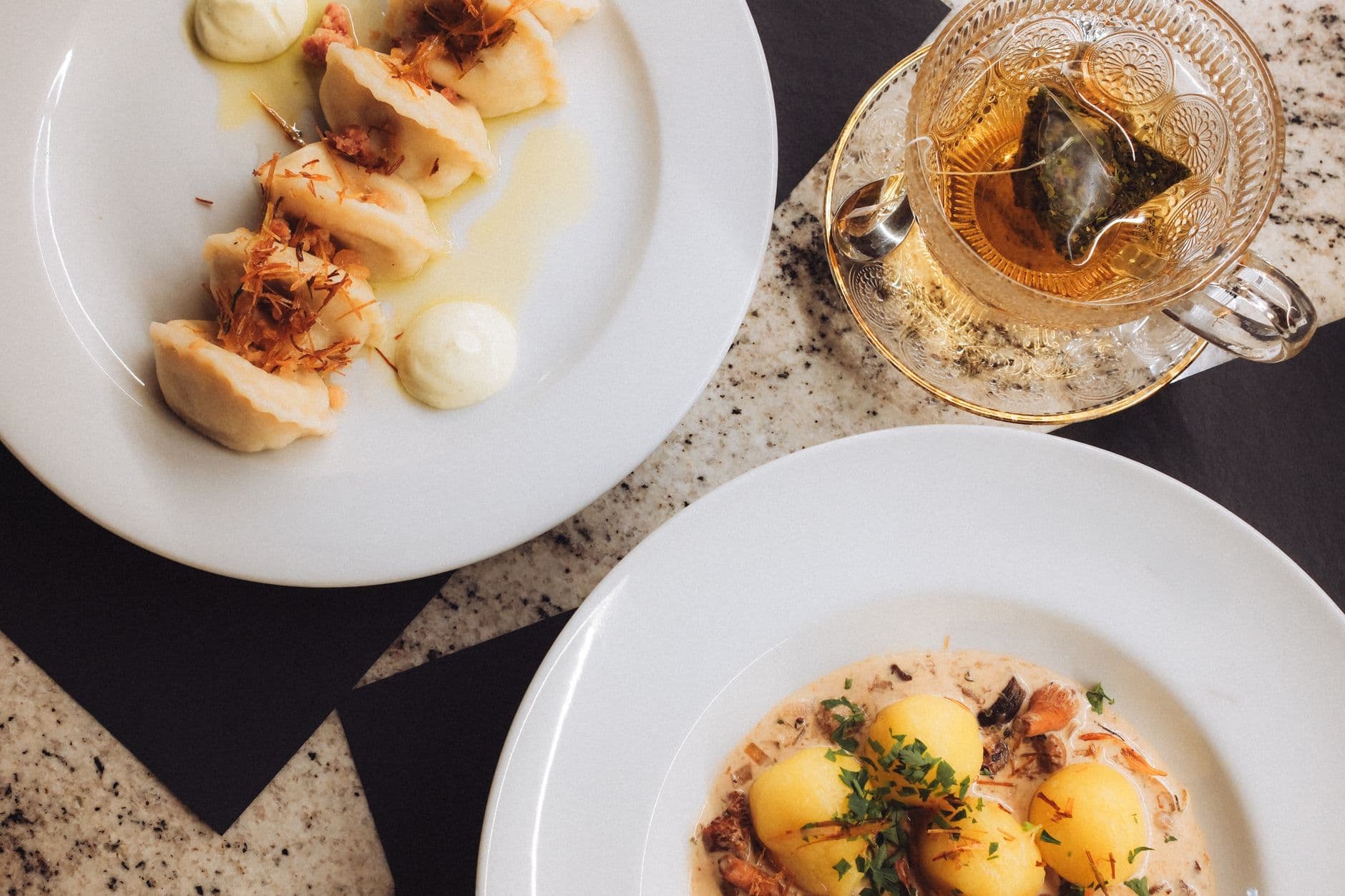
Pelmeni are small dumplings of thin dough filled with minced pork and beef, served hot with sour cream and often vinegar or butter. They trace back to Ural and Siberian tradition and are found everywhere, from cafeteria trays to restaurant menus. They are one of the safest, most satisfying choices for a first taste of Russian home cooking.
Blini deserve special attention because locals eat them year-round, not only during Maslenitsa (Butter Week). They come with sweet fillings such as jam and condensed milk, or savoury ones including caviar, smoked salmon and mushrooms; a plate with salmon costs roughly 600-800 rubles at a mid-range restaurant. Beef stroganoff — strips of beef in a sour-cream and mushroom sauce — dates to 19th-century aristocratic kitchens and pairs classically with buckwheat kasha.
Where can tourists find authentic Soviet-era stolovayas in 2026?
Stolovayas are cafeteria-style, self-service canteens that keep Soviet dining culture alive and serve affordable Russian food. Reliable choices include Stolovaya No. 1 near Ploshchad Vosstaniya, Pyshechnaya on Bolshaya Konyushennaya Street, and inexpensive canteens around Gostiny Dvor. Expect to pay roughly 300-500 rubles for a full meal of soup, a main course and kompot.
Stolovaya No. 1 sits at Ligovsky Prospekt 43-45, a short walk from Ploshchad Vosstaniya metro, and is open around the clock. The interior keeps a simple Soviet-era look with wooden tables and cafeteria trays, and there is a wide choice of salads, hot dishes and fresh-baked pirozhki; the average check starts from about 350 rubles, and classics like selyodka pod shuboy (herring under a fur coat) cost only a couple of hundred.
Pyshechnaya on Bolshaya Konyushennaya has served traditional Russian doughnuts called pyshki since 1958 and is a genuine city institution, a short walk from the Church of the Savior on Spilled Blood. It opens weekdays 9:00-20:00 and weekends 10:00-20:00, and the signature pyshki — dusted with powdered sugar and served with sweet tea — cost around 20-40 rubles each. Crucially, it is cash only, so bring rubles.
Around Gostiny Dvor you will find other cheap canteens, such as Stolovaya No. 37 on Ulitsa Lomonosova, with an average check of about 200-250 rubles. Many small stolovayas prefer cash, and those near tourist areas often display picture menus, making ordering easy even without Russian.
What local Saint Petersburg specialties differ from standard Russian cuisine?
Saint Petersburg developed its own culinary traditions, shaped by its Baltic setting, imperial history and European connections. Local specialties include koryushka (smelt), Leningrad-style cutlets, Baltic sprats, and the cakes of the Sever confectionery. These appear here with a prominence you rarely see in Moscow or other Russian cities.
Koryushka season runs from roughly April into May, when the small smelt are sold fresh along the Neva embankments. The fish has a distinctive cucumber-like aroma, and locals either fry it whole or smoke it; fried portions are sold from seasonal stands near the Peter and Paul Fortress for a few hundred rubles. Each spring the city celebrates koryushka, in some years with a dedicated festival — a good moment to try this seasonal delicacy at its best.
Leningrad-style cutlets differ from standard Russian kotlety in using more breadcrumbs and milk, which gives them a lighter texture; the recipe took hold in the Soviet era when fillers helped stretch scarce meat. Baltic sprats in tomato sauce, spread on black bread, remain a common Saint Petersburg appetiser and breakfast item, and supermarkets stock many varieties, with those from Kaliningrad canneries especially popular.
at the Bank of Russia rate on 15.10.2026 · powered by tutkakdoma
Which restaurants near major Saint Petersburg attractions serve quality Russian food?
Visitors to the Hermitage, Nevsky Prospekt and the Mariinsky Theatre can find good Russian restaurants within walking distance. Palkin, Teplo and Sadko serve traditional cuisine near these landmarks, while Marketplace and Ginza Project venues offer more modern interpretations. Reservations are worth making for dinner, especially during the White Nights (June to July). Menus and prices at individual restaurants change often, so confirm the current details before you go.
Palkin stands directly on Nevsky Prospekt at number 47, a short walk from the Hermitage, with a history going back to 1785. This is high-end dining: expect an average check of around 4,000-5,000 rubles, a tasting menu near 8,100 rubles, and classic imperial-era Russian dishes and sturgeon caviar service. A weekday three-course business lunch is much gentler at about 890 rubles (roughly 12:00-16:00), and the dining room, with its 19th-century chandeliers, calls for smart-casual dress.
Near the Mariinsky Theatre, Sadko (on Glinka Street) serves traditional Russian fare in a folk-style interior and is used to pre-theatre timing, getting diners through their courses before curtain-up. Teplo, on Bolshaya Morskaya between the Hermitage and St Isaac's Cathedral, is a cosy, homestyle spot with communal tables that opens in the morning for breakfast, including syrniki (cottage-cheese pancakes) with berry sauce. Both sit in the mid-range, and English-language menu descriptions make ordering straightforward.
How much should tourists budget for Russian meals in Saint Petersburg?
Meal costs vary widely by restaurant type and location. Budget roughly 400-600 rubles per person at a stolovaya, 1,200-2,000 rubles at a mid-range restaurant, and 3,000-5,000 rubles at an upscale one. Those figures cover a main course, a side and a soft drink; alcohol adds anywhere from 500 to 1,500 rubles depending on what you order.
Street food and quick bites cost far less than a sit-down meal. Pirozhki from vendors near metro stations sell for about 60-100 rubles each, and shawarma stands charge roughly 250-350 rubles for a generous portion — an easy, cheap lunch between museums. A couple of meat-and-cabbage pirozhki will keep you going for hours of sightseeing.
Higher-end restaurants sometimes add a service charge of around 10%, though this is not universal. Some city passes and partner programmes offer restaurant discounts, so it is worth checking the current partner list if you hold one. As a planning rule of thumb, allow 300-600 rubles for breakfast, 500-1,000 for lunch and 1,000-2,500 for dinner, plus snacks.
Supermarkets are the cheapest option of all. Perekrestok and Lenta stock prepared salads (150-300 rubles a container), fresh bread (40-80 rubles a loaf) and Russian dairy at a fraction of restaurant prices, and a rotisserie chicken runs about 280 rubles — enough for two meals for travellers on a tight budget.
What are the best places to try Russian caviar and where to buy it?
Caviar is one of Saint Petersburg's classic luxuries, in two main forms: black (sturgeon) and red (salmon) roe. Prices vary widely — red caviar is far more affordable than black sturgeon caviar, which can be very expensive per 50 grams. Restaurants traditionally serve it with blini, sour cream and sometimes a shot of vodka.
The Caviar Bar at the Grand Hotel Europe, on Mikhailovskaya Street, is one of the city's best-known places for a formal tasting, offering a selection of caviar with the classic accompaniments. It is a splurge rather than an everyday stop, but a memorable way to try several types side by side in an elegant setting.
To buy caviar to take home, the historic Kupetz Eliseevs (Eliseev Emporium) on Nevsky Prospekt sells tinned caviar from reputable producers, and the ornate 1903 building — with its stained glass and gilded interior — is worth seeing in its own right. Before buying, check the rules carefully: many countries restrict imports of sturgeon caviar, and Russia limits how much caviar you may export personally, so keep receipts and stay within the allowances. Red salmon caviar generally faces fewer restrictions and makes a safer souvenir.
Where can visitors experience Russian tea culture and try authentic pastries?
Russian tea culture revolves around the samovar, and Saint Petersburg has plenty of historic cafes and modern tea houses to enjoy it. Cafe Singer in Dom Knigi, the Bushe bakery chain and the Sever confectionery are three easy, central choices. Tea typically costs 200-400 rubles a pot, with pastries from about 150 to 450 rubles a piece.
Cafe Singer occupies the second floor of the Dom Knigi bookstore at 28 Nevsky Prospekt, with window views over the Kazan Cathedral, and opens daily 9:00-22:00. It serves Russian tea alongside honey cake (medovik), bird's milk cake and Napoleon, as well as a Russian and European menu that runs to blini, pelmeni and borscht; the average check is around 810-1,000 rubles.
Sever, the flagship confectionery at 44 Nevsky Prospekt, has operated since 1903 and is listed among the city's "Red Book" of memorable places. It is beloved for classic Soviet-era cakes such as the Prague cake, with an average check around 250 rubles, and sells beautifully boxed chocolates that make good gifts. Bushe, meanwhile, has been baking since 1999 and now has cafes near most metro stations; its morning menu of syrniki, oladyi (thick pancakes) and pastries — the vatrushka is a good breakfast with black tea — plus free WiFi and English-speaking staff make it especially easy for visitors.