Fourteen destinations are close enough to visit and return the same day, or with one night away. The table below is the short version: how far, how you get there, how long to allow, and what a ticket costs. Every figure comes from our own guide to that destination — follow the link for the detail.
Kronstadt, Repino, Sestroretsk, Pavlovsk and Strelna all work as a morning or an afternoon. Each sits under an hour from the centre, and none needs a full day to feel worthwhile.
If you have a full day
Peterhof, Tsarskoye Selo, Gatchina, Oranienbaum, Vyborg and Oreshek Fortress reward the whole day. Peterhof and Tsarskoye Selo are the two most people choose first; the comparison further down weighs them against each other.
If you can stay overnight
Veliky Novgorod, Staraya Ladoga and Ruskeala are all reachable in a day, but each is better with a night. Ruskeala in particular is a five-hour bus ride each way, which leaves little time in the park itself.
Grouped by how you travel
Metro and marshrutka: Tsarskoye Selo, Gatchina, Strelna. Suburban train: Pavlovsk, Oranienbaum, Sestroretsk, Repino, Oreshek. Lastochka express: Vyborg, Veliky Novgorod. Hydrofoil, summer only: Peterhof. Ferry: Kronstadt, Oreshek. Car or organised tour: Staraya Ladoga, Ruskeala.
Why These Three Destinations Stand Out for Day Trippers
Saint Petersburg serves as an exceptional base for exploring the surrounding region, with three destinations consistently ranking as the most popular choices for day trips. Peterhof, Pushkin, and Vyborg each offer distinct experiences that complement the imperial grandeur of the city itself. When I walked through the ticket office at Peterhof last summer, I overheard at least five different languages being spoken, confirming what tourism statistics already show: these locations attract visitors from across the globe.
The practical appeal of these three destinations lies in their accessibility. Peterhof sits approximately 30 kilometers west of central Saint Petersburg, Pushkin extends 25 kilometers south, and Vyborg stands 130 kilometers northwest near the Finnish border. Each location can be reached within 90 minutes using various transport options, making them feasible for travelers who want to return to their Saint Petersburg accommodation by evening. These three sites are by far the most visited day-trip destinations in the region.
The choice between these destinations depends on your specific interests. Peterhof delivers unmatched fountain spectacles and Baroque palace architecture. Pushkin offers intimate palace interiors and the legendary Amber Room. Vyborg provides medieval castle ruins and a distinctly Scandinavian atmosphere that feels worlds away from Russian imperial culture. On my last visit to the region in October, I managed to visit all three within a single week, and each day felt like entering a completely different historical period.
Peterhof: The Russian Versailles and Its Golden Fountains
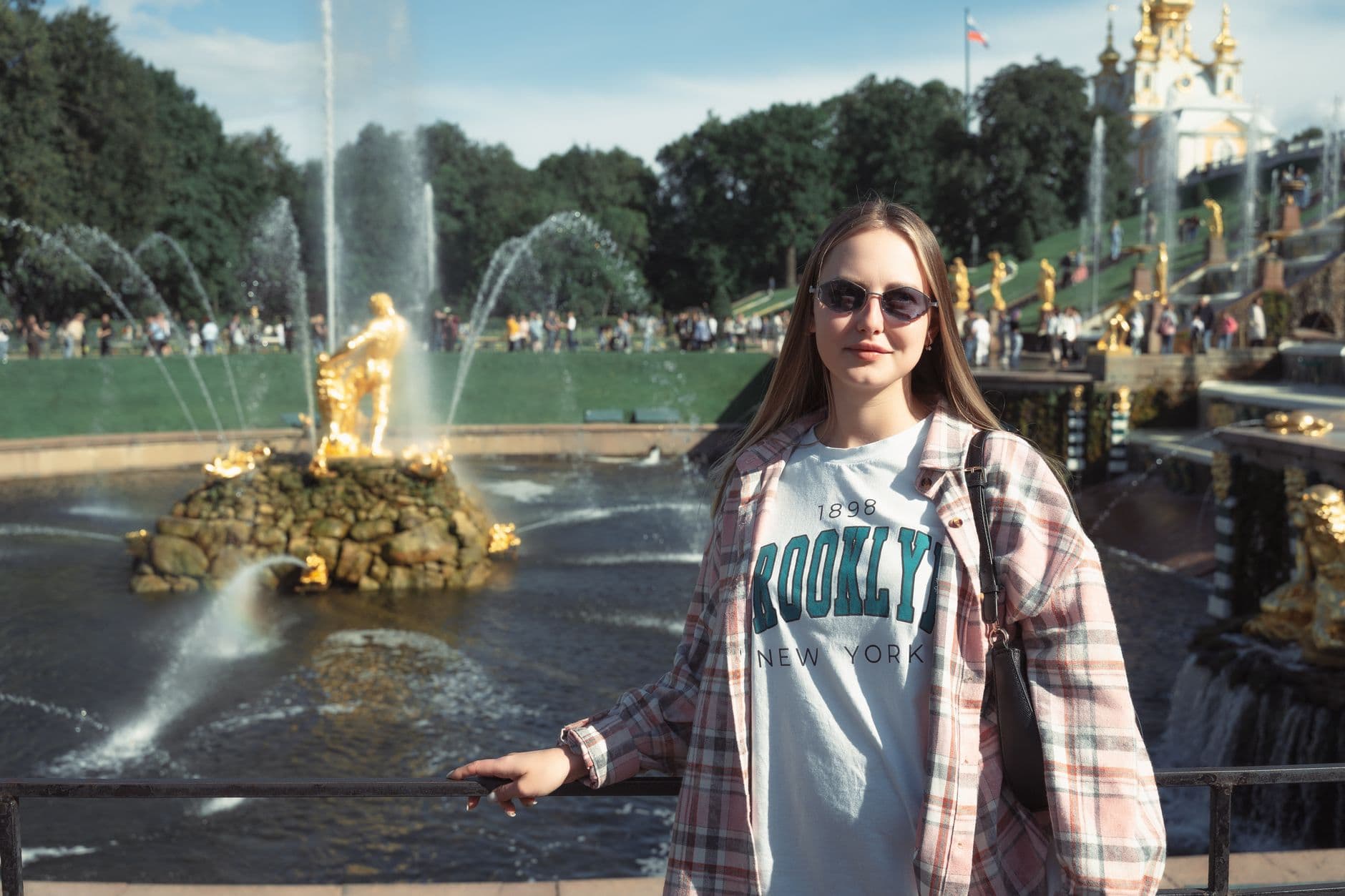
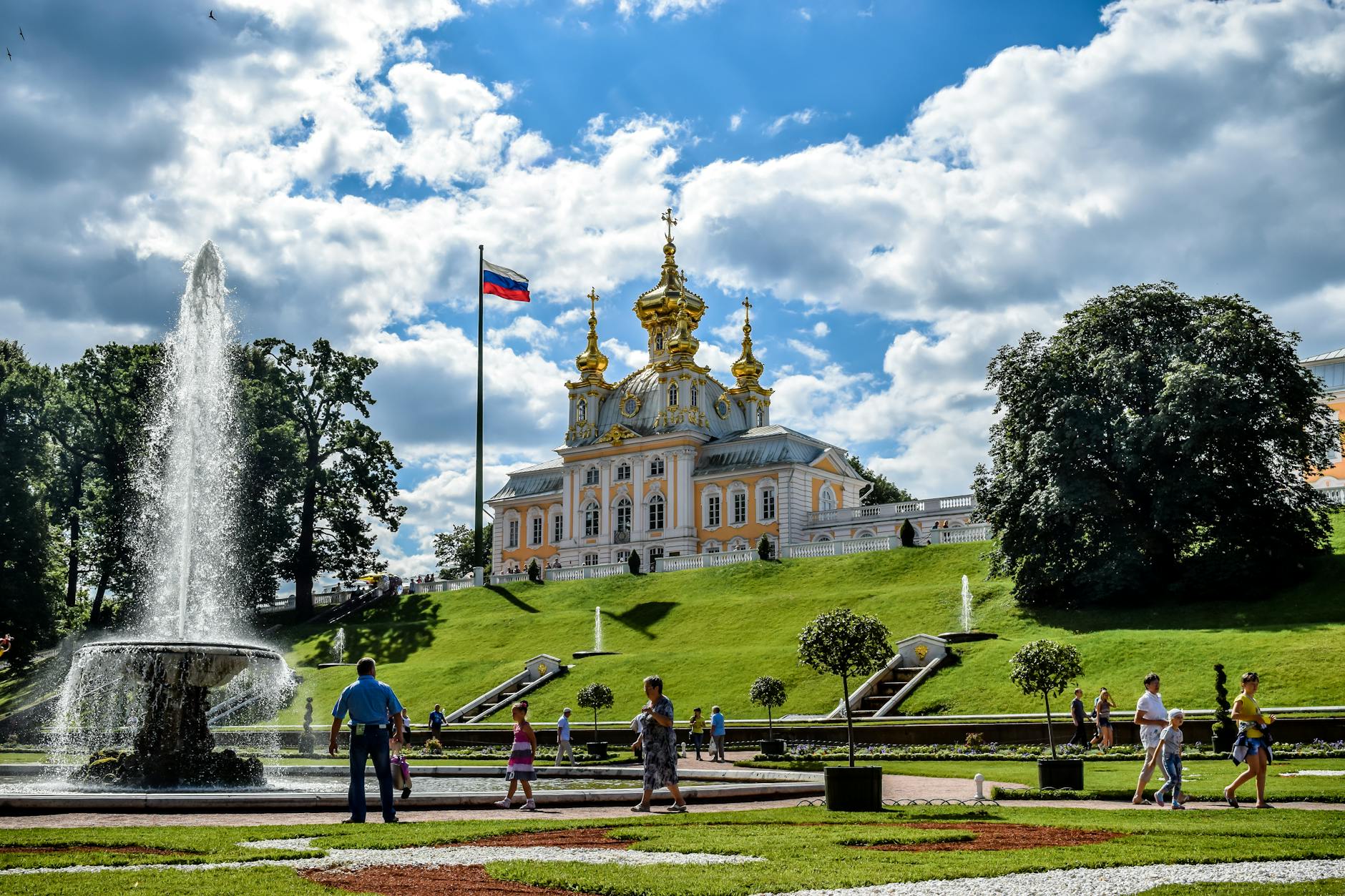
Peterhof functions as Russia's answer to Versailles, though many visitors argue it surpasses the French palace in fountain design and engineering. The Grand Cascade features 64 fountains and 255 bronze sculptures, all powered by natural water pressure without pumps. The central Samson Fountain shoots water 20 meters into the air, creating a spectacle that operates from late May through mid-September. Standard admission to the Lower Park costs 600 rubles during fountain season, while the Grand Palace requires a separate 700-ruble ticket — check current prices and hours on the official peterhofmuseum.ru.
Getting to Peterhof offers two distinct experiences. The hydrofoil boats depart from the Admiralty embankment near the Hermitage Museum and take about 35 minutes. A one-way adult ticket starts at 1,200 roubles; the return leg is cheaper, so a round trip works out at roughly 1,200 + 700 roubles. Concession and child fares are lower, and the operator adjusts prices through the season — check the current tariff before you travel. I noticed during my morning departure that the boat fills quickly by 10:30 AM, so arriving early matters. The alternative involves taking marshrutka minibus K-424 from Avtovo metro station, which costs 700 rubles but takes 50 minutes through suburban traffic. The land route drops you at the upper entrance, meaning you walk downhill through the gardens toward the Gulf of Finland.
The palace grounds span 414 acres, combining formal French gardens with English landscape parks. When I walked from the Grand Cascade to the Monplaisir Palace along the shoreline path, the journey took 25 minutes at a comfortable pace. The Monplaisir served as Peter the Great's personal retreat, featuring original 18th-century interiors that feel more intimate than the overwhelming grandeur of the main palace. The Peterhof museum reserve maintains strict visitor limits inside palace buildings, with timed entry slots that often sell out by midday during summer months.
at the Bank of Russia rate on 24.10.2026 · powered by tutkakdoma
Pushkin: Catherine Palace and the Reconstructed Amber Room
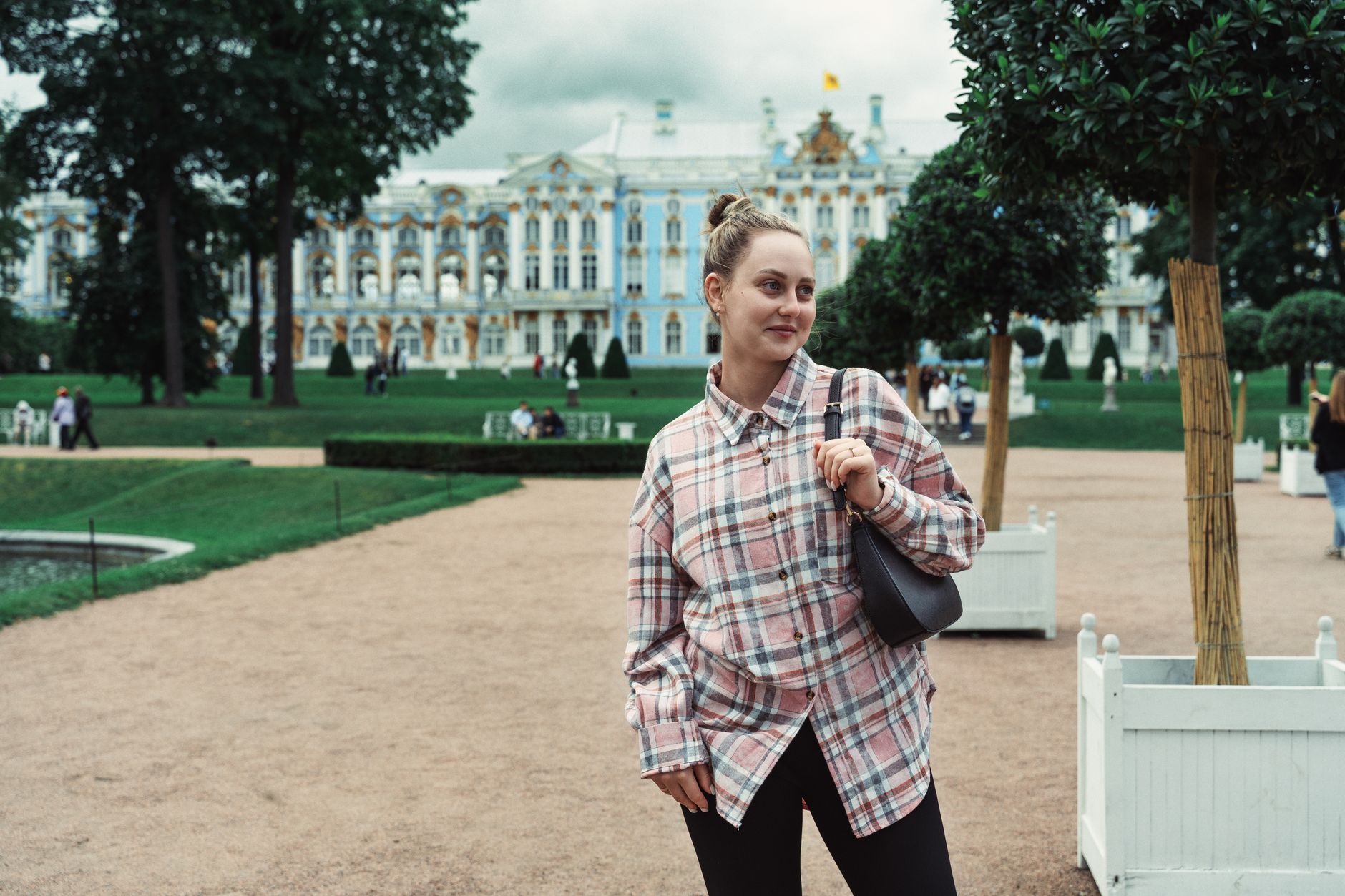
The town of Pushkin, formerly known as Tsarskoye Selo, centers around Catherine Palace and its azure Baroque facade stretching 306 meters. The palace interior houses the reconstructed Amber Room, which required 24 years of restoration work after German forces looted the original panels during World War II. Standard admission for the Catherine Palace with the Amber Room and park costs 1,600 RUB for adult Russian/EAEU citizens, 950 RUB for concessions, 400 RUB for children aged 7-14, and 2,600 RUB for foreign adults. An open-date ticket is available for 3,000 RUB. An audio guide can be rented for 350 RUB plus a 1,000 RUB deposit. During summer, entry to Catherine Park alone costs 400 RUB. For the most up-to-date information on special exhibitions and other ticket options, please verify on the official tzar.ru.
Transportation to Pushkin proves straightforward from Moskovskaya metro station, where marshrutka minibuses K-287 and K-342 depart every 15 minutes for 50 rubles. The 30-minute journey passes through residential neighborhoods before arriving at the palace gates. On my last visit in March, I took the suburban train from Vitebsk Railway Station instead, which costs 52 rubles and drops passengers at Tsarskoye Selo station, requiring a 15-minute walk or local bus connection to reach the palace entrance.
The Catherine Park surrounding the palace deserves equal attention to the building itself. The 107-hectare grounds combine formal gardens near the palace with romantic landscape features including the Turkish Bath pavilion and the Marble Bridge spanning the Great Pond. I noticed that most tour groups concentrate on the palace interior, leaving the park relatively peaceful even during busy periods. The Cameron Gallery, an 18th-century neoclassical structure overlooking the park, offers exceptional views and houses a small collection of classical sculptures. Winter visits between November and April provide a different atmosphere, with snow-covered grounds and significantly shorter entrance queues, though some pavilions close for the season.
Vyborg: Medieval Castle and Scandinavian Architecture
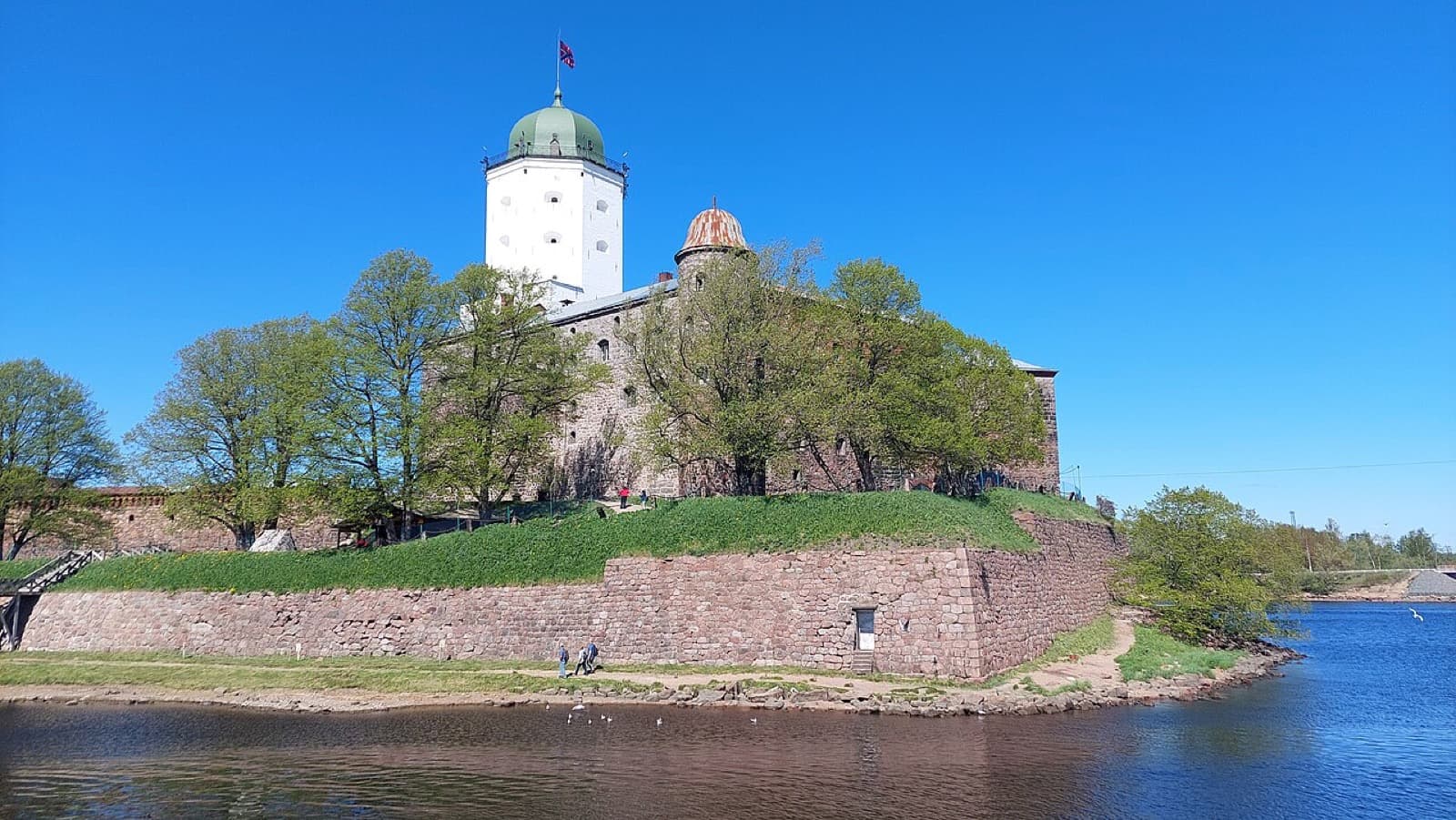
Vyborg stands apart from typical Russian imperial destinations, displaying centuries of Swedish and Finnish influence through its medieval castle, cobblestone streets, and granite architecture. The Vyborg Castle, founded by Swedes in 1293, dominates the town from its island position, with a stone tower offering panoramic views across the Gulf of Finland. Entrance to the castle costs 250 rubles, while climbing St. Olaf's Tower requires an additional 150 rubles. The castle museum operates daily from 10:00 to 18:00, closing Mondays during winter months.
Reaching Vyborg requires more commitment than Peterhof or Pushkin due to the 130-kilometer distance. Express trains depart from Finland Station approximately every two hours, taking 70 minutes and costing 450 rubles for a standard seat. When I traveled to Vyborg on a Saturday morning, the 08:15 departure arrived punctually at 09:25, providing a full day for exploration before the 18:40 return service. Some travelers combine Vyborg with a crossing into Finland, as the Finnish border lies just 30 kilometers northwest, though this requires appropriate visa documentation.
The town center preserves its medieval street layout, with the Round Tower (now housing a restaurant) and the Clock Tower marking key historical points. Mon Repos Park, located 2 kilometers north of the castle, spreads across 180 hectares of rocky coastline and pine forest. The park entrance costs 100 rubles, and the grounds feature neoclassical pavilions, granite cliffs, and walking trails that require at least 90 minutes to explore properly. Mon Repos is considered one of the finest examples of romantic landscape design in Russia, created during the early 19th century when Vyborg belonged to the Grand Duchy of Finland under Russian imperial rule.
Practical Comparison: Cost, Time, and Logistics
Budget considerations vary significantly between these three destinations. A day trip to Peterhof typically costs 2,000-2,500 rubles per person when including hydrofoil transport, palace admission, and lunch. Pushkin proves more economical at 1,200-1,500 rubles with marshrutka transport and palace entry. Vyborg requires 1,400-1,800 rubles accounting for train tickets, castle admission, and meals. These figures assume independent travel rather than organized tours, which typically charge 3,500-4,500 rubles per person but include transportation and guide services. For current prices, ticket types and how to buy, see our Peterhof Palace ticket and entrance fee guide.
Peterhof
Pushkin (Tsarskoye Selo)
Vyborg
Distance
~30 km west
~25 km south
~130 km northwest
Transport
Hydrofoil 35 min, from 1,800 ₽ one way; minibus K-424 50 min, 80 ₽
Lower Park 2,000 ₽ + Grand Palace 2,700 ₽ foreign; 900 ₽ + 1,000 ₽ RU/EAEU
Catherine Palace 1,600 ₽ RU/EAEU; 2,600 ₽ foreign
Castle Island 100 ₽ + museum buildings 350 ₽
Day budget
2,200–3,000 ₽ RU/EAEU; 4,500–7,000 ₽ foreign
2,000–2,600 ₽ RU/EAEU; 3,000–3,800 ₽ foreign
1,400–1,800 ₽
Time needed
6–7 h
5–6 h
8–9 h
Best for
Fountains, outdoor spectacle
Amber Room, palace interiors
Medieval castle, Nordic flavour
Time investment differs substantially between locations. Peterhof demands 6-7 hours for a comprehensive visit including the Grand Palace, Lower Park, and either Monplaisir or the Alexandria Park. Pushkin requires 5-6 hours to cover Catherine Palace and explore the park grounds adequately. Vyborg needs a full 8-9 hours considering the longer train journey, though the town itself can be explored in 4-5 hours. I noticed during my planning that combining any two of these destinations in a single day proves impractical unless you skip major attractions or accept superficial visits.
The pass covers Saint Petersburg public transport, which connects to departure points for all three destinations. Holders receive 10% discounts at selected restaurants in Peterhof and Pushkin, plus reduced rates on some guided tours. For Vyborg, the pass offers no direct benefits, though the transport coverage extends to Finland Station where the trains depart.
Which day trip from Saint Petersburg is best?
For a first visit, choose Peterhof during fountain season (late May to mid-September) or Pushkin with the Amber Room in any month — both deliver the imperial-Russia experience in 5-7 hours. Pick Vyborg if you want medieval castles and Nordic atmosphere instead of Baroque palaces, and can spare a full 8-9-hour day. For a quieter, castle-style palace with far smaller crowds, also consider a Gatchina Palace day trip.
Can you combine two of these day trips in one day?
Realistically, no. Each destination needs five or more hours including transport, so pairing any two means skipping major attractions. If your schedule is tight, choose one destination and keep the evening for Saint Petersburg itself rather than rushing between ticket queues.
Peterhof's appeal varies dramatically with seasons due to the fountain system operating only from late May through mid-September. The official fountain opening ceremony occurs on the Saturday closest to May 27th, marking the start of peak season when visitor numbers triple compared to winter months. When I visited in early June, the Lower Park felt crowded between 11:00 and 15:00, but arriving at the 09:00 opening provided 90 minutes of relative calm before tour buses arrived. Winter visits offer discounted admission at 450 rubles and access to palace interiors without long queues, though the frozen fountains and snow-covered gardens create a melancholic atmosphere rather than the intended Baroque splendor.
Pushkin maintains more consistent appeal across seasons, as the primary attraction focuses on interior palace rooms rather than outdoor features. The Amber Room appears identical whether visited in July or January, though the surrounding Catherine Park transforms completely. Summer visits from June through August bring maximum crowds and premium pricing, with foreign adult admission to the Catherine Palace with the Amber Room and park at 2,600 RUB. The shoulder seasons of May and September offer moderate weather and reduced visitor numbers. I found October particularly rewarding, with autumn foliage coloring the park. The palace closes one Tuesday monthly for maintenance, so checking the official schedule before planning your visit prevents disappointment.
Vyborg experiences harsh winters with temperatures frequently dropping below minus 15 degrees Celsius between December and February. The castle remains open year-round, but Mon Repos Park becomes challenging to navigate when snow covers the rocky paths and wooden staircases. Summer months from June through August provide the most comfortable visiting conditions, with temperatures ranging between 18-22 degrees Celsius and extended daylight hours allowing exploration until 22:00. The town hosts a medieval festival during the last weekend of July, when the castle grounds fill with historical reenactors, though accommodation becomes scarce and requires advance booking. Spring visits in May offer a compromise between weather and crowds, as most tourists concentrate on Peterhof's fountain season rather than making the longer journey to Vyborg.
Making Your Choice: Which Destination Fits Your Trip
First-time visitors to Saint Petersburg with limited time should prioritize Peterhof during fountain season or Pushkin during other months. These two destinations deliver the quintessential imperial Russian experience that complements the Hermitage Museum and city palaces. Peterhof suits travelers who appreciate outdoor spectacle, engineering marvels, and expansive grounds for walking. The fountain displays operate on a precise schedule, with the Grand Cascade performing continuously but smaller fountain groups activating at specific times throughout the day, creating incentive to spend several hours exploring different park sections.
Pushkin appeals more to visitors interested in interior design, decorative arts, and the specific story of the Amber Room. The palace provides better protection from weather, making it the superior choice during rain or cold periods. When I tasted traditional Russian pastries at the café near the Cameron Gallery, I appreciated having a comfortable indoor retreat between palace viewing and park exploration. The town of Pushkin itself offers more dining options and historical context than Peterhof, with the Tsarskoye Selo Lyceum where Alexander Pushkin studied located within walking distance of the palace gates.
Vyborg serves travelers seeking something beyond standard imperial tourism, particularly those with interest in medieval history, Scandinavian culture, or Nordic architecture. The town rewards independent exploration rather than structured palace tours, with atmospheric cobblestone streets, Finnish-style wooden houses, and local restaurants serving Karelian pastries distinct from Saint Petersburg cuisine. The journey itself provides value, as the train passes through forests and small towns that reveal aspects of Russian life invisible in the city center. Consider Vyborg for your second or third visit to the Saint Petersburg region, or if you specifically want to experience the Finnish-Russian border culture that shaped this area for centuries. The medieval castle offers a stark contrast to Baroque palaces, and Mon Repos Park delivers natural beauty rather than formal gardens, creating a day trip that feels like entering a different country while remaining within Russian territory.
Planning to focus on Vyborg alone? See our complete Vyborg day trip guide, covering the medieval castle, Monrepos Park, and the new non-stop Lastochka train from Finland Station.