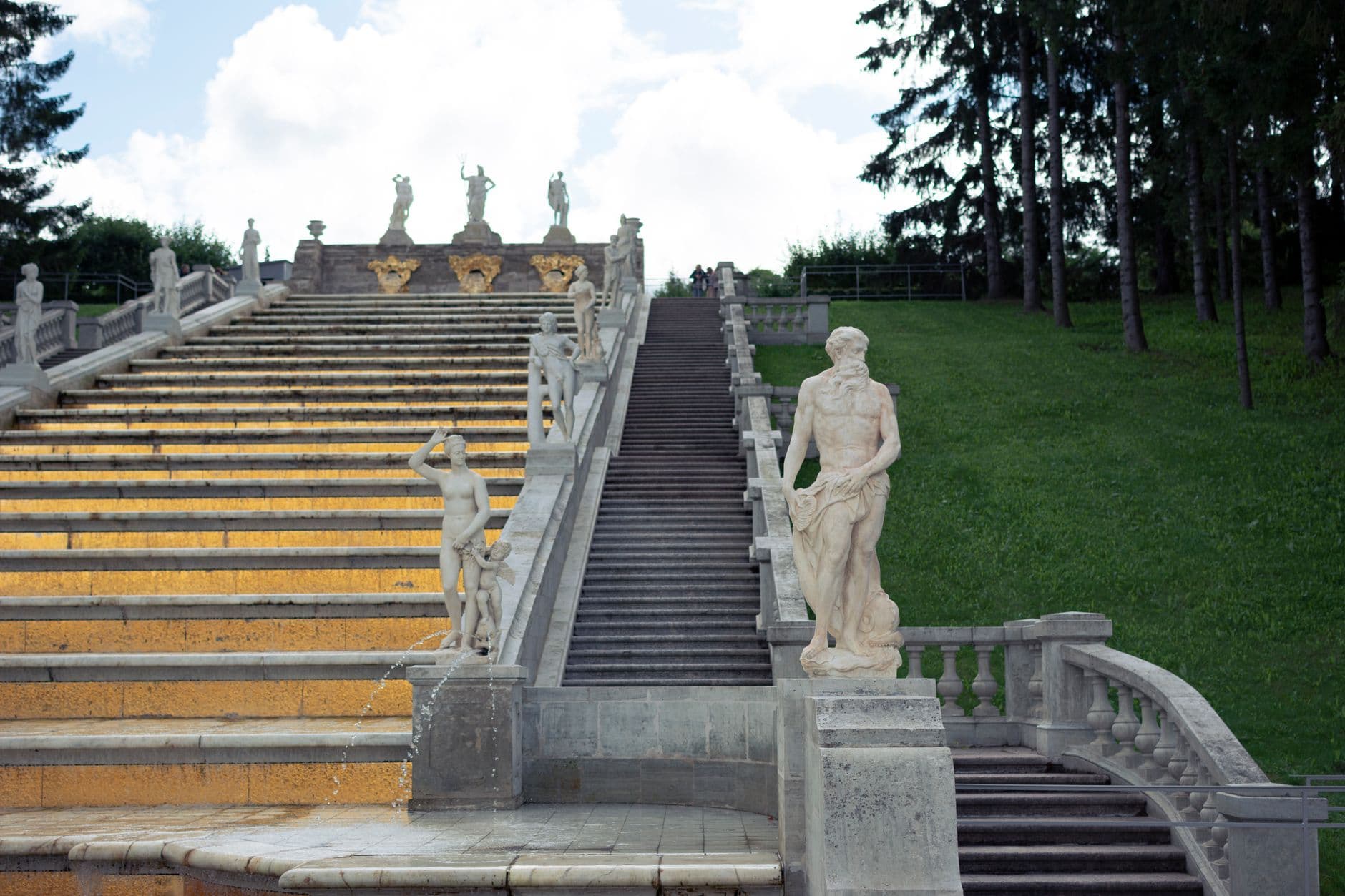
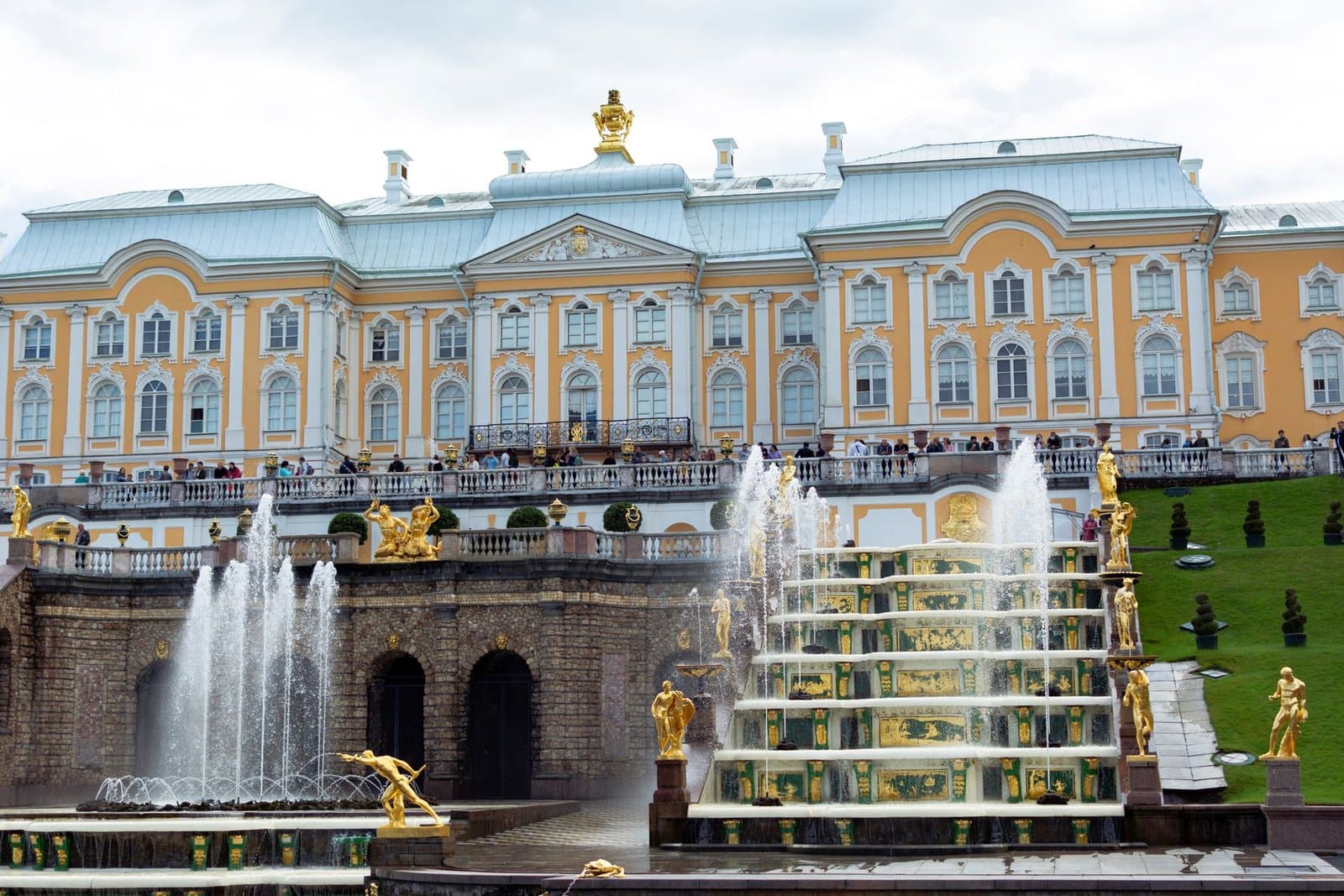
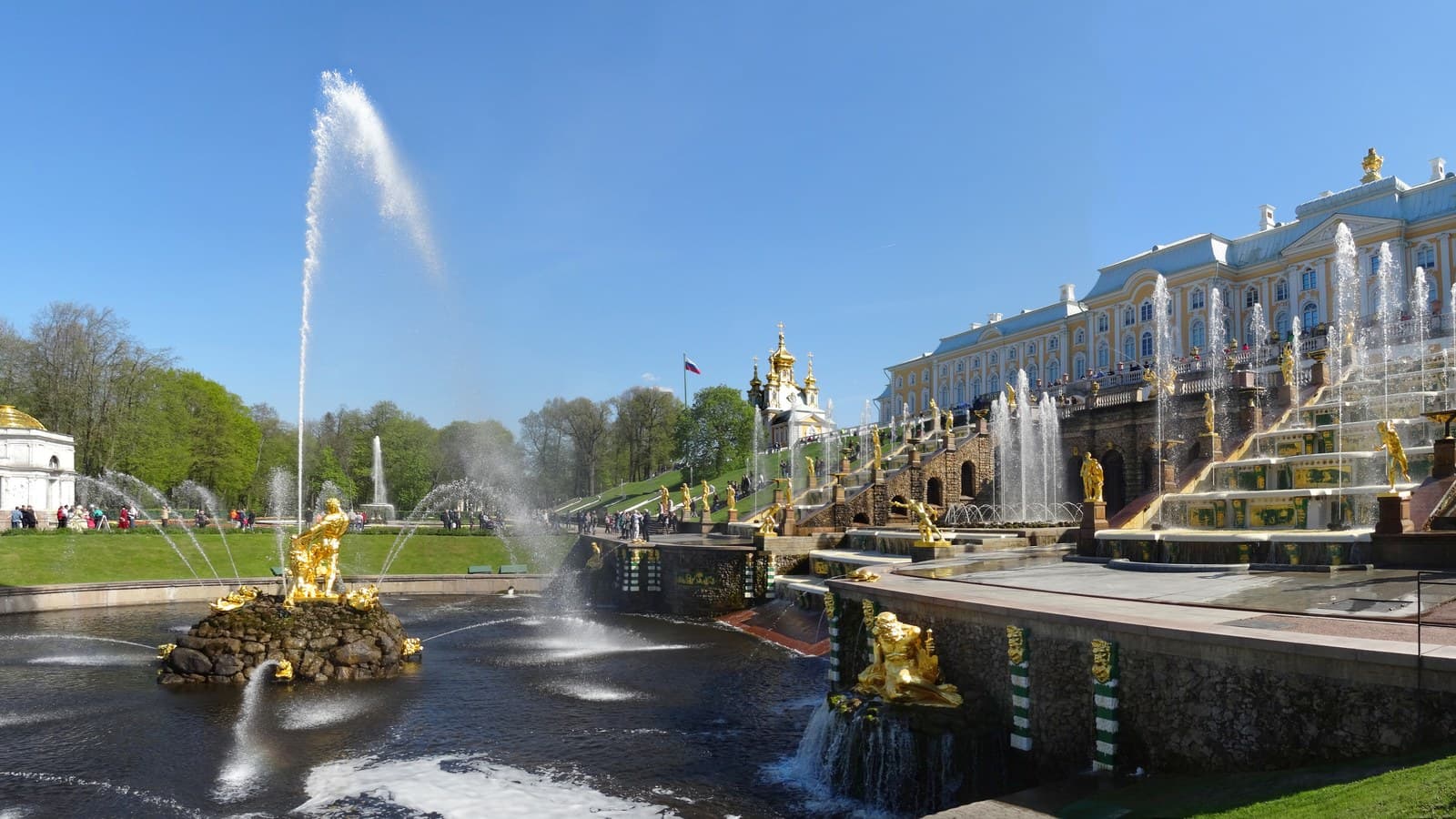
The air in the Lower Park of Peterhof turns crisp, carrying the scent of damp earth and pine needles as the golden hour fades into twilight. For one or two spectacular evenings each autumn, the silence of the imperial estate is broken not by the roar of engines but by the synchronised thunder of water and fire. This is the autumn Festival of Fountains, the ceremonial farewell to the fountain season at Peterhof, where the Grand Cascade becomes a stage for light, sound, and pyrotechnics. It is a fleeting moment of magic that bids farewell to summer in Saint Petersburg, drawing thousands to the Lower Park — even though the fountains themselves keep running for a few more weeks, into mid-October.
Note that Peterhof holds two fountain festivals each year: the spring opening (in 2026, held on 16 May, with a daytime ceremony at the Grand Cascade) and the autumn closing covered by this guide. The 2026 fountain season itself began on 25 April, the date from which Lower Park entry became paid again.
The Magic of the Autumn Closing Ceremony
The Festival of Fountains is not merely a shutdown procedure; it is a theatrical production of grand proportions. Held annually on a weekend in late September, this event serves as the symbolic final bow for the season, honouring the gravity-fed hydraulic system that has run without pumps since Peter the Great's time. The atmosphere blends the solemnity of imperial tradition with the modern spectacle of multimedia art. As the sun sets behind the Gulf of Finland, the palace walls are illuminated, and the Grand Cascade becomes the centrepiece of a dazzling light-and-water show.
Visitors can expect a carefully choreographed performance combining classical music, 3D projection mapping on the palace facade, and fireworks that reflect off the water's surface, doubling the spectacle. It is a poignant reminder of the passage of time, even though the mighty jets keep flowing for several more weeks after the show. For international tourists, this event offers a unique perspective on Russian history and engineering, wrapped in an emotional package that few other heritage sites can match.
Understanding the context enhances the experience. Peterhof was designed to rival Versailles, and the fountains were its heartbeat. The autumn festival is therefore treated with reverence: locals and tourists alike gather to celebrate this architectural marvel one last time before the cold sets in. The emotional weight of the finale adds depth to the visual spectacle, making it more than a tourist attraction — it is a cultural ritual, staged by the Peterhof State Museum-Reserve.
2026 Dates and Official Verification
Planning for the 2026 autumn festival requires precision, as the exact date is not fixed years in advance. As of now the 2026 date has not been announced; historically the closing festival falls on a weekend in late September (in 2025 it ran on 20–21 September). For the 2026 edition, verify the specific date on the official museum site, go.peterhofmuseum.ru, which usually publishes it a few weeks ahead. Dates can shift due to weather, technical preparations, or state holidays, so do not rely on third-party travel blogs for the final date — always cross-reference with the primary source.
Crucially, the festival show runs only on its announced dates: if you arrive on the wrong evening there will be no spectacle, even though the Lower Park and its daytime fountains stay open well into October. The official site also posts updates on last-minute changes — strong wind, for example, can cancel the fireworks portion of the show while the light-and-fountain display goes ahead. Early confirmation lets you secure accommodation and transport before the date sells out.
The timing of the show itself depends on sunset. In late September twilight arrives earlier than in summer, and the grand finale at the Grand Cascade — the light show and fireworks — has in recent years begun around 20:30 (8:30 p.m.) and lasted about 30 minutes, with the gates and earlier programme opening in the late afternoon. Confirm the exact start time on the official schedule closer to your travel date, mark a tentative date in your calendar, and keep the official site bookmarked for the final confirmation.
Ticket Prices and Payment Methods
The Lower Park is a paid attraction during the fountain season (in 2026, from 25 April to mid-October) — it is not free in daytime; free entry applies only in the winter off-season. For 2026, standard Lower Park admission is 1,100 ₽ for citizens of Russia and the EAEU and 2,000 ₽ for foreign visitors, with children under 7 entering free. At the spring 2026 festival the celebration was included with this standard park ticket — no separate surcharge was required. The autumn closing has in some past years used a separate timed evening ticket; because the 2026 autumn arrangements and any festival-specific price have not yet been announced, confirm them on the official site rather than relying on an estimate.
A crucial warning for international visitors: foreign Visa and Mastercard payments are generally not accepted at the ticket offices or online portals of Russian state museums. Due to current banking restrictions, you must pay in cash rubles or use a Russian Mir card. If you rely on an international credit card you will be unable to purchase tickets online or at the gate — a logistical hurdle many tourists overlook. Plan to withdraw sufficient cash from ATMs in Saint Petersburg before heading to Peterhof; there are no exceptions to this rule at the point of sale.
If an online system is available, consider buying tickets in advance — but mind the payment barrier above. The Piter Pass city card may cover regular Peterhof entry; however, special ticketed shows can be excluded, so check whether the festival evening is included. If it is not, you will still need cash for any separate festival ticket. Always have a backup payment method in rubles.
Getting to Peterhof: Transport Options
Reaching Peterhof from Saint Petersburg is straightforward, but timing matters for the evening show. The most scenic route is the "Meteor" hydrofoil, which departs from piers on the city-centre embankments and crosses the Gulf of Finland in about 30–40 minutes, landing right by the Lower Park. The Meteor season ends in early-to-mid October, so for a late-September event it usually runs, though schedules thin out — check the 2026 timetable. The ride itself is part of the experience, with views of the city skyline.
If the hydrofoils are not running or you prefer a land route, the suburban train (elektrichka) is the most reliable option. Trains depart from the Baltiysky (Baltic) Railway Station in Saint Petersburg — metro Baltiyskaya — and arrive at Novy Petergof station in about 40 minutes. The station sits a few kilometres from the park, so from Novy Petergof take bus 351, 352 or 356 (about 10–15 minutes) or a taxi to the Lower Park entrance. This route is the cheapest and runs frequently. A taxi straight from Saint Petersburg takes roughly 45–60 minutes depending on traffic, which is heavier on weekends.
| Option | Journey time | Notes |
|---|---|---|
| "Meteor" hydrofoil (city-centre piers) | ~30–40 min | Scenic; season ~May to early/mid-Oct, reduced late-Sept schedule; book ahead |
| Elektrichka from Baltiysky station (metro Baltiyskaya) → Novy Petergof | ~40 min + bus | Then bus 351/352/356 (~10–15 min) to the Lower Park; cheapest option |
| Taxi / car | ~45–60 min | Door-to-door; allow extra time on weekends |
For the return journey, remember that crowds leave simultaneously: hydrofoil queues lengthen and taxis grow scarce. The train usually runs on a fixed schedule and is often the most efficient way back. Whatever you choose, start early so you arrive with time to find a good spot rather than rushing the gates.
Best Viewing Spots and Practical Tips
Finding the perfect vantage point is key. The Grand Cascade is the focal point, and the area directly in front of it fills up quickly, so arrive at least 60 to 90 minutes before the show to secure a place on the terraces or along the central axis. Side angles can offer unique perspectives of the fireworks against the palace facade. Avoid the water's edge, where the ground can be slippery and crowds dense, and note that the Lower Park is largely flat, so there are few natural elevated spots.
Weather in late September can be unpredictable. Temperatures drop sharply after sunset and rain is common, so dress in layers with a warm jacket, waterproof outerwear, and comfortable shoes — the park paths can be wet. Be ready for wind off the Gulf, which makes the cold bite harder and can affect the fireworks portion of the show.
- Carry plenty of cash in rubles (budget at least 4,000–5,000 ₽ per person for tickets, transport and snacks), as foreign card payments fail.
- Arrive at the Lower Park entrance in the late afternoon to clear the queues and secure a central spot near the Grand Cascade before the finale.
- Check the wind forecast on the morning of the event; high winds can cancel the fireworks, though the light-and-fountain show usually still runs.
- Wear warm, waterproof clothing and sturdy shoes — the park is outdoors and the ground can be wet and cold after dark.
Frequently Asked Questions
Can I use my international credit card to buy tickets?
No. International Visa and Mastercard cards do not work in Russia due to current sanctions. You must pay in cash rubles or with a Russian Mir card. Withdraw cash before your visit so you are not locked out of the event at the gate or online.
Is the Lower Park free to enter during the day?
Not in the fountain season. In 2026 the Lower Park is paid from 25 April to mid-October — 1,100 ₽ for citizens of Russia and the EAEU and 2,000 ₽ for foreign visitors, with children under 7 free. It is free only in the winter off-season, when the fountains are switched off. At the spring 2026 festival, that standard park ticket also covered the celebration; confirm the autumn arrangements on the official site.
What if the fireworks are canceled due to weather?
Fireworks depend on wind conditions; if the wind is too strong the pyrotechnics may be cancelled for safety, while the light show and fountain display usually continue. Check the official website on the day for updates. Tickets are generally non-refundable, so plan on the event proceeding unless the museum states otherwise.
Conclusion
The 2026 Peterhof autumn fountains closing festival is a once-a-year spectacle that fuses history, engineering, and artistry into a single autumn evening. It is a fitting farewell to the warm-weather season in Saint Petersburg, with the Grand Cascade illuminated by light, music, and fireworks. To make sure you do not miss it, verify the date on the official site, secure enough cash in rubles, and arrive early for the best views. The sight of the Grand Cascade ablaze against the night sky is a memory that lasts long after the water finally falls silent for the winter.