One ticket gets you into St Isaac's Cathedral. A different ticket gets you onto the colonnade. This is not an upgrade or a surcharge: two ticket desks, two entrances, two queues. The colonnade costs 700 rubles and, unlike the cathedral itself, carries no concession rates. Visitors regularly arrive with a cathedral ticket, go looking for the staircase and are sent back to the ticket office. Here is how it actually works.
The colonnade and the cathedral are two different visits
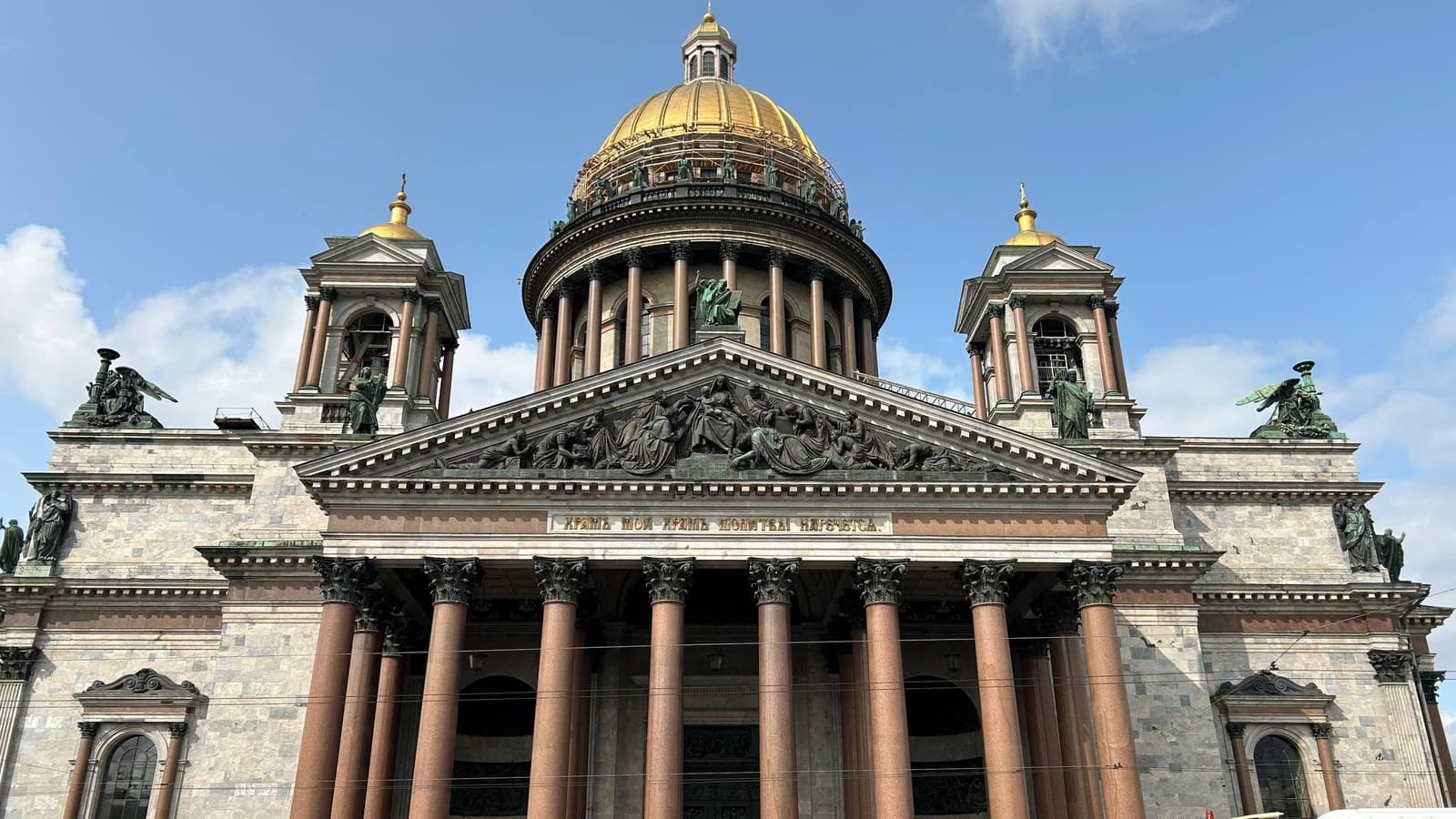
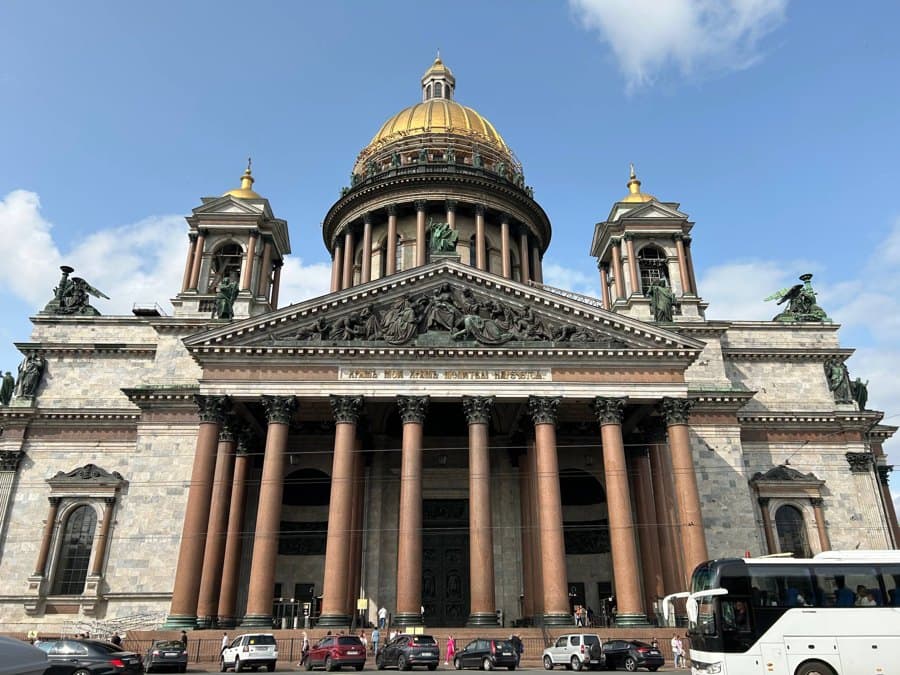
Inside the cathedral you see the interior: malachite columns, mosaics, the stained-glass window, the pendulum under the dome. That is the ground floor and one ticket.
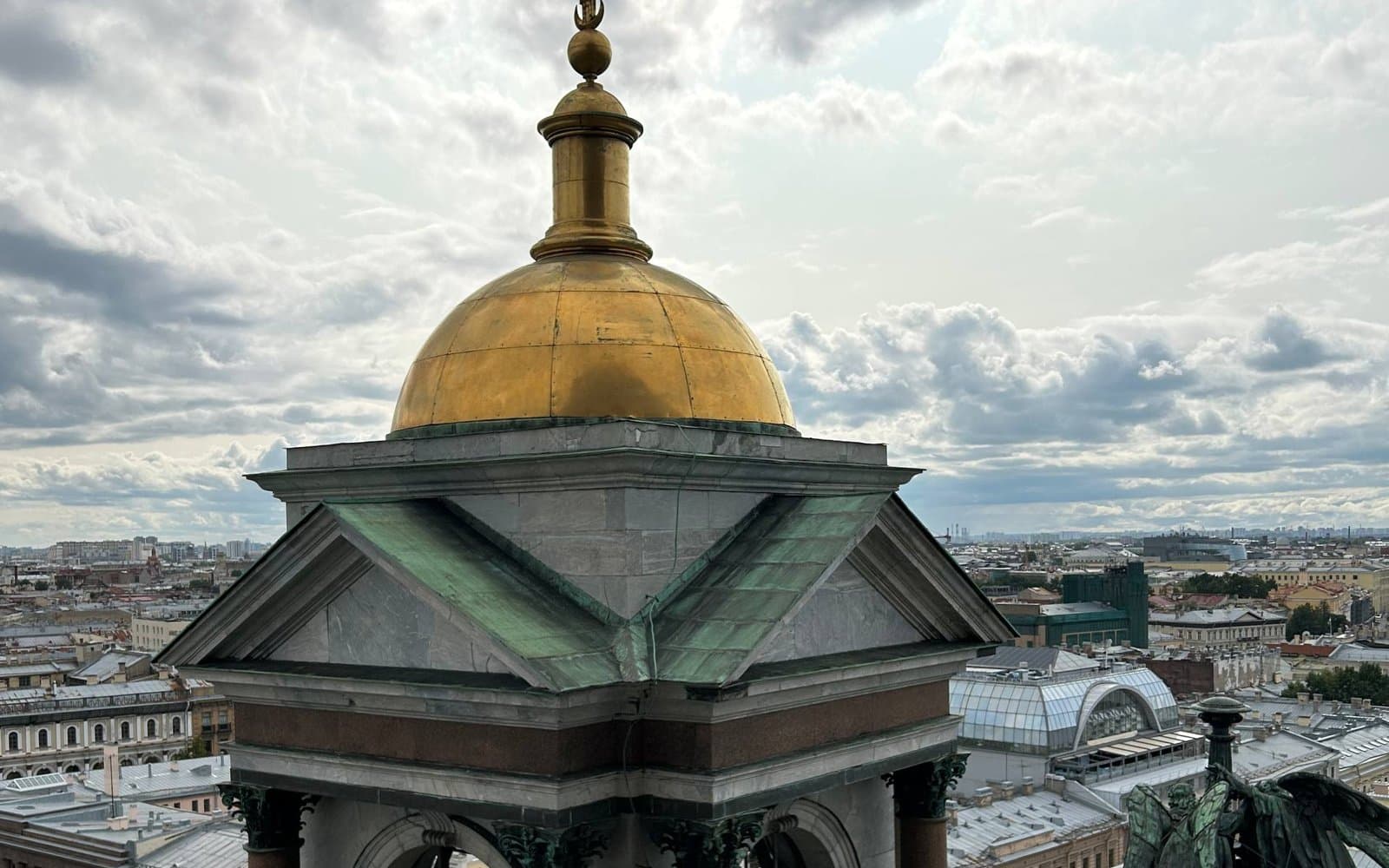
The colonnade is the circular open gallery outside, around the drum of the dome, roughly forty-three metres above the ground. From up there you see the whole historic centre. That is a second ticket, and the stair entrance is separate — from the side of the building, not through the main portico.
You can buy both, but they are two purchases. If time is short and you have to choose, take the colonnade on a clear day: interiors on a comparable scale exist elsewhere in the city, a 360-degree view of the centre does not.
262 steps, and who will struggle
A spiral staircase leads up — more than two hundred and sixty steps. There is no lift and there never will be: this is a mid-nineteenth-century structure.
The climb is uneven. The first section is a wide ceremonial staircase; after that a narrow metal spiral begins, too tight for two people to pass. There is a landing halfway up where you can catch your breath, and almost everyone uses it.
Who will find it hard: anyone with bad knees, anyone short of breath, and anyone uncomfortable in confined spaces — the narrow section is fairly long. Who cannot do it at all: wheelchair users and anyone with a pram. There is nowhere to leave a pram at the bottom. A child who walks confidently can manage; carrying one up all 262 steps is another matter.
What you can see
The gallery is circular, so you walk right around the dome and see the city from all four sides. That is unusual — most Saint Petersburg viewpoints give you one sector.
North — the Admiralty and its gilded spire, behind it Palace Square with the Alexander Column and the roof of the Winter Palace, then the Neva and the Peter and Paul Fortress.
West — New Holland, the Galley Harbour, and on a clear day the needle of the Lakhta Center on the horizon.
South — the Mariinsky Palace and the Blue Bridge over the Moika, which is the widest bridge in the city and so wide that most people cross it without noticing it is a bridge at all.
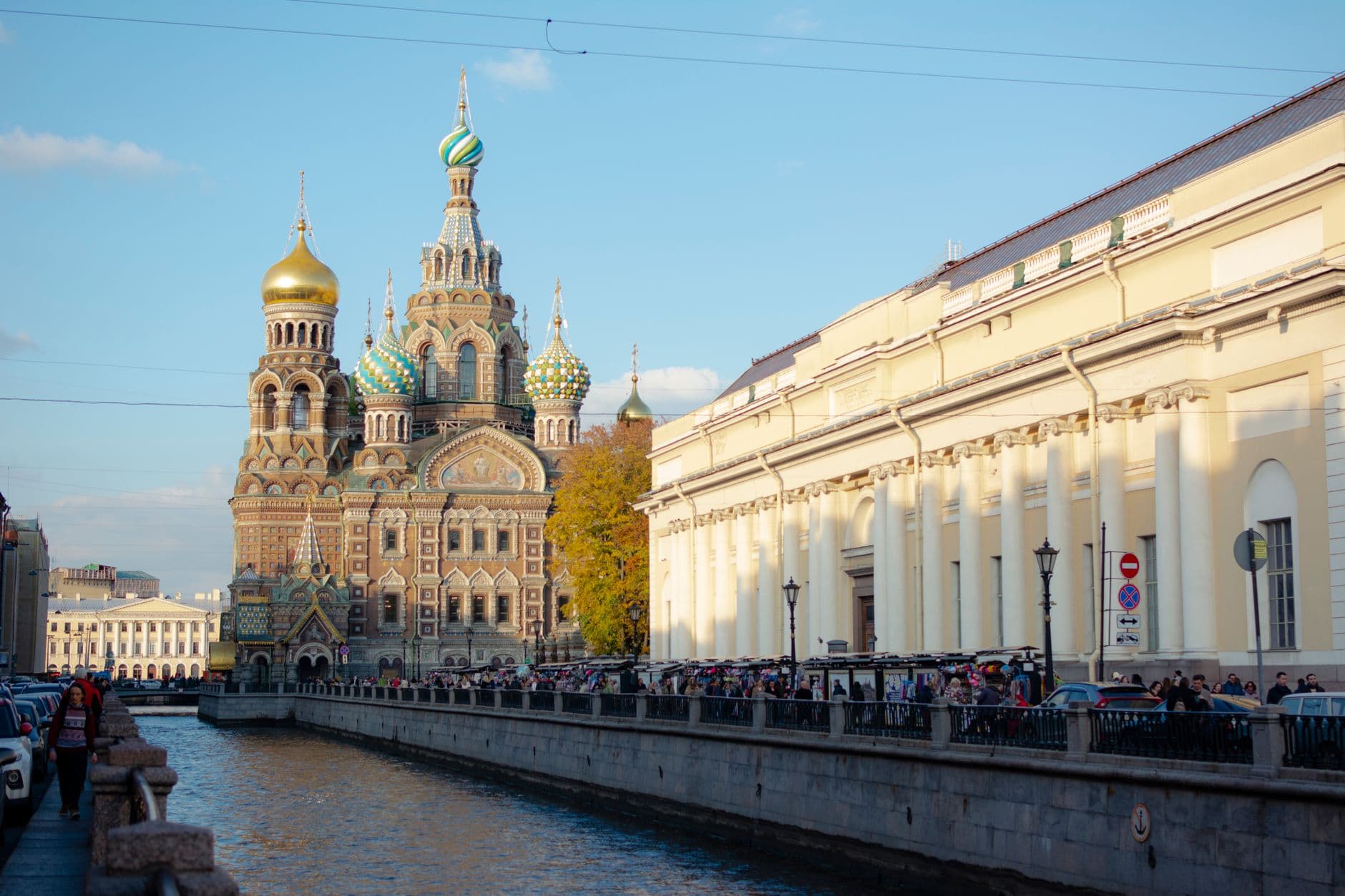
East — the rooftops of the centre, the domes of the Church of the Savior on Spilled Blood in the distance, and the famously even skyline that makes the city recognisable from above.
When to go
Light decides everything here. At midday the city looks flat from above: the sun is vertical, shadows disappear, the roofs merge into a grey field. Towards sunset the relief comes back, the spires catch fire and the Neva turns colour.
In summer, during the White Nights, the colonnade stays open later than usual, and an evening climb is the best use of this ticket. Exact hours change from year to year and with the weather, so check the schedule for the day you are going rather than trusting last year's article.
In winter it is noticeably colder at the top — you are standing on an open, exposed gallery forty metres up. Expect a few degrees' difference, more with wind. In exchange, winter air is clearer and you see further.
In strong wind, ice or thunderstorms the colonnade closes. That decision is made on the day, so in bad weather it is worth checking before you set out.
Why rain beats sunshine up there
This is the most underrated piece of advice about the colonnade. On an overcast day, or in light rain, almost nobody climbs it — the queue disappears and you have the gallery more or less to yourself.
And the view is better than in clear weather. Wet roofs reflect the light and the city turns graphic instead of grey: the tin sheeting shines, the domes darken, and low cloud moves past at eye level — you are inside the weather rather than under it. Saint Petersburg in rain also looks like itself; there are not many sunny days here.
One caveat: drizzle yes, thunderstorm and gale no — in that weather the gallery simply closes. The deciding factor is wind, not water.
Practical note: bring something to wipe your lens. On an open gallery the drops come at you from below and sideways, not just from above. An umbrella is useless up there — it turns inside out.
The queue
The queue here works differently from a museum. It forms on the staircase rather than at the ticket desk: the narrow spiral lets people up in batches, and when the gallery gets crowded the flow at the bottom is held back.
The practical consequence: the wait is longest not when there are many people at the entrance, but when there are many people at the top who are in no hurry to come down. The peak is weekend afternoons and White Nights evenings.
The emptiest slot is the first hour after opening. The difference against the afternoon peak can be an hour of waiting.
What to bring
Shoes with grip — the steps are metal and they get damp. A windproof layer, even if it is warm at street level. A strap for your phone or camera: it is windy up there and there are people below.
Leave the tripod. There is nowhere to set it up on a narrow gallery and security will ask you to put it away. Handheld shooting at forty metres in evening light is perfectly workable if you raise the ISO and brace against the parapet.
What is directly below: the Astoria and endless weddings
From the southern side of the gallery you see the whole of St Isaac's Square, and two things on it are worth knowing about.
The Astoria is the large building on the corner of Bolshaya Morskaya, facing the square. The hotel was built in 1912 to a design by Fyodor Lidval and has been one of the best-known addresses in the city ever since; the building next to it is the Angleterre. There is no particular reason to walk down for a closer look, but from above you understand how the square is assembled — cathedral, palace, hotel and monument in one frame.
Weddings. St Isaac's Square and the garden beside the cathedral are among the most heavily used wedding-photo spots in the city. On any warm-season weekend you will see at least one couple from above, and more often three or four in succession, taking turns at the same steps.
For your own photographs that is useful to know: if you want the square without people in it, come in the first hour after opening — the weddings start later.
Getting there
The cathedral stands on St Isaac's Square. The nearest metro is Admiralteyskaya, ten minutes away on foot along Malaya Morskaya. It is the only station within easy walking distance, and its exit is almost always crowded — the station is deep, with a long escalator.
Alternatives are Sadovaya, Sennaya Ploshchad or Spasskaya: about twenty minutes on foot, but the walk follows the Moika embankment and is pleasant in itself.
In short
- One ticket for the cathedral, another for the colonnade — two desks, two entrances.
- More than 260 steps, no lift, impossible with a pram.
- The view is a full circle, not one sector.
- Best times: the first hour after opening, sunset, or an overcast day.
- In light rain it is empty up there and better looking than in sun; in a storm it is closed.
- It can close on the day in bad weather — check before you go.