
What makes the Bronze Horseman Russia's most iconic monument?
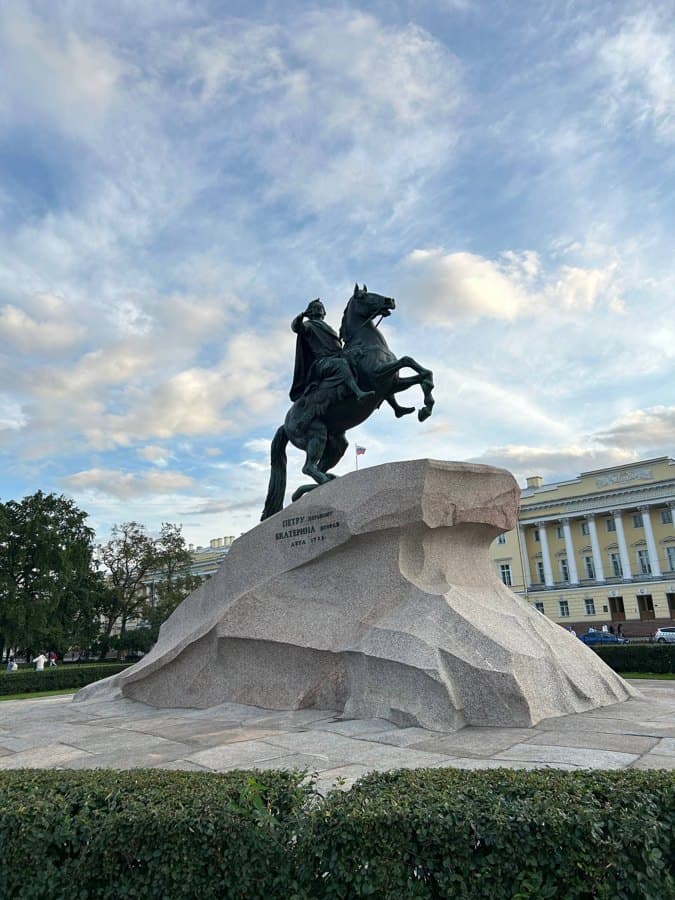
The Bronze Horseman stands as Russia's most recognizable monument because it captures Peter the Great's transformative vision in a single dramatic sculpture. Unveiled in 1782 by Catherine the Great, this equestrian statue weighs approximately 8 tons and rests on a 1,500-ton granite pedestal known as the Thunder Stone. The monument's dynamic pose—Peter on a rearing horse trampling a serpent—symbolizes Russia's victory over its enemies and the triumph of civilization over chaos.
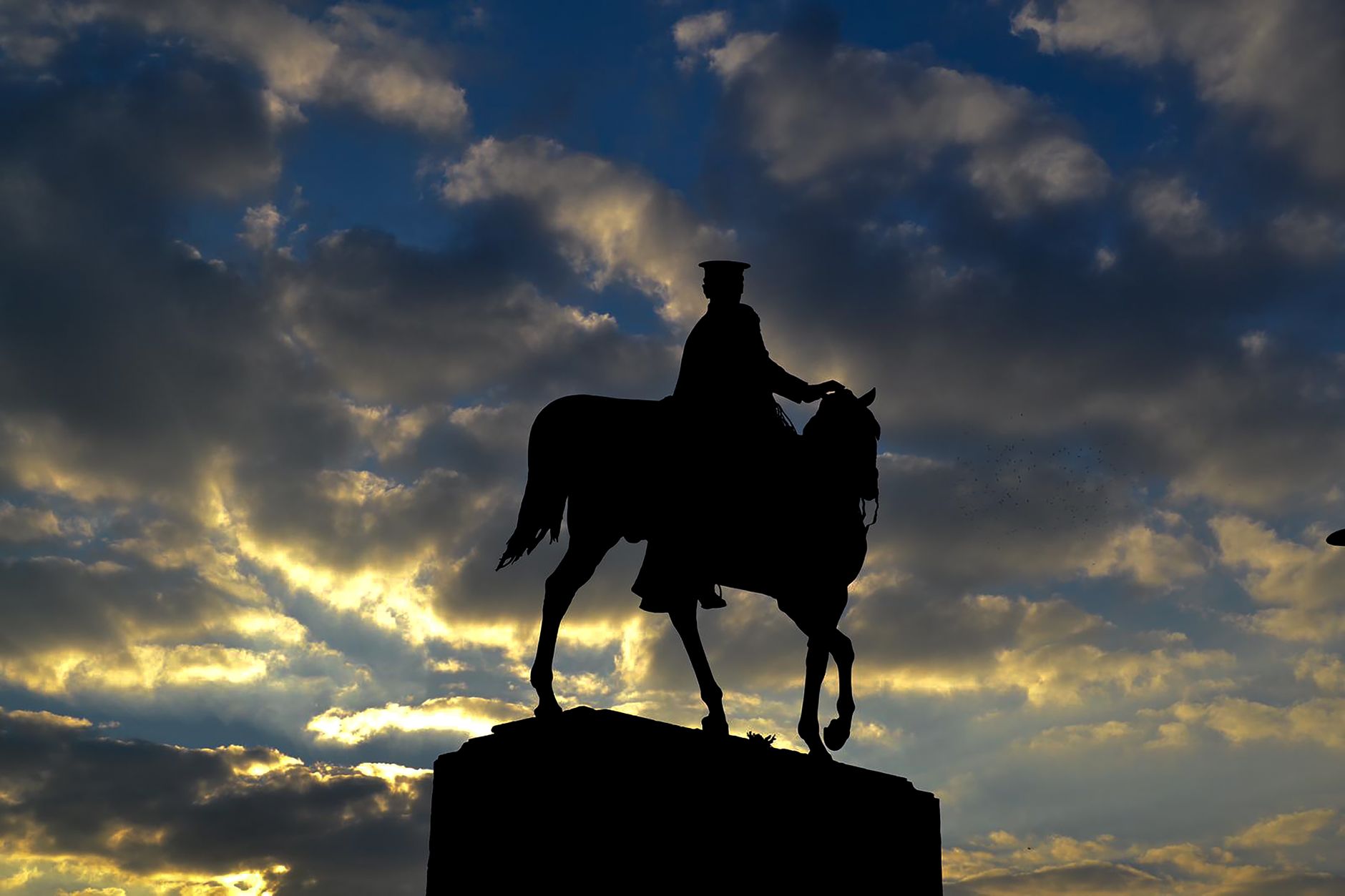
The Bronze Horseman emerges dramatically from Senate Square, particularly striking when fog rolls in from the Neva River. The statue's placement facing the Neva emphasizes Peter's role in founding Saint Petersburg in 1703 and opening Russia to European maritime trade. The State Russian Museum notes that sculptor Étienne Maurice Falconet spent twelve years perfecting the monument, with Marie-Anne Collot creating Peter's face at just eighteen years old.
The inscription on the pedestal reads simply "PETRO primo CATHARINA secunda MDCCLXXXII" in Latin on one side and "Петру перьвому Екатерина вторая, лѣта 1782" in Russian on the other, translating to "To Peter the First from Catherine the Second, 1782." This dedication connects two of Russia's greatest rulers across five decades. The monument stands 5.35 meters tall without the pedestal, rising to over 10 meters total when measured from Senate Square's cobblestones.
How did they move the Thunder Stone to Senate Square?
Moving the Thunder Stone from Lakhta, 6 kilometers away, required one of history's greatest engineering feats. The 1,500-ton granite boulder traveled on bronze spheres rolling between two parallel grooves, pulled by 400 men over nine months in 1769-1770. This achievement made international headlines and demonstrated Russian technical prowess to skeptical European powers.
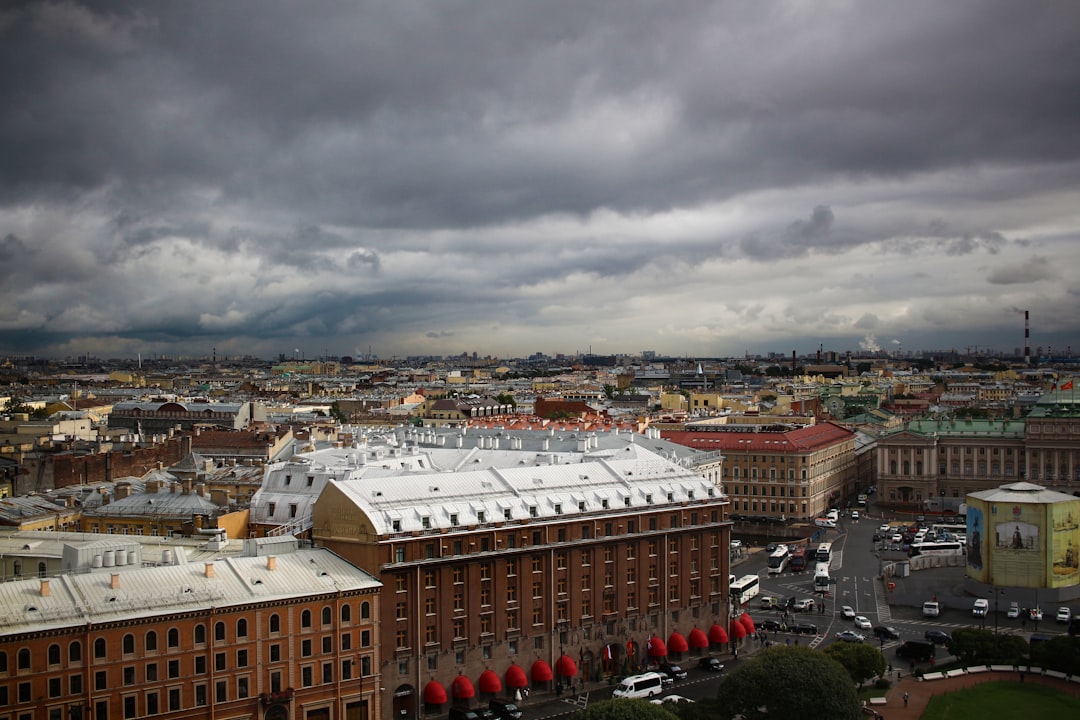
Marine engineer Count Marinos Carburis designed the transport system after Falconet discovered the massive rock in a Finnish swamp. Workers carved the stone during transport, reducing its weight from an estimated 2,000 tons. Saint Petersburg State University historians document that Catherine the Great personally visited the construction site multiple times, understanding the monument's propaganda value for her reign.
The Thunder Stone's journey became so famous that Catherine commissioned a commemorative medal showing the rock on its transport mechanism with the inscription "Daring equals strength." The bronze spheres—each 13.5 centimeters in diameter—are now displayed at the Mining Museum on Vasilyevsky Island. The pedestal itself required another year to position and secure, with workers using a complex system of levers and wooden scaffolding.
What is the legend of the Bronze Horseman curse?
The Bronze Horseman legend, immortalized in Alexander Pushkin's 1833 narrative poem, warns that Russia will stand undefeated as long as the statue remains in Senate Square. During the 1941 Siege of Leningrad, Soviet authorities refused German demands to remove the monument, instead building a protective wooden shelter around it. This decision reinforced the legend's power in Russian cultural consciousness.
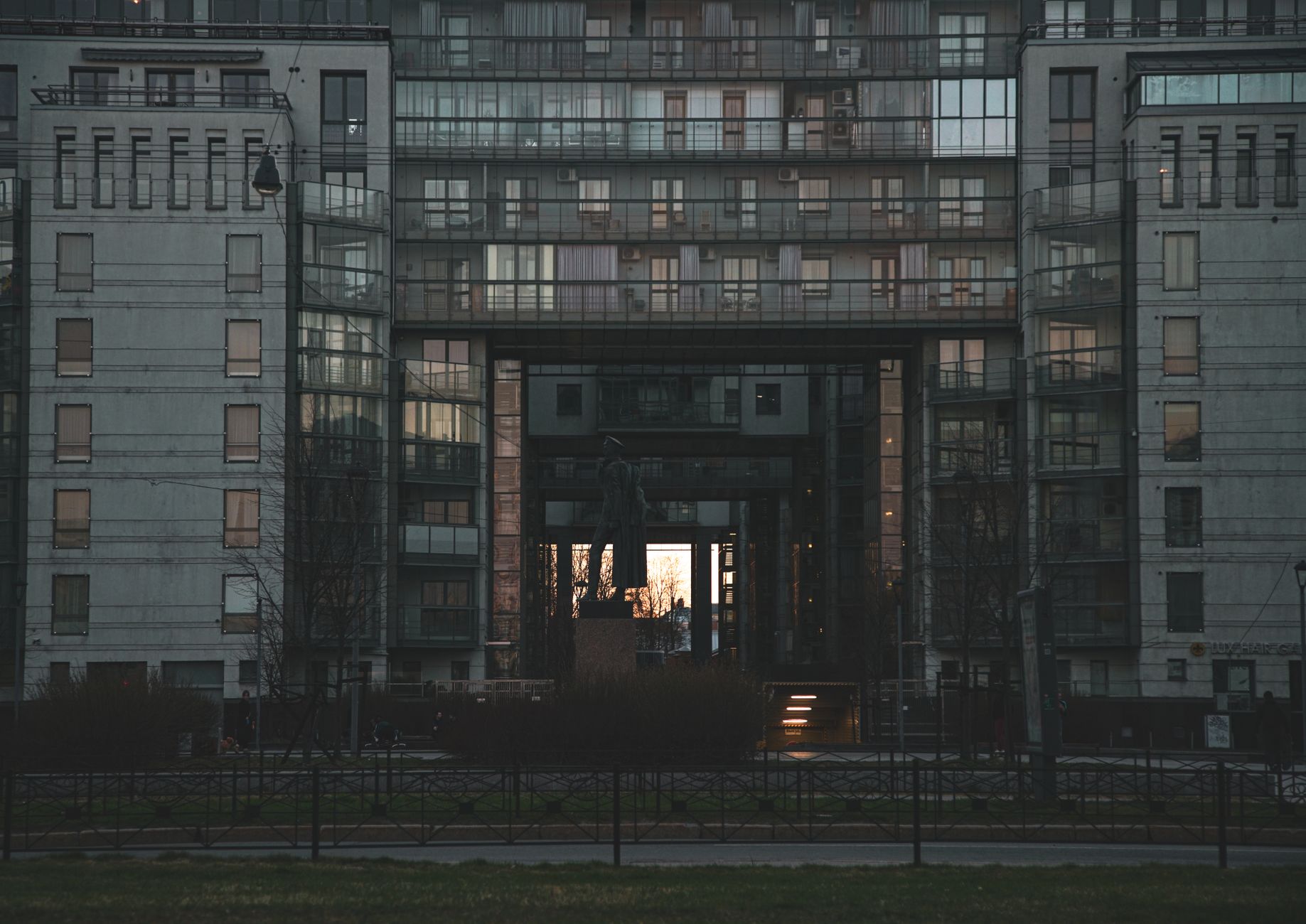
Pushkin's poem tells of Evgeny, a poor clerk driven mad after the 1824 flood destroys his fiancée's home. In his madness, Evgeny shakes his fist at the Bronze Horseman, and the statue comes alive, chasing him through Saint Petersburg's streets. Many Russians still touch the horse's rear hoof for good luck, a tradition not mentioned in guidebooks but widely practiced by locals.
The curse legend intensified during World War II when rumors spread that moving the statue would doom the city. The State Museum of the History of Saint Petersburg archives show that military engineers considered evacuation but ultimately deemed the 8-ton statue too difficult to transport under siege conditions. The wooden shelter remained until 1945, and slight discoloration on the bronze remains visible where moisture collected during those years.
Another superstition claims that students who walk around the monument three times before exams will fail. Saint Petersburg State University students often carefully avoid circling the statue, though many laugh about the tradition. The legend has evolved to include various romantic predictions—couples who kiss in front of the monument supposedly stay together forever, though this appears to be a recent invention for tourists.
Where exactly is the Bronze Horseman and how do I get there?
The Bronze Horseman stands in Senate Square (Senatskaya Ploshchad), directly facing the Neva River between the Admiralty building and Saint Isaac's Cathedral. The nearest metro station is Admiralteyskaya on the violet line, approximately 600 meters away—a ten-minute walk along Malaya Morskaya Street. Alternatively, Nevsky Prospekt station is 1.2 kilometers away, offering a scenic route past the Admiralty's golden spire.
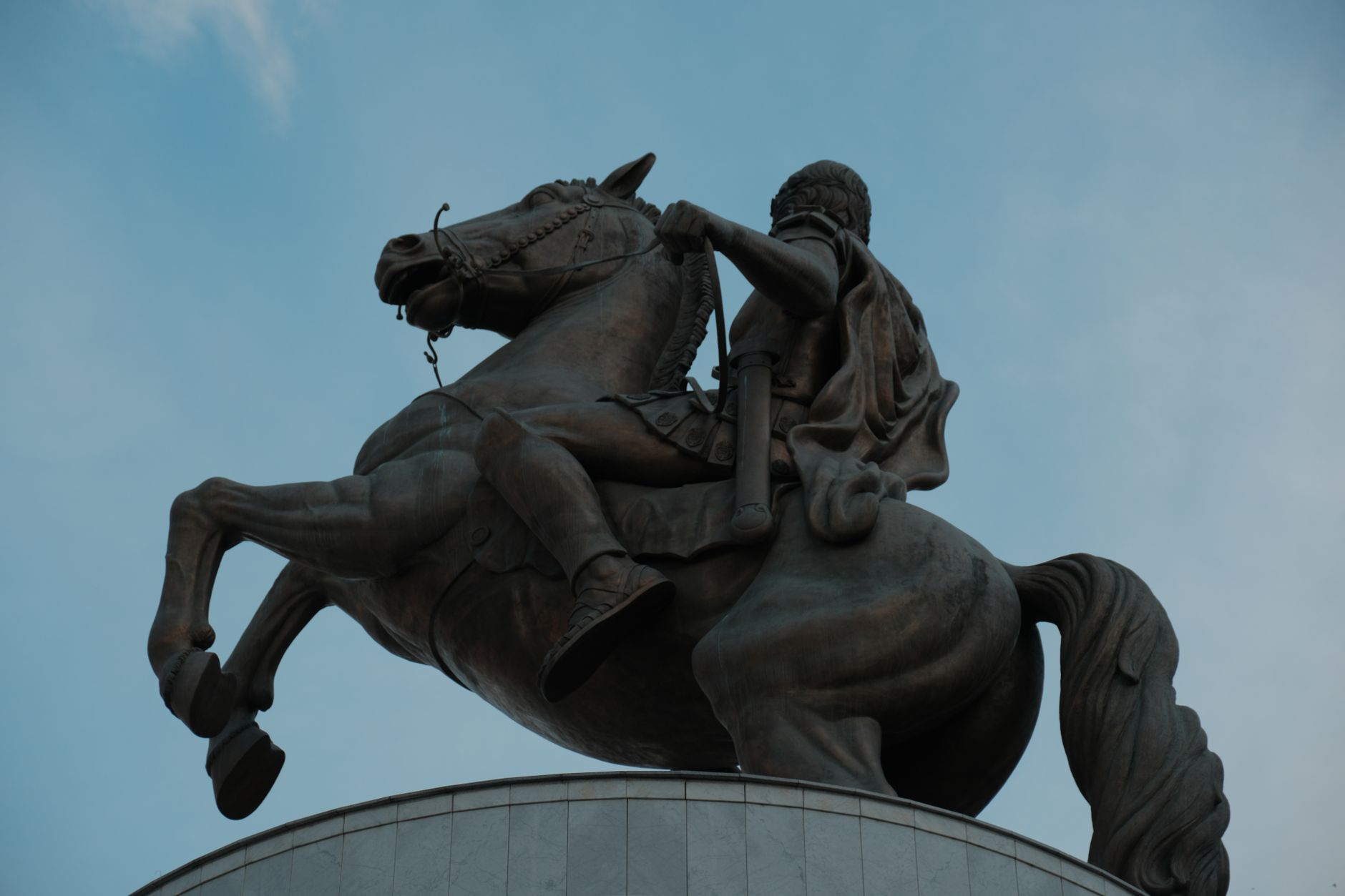
Senate Square itself is a free public space open 24 hours daily, making sunrise and sunset visits particularly atmospheric. From Admiralteyskaya metro, exit toward Kirpichny Lane and walk northwest; Saint Isaac's golden dome appears first, then the Bronze Horseman comes into view as the river approaches. Bus routes 3, 22, and 27 stop at Senatskaya Ploshchad, while trolleybus 5 and 22 also serve the area.
The monument sits approximately 50 meters from the Neva embankment, with the Senate and Synod buildings forming the square's eastern boundary. During White Nights in June, the extended daylight allows photography at 11 PM with perfect natural lighting. Winter visits require caution—the square's cobblestones become extremely slippery, and the ice near the pedestal poses hazards for visitors.
| Access Method | Distance | Walking Time | Notes |
|---|---|---|---|
| Admiralteyskaya Metro | 600 meters | 10 minutes | Closest station, opened 2011 |
| Nevsky Prospekt Metro | 1.2 km | 15 minutes | Scenic route via Admiralty |
| Bus 3, 22, 27 | Direct stop | Varies | Senatskaya Ploshchad stop |
| From Hermitage | 800 meters | 12 minutes | Walk along Palace Embankment |
Short-term rentals in Saint Petersburg
Лофт у реки Мойки
8 000 ₽ per night · ≈ $96 · ★ 4.82
3 nights · 24 000 ₽ total · ≈ $287
See optionsat the Bank of Russia rate on 17.10.2026 · powered by tutkakdoma
What are the best times to photograph the Bronze Horseman?
Early morning between 6-8 AM offers the best lighting and fewest crowds for photography, particularly from May through September. The rising sun behind the Admiralty creates dramatic backlighting, while the Neva's surface reflects golden light onto the bronze. Arriving at 6:30 AM provides opportunities to photograph the square with minimal crowds before tour groups appear.
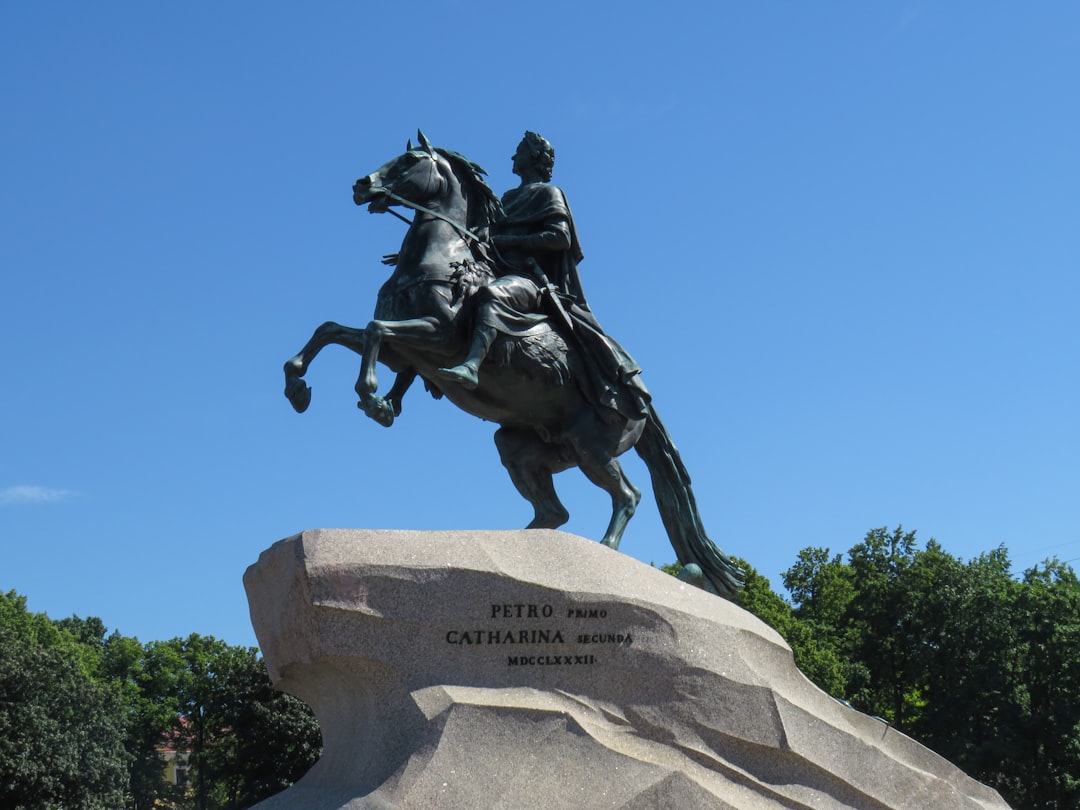
White Nights season (late May to mid-July) provides extended "golden hour" lighting that lasts until nearly midnight. The monument's western orientation means sunset photography works best from the Neva embankment side, capturing Peter's profile against the river. However, summer also brings peak tourist numbers—expect substantial crowds around the statue between 10 AM and 6 PM during July and August.
Winter photography requires different strategies. December through February offers stark beauty with potential snow coverage, but daylight only lasts from 10 AM to 4 PM. The monument during a January snowstorm creates an almost supernatural atmosphere around Peter's outstretched arm, with swirling flakes adding drama. The bronze develops a darker patina in winter cold, making the statue appear more dramatic against white snow.
Professional photographers recommend the embankment stairs for elevated angles showing both the monument and Saint Isaac's Cathedral dome in one frame. The official Visit Petersburg tourism website suggests avoiding midday harsh shadows, particularly in summer when the sun reaches its highest point around 1 PM. Drone photography is prohibited in Senate Square due to its proximity to government buildings.
What other Peter the Great monuments exist in Saint Petersburg?
Saint Petersburg contains several other Peter the Great monuments beyond the Bronze Horseman, each representing different aspects of the tsar's legacy. The most significant is Peter the Great statue by Mikhail Shemiakin near the Peter and Paul Fortress, installed in 1991. This controversial bronze shows Peter with an elongated, almost grotesque body—2.1 meters tall with a disproportionately small head—meant to capture his contradictory nature as both visionary and tyrant.
Inside the Peter and Paul Cathedral, Peter's tomb remains a pilgrimage site where Russians leave flowers daily. The cathedral, accessible via Gorkovskaya metro station, houses the remains of nearly all Romanov rulers. The Peter and Paul Fortress Museum reports that over 1.5 million visitors annually pay respects at Peter's white marble sarcophagus, which sits prominently to the right of the cathedral entrance.
In front of the Mikhailovsky (St Michael's) Castle stands the equestrian monument to Peter I by Bartolomeo Carlo Rastrelli, unveiled in 1800. This statue bears the inscription "To the Great-Grandfather from the Great-Grandson"—a deliberate counterpoint to Catherine the Great's dedication on the Bronze Horseman, emphasizing dynastic continuity under Emperor Paul I.
Peterhof Palace includes multiple Peter monuments, most notably the bronze statue in the Lower Park showing the tsar in military uniform. The Peterhof State Museum explains that this 1884 statue by Mark Antokolsky emphasizes Peter's role as military reformer rather than imperial founder. Reaching Peterhof requires a hydrofoil ride from the Hermitage embankment or a marshrutka minibus from Avtovo metro station—check current prices and schedules before traveling.