The classic November mistake in St Petersburg looks like this: you sleep in, have a slow breakfast, head out at one in the afternoon — and by half past three it is already dusk. This city sits at almost 60° north. November is not the month when things close; October was. November is the month when daylight, not opening hours, decides what you can do.
How much daylight is left
Calculated for the city centre (59.94° N, 30.31° E), Moscow time:
- 1 November: sunrise 08:18, sunset 17:06 — 8 hours 47 minutes of daylight.
- 15 November: sunrise 08:53, sunset 16:32 — 7 hours 39 minutes.
- 30 November: sunrise 09:28, sunset 16:06 — 6 hours 38 minutes.
The city loses 2 hours 9 minutes of daylight over the month — more than in any other month of the year. Civil twilight adds roughly fifty minutes on each side: on 30 November it runs from 08:37 to 16:57, and that low, slanted light is often better for photographs than midday.
The planning rule follows directly: everything outdoors before three, everything indoors after. Most visitors do it backwards, start with a museum and step outside with two hours of light left. Also budget extra transit time — wet pavements and sleet slow walking noticeably, so a route that took an hour in summer takes ninety minutes now.
Bridges: the last opening is 30 November
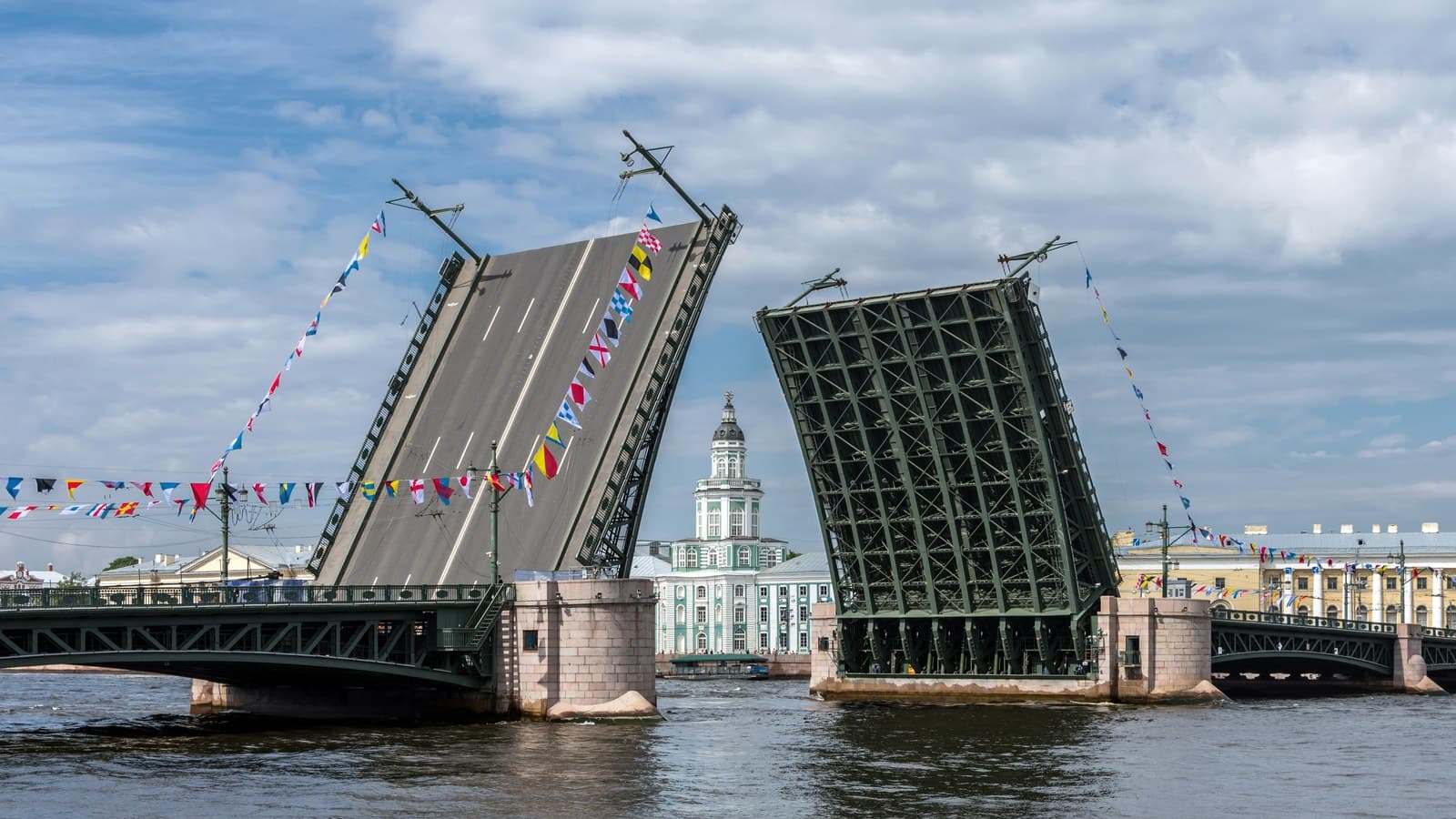
This is the date to build a trip around. The city bridge authority, SPb GBU Mostotrest, publishes the navigation period officially: for bridges over the Neva, the Bolshaya Neva and the Malaya Neva it runs from 10 April to 30 November. After that there are no scheduled openings until spring.
Three bridges over the Bolshaya Nevka — Sampsonievsky, Grenadersky and Kantemirovsky — stop even earlier, on 15 November, and they only open on request filed two days in advance, between 1:30 and 4:30.
Two catches. There is no bridge opening on the night of 4–5 November, because Mostotrest does not raise bridges on public holidays. And openings can be cancelled by weather: the official wording lists sustained sub-zero temperatures, strong wind and a serious rise in water level. In late November all three are realistic. The earliest bridge is Palace Bridge: traffic stops at 1:10, the bridge closes again at 2:50, with a second opening from 3:10 to 4:55. Trinity Bridge goes at 1:20, Liteyny at 1:40, Alexander Nevsky Bridge last at 2:20. Bridges are sometimes lowered ahead of schedule once all vessels have passed, and the second opening may be cancelled outright.
Water, fountains and the suburbs
Operators do not publish a final sailing date for hydrofoils and canal boats — only a vague "navigation period" that ends with the weather. By November the Peterhof hydrofoil line is normally already laid up. Do not put a boat trip in your plan as a fixed item.
The Peterhof fountains are either off by November or living their last days. The summer schedule for the Lower Park runs 25 April to 18 October. In 2025 the museum officially extended the fountains to 4 November, with the park open 9:00–18:00, fountains 10:00–18:00, and free entry to the Alexandria and Oranienbaum parks. For 2026 the museum said only "until early November" and had not published an exact date when this text was written — check the museum site before you travel.
A useful detail from the museum itself: night frosts down to −5 °C do not threaten the fountains, because the water supply system and pipes tolerate low temperatures. They are switched off when the cold becomes sustained, not after one cold night. Meanwhile the palaces stay open all winter, while everything tied to water and open air shuts down — and the suburban parks become free and almost empty, which is the best reason to go.
Viewpoints that actually work
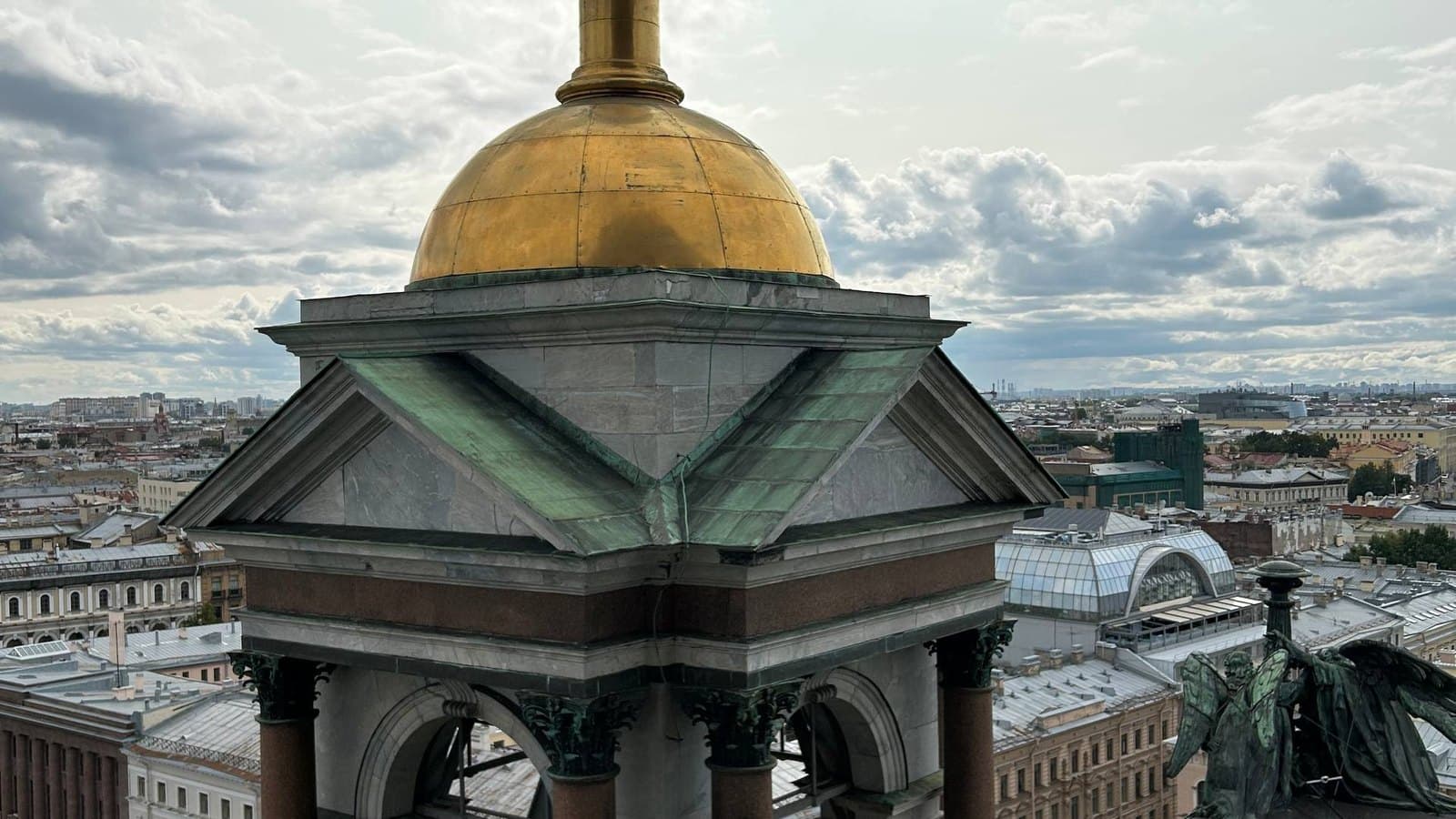
Evening access to the St Isaac's Cathedral colonnade, and the evening programmes inside St Isaac's and the Church of the Savior on Spilled Blood, run only from 1 May to 30 September. In November they do not exist.
What does work: the colonnade in daytime, 10:00 to 18:00. From 1 October to 30 April it has a closing day — the third Wednesday of the month. The cathedral itself and the Savior on Spilled Blood are open 10:00–18:00, ticket offices until 17:30, closed on Wednesdays. The chapel museum closes on the second Wednesday in winter.
The overlooked part of the schedule: during school holidays (other than summer) and on public holidays except 1 January, the museum's sites work with no days off. Russian autumn school holidays and 4 November fall exactly there — so a "closed" Wednesday may well be open.
What to wear
November here is not about frost. Temperatures hover near zero, but damp air and wind off the gulf make anyone dressed "by the thermometer" cold within forty minutes.
Footwear matters most: waterproof rather than insulated, with real tread, because you will cross water, wet snow and glaze ice several times in one day. Add a windproof outer layer — a down jacket without wind protection is useless on the embankments. A hat and gloves are already necessary, and a compact umbrella beats a large one, since sleet arrives sideways anyway.
What November does better than summer
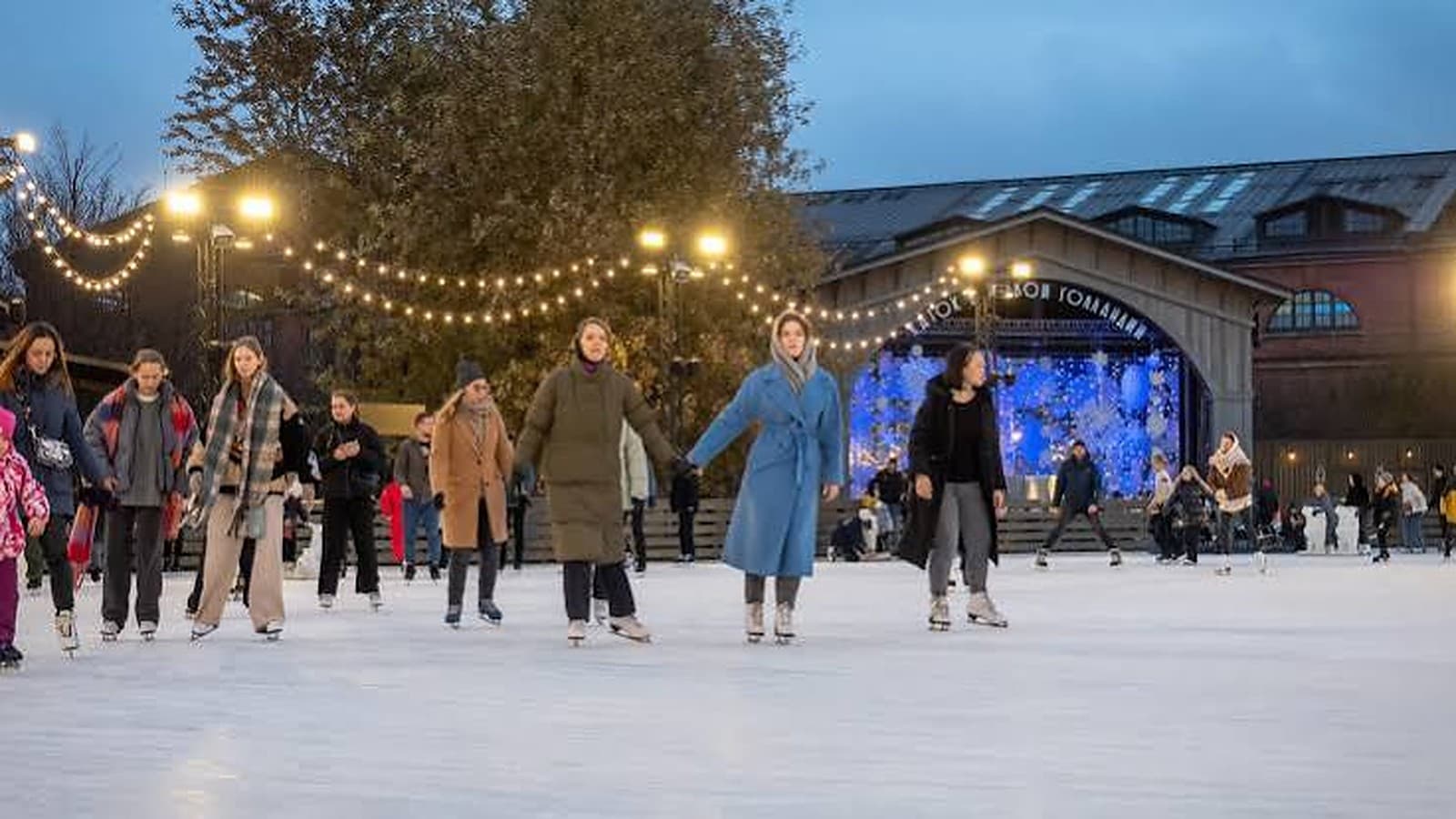
Low season is the point. The Hermitage and the Russian Museum on a November weekday are visibly emptier than in July, queues are shorter and accommodation is cheaper. Build the day around museums with late opening hours — in a month that goes dark at four, extended hours stop being a bonus and become the backbone of the itinerary. And by the end of November the city starts flooding its ice rinks and switching on winter lighting, so the first ice of the season is a November event.
In short: plan outdoors before three and indoors after. Bridges open until 30 November, the Bolshaya Nevka three until 15 November, none on the night of 4–5 November. Peterhof fountains survive the first days of the month at best. The St Isaac's colonnade runs 10:00–18:00 with the third Wednesday off. And buy waterproof boots — that is the one economy that reliably ruins a November trip.