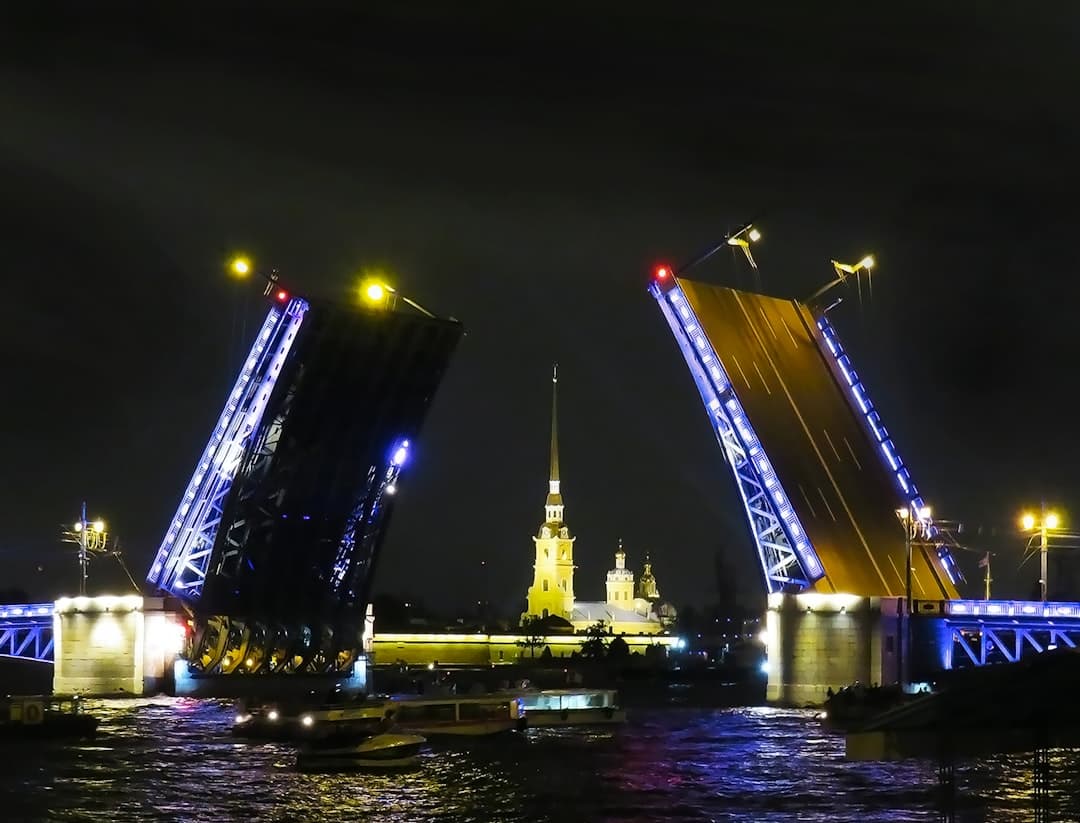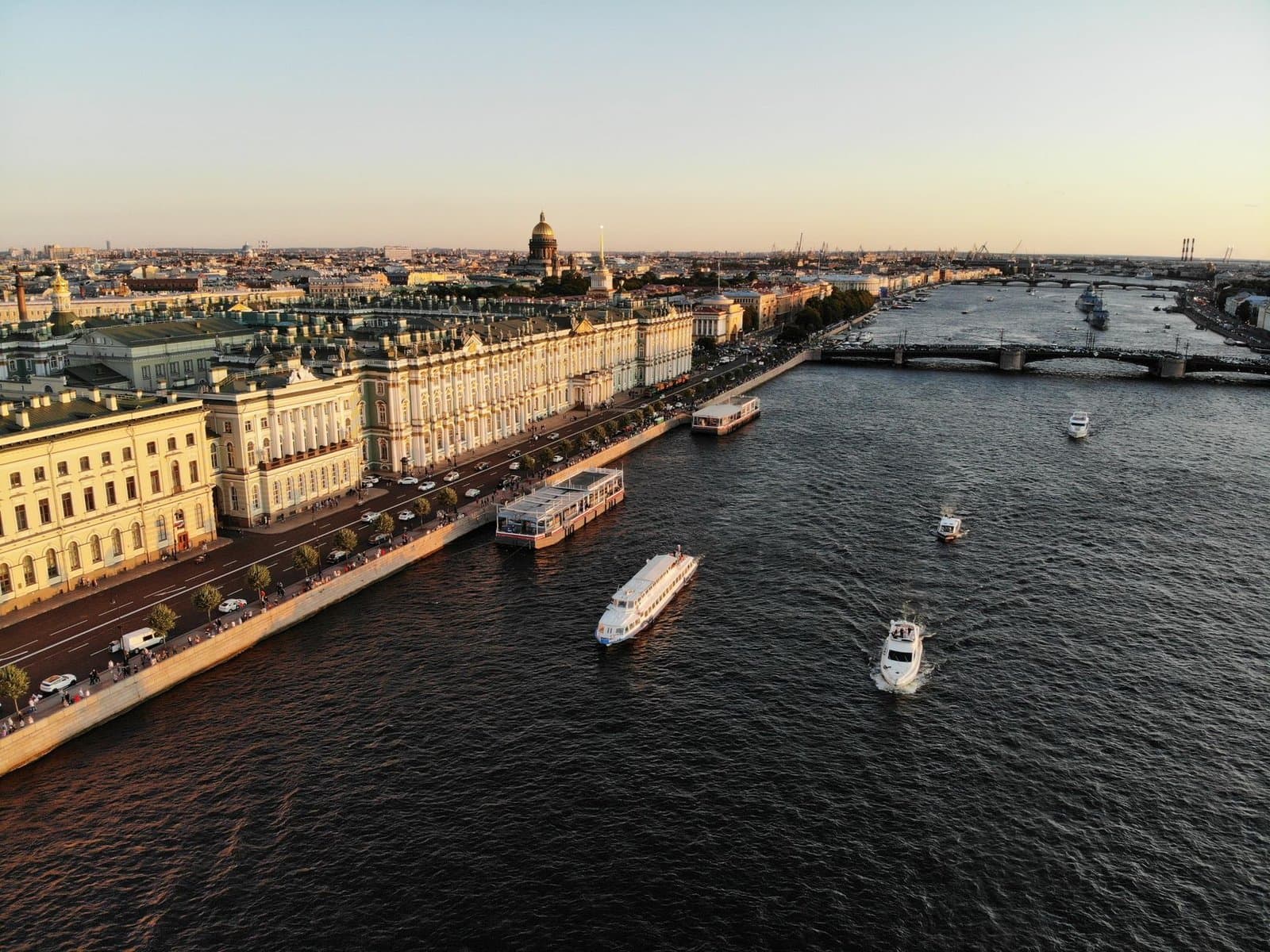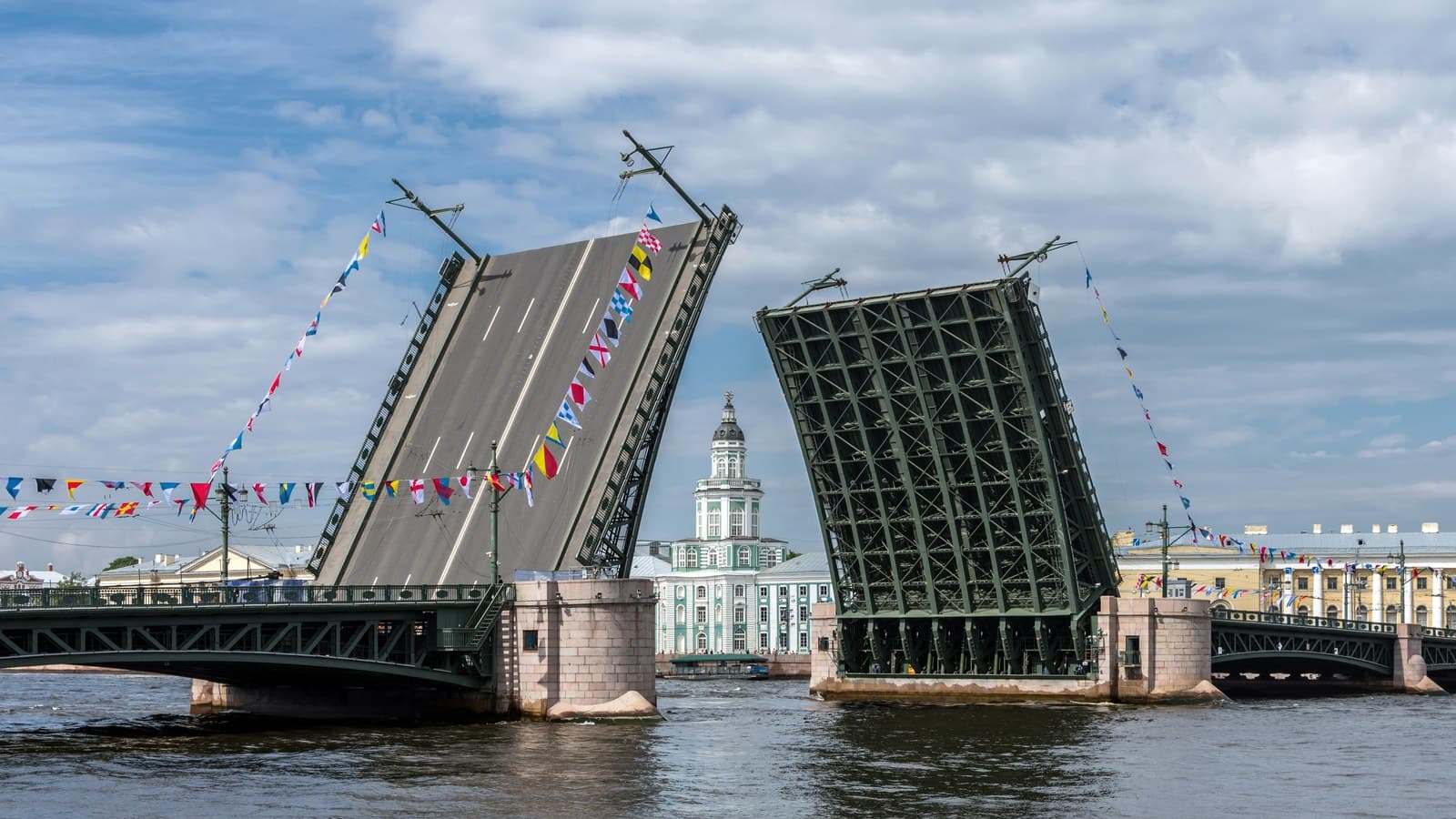
The bridges are raised for ships, not for tourists: navigation on the Neva runs from 10 April to 30 November, and up to fifty vessels pass beneath the raised spans in a single night.
Mostotrest, the city bridge authority, operates eighteen opening bridges; twelve of them open on a regular schedule. Here is what the 2026 timetable actually means if you are on the wrong bank at two in the morning.
When traffic stops
The times below are when a bridge closes to traffic and when it reopens. In between, it stands raised.
Palace Bridge (Dvortsovy) — 1:10 to 2:50, then 3:10 to 4:55.
Trinity Bridge (Troitsky) — 1:20 to 4:50, in one stretch.
Blagoveshchensky — 1:25 to 2:45, then 3:10 to 5:00.
Liteyny — 1:40 to 4:45.
Bolsheokhtinsky — 2:00 to 5:00.
Alexander Nevsky — 2:20 to 5:10.
Volodarsky — 2:00 to 3:45, then 4:15 to 5:30.
Birzhevoy and Tuchkov — 2:00 to 2:55, then 3:35 to 4:55.
The gaps that matter
The useful part of the timetable is not the openings but the intervals between them. Four bridges are raised twice a night, and in between they carry traffic again.
Palace Bridge is down from 2:50 to 3:10 — twenty minutes.
Blagoveshchensky is down from 2:45 to 3:10 — twenty-five minutes, and the most dependable window in the centre.
Birzhevoy and Tuchkov are down from 2:55 to 3:35 — forty minutes, the longest of all. Both lead to the Petrogradskaya side.
So if you are stranded on Vasilyevsky Island after one in the morning, you do not have to wait until five: Blagoveshchensky comes down around three.
Three bridges that open only on request
Sampsonievsky, Grenadersky and Kantemirovsky, all crossing the Bolshaya Nevka, are raised between 1:30 and 4:30 only if a request is filed two days in advance.
On an ordinary night they are most likely down — but you cannot count on them, because the request comes from a ship operator and is not published.