What are the opening hours and ticket prices for 2026?
The Church of the Savior on Spilled Blood is open Thursday–Tuesday from 10:00 AM to 6:00 PM (ticket offices close at 5:30 PM) and is closed on Wednesdays. From 1 May to 30 September it also runs a separate evening programme from 6:00 PM to 10:30 PM (no guided tours). A standard adult ticket costs 700 rubles (about €7); Russian and Belarusian citizens, students and visitors aged 7–18 pay 300 rubles, ISIC holders 330 rubles, and children under 7 enter free. The summer evening session is a separate 700-ruble ticket.
Wednesday is the weekly day off, so plan your visit for any other day. The church is run by the State Museum-Monument "St Isaac's Cathedral", whose official site publishes the current schedule and prices; confirm them shortly before your trip, as individual sections occasionally close for restoration work.
Buying tickets online through the official museum website saves time during the peak May–September season. On-site ticket offices accept cash rubles and Russian bank cards; most foreign Visa and Mastercard cards issued outside Russia are not accepted at Russian terminals or ATMs, so read our 2026 guide to paying in Saint Petersburg before you arrive. An audio guide costs 300 rubles and is available in ten languages (English, German, Spanish, Italian, French, Chinese, Korean, Japanese, Finnish and Turkish), covering the 7,500 square metres of mosaics inside.
How to reach the church from Nevsky Prospekt and major metro stations?
The Church of the Savior on Spilled Blood stands on Griboyedov Canal Embankment, a 15-minute walk west from Nevsky Prospekt. The nearest metro station is Nevsky Prospekt (blue line) or Gostiny Dvor (green line), both within 800 meters. Walking from either station takes you past the Kazan Cathedral and across the Griboedov Canal bridge.
The walk from Nevsky Prospekt is worth taking because it showcases central Saint Petersburg's architectural progression. Exit Nevsky Prospekt metro station, turn right onto Nevsky Prospekt, then left onto Mikhailovskaya Street past the Grand Hotel Europe. The church's multicolored onion domes become visible as you approach the Russian Museum's Mikhailovsky Garden. Alternatively, several trolleybus and bus routes along Nevsky Prospekt stop near the Griboedov Canal, a short walk from the church.
From Pulkovo Airport, take bus 39 to Moskovskaya metro station, then ride the blue line to Nevsky Prospekt. Total journey time averages 50 minutes. Taxi or ride-hailing from the airport costs roughly 800–1,200 rubles depending on traffic along Moskovsky Prospekt. Pedestrian traffic around the church peaks between 11 AM and 2 PM, so early-morning visits are better for photography.
The assassination site and historical significance of the location
Emperor Alexander II died on this exact spot on March 13, 1881, after a revolutionary threw a bomb at his carriage on the Catherine Canal embankment. His son, Alexander III, commissioned the church's construction in 1883 to memorialize the assassination site. The building's official name references the blood spilled during the attack, and architects preserved a section of the original cobblestone street inside the church where the emperor fell.
The church took 24 years to complete, opening in 1907 under architect Alfred Parland's direction. Unlike most Saint Petersburg churches following Western European baroque and neoclassical styles, this structure deliberately echoes Moscow's Saint Basil's Cathedral with its Russian Revival architecture. The Russian Ministry of Culture classifies it as a federal cultural heritage monument, restricting any external modifications to preserve its historical authenticity.
Inside, a canopy marks the assassination spot with a jasper and topaz inlay. Guides explain how the church's foundation incorporated the original canal embankment stones. The structure remained closed during Soviet years, serving as a warehouse until restoration began in 1970. Full restoration took until 1997, addressing damage from World War II shelling and decades of neglect.
at the Bank of Russia rate on 17.10.2026 · powered by tutkakdoma
Understanding the 7,500 square meters of mosaic artwork
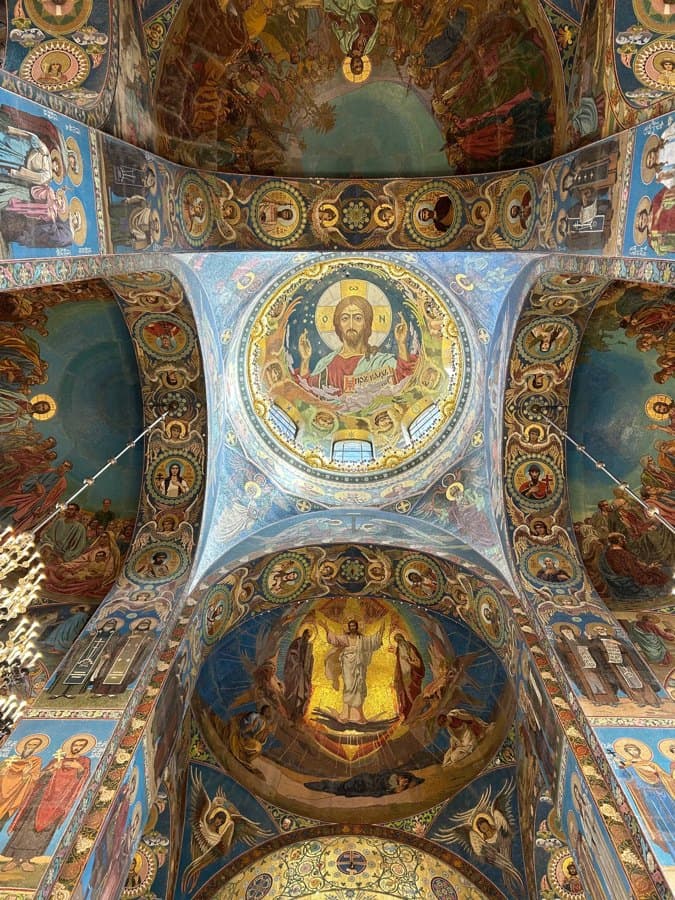
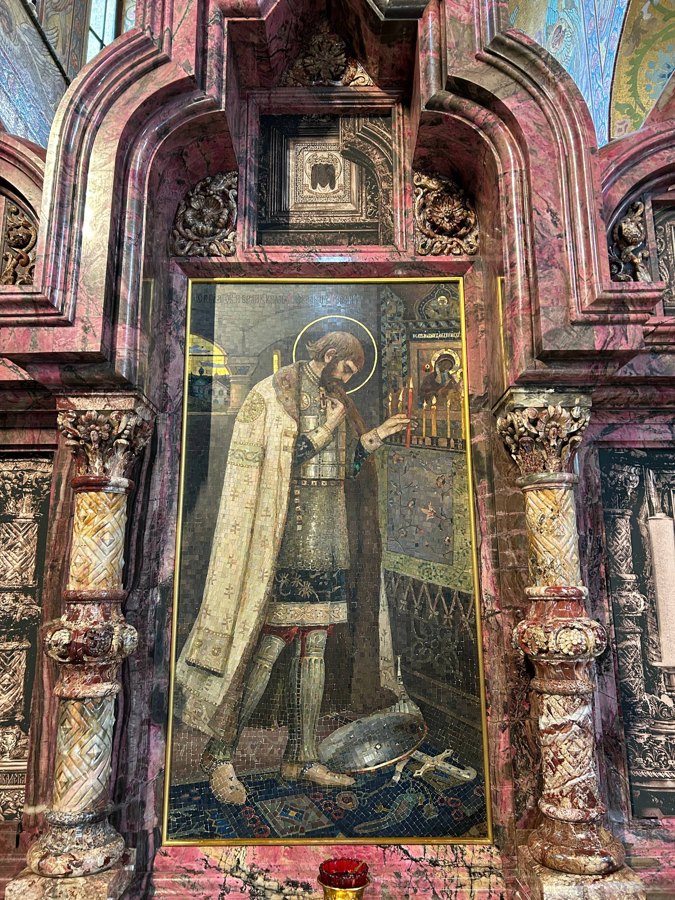
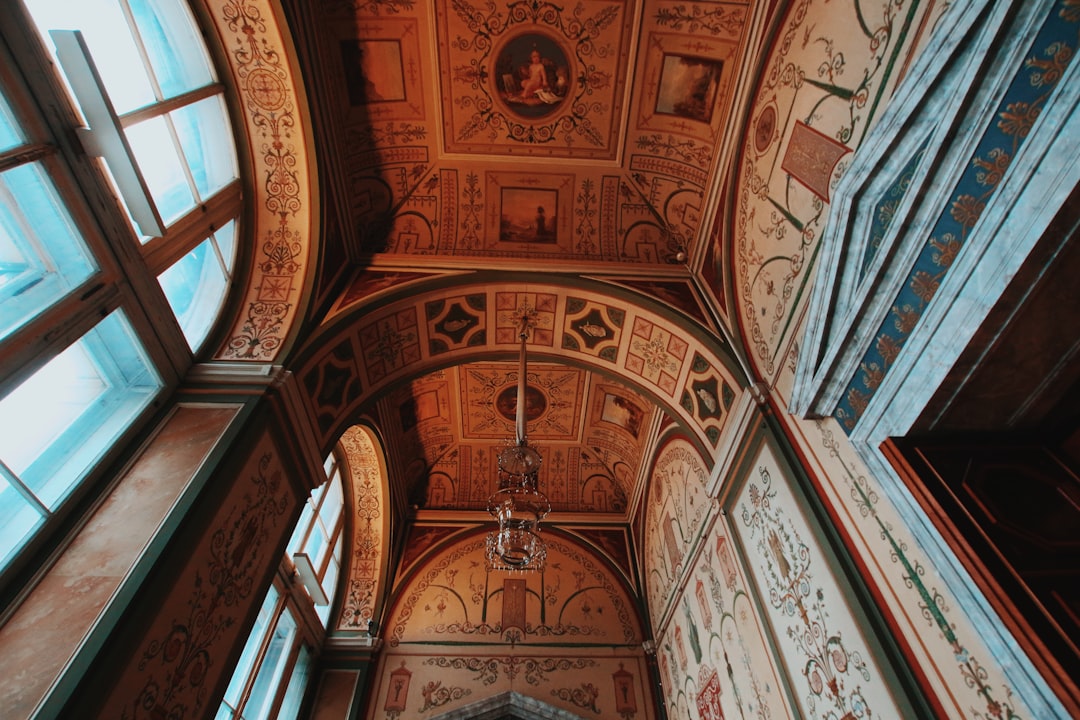
The interior contains over 7,500 square meters of mosaics created by more than 30 Russian artists between 1895 and 1907. Every surface—walls, pillars, vaults, and iconostasis—displays biblical scenes, saints, and ornamental patterns using Italian mosaic techniques adapted for Russian religious themes. The central dome features Christ Pantocrator surrounded by angels, while lower sections depict events from the New Testament.
Production occurred at the Imperial Academy of Arts mosaic workshop, where craftsmen assembled tiny colored glass pieces called tesserae. The scale is striking — every surface is covered in hand-set glass tesserae. The color palette emphasizes gold backgrounds with deep blues, reds, and greens creating three-dimensional effects despite the flat mosaic surface. Notable panels include the Sermon on the Mount, the Transfiguration, and the Crucifixion, each occupying entire wall sections.
The mosaics follow Byzantine iconographic traditions with standardized saint depictions. Artists including Viktor Vasnetsov, Mikhail Nesterov, and Andrei Ryabushkin contributed designs. Natural light enters through narrow windows, illuminating gold-backed mosaics that reflect throughout the space. Photography is permitted without flash, though capturing the full mosaic detail requires multiple visits under different lighting conditions. Afternoon sun through the southern windows creates the best conditions for photographing the iconostasis, roughly between 2 PM and 4 PM.
What makes the architecture unique compared to other Saint Petersburg landmarks?
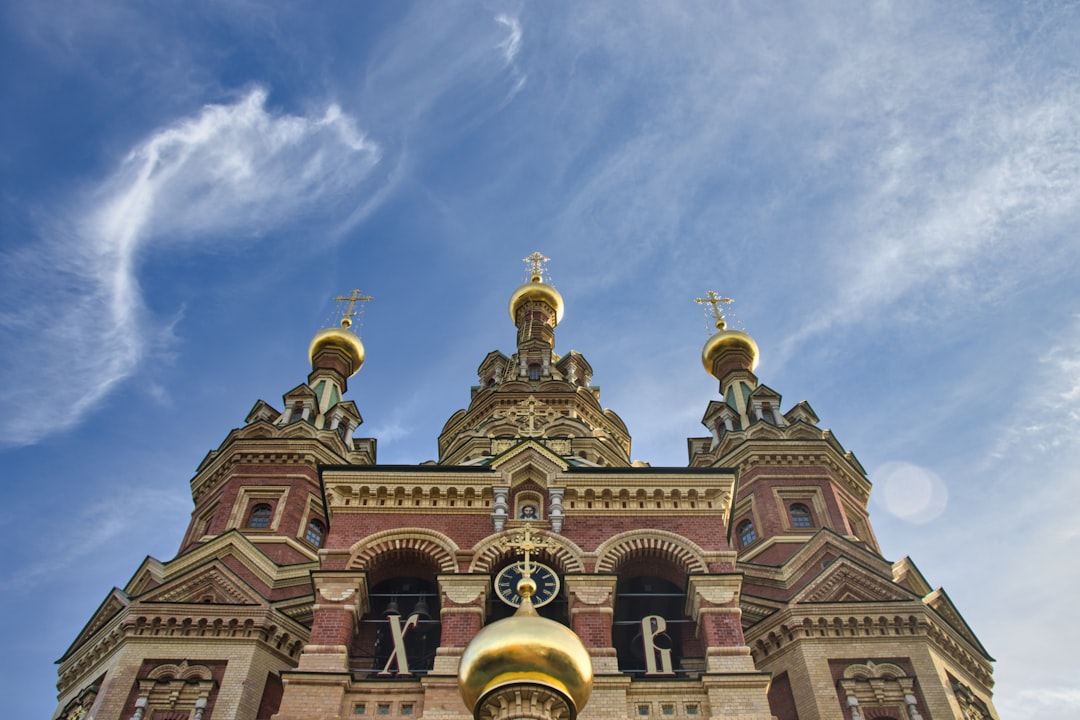
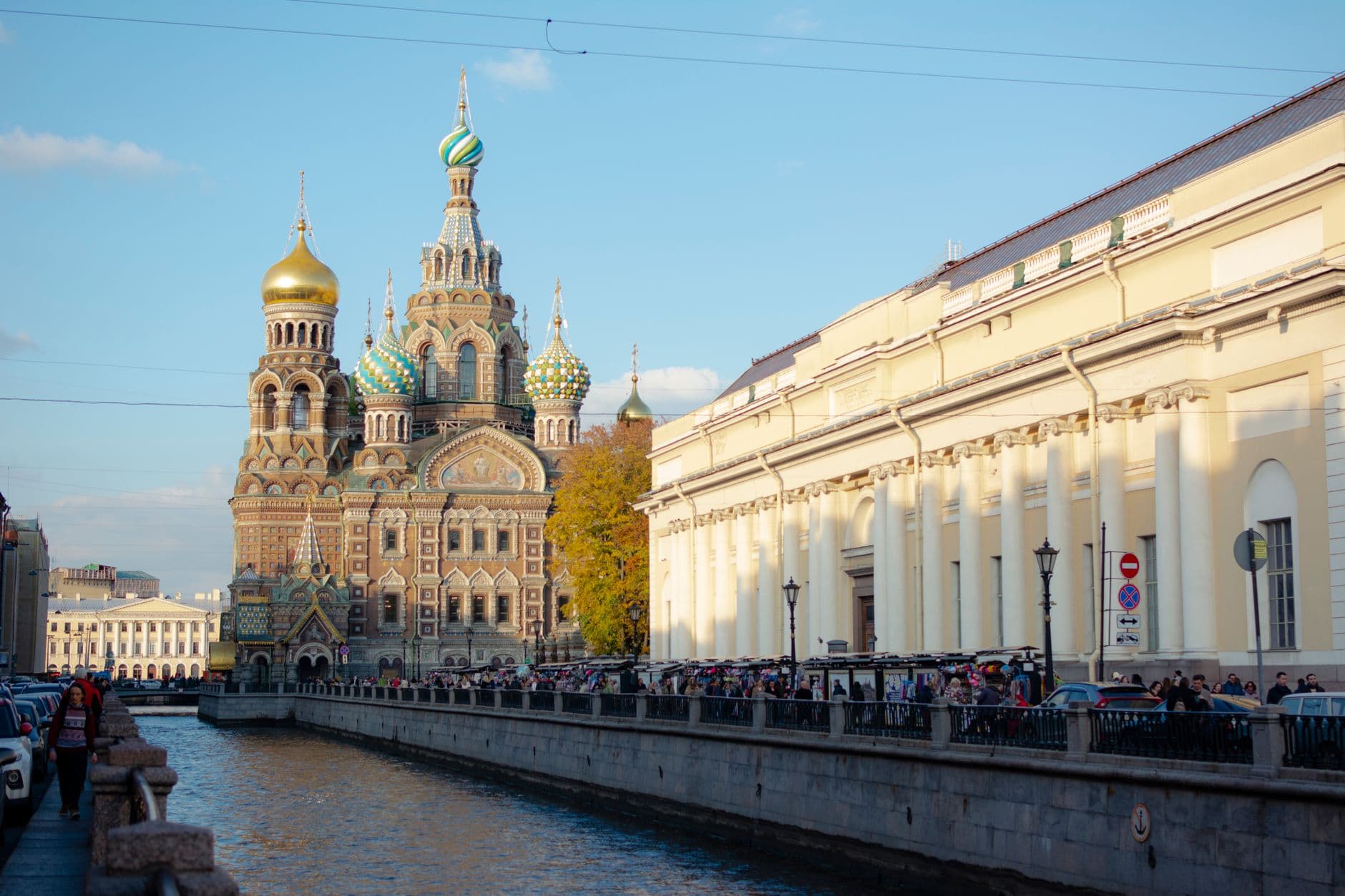
The Church of the Savior on Spilled Blood breaks from Saint Petersburg's dominant architectural style by embracing Russian medieval design. While the Hermitage, Kazan Cathedral, and Saint Isaac's Cathedral follow Italian baroque and neoclassical traditions, this church features kokoshnik gables, tent roofs, and colorful onion domes characteristic of 16th-century Moscow architecture. The contrast appears deliberate, symbolizing Russian nationalism during Alexander III's reign.
Five domes of varying heights crown the structure, each covered in bright enamel tiles creating the multicolored appearance visible from the Griboedov Canal. The tallest central dome reaches 81 meters, while four smaller domes surround it asymmetrically. Exterior walls display intricate brickwork patterns, ceramic tiles, and mosaic panels depicting coats of arms from Russian provinces. This decorative approach differs sharply from the restrained yellow-and-white facades dominating Nevsky Prospekt.
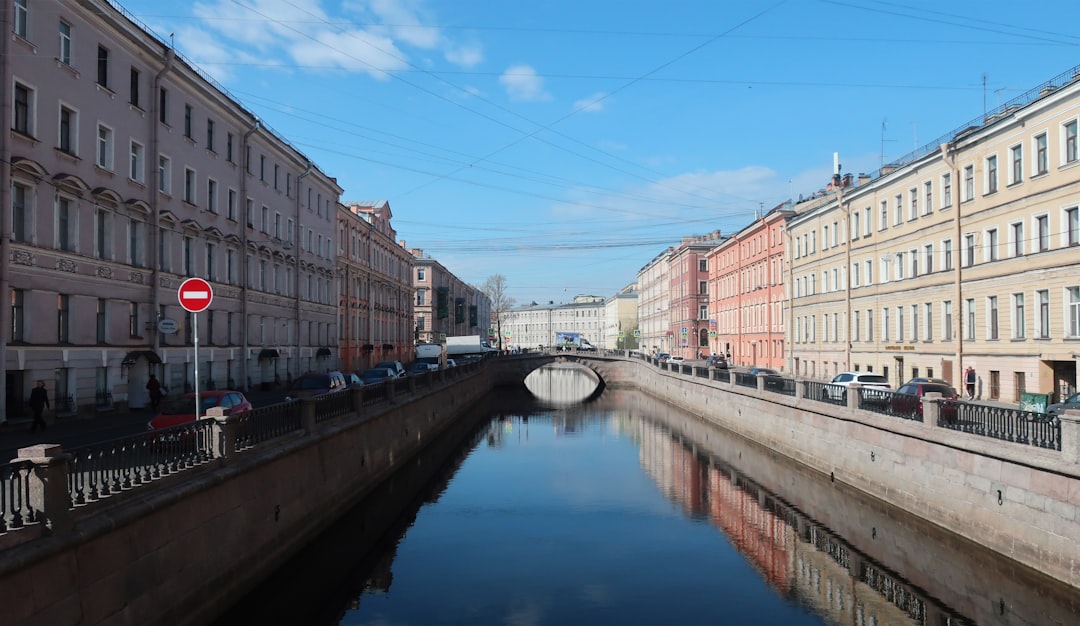
The church sits directly on the Griboedov Canal, which required special foundation engineering to prevent water damage. From the Mikhailovsky Garden side, the church's reflection in the canal water provides the classic postcard view photographers seek. The Saint Petersburg Tourism Committee lists it among the city's top five most photographed monuments, with optimal viewing angles from the Konyushenny Bridge at sunrise.
The Russian Museum's Mikhailovsky Palace stands 200 meters north, housing the world's largest collection of Russian fine art with works from icon painters to avant-garde movements. A combined visit takes 4-5 hours. The State Museum-Monument Church of the Savior on Spilled Blood and Russian Museum offer no joint tickets, but both provide English-language materials; bring cash or a Russian card, as foreign cards are not accepted.
Mikhailovsky Garden, connecting both sites, offers benches and pathways along the Moika River. In late spring, cherry blossoms bloom in the garden's western section, framing the church's domes for photographs. The nearby Arts Square hosts the Mikhailovsky Theatre, presenting ballet and opera performances; ticket prices vary by programme and seat. The Mariinsky Theatre main stage on Theatre Square offers more prestigious productions but requires advance booking.
Walking south along the Griboedov Canal leads to the Kazan Cathedral within 10 minutes. This route passes numerous cafes serving traditional Russian cuisine across a range of price points. If you are touring the city's churches, pair this with our guide to Saint Petersburg's most beautiful religious buildings.
Car rental in Saint PetersburgNo driver — you take the keys and driveno-deposit options availableBrowse carspowered by getrentacar.com
Practical visitor tips for photography and tour planning
Interior photography requires adjusting camera settings for low light conditions despite the mosaic brilliance. The church prohibits tripods and flash photography to protect the artwork. Morning visits between 10:30 AM and 11:30 AM offer fewer crowds, particularly on weekdays outside July and August. Guided group tours and the paid audio guide are offered in several languages; check current options at the ticket office or online.
The gift shop near the exit sells reproduction icons, postcards, and books about the church's history and restoration. It stocks everything from inexpensive postcards to detailed art books. The shop also sells a mosaic-making kit that demonstrates the tessera assembly technique used to build the church's panels. Security requires bag checks at entry, and large backpacks must be stored in free lockers near the ticket office.
Winter visits present challenges with shorter daylight hours and potential ice on surrounding walkways. The church interior maintains comfortable temperatures year-round, but queues form outdoors regardless of weather. Dress codes require modest clothing covering shoulders and knees, though enforcement varies. The audio guide, available in ten languages, gives independent visitors the most comprehensive information for exploring at their own pace.