What makes the Faberge Museum in Saint Petersburg unique?
The Faberge Museum in Saint Petersburg houses the world's largest collection of works by Carl Fabergé, including nine imperial Easter eggs commissioned by the Romanov dynasty. Located in the Shuvalov Palace on the Fontanka River embankment, this museum displays over 4,000 objects spanning decorative arts, jewelry, and precious metalwork. No other institution worldwide concentrates such a density of authentic Fabergé imperial eggs under one roof.
The Blue Drawing Room displays the Bay Tree Egg (1911), its mechanical singing bird still functional after more than a century. The palace itself, completed in 1844, provides an authentic aristocratic setting that amplifies the opulence of each display case. The Link of Times Foundation, which established the museum in 2013, spent years acquiring pieces from international auctions to repatriate this cultural heritage to Russia.
The museum occupies a strategic position at Fontanka Embankment 21, a ten-minute walk from Gostiny Dvor metro station along Nevsky Prospekt. This location places it within easy reach of other imperial landmarks like the Anichkov Palace and the Russian Museum. The Shuvalov Palace's interiors—restored to their 19th-century grandeur with gilded moldings and parquet floors—create an immersive experience that transports visitors to the era when these treasures were first unveiled in the Winter Palace.
Unlike the Hermitage's vast halls where Fabergé pieces occupy just a few cases, this dedicated museum allows extended contemplation of each egg's engineering marvels. Visitors often spend 20 minutes examining the Hen Egg (1885), the first imperial commission, comparing its simple exterior to the later extravagance of the Moscow Kremlin Egg (1906). The curators arranged the collection chronologically, revealing how Fabergé's workshop evolved from restrained elegance to baroque complexity over three decades of imperial patronage.
How much do Faberge Museum tickets cost in 2026?
General adult admission to the Faberge Museum is around 600-700 rubles (roughly €6-7) as of 2026, though the exact rate varies between sources and ticket types, so confirm the current price on the official website before your visit. Reduced rates apply for students and seniors, and children under 18 enter free when accompanied by an adult. Audio guides in English, German, French, and Chinese add about 300 rubles to the base ticket, and the multilingual wall texts are detailed enough for a self-guided visit.
Guided tours are also available, typically from around 1,200 rubles, and morning slots can sell out in peak summer (June through August) when river-cruise groups arrive, so booking online a few days ahead is wise. Check the Faberge Museum official website for the current line-up of standard, guided and any combined tickets, as these change from season to season.
A photography permit usually carries a small extra fee, and flash and tripods are prohibited to protect the delicate enamel surfaces. If you are visiting several attractions along Nevsky Prospekt in one day, compare a pass against the individual ticket prices for your planned route.
Ticket Type
Price (Rubles)
Price (EUR)
Notes
Adult (general admission)
~600-700
~€6-7
Varies by source; verify online
Student/Senior
350
~€3.50
Valid ID required
Under 18
Free
Free
With adult
Audio Guide
300
~€3
Several languages
Photography Permit
200
~€2
No flash/tripod
Guided tour
from ~1,200
~€12
Check current options
Which imperial Easter eggs can you see at the museum?
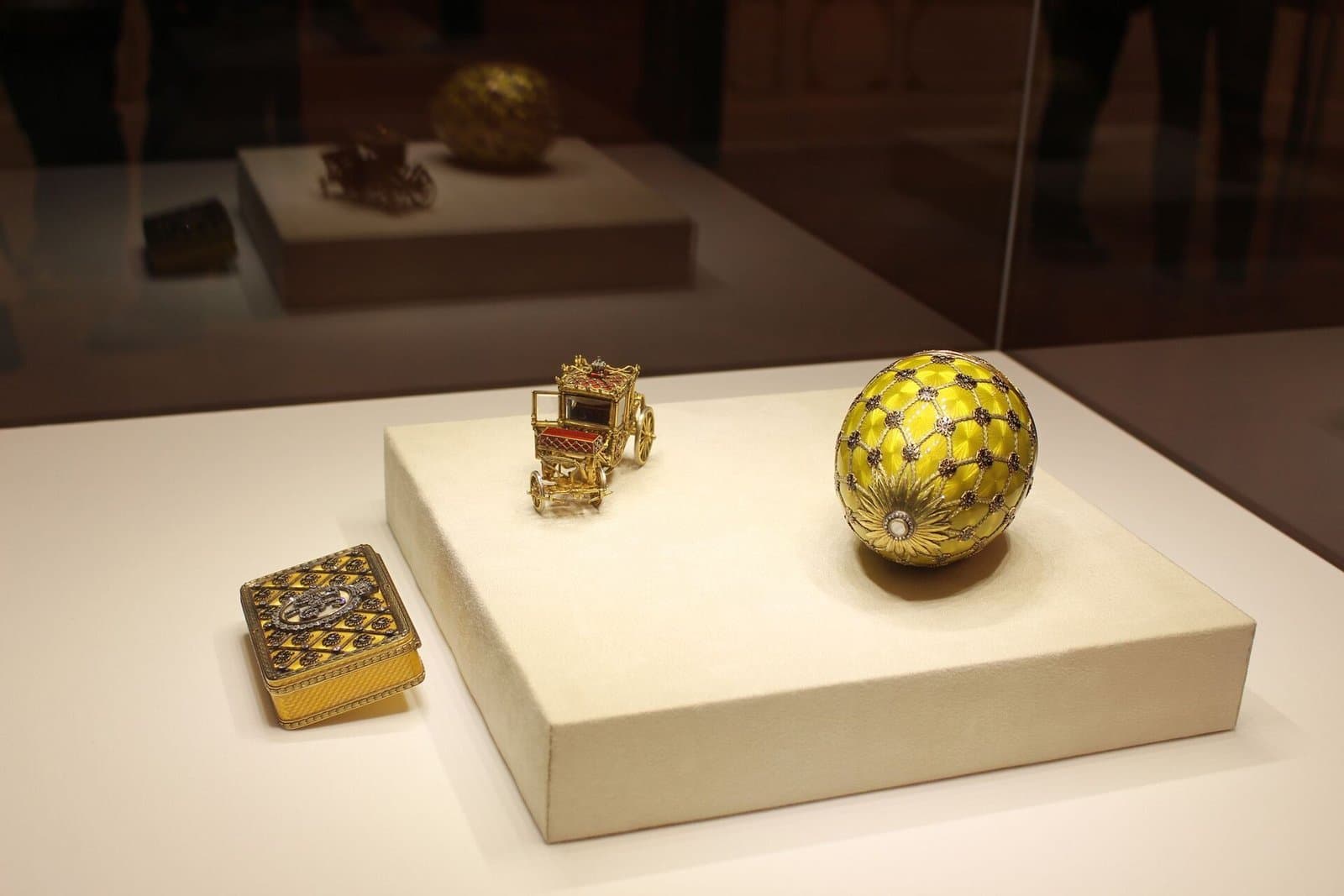
The Faberge Museum displays nine imperial eggs from the 50 originally commissioned by Tsars Alexander III and Nicholas II between 1885 and 1916. The collection includes the Hen Egg (1885), Coronation Egg (1897), Lilies of the Valley Egg (1898), Bay Tree Egg (1911), Fifteenth Anniversary Egg (1911), Orange Tree Egg (1911), Tsarevich Egg (1912), Napoleon Egg (1912), and Moscow Kremlin Egg (1906). Each egg contains a surprise mechanism—miniature portraits, mechanical birds, or replica buildings—that demonstrates the workshop's technical mastery.
The Knights' Hall displays the Coronation Egg, which houses a precise gold replica of the coach used in Nicholas II's 1896 coronation ceremony. The level of detail—from the diamond-set windows to the functioning suspension—required magnification to fully appreciate. Museum staff rotate which eggs occupy the central vitrine, so the exact display configuration changes quarterly to prevent light damage to the enamel surfaces.
The Bay Tree Egg is a highlight, and staff periodically demonstrate its singing-bird automaton. The bird emerges from the tree's foliage, flaps its wings, opens its beak, and produces an authentic birdsong through a miniature bellows mechanism. Sotheby's auction house valued this egg at over $30 million when the Link of Times Foundation acquired it in 2004, making it one of the most expensive decorative objects ever sold.
Beyond the imperial eggs, the museum displays several more Fabergé eggs created for private clients such as the Rothschild and Kelch families. These pieces, while not bearing the imperial warrant, often equal or surpass the technical complexity of their royal counterparts. The Rothschild Clock Egg (1902), with its rotating dial and rose-cut diamonds, stands in a dedicated case near the museum's grand staircase, where natural light from the palace's tall windows illuminates its pink enamel surface.
What are the museum's opening hours and best visiting times?
The Faberge Museum is generally open daily from 10:00, with closing most often listed at 21:00 in 2026 (some sources still cite 20:45) and last entry shortly before closing. Hours can shift with the season and special events, so check the official website before you go. Ticket counters usually close ahead of the final entry.
Early evenings tend to be quietest, with the galleries nearly empty and unobstructed views of each display case. Summer mornings between 10:00 and 13:00 see the heaviest crowds when river cruise passengers arrive on organized tours. The museum's relatively compact size—12 exhibition halls across two floors—means that even during peak periods, you can view the complete collection in 90 minutes if you move efficiently between rooms.
Winter months (December through February) offer the most atmospheric experience, when early sunset at 16:00 transforms the palace's chandeliers into the primary light source, mimicking how the Romanovs would have viewed these treasures during evening receptions. Staff adjust display lighting throughout the day to prevent glare on glass cases, and the best photography conditions occur during the golden hour before closing, when indirect light fills the western-facing Knights' Hall.
The museum occasionally closes specific halls for temporary exhibitions or conservation work, though the imperial egg collection remains accessible year-round. In 2026 it also hosts rotating temporary exhibitions alongside the permanent collection, so it is worth checking the official Faberge Museum website before your visit. The website's English-language section lists current gallery closures, temporary exhibitions and special events.
at the Bank of Russia rate on 23.10.2026 · powered by tutkakdoma
How do you reach the Faberge Museum from major Saint Petersburg landmarks?
From Nevsky Prospekt's central section near Kazan Cathedral, walk north along Malaya Konyushennaya Street for 400 meters until you reach the Moika River, then turn right onto Fontanka Embankment for another 300 meters—a total 12-minute walk. The Shuvalov Palace's yellow facade with white columns becomes visible on your left at number 21. This route passes the Russian Museum's Benois Wing, allowing you to combine both museums in a single afternoon.
Metro riders should exit at Gostiny Dvor station (green Line 3 or blue Line 2) and walk west along Nevsky Prospekt toward the Fontanka River, a distance of 850 meters that takes approximately 11 minutes. Alternatively, Mayakovskaya station (green Line 3) places you 700 meters northeast of the museum via Vladimirsky Prospekt and Liteyny Avenue. The Gostiny Dvor route is more straightforward for first-time visitors, as Nevsky Prospekt's continuous storefronts provide clear orientation points.
Visitors arriving from Pulkovo Airport can take bus 39 or minibus K39 to Moskovskaya metro station, then ride the blue Line 2 to Nevsky Prospekt and transfer to the green Line 3 for one stop to Gostiny Dvor—a 50-minute journey costing 95 rubles, or 65 with a Podorozhnik card. A direct transfer booked through the Yandex.Taxi app is the simplest option from the airport, typically reaching the palace's main entrance on Fontanka Embankment in around 35-50 minutes depending on traffic.
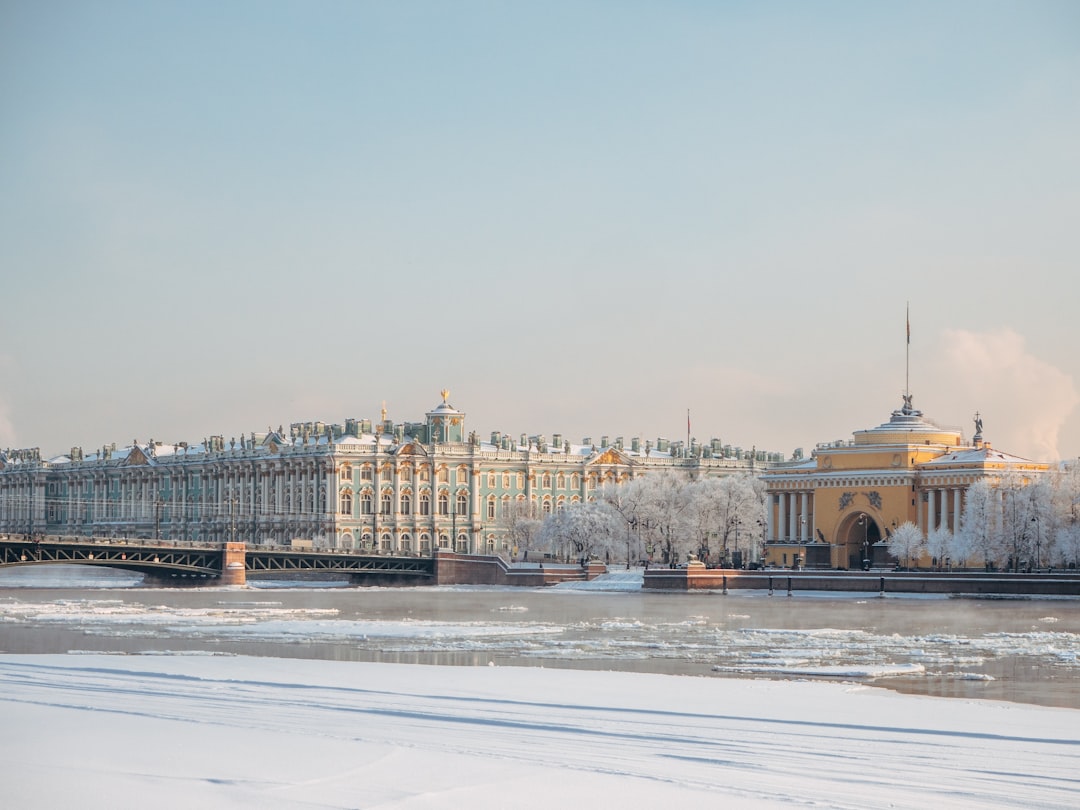
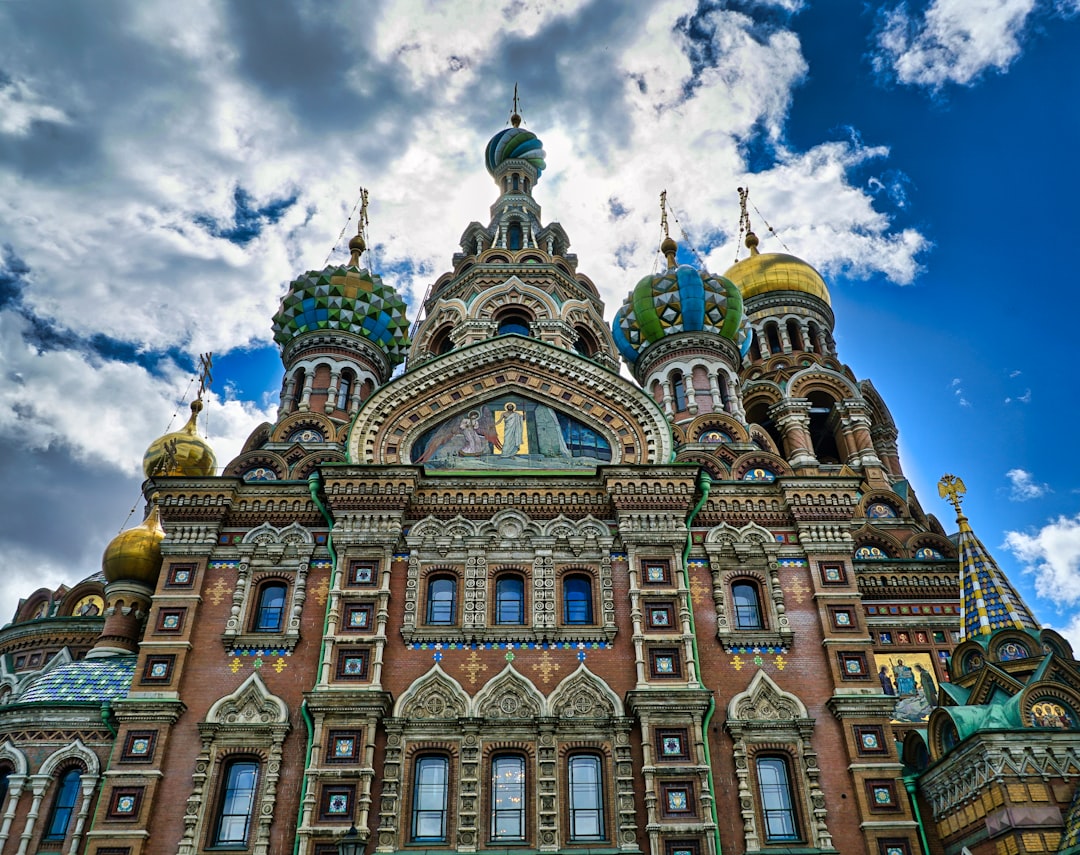
From the Hermitage's main entrance on Palace Square, the most scenic route follows the Moika River embankment eastward for 1.2 kilometers, passing the Stroganov Palace and the Church of the Savior on Spilled Blood before reaching the Fontanka confluence. This 16-minute walk showcases Saint Petersburg's canal architecture and provides photo opportunities at multiple bridges. Tour boats operating along the Fontanka from May through October stop at a landing stage 100 meters from the museum, offering a 30-minute cruise from the Hermitage for which prices should be checked on the museum's own site.
What other attractions are near the Faberge Museum?
The Yusupov Palace, located 1.5 kilometers south along the Moika River at number 94, houses the rooms where Grigori Rasputin was assassinated in December 1916. This palace's private theater, with its original 19th-century stage machinery, operates daily except Mondays with tours in English at 13:30. Visiting both palaces in the same afternoon pairs the Yusupov's darker history with the Faberge's celebration of imperial luxury, giving a more complete picture of late Romanov society.
The Russian Museum's Mikhailovsky Palace stands 600 meters west at Arts Square, displaying the world's largest collection of Russian fine art from icons to Soviet realism. Its collection of 400,000 works includes paintings by Repin, Kandinsky, and Malevich, requiring at least two hours for a cursory visit. The State Russian Museum opens daily except Tuesday from 10:00 to 18:00 (Thursdays until 21:00), with adult admission at 500 rubles. The museum's Karl Briullov halls are particularly rewarding after seeing Fabergé's decorative arts, as both institutions showcase different facets of imperial patronage.
The Church of the Savior on Spilled Blood, marking the 1881 assassination site of Alexander II, rises 400 meters northwest of the Faberge Museum at Griboyedov Canal. Its 7,500 square meters of mosaic interiors—more than any other church worldwide—require 45 minutes to survey properly. The church operates as a museum daily from 10:30 to 18:00 (closed Wednesdays), with 350-ruble admission. Climbing its bell tower (a small extra fee) opens up a view taking in the Fontanka's curve past the Shuvalov Palace, the Hermitage's green roofs, and the Peter and Paul Fortress across the Neva.
Nevsky Prospekt's shopping and dining district extends from the museum's doorstep, with the historic Yeliseev Food Hall at number 56 offering pre-revolutionary interiors and contemporary Russian delicacies. It makes a good post-museum stop for a box of Krupskaya chocolates, and its art nouveau stained glass has survived since 1903. The avenue's concentration of bookstores, including the Dom Knigi at number 28, provides English-language guides to Saint Petersburg's imperial history that contextualize the Fabergé collection within broader Romanov cultural patronage.
What should visitors know before entering the Faberge Museum?
A mandatory coat check operates in the palace's entrance hall, with no fee, though a small tip for attendants is customary. Large bags must be stored, while small purses and camera bags pass inspection. The cloakroom is quick, even during the evening rush when a tour group arrives, with attendants handing over a numbered token in under two minutes.
The museum prohibits food, beverages, and backpacks in exhibition halls, enforcing these rules through staff stationed in each room. Security personnel monitor visitors approaching display cases, maintaining a 40-centimeter distance between guests and glass surfaces. Guards politely redirect anyone who leans too close, since breath moisture can damage the enamel over time. This attentiveness to conservation creates a formal atmosphere that some visitors find restrictive, though it ensures these irreplaceable objects survive for future generations.
Audio guides provide around 90 minutes of commentary across numbered stops, though the English translation occasionally uses technical terminology without explanation. The printed gallery guide (free at the entrance) is more accessible for understanding the eggs' historical context, as it includes a timeline of Romanov commissions and photographs of eggs now held in international collections. The museum shop near the exit also sells detailed English-language catalogs with high-resolution photography of each egg's surprise mechanism.
Accessibility is limited in this historic building, with the main exhibition halls on the second floor reached by a 32-step marble staircase. A small elevator is available for wheelchair users and visitors with mobility challenges, though it is best arranged in advance by phone to ensure staff availability. Because the palace is a protected architectural monument, major structural modifications are not possible; the museum has installed ramps at the main entrance and adapted the ground-floor exhibition halls for wheelchair access to part of the collection.
General adult admission is around 600 to 700 rubles depending on the source and ticket type, with reduced rates for students and seniors and free entry for under-18s accompanied by an adult. Confirm the current price on the official website before visiting.
What are the Fabergé Museum's opening hours?
The museum is generally open daily from 10:00, with closing most often listed at 21:00 in 2026, though some sources still cite 20:45. Hours can shift with the season and special events, so check the official website before you go.
How many imperial Easter eggs are on display?
The museum holds nine imperial eggs made for the Romanovs, including the Hen Egg (1885), Coronation Egg (1897), Lilies of the Valley Egg (1898) and Bay Tree Egg (1911), plus several more Fabergé eggs created for private clients such as the Rothschild and Kelch families.
How do you get to the Fabergé Museum?
It stands in the Shuvalov Palace at Fontanka Embankment 21, about a 10-minute walk from Gostiny Dvor metro along Nevsky Prospekt. Mayakovskaya station is also close, roughly 700 meters to the northeast.
Cover photo: Guy Fawkes / Wikimedia Commons, CC BY-SA 2.0