Renting a car in St Petersburg in winter costs roughly the same as in summer: local companies advertise economy cars from 1,100–1,300 roubles per day, aggregators average around 2,400 roubles, and desks at Pulkovo airport sit near 2,100 roubles a day. The real surprise is not the rate but the deposit — between 5,000 and 20,000 roubles blocked on your card, released only after the car comes back.
Before you pay, ask three questions: how large is the deposit and when is it refunded, which tyres are fitted to this specific car, and whether you are allowed to drive outside the city and the Leningrad Region. Those three answers prevent almost every winter dispute.
Deposit, franchise and the 14-day rule
The deposit is a hold, not a payment. Rental companies use it to cover traffic fines, towing, scratches or a lost key. Typical Russian terms list 10,000 roubles for economy cars, 10,000–15,000 for comfort class and 20,000 for business class; some firms work with a token 5,000-rouble hold but tighten mileage limits instead.
The detail travellers miss: the standard contract releases the deposit within 14 calendar days after the car is returned, provided no traffic fines have arrived. Camera fines reach the owner with a delay, so the company waits. Plan your travel budget around that, not around the return date.
The franchise (excess) is separate — the amount you pay yourself even when the car is insured. Photograph every panel, the roof and the wheels before signing the handover act: under winter salt and dirt, old scratches are invisible, and proving they were there later is impossible.
at the Bank of Russia rate on 24.10.2026 · powered by tutkakdoma
Winter tyres are a legal requirement
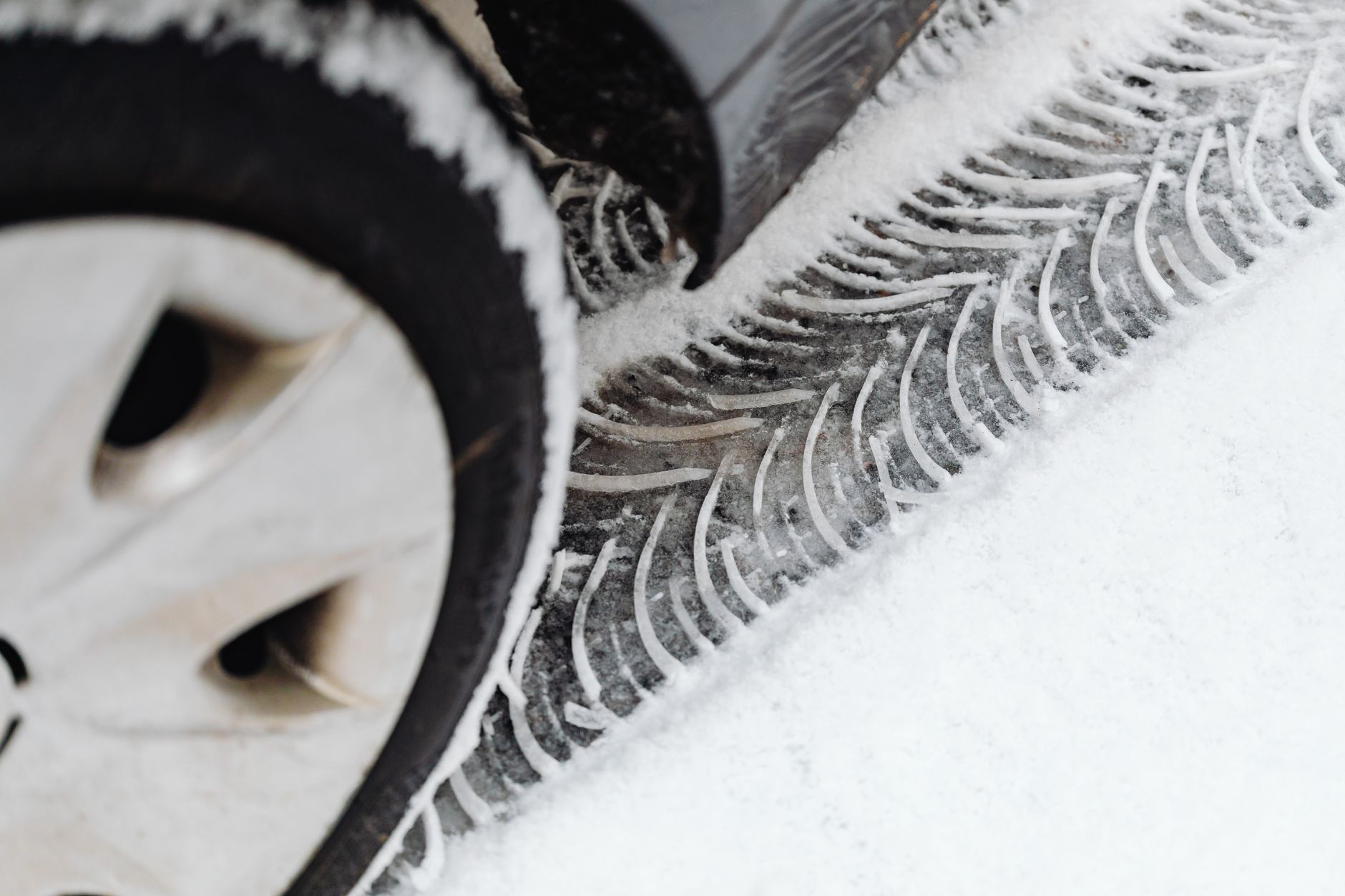
Russian law follows the Customs Union technical regulation TR TS 018/2011. In December, January and February passenger cars must be fitted with winter tyres on all four wheels, marked with the three-peak mountain snowflake symbol or M+S. Weather is irrelevant; the calendar months are what count. The penalty under article 12.5 part 1 of the Administrative Code is a warning or a 500-rouble fine, and the car is not impounded.
The fine is trivial, the insurance consequences are not. If a company hands you a car on summer tyres, refuse to sign the act, photograph the tyre sidewall and ask for a replacement vehicle. Studded or non-studded both satisfy the rule; in the city, non-studded winter tyres work perfectly well.
Leaving the region: Karelia needs permission
Most St Petersburg contracts limit the operating zone to the city and the Leningrad Region, with trips to other regions allowed by prior agreement only. Karelia — Ruskeala, Sortavala, Lake Ladoga — is another region. Drivers who leave without telling the company report missed calls and the threat of a remote engine block; sorting it out on the road meant transferring an extra 5,000 roubles of deposit.
Agree the route before signing, and check the daily mileage allowance: Sortavala is about 270 km one way, and a 200 km daily cap is gone on day one. For ideas on shorter winter drives, see our comparison of day trips from St Petersburg.
Pulkovo desks are convenient but cost more per day, and the standard grace period for a late return is two hours before a full extra day is charged. If your first two days are spent walking the historic centre, take public transport from the airport and rent later.
Paid parking now covers the Central, Admiralteysky, Petrogradsky and Vasileostrovsky districts, with hourly rates for cars running from 100 to 360 roubles depending on how busy the street is. Eight hours on a popular central street costs more than a day of rental, so choose a hotel with its own car park.