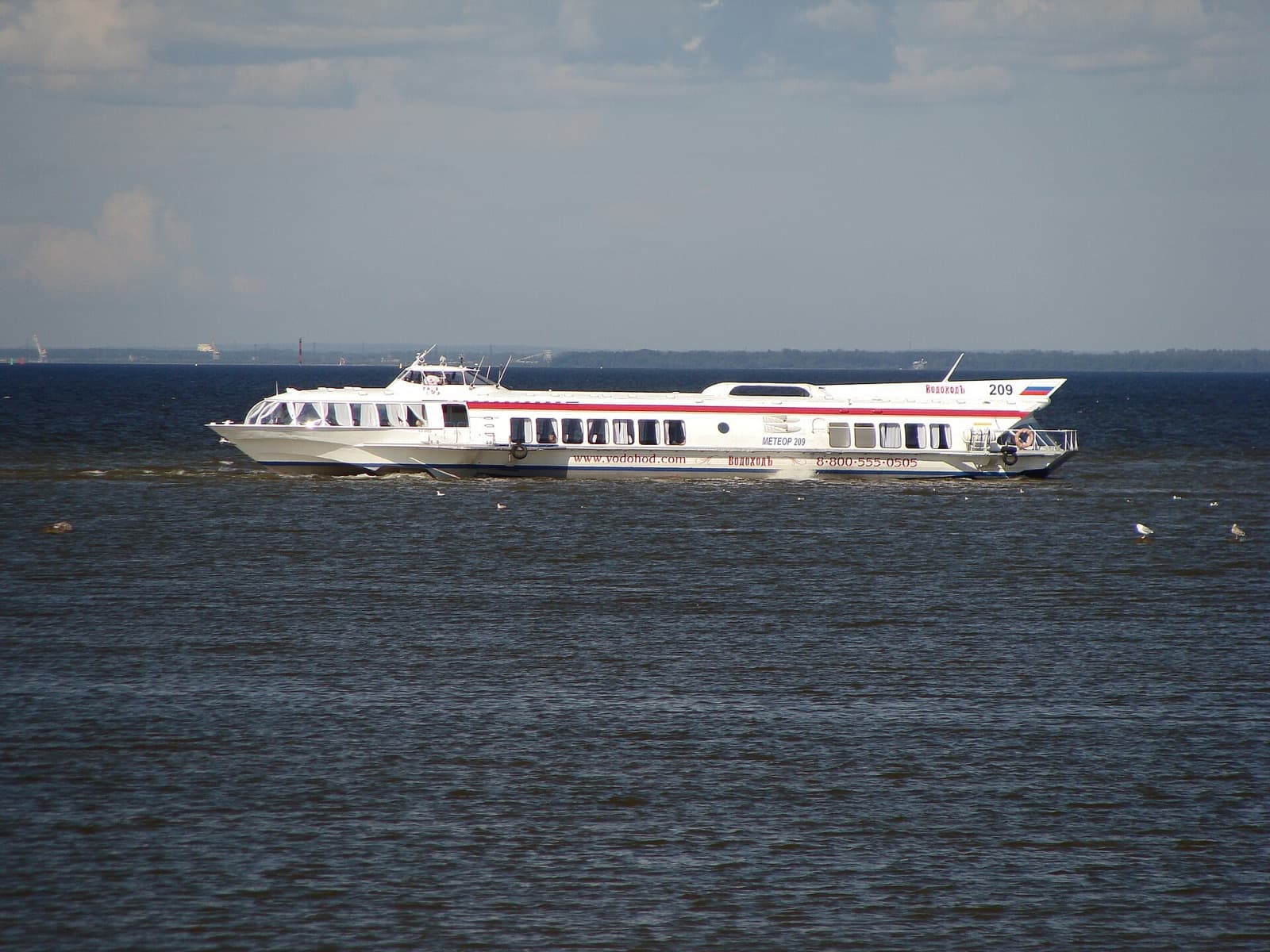
In summer, Kronstadt is reached by water: a Meteor hydrofoil from the central piers takes about an hour, and the crossing itself is half the trip. But the navigation season ends with the summer, and from autumn onwards only two routes remain — the road across the dam and the city bus. Here is what changes and how to get there once the hydrofoils stop.
When the navigation season ends
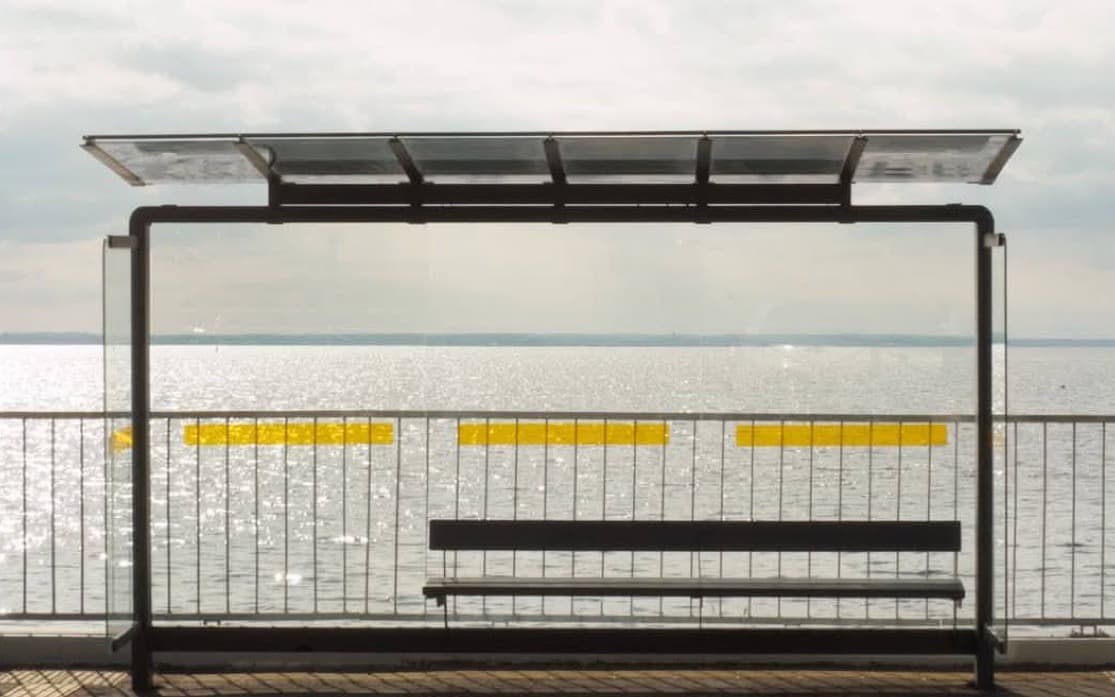
High-speed boats to Kronstadt run during the navigation season, usually from May through September; some operators keep sailing into October while the weather allows. No one announces the closing date in advance — the season ends with the wind and the waves, and the last departures are often cancelled a day ahead.
So in September one rule applies: book the hydrofoil for a specific date and check the departure the evening before. And keep the overland option in mind — it will still be there in October and in February.
The bus: the simplest way
The main route is bus No. 101 from Staraya Derevnya metro station. It runs through Lakhta, Olgino and Lisiy Nos onto the northern dam and into Kronstadt. There is also an express version, 101E, with fewer stops.
- It runs often — roughly every fifteen to twenty minutes — and almost around the clock, from early morning until night.
- The trip takes one to two hours; the spread is wide because it depends on traffic leaving the city and on the dam itself.
- The fare is an ordinary city fare — Kronstadt is part of St Petersburg, so no separate suburban ticket is needed.
In autumn the bus beats the boat not only on reliability but on predictability: a hydrofoil gets cancelled by waves, a bus does not.
By car, across the dam
Drivers take the ring road across the flood protection barrier — the dam. It is a road of its own kind: the gulf on one side, the gulf on the other, the carriageway and the ship passages in between. On a clear day it is beautiful in itself; in a storm it is spectacular.
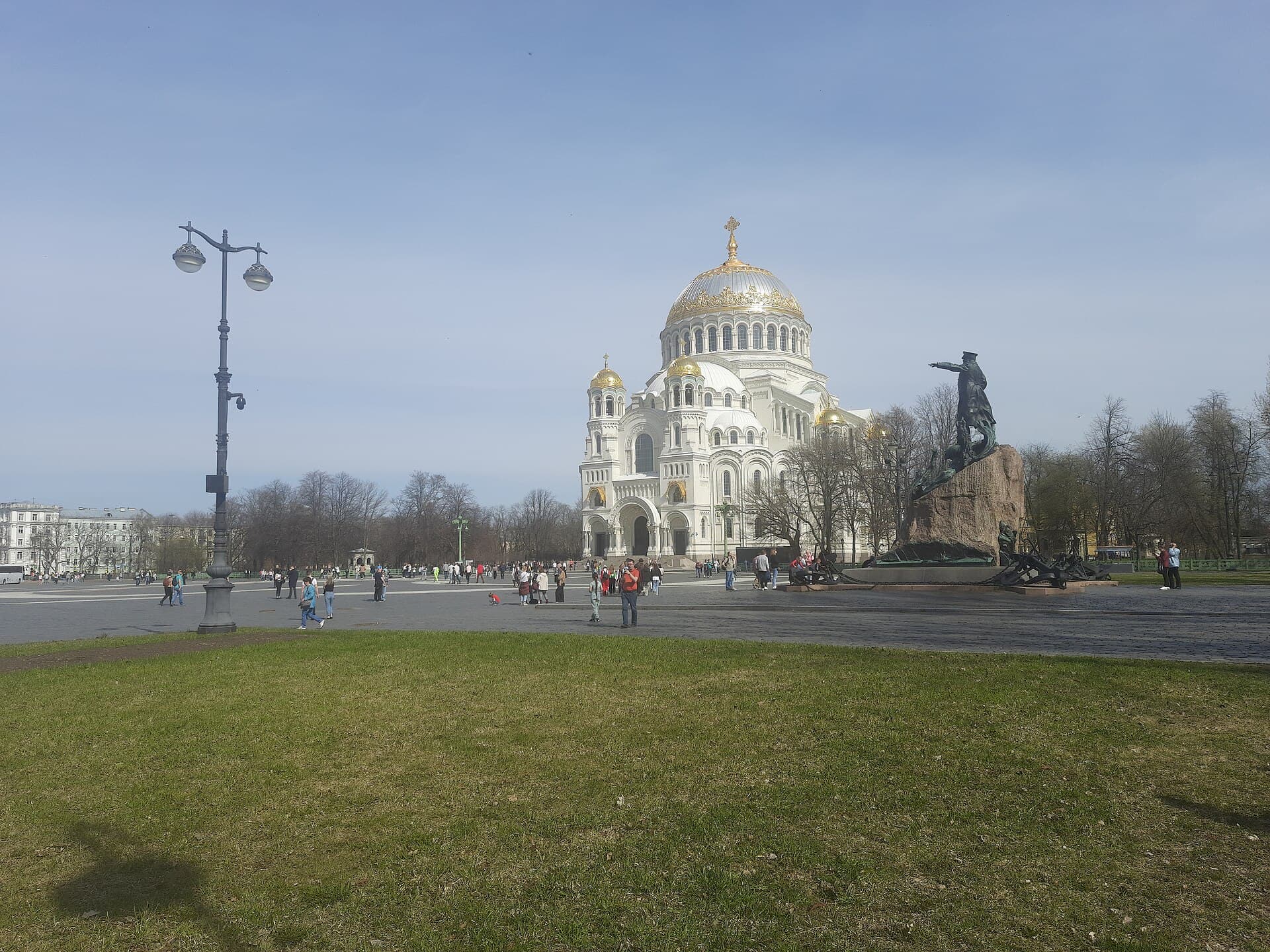
One practical note: there is a single exit into Kronstadt from the ring road, and it backs up at weekends. Parking in the historic centre is tight, especially near the Naval Cathedral, so it is easier to leave the car on the approach and walk — the centre is compact enough to cover on foot in a day.
What to see when it is cold
Kronstadt in autumn and winter is not a reduced version of the summer town but a different one. The wind off the gulf is always stronger than in the city, and you should dress a degree or two colder than the forecast suggests.
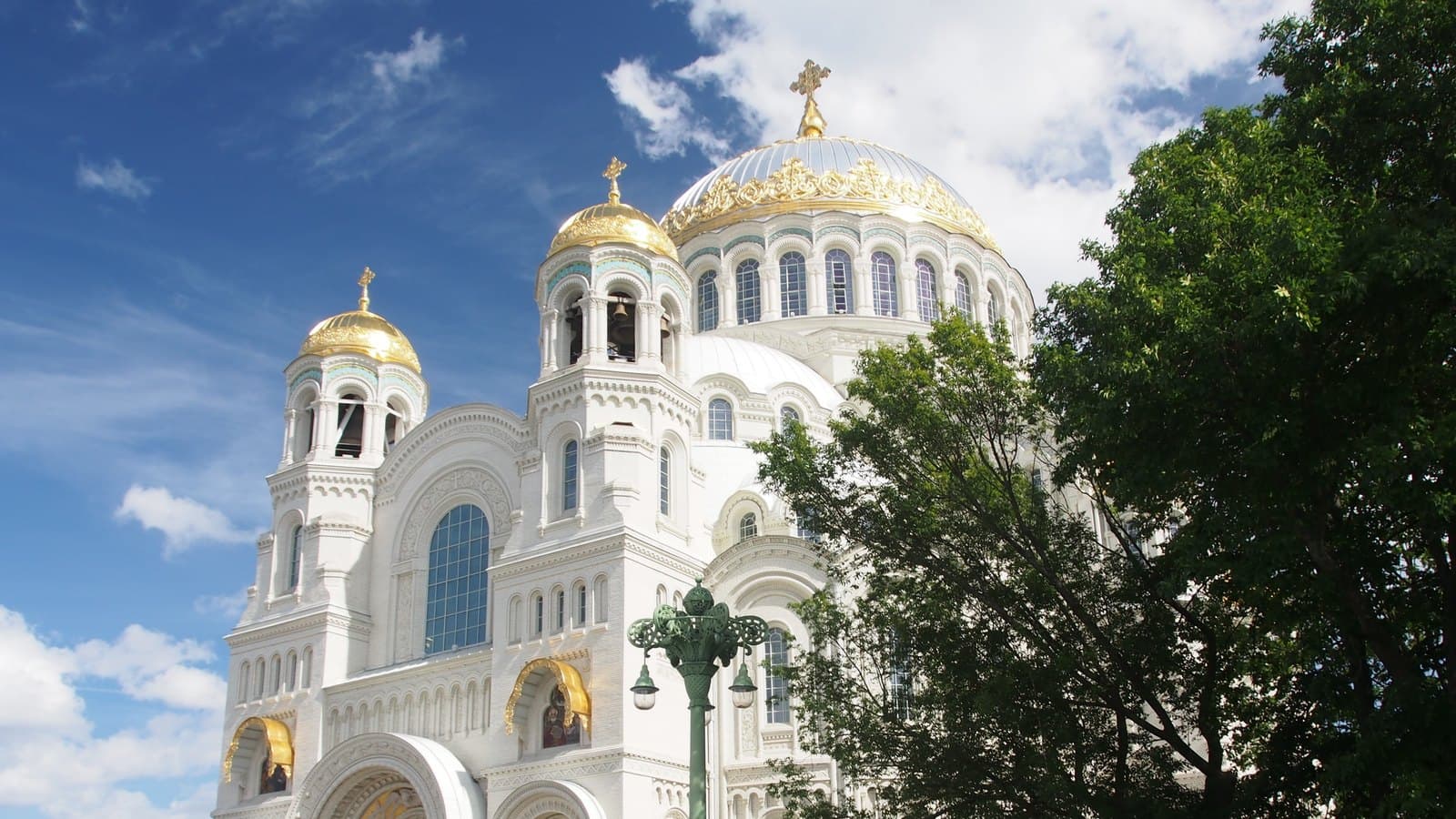
The Naval Cathedral of St Nicholas. The main reason people come. Mosaics, stained glass and memorial plaques bearing the names of sailors; the scale of it stops you in the doorway. It is open all year, and in autumn there are almost no crowds.
The Island of Forts park. A waterfront park with an avenue of heroes and a view of the gulf. In summer it is a promenade; in autumn it is where you understand what the Baltic wind actually means.
The forts. Kronshlot, Emperor Alexander I — the so-called Plague Fort — and the others stand in the water and can only be approached by boat, that is, during the navigation season. In winter they are viewed from the shore, which is an honest compromise: their silhouettes in the haze over grey water can be more striking than a close-up.
The Petrovsky dry dock and the bypass canal. An engineering structure from Peter the Great's time that is still legible on the ground. It is more interesting in overcast weather than in sunshine — the texture of stone and water.
Planning the day
Kronstadt is a full day, not a two-hour stop. Count on an hour and a half each way, four to five hours in town, and set off before ten in the morning: by late September it gets dark around seven, earlier in October, and the drive back across the dam in the dark is far less interesting.
Food: there are cafés in the centre, but on a weekday some close early. If you are travelling with children, bring something to eat — the stretch between the cathedral and the forts is a long one.
In short
- Hydrofoils run during the navigation season, usually to September or October; check the sailing the day before.
- All year round: bus No. 101 and 101E from Staraya Derevnya, one to two hours, ordinary city fare.
- By car — the ring road across the dam, a single exit, tight parking in the centre.
- In winter the forts are viewed from the shore; the cathedral, the park and the dock are open all year.
- The wind off the gulf is always stronger than in the city — dress warmer than the forecast.
Cover photo: Naval Cathedral of St Nicholas, Kronstadt. Photo: Alf van Beem, Wikimedia Commons, public domain.