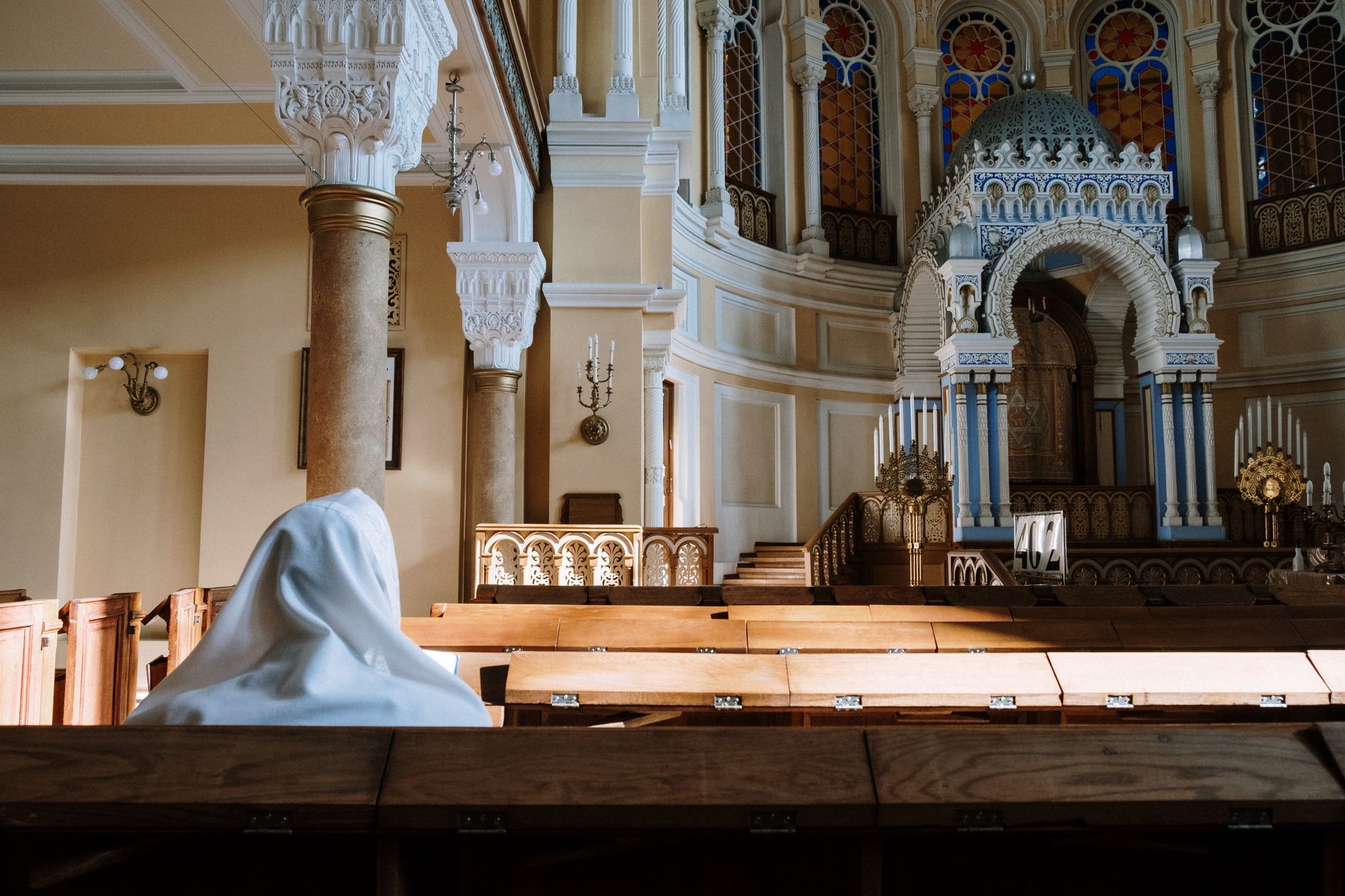
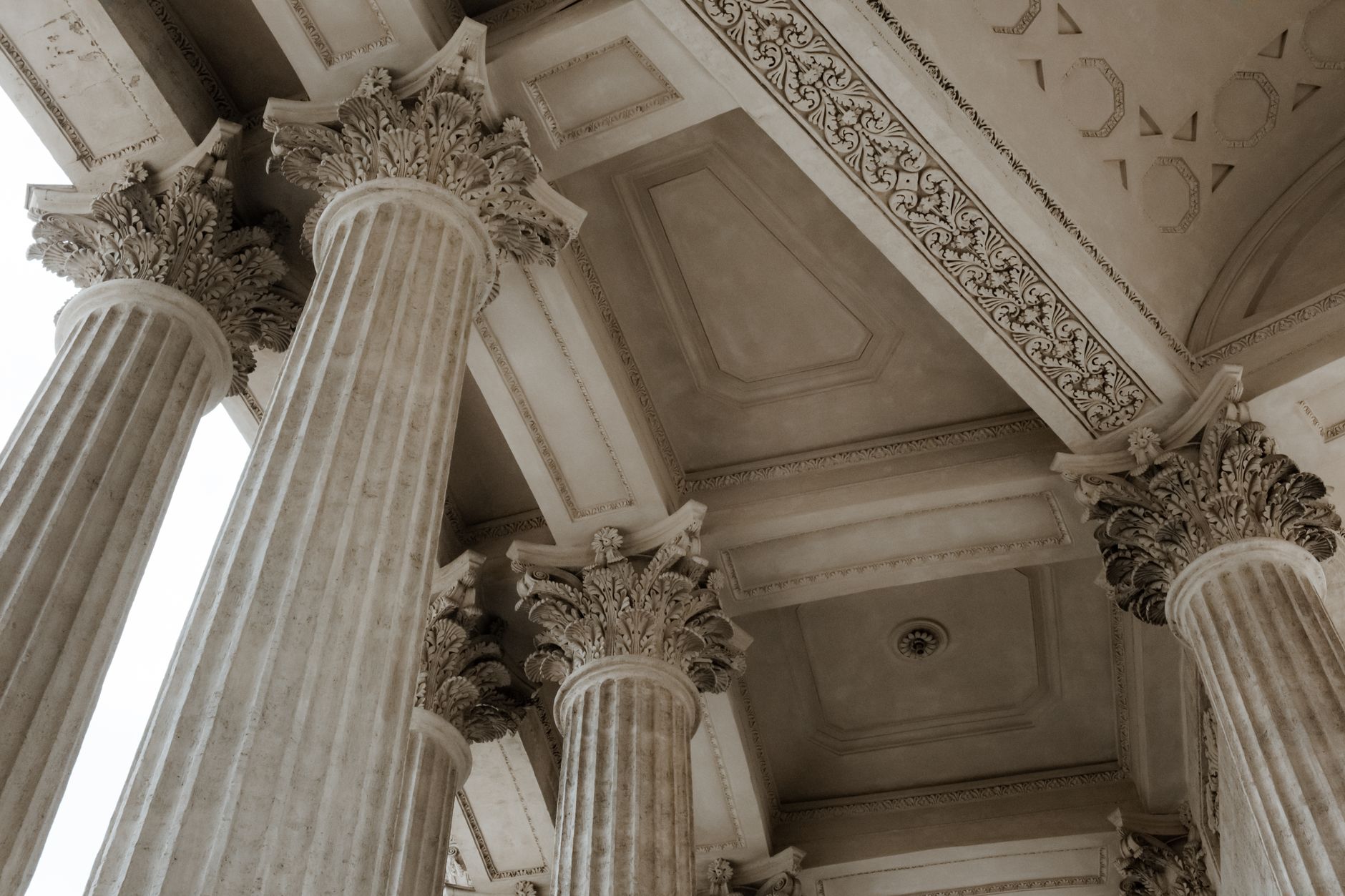
The Grand Choral Synagogue stands as the third-largest synagogue in Europe and represents one of Saint Petersburg's most distinctive religious landmarks. Constructed between 1880 and 1888, this magnificent structure combines Moorish Revival architecture with traditional Russian building techniques, creating a striking presence on Lermontovsky Prospekt. The synagogue's design reflects the vision of architects Ilya Shaposhnikov and Lev Bakhman, who drew inspiration from the Alhambra palace in Granada, Spain.
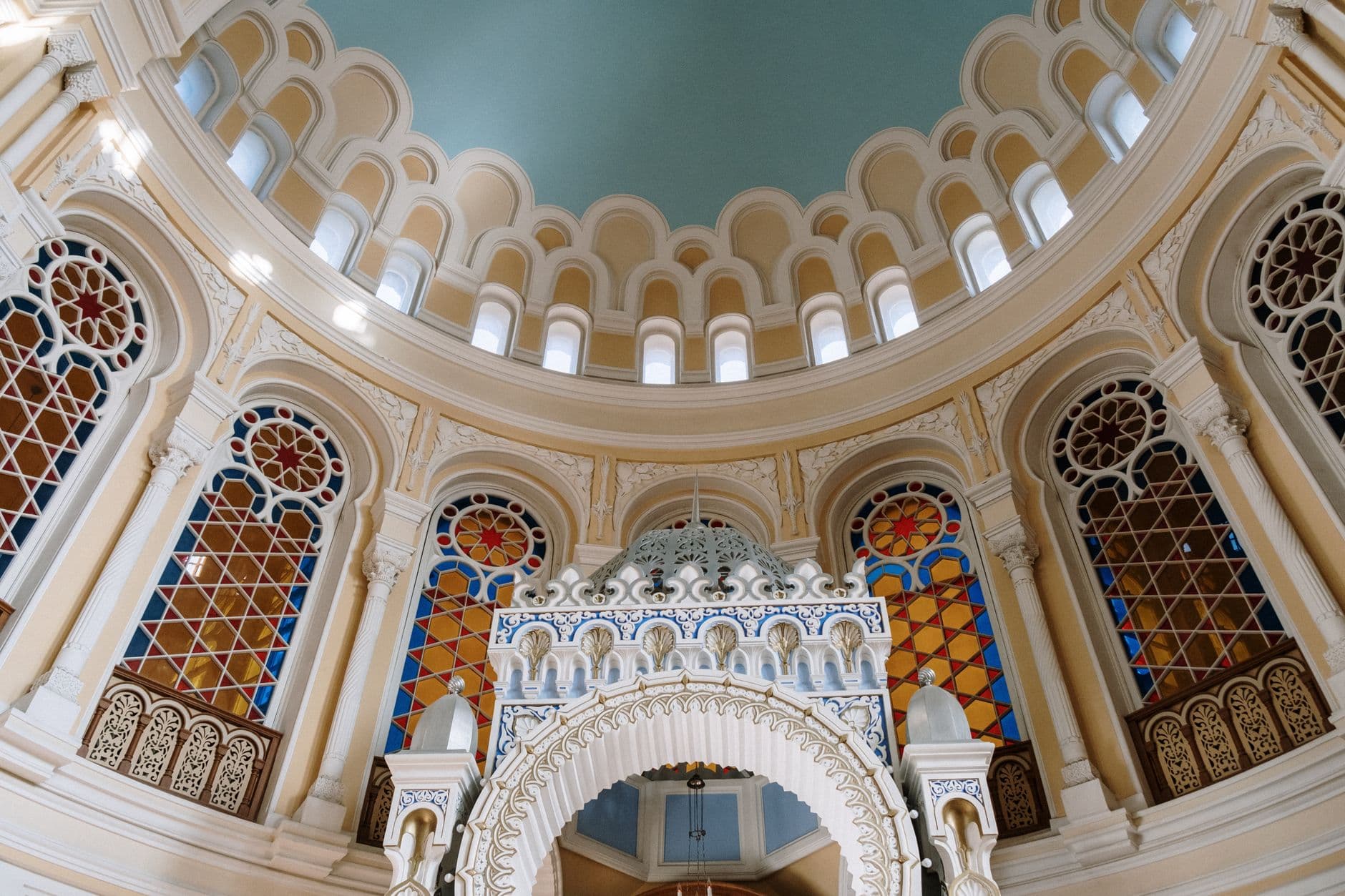
The exterior features intricate terracotta ornamentation, horseshoe arches, and geometric patterns characteristic of Islamic architecture. The main prayer hall rises to an impressive height beneath a central dome, with capacity for approximately 1,200 worshippers. Natural light filters through elaborate stained-glass windows, illuminating the interior's rich decorative program of Hebrew inscriptions and floral motifs executed in blue, gold, and crimson tones.
Located near Mariinsky Theatre and within walking distance of Sennaya Ploshchad metro station, the synagogue occupies a central position in the city's historic Jewish quarter. The building underwent extensive restoration in the 1990s after decades of Soviet-era neglect, restoring its original splendor and reestablishing its role as the spiritual center for Saint Petersburg's Jewish community.
The construction of the Grand Choral Synagogue marked a turning point for Jewish life in imperial Russia. Prior to its establishment, Saint Petersburg's Jewish community lacked a permanent place of worship commensurate with their growing numbers. The project received approval from Tsar Alexander II in 1869, though construction faced numerous delays due to funding challenges and bureaucratic obstacles typical of the period.
Baron Horace Günzburg, a prominent Jewish banker and philanthropist, played a crucial role in financing the project and navigating the complex permissions required from imperial authorities. The synagogue's completion coincided with a period of relative tolerance for Jewish residents in the capital, though this community still faced significant legal restrictions on residence and occupation. The building served not only religious functions but also became a cultural hub, hosting educational programs and social welfare initiatives.
During the Soviet period, the synagogue remained one of the few Jewish religious institutions permitted to operate, though under strict state supervision. The building suffered damage during World War II and the Siege of Leningrad, when it served briefly as a warehouse. Post-war decades saw minimal maintenance, leading to deterioration that required comprehensive restoration work beginning in the late 1980s.
Visitors entering the Grand Choral Synagogue encounter a prayer hall distinguished by its soaring central dome and two-tiered gallery system. The main floor accommodates male worshippers, while the second-level galleries were traditionally reserved for female congregants, following Orthodox Jewish customs. The interior measures approximately 47 meters in length and features ornate columns supporting the galleries and dome structure.
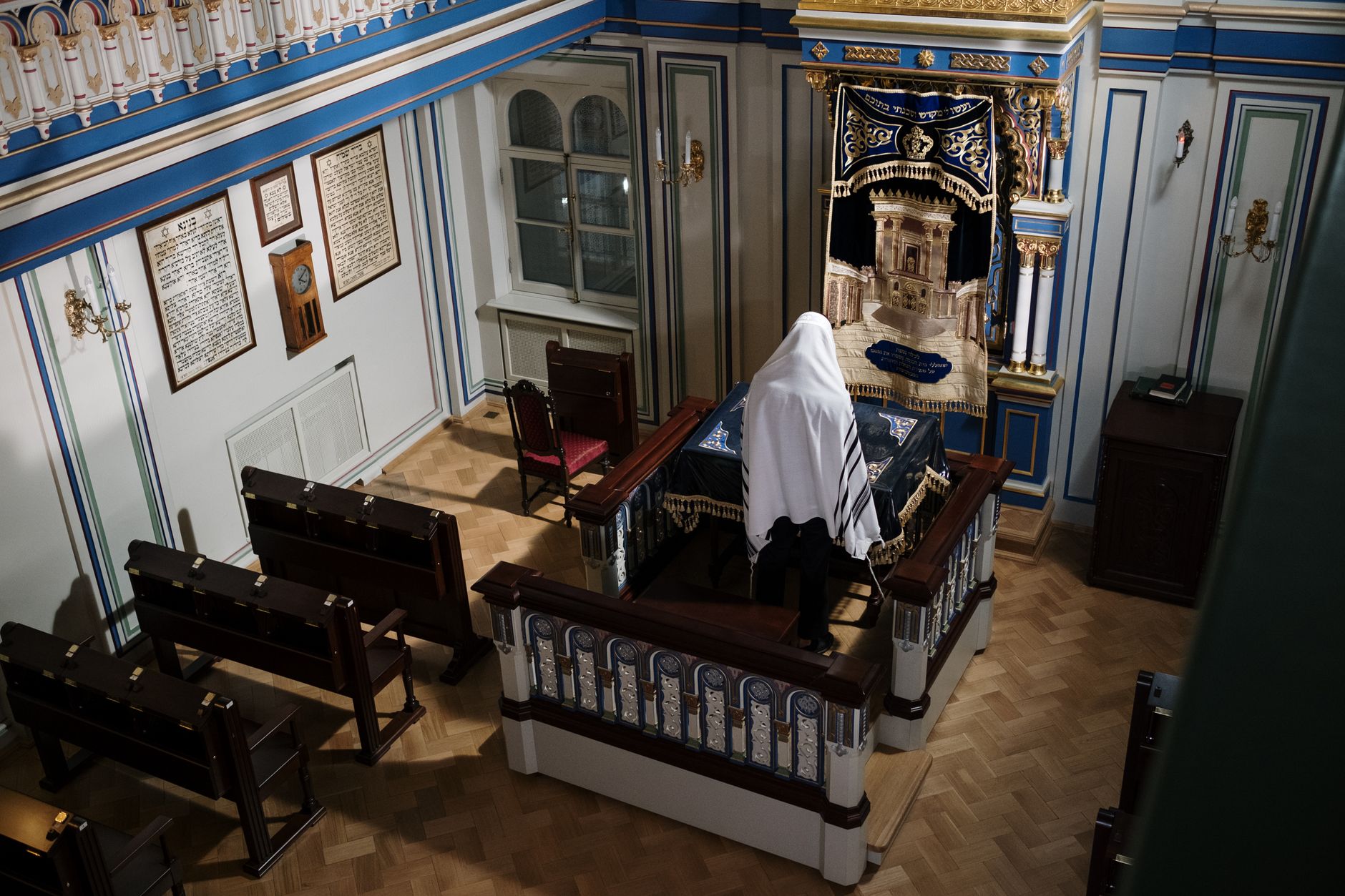
The bimah, or raised platform for Torah reading, occupies the center of the hall, crafted from polished wood with intricate carvings. The ark housing the Torah scrolls stands against the eastern wall, oriented toward Jerusalem, and features elaborate metalwork and textile decorations. The ceiling displays geometric patterns and Hebrew calligraphy, with the dome's interior painted in celestial blue tones accented with gold stars.
A small museum within the complex documents the history of Jewish life in Saint Petersburg, displaying photographs, religious artifacts, and documentation from various periods. The exhibition includes items recovered after the Soviet era and donations from community members. Educational displays provide context about Jewish traditions, holidays, and the specific architectural features that make this synagogue architecturally significant.
The basement level houses a kosher restaurant, Le'chaim, and a bakery, offering traditional Jewish cuisine prepared according to dietary laws. This facility serves both the local community and visitors interested in experiencing authentic Jewish culinary traditions. The synagogue also maintains a library with religious texts and historical archives available to researchers by appointment.
at the Bank of Russia rate on 08.10.2026 · powered by tutkakdoma
How Do You Visit the Grand Choral Synagogue?
The Grand Choral Synagogue welcomes visitors outside of prayer times, typically allowing tours during weekday mornings and early afternoons. Access requires advance coordination through the synagogue administration, as security protocols necessitate registration. Visitors should contact the synagogue office to arrange entry, providing identification and confirming appropriate dress codes that require modest attire covering shoulders and knees.
The synagogue is located at Lermontovsky Prospekt 2, approximately 800 meters from Sennaya Ploshchad metro station. From the metro, walk south along Sadovaya Street, then turn onto Lermontovsky Prospekt. The journey takes roughly ten minutes on foot. Alternatively, Sadovaya or Spasskaya metro stations provide comparable access. Bus routes 3, 27, and 181 stop near the synagogue, though walking from the metro offers the most straightforward approach.
Photography inside the prayer hall may be restricted, particularly during religious services. Visitors should inquire about photography policies upon arrival. Male visitors receive head coverings at the entrance if they arrive without appropriate headwear. Guided tours in English can be arranged with advance notice, providing detailed explanations of the architectural features and historical context. The synagogue maintains an active schedule of religious services, with Friday evening and Saturday morning services drawing the largest congregations.
The Grand Choral Synagogue operates as an active house of worship, so visiting hours follow the religious calendar. Individual visitors are generally welcome Sunday to Friday, roughly 10:00 to 18:00 (Sunday sometimes from 11:00), with Friday closing early ahead of Shabbat at a time that shifts with sunset. Guided tours run from May to September, daily 09:00–17:00, except Saturdays and Jewish holidays. The synagogue is closed to tourists on Shabbat (Friday evening through Saturday evening) and on major Jewish holidays such as Rosh Hashanah, Yom Kippur, Passover, and Sukkot; on Saturday mornings it opens only around 10:00–12:00 for prayer, and only to those attending the service. Always confirm current times before visiting via the official tourism site en.jeps.ru or by phone at +7 (812) 713-8186.
Entry to the synagogue for visitors is generally free, though donations supporting maintenance and community programs are welcomed. The kosher restaurant operates independently with separate pricing for meals and baked goods. Visitors planning to dine should note that the restaurant observes Shabbat and Jewish dietary laws, closing Friday afternoon through Saturday evening and serving only kosher-certified ingredients.
Security measures at the entrance include bag checks and identity verification, standard protocols at Jewish institutions worldwide. Visitors should allow extra time for security screening and arrive with valid identification. The synagogue staff includes English-speaking members who can assist with questions and provide basic orientation. For detailed historical tours or special access to archives, advance arrangements through the synagogue office prove necessary.
The surrounding neighborhood contains several other points of interest, including the Yusupov Palace on the Moika River and the Mariinsky Theatre complex. Visitors can easily combine a synagogue visit with exploration of these nearby cultural sites, all within a fifteen-minute walking radius. The area features numerous cafes and restaurants, though those seeking kosher dining should utilize the synagogue's own facilities.
Architectural Details and Restoration Work
The synagogue's structural design employs a basilica plan with a central nave and side aisles, adapted to accommodate Jewish liturgical requirements. The building measures approximately 47 meters long, 26 meters wide, and reaches 47 meters in height at the dome's apex. Load-bearing walls constructed from brick support the weight of the dome and galleries, while decorative elements utilize terracotta, stucco, and painted plaster to achieve the Moorish aesthetic.
The restoration project initiated in 1987 addressed decades of deferred maintenance and wartime damage. Engineers stabilized the foundation, which had suffered from groundwater infiltration common in Saint Petersburg's marshy terrain. The dome required complete reconstruction of its supporting structure and replacement of damaged exterior tiles. Interior restoration focused on recovering original paint schemes, repairing plasterwork, and restoring the stained-glass windows to their historical appearance.
Craftsmen employed traditional techniques to recreate lost decorative elements, studying historical photographs and architectural drawings to ensure accuracy. The restoration of the Torah ark involved specialized metalworkers and textile conservators who replicated period-appropriate techniques. Modern building systems, including climate control and electrical infrastructure, were integrated discretely to preserve the historical character while ensuring the building's functionality for contemporary use.
The Grand Choral Synagogue anchors a broader narrative of Jewish presence in Saint Petersburg dating to the city's founding. While Peter the Great's original city plan made no provision for Jewish residents, the community gradually established itself through the 18th and 19th centuries, initially comprising merchants, craftsmen, and professionals granted special residence permits. The Jewish population expanded significantly after reforms in the 1860s relaxed some residential restrictions.
By the early 20th century, Saint Petersburg hosted a thriving Jewish community that contributed significantly to the city's commercial, cultural, and intellectual life. The neighborhood surrounding the synagogue developed as a center of Jewish life, with religious schools, charitable organizations, and kosher food establishments. This community faced upheaval during the Soviet period, when religious practice was discouraged and many institutions closed or repurposed.
The post-Soviet era witnessed a revival of Jewish religious and cultural life in Saint Petersburg. The synagogue resumed full religious services, educational programs expanded, and community organizations reestablished themselves. Today, the Grand Choral Synagogue serves an active congregation while also functioning as a historical monument and educational resource. The adjacent Jewish Community Center, established in recent decades, provides social services, cultural programming, and educational opportunities for community members and interested visitors.
Feature
Details
Address
Lermontovsky Prospekt 2
Nearest Metro
Sennaya Ploshchad (800m walk)
Construction Period
1880-1888
Architectural Style
Moorish Revival
Capacity
Approximately 1,200 worshippers
Individual Visits
Sun–Fri ~10:00–18:00 (Fri closes early for Shabbat); verify via en.jeps.ru