The Road of Life (Doroga Zhizni) was the route by which besieged Leningrad received bread, fuel and ammunition in 1941–1943: across the water of Lake Ladoga in summer and over its ice in winter. Today the highway from Vsevolozhsk to the lake is lined with memorials of the "Green Belt of Glory", and on the shore, in the village by Ladozhskoye Ozero station, stands the Road of Life Museum, a branch of the Central Naval Museum. November is when the road is remembered most: in late November 1941 the first lorry convoys crossed the Ladoga ice.
Below is a one-day route without a car: the Broken Ring (Razorvannoye Koltso) memorial on the Ladoga shore, the Road of Life Museum and the Flower of Life (Tsvetok Zhizni) memorial to the children of the siege. On 19 October 2026 we checked opening hours, prices and transport on the websites of the Central Naval Museum and the North-Western Suburban Passenger Company (the local train operator); distances from the platforms to the memorials are our own measurements on the map.
🕯 The Broken Ring: the Vaganovo descent to Lake Ladoga
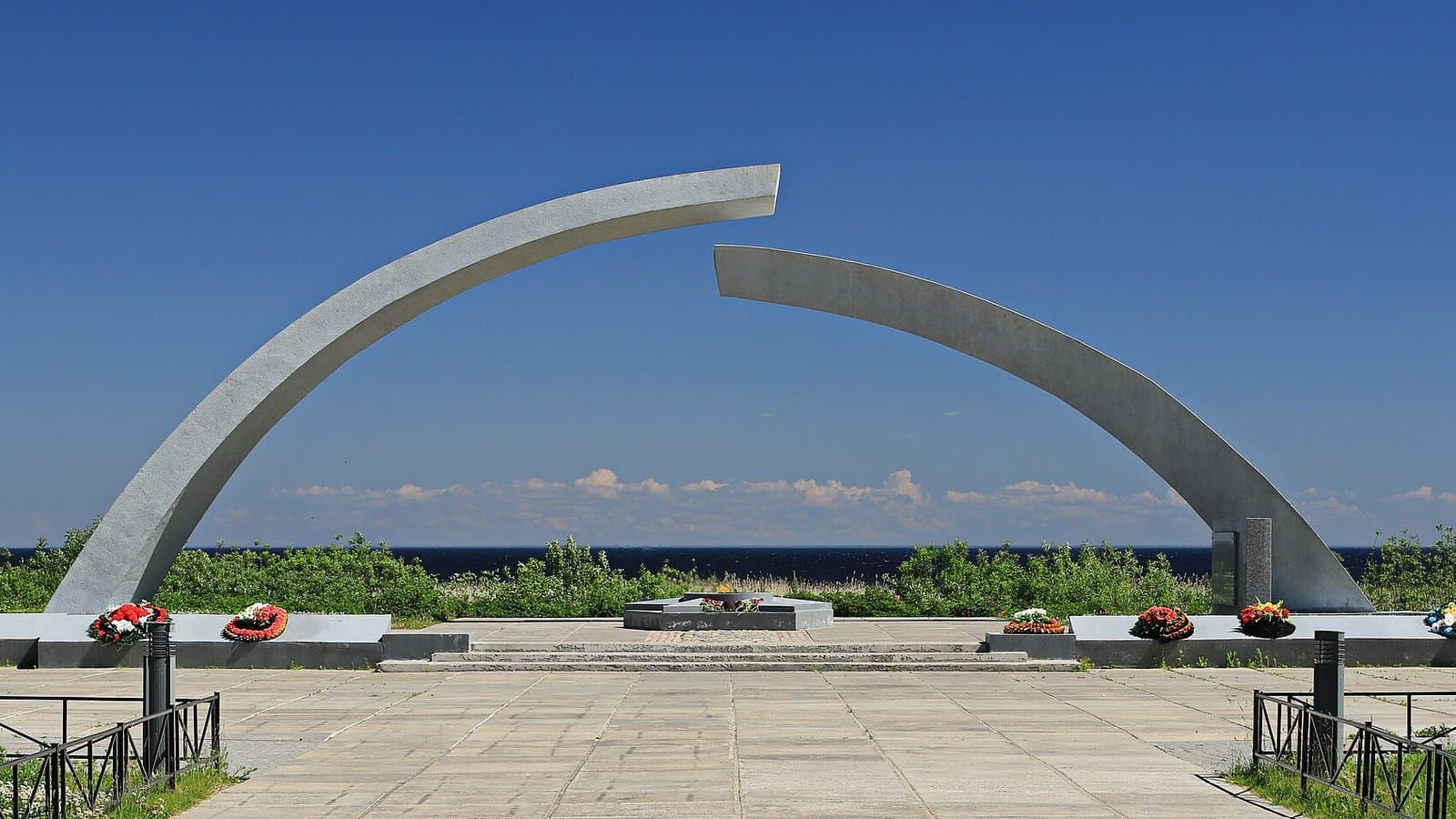
The most powerful place on the route is a pair of concrete arcs on the shore of Lake Ladoga that don't meet at the top. The gap between them is the Road of Life itself — the besieged city's only link with the rest of the country. The memorial was unveiled on 29 October 1966 at the Vaganovo descent: from here the convoys set off across the ice to the eastern shore and returned after some 30 km on the frozen lake. An eternal flame burns in the centre of the square, and open water lies just beyond the arcs.
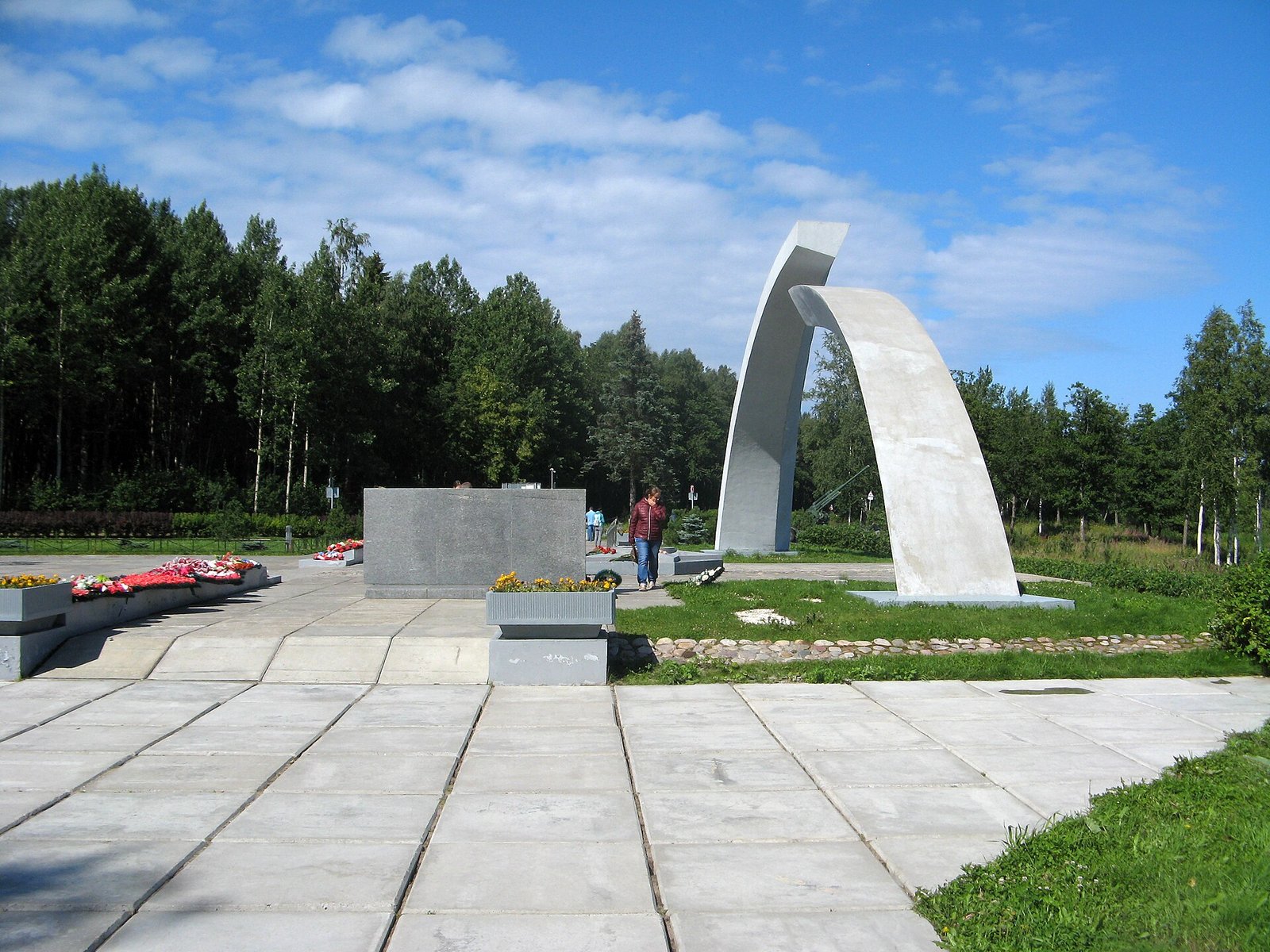
The Broken Ring memorial from the side: an arc, the square and flowers by the plinth — Photo: Yekaterina Borisova, Wikimedia Commons, CC BY-SA 4.0
The memorial is always open and free. The nearest platform is Vaganovo, about 3.5 km away in a straight line; from Ladozhskoye Ozero station it's about 5 km. Check the walking route on a map beforehand and don't walk it at dusk — a taxi from the station is simpler.
⚓ The Road of Life Museum at Osinovets
The museum stands on the Ladoga shore, near Cape Osinovets where the water route began. It opened on 12 September 1972 in a former bakery that housed a canteen and the command of the Osinovets naval base during the war. By 2015 the site had been completely rebuilt, with a pavilion for large exhibits, a new embankment and a modern museum building.
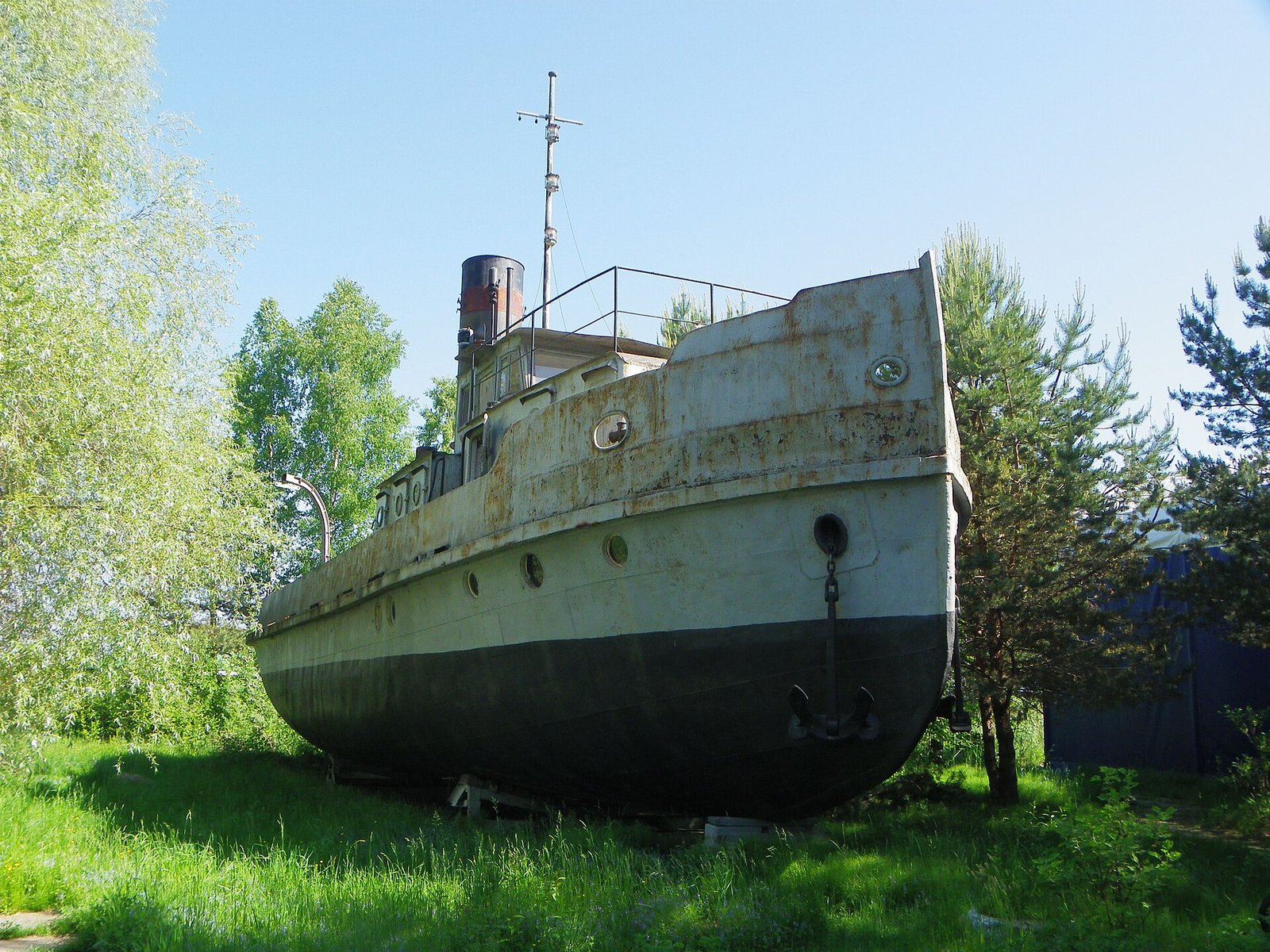
A steam tug on the open-air display at the Road of Life Museum — Photo: SokOs, Wikimedia Commons, CC0
What to see:
- Outdoors: the steam tug Izhorets No. 8, built in 1935, which towed barges between Osinovets and Kobona during the war; a Ladoga cargo tender; a Li-2T transport plane; naval guns and parts of ships from the Ladoga Flotilla.
- In the Maly Okhotnik pavilion: an MO-4 patrol boat, which the museum describes as the only surviving boat in Russia that served in the Second World War.
- In the large-exhibits pavilion: GAZ-AA and ZIS-5 lorries. The GAZ-AA was raised from the bottom of Ladoga in 1947. This is also where the story of the ice road is told: on 22 November 1941 a column of 60 lorries left the western shore and on 23 November came back from Kobona loaded with flour.
The museum is open 10:00–18:00; the ticket office and entry to the grounds close at 17:15. It is closed on Mondays and Tuesdays. Entry costs 400 roubles for citizens of Russia and the Eurasian Economic Union (Armenia, Belarus, Kazakhstan, Kyrgyzstan), 200 concession, and 600 roubles for all other foreign visitors. Audio guides cost 500 roubles in Russian and 800 in a foreign language, against a 1,000-rouble deposit or a driving licence. Tickets are sold online on the Central Naval Museum's website and at the ticket office; cards issued outside Russia generally don't work in the country, so plan your payment in advance. The museum is about 1 km on foot from Ladozhskoye Ozero station, towards the lake.
At the station itself, according to the train operator, the steam locomotive Esh-4375 that worked on the Road of Life stands by the station building, which has housed a small railway museum since 1975; check on the spot whether it's open.
🌸 The Flower of Life: in memory of the siege's children
This memorial stands at kilometre 3 of the Road of Life in the Vsevolozhsk district and is dedicated to Leningrad's children who died during the siege. It was unveiled on 28 October 1968. The white flower on its tall stem can be seen from far away; next to it a stone reads "In the name of life and against war — to the children, the young heroes of Leningrad".
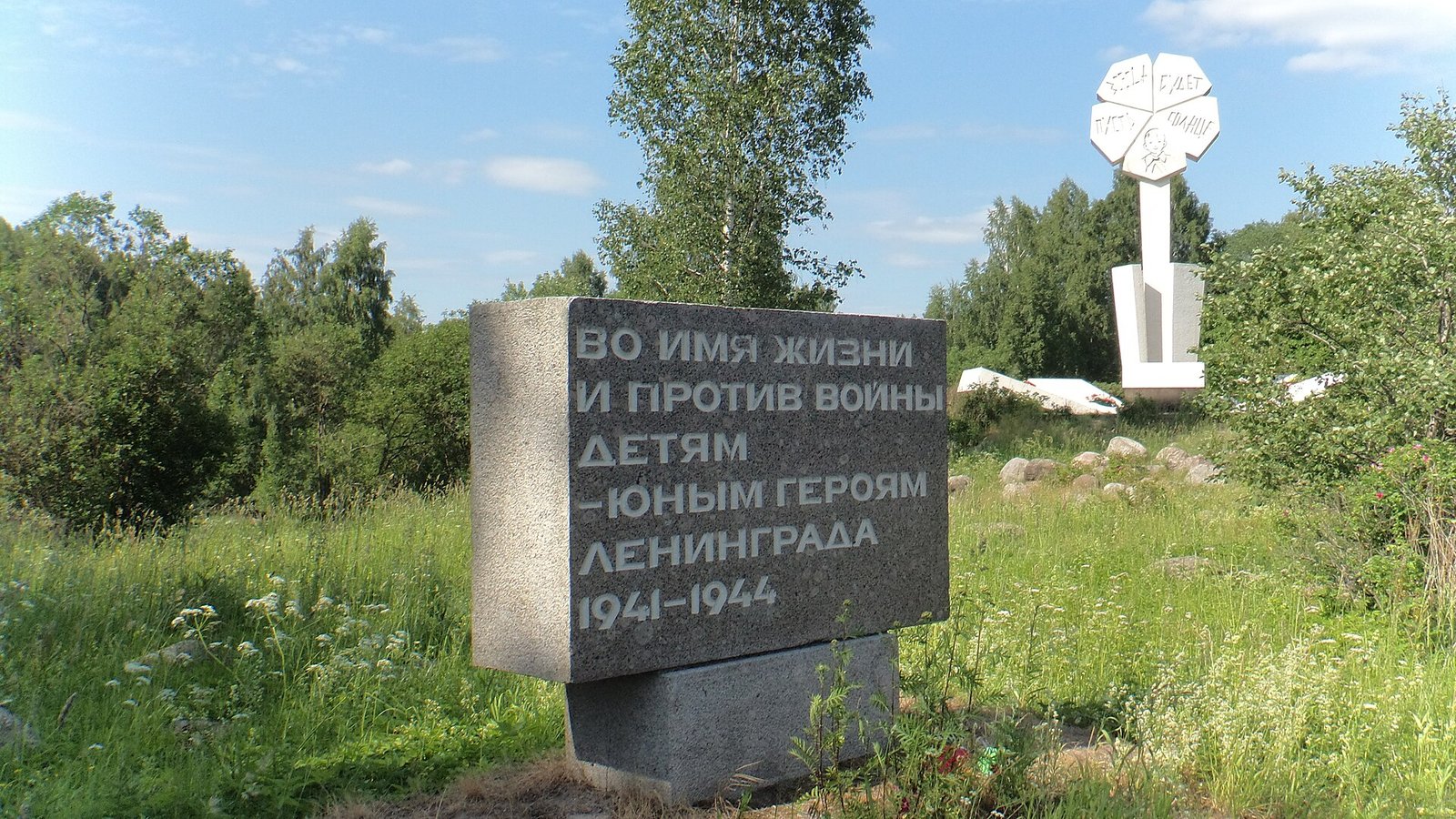
The Flower of Life monument and the inscribed memorial stone — Photo: Ilyin Denis, Wikimedia Commons, CC BY-SA 4.0
The complex includes the Alley of Friendship and the "Diary of Tanya Savicheva" mound — stone slabs carrying lines from the notebook in which a Leningrad girl recorded the deaths of her family. All around is a birch grove, with red ribbons on the trunks.
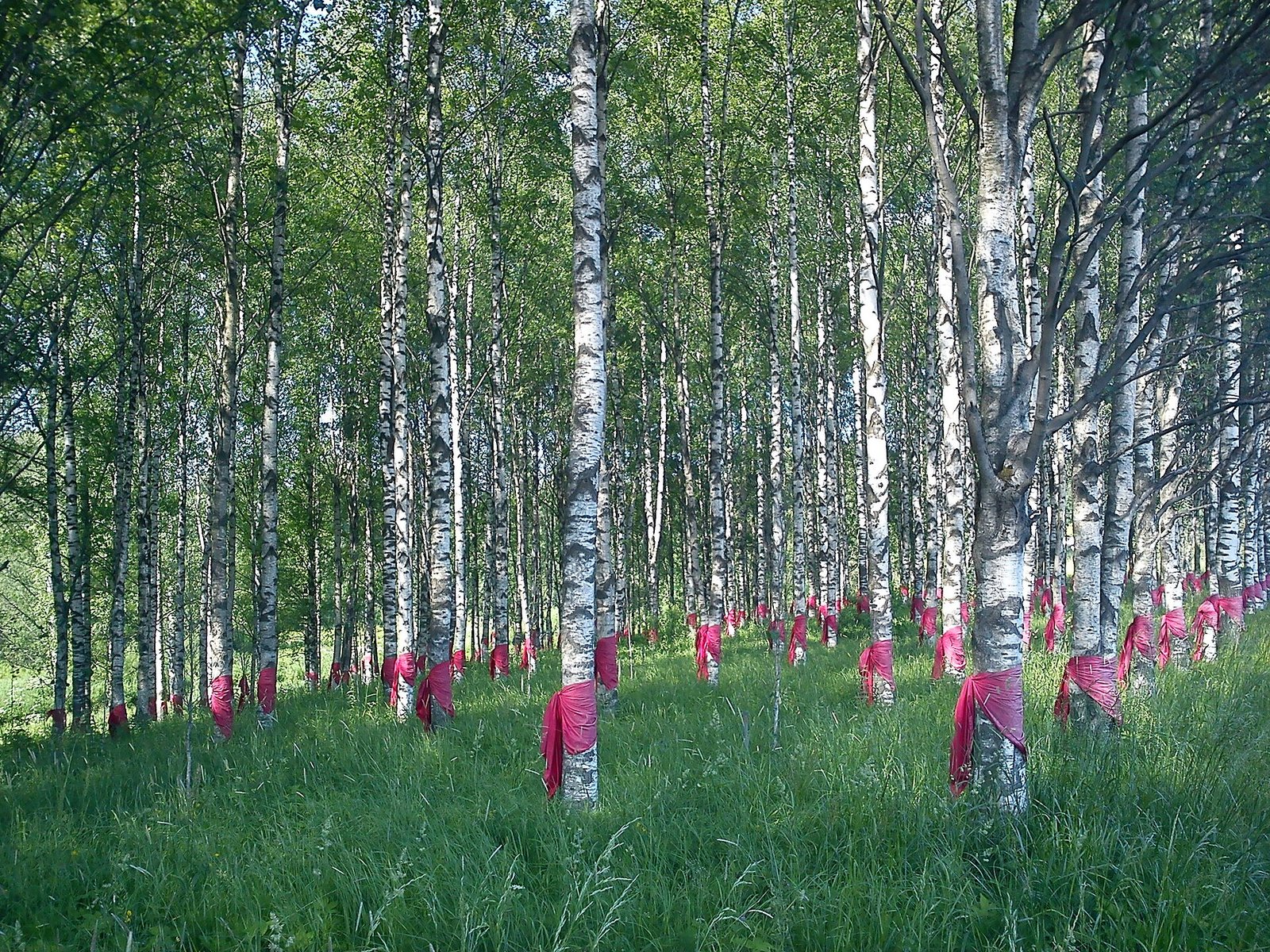
The birch grove at the Flower of Life memorial with red ribbons on the trunks — Photo: Ilyin Denis, Wikimedia Commons, CC BY-SA 4.0
The nearest platform is Kovalyovo, about 1.5 km from the memorial on the map. The platform has no ticket office. Entry to the memorial is free.