Russia's Oldest National Theatre and Its Historic Significance
The Alexandrinsky Theatre stands as Russia's oldest national theatre, established in 1756 by decree of Empress Elizabeth. Located on Ostrovsky Square in central Saint Petersburg, this imperial stage has maintained continuous operation and in 2026 marks its 270th anniversary, making it one of Europe's longest-running theatrical institutions. The theatre's current neoclassical building, designed by architect Carlo Rossi and completed in 1832, represents one of the finest examples of Russian Empire architecture. The structure features a distinctive columned portico crowned by Apollo's chariot, a landmark visible from Nevsky Prospekt via the perfectly aligned Rossi Street.
The theatre was named in honor of Empress Alexandra Feodorovna, wife of Nicholas I, and quickly became the premier venue for Russian dramatic art. Throughout the 19th century, the Alexandrinsky premiered works by Russia's greatest playwrights, including Nikolai Gogol's "The Government Inspector" in 1836 and Anton Chekhov's "The Seagull" in 1896. These historic premieres established theatrical traditions that continue to influence Russian drama today. The venue served as the birthplace of the Russian national repertoire, where the Russian language itself was refined and elevated through theatrical performance.
Today, the Alexandrinsky Theatre operates under the official name Russian State Academic Alexandrinsky Theatre and maintains its reputation as a leading dramatic institution. The theatre preserves classical Russian repertoire while also staging contemporary works, offering visitors insight into both historical and modern Russian theatrical traditions. Its location at 6 Ostrovsky Square, accessible via Gostiny Dvor metro station (exit onto Nevsky Prospekt, then a 5-minute walk), makes it convenient for international visitors exploring central Saint Petersburg. The official Alexandrinsky Theatre website provides current performance schedules and historical information.
The Architectural Masterpiece of Carlo Rossi
Carlo Rossi's architectural vision for the Alexandrinsky Theatre created not just a building but an entire urban ensemble. The architect designed Ostrovsky Square, Theatre Street (now Rossi Street), and the theatre itself as a unified composition, demonstrating the principles of Russian neoclassicism at their peak. The theatre's facade stretches 60 meters, featuring six Corinthian columns supporting a pediment decorated with classical reliefs. The building's proportions follow strict mathematical ratios, creating visual harmony that architectural historians study as a textbook example of early 19th-century design.
Rossi Street, extending behind the theatre, demonstrates remarkable precision: 220 meters long, 22 meters wide, with buildings exactly 22 meters high, creating a perfect 10:1:1 ratio. This geometric perfection makes it one of the most photographed streets in Saint Petersburg. The street connects Ostrovsky Square to Lomonosov Square, forming a theatrical corridor that once housed the Imperial Theatre School and costume workshops. Visitors walking this route experience the complete architectural concept Rossi envisioned for the theatrical quarter.
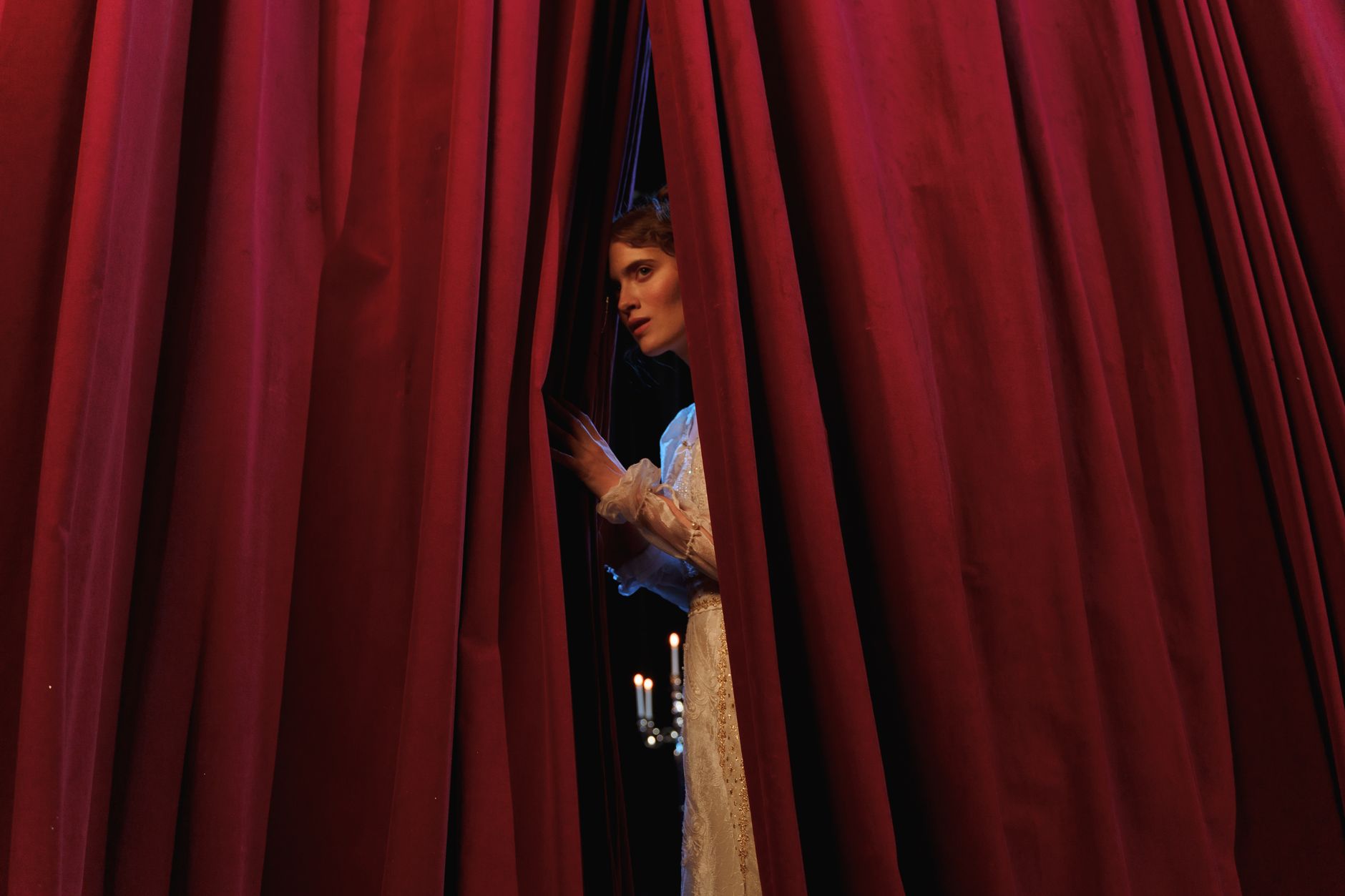
Inside, the auditorium preserves its original 1832 layout with four tiers of boxes, a gallery, and seating for approximately 900 spectators. The interior decoration features white, gold, and blue color schemes characteristic of imperial Russian theatres. The stage curtain, depicting Apollo and the Muses, was created in the 19th century and remains in use for special performances. The theatre's foyer and public spaces showcase period chandeliers, mirrors, and decorative elements that transport visitors to the era of imperial premieres.
What Performances Can You See at the Alexandrinsky Theatre?
The Alexandrinsky Theatre presents approximately 30 different productions in its repertoire, focusing primarily on Russian classical drama and selected international classics. Visitors can typically see works by Pushkin, Gogol, Ostrovsky, Chekhov, and Dostoevsky, performed in Russian with occasional English subtitles for select productions. The theatre maintains traditional staging approaches while also featuring contemporary interpretations directed by leading Russian directors, offering a spectrum from classical to modern theatrical styles.
The repertoire includes cornerstone Russian plays such as Gogol's "The Government Inspector," Griboedov's "Woe from Wit," and Ostrovsky's "The Storm." These productions showcase Russian dramatic traditions developed on this very stage over centuries. Chekhov's works, particularly "The Seagull" (which premiered here despite initial critical failure), appear regularly in the schedule. The theatre also stages adaptations of Russian literary classics, including Dostoevsky's novels transformed for the stage, allowing audiences to experience Russian literature through theatrical interpretation.
International classics appear selectively, with Shakespeare, Molière, and other European playwrights adapted to Russian theatrical traditions. The theatre occasionally presents modern Russian drama and experimental works on its New Stage, a smaller venue within the same complex offering more intimate productions. The 2026 season features special 270th-anniversary programming, including the International Theatre Festival "Alexandrinsky" held 30 August to 11 October 2026. Performance schedules vary seasonally, with the main season running from September through June. Summer months typically feature reduced schedules or special festival performances. The theatre's performance calendar provides detailed information about current productions, though international visitors should note that most performances are conducted in Russian.
at the Bank of Russia rate on 10.10.2026 · powered by tutkakdoma
How Much Do Tickets Cost and How Can You Book Them?
Ticket prices at the Alexandrinsky Theatre range from approximately 300 rubles for basic gallery seats up to 8,000 rubles or more for premium seats and premieres, depending on seat location, production, and performance date. Premium seats in the stalls and first-tier boxes command higher prices, while gallery seats offer budget-friendly options with good sightlines. Weekend evening performances typically cost more than weekday matinees, and premiere productions or special events may exceed standard pricing ranges.
International visitors can purchase tickets through the theatre's official website, which offers an English-language interface and accepts international payment cards. Booking in advance is recommended, particularly for popular productions or weekend performances, as the theatre maintains strong attendance from local audiences. The box office, located at the main entrance on Ostrovsky Square, opens daily and accepts cash and cards. Staff at the box office may have limited English proficiency, so having production names written in Russian can facilitate the transaction.
Some productions offer audio guides or subtitle devices for international audiences, available for rental at the theatre. Dress code remains relatively formal by contemporary standards, with many Russian theatregoers choosing elegant attire, though strict requirements are not enforced. Photography during performances is prohibited, but visitors may photograph the interior spaces before the performance and during intermission.
Ticket Category
Approximate Price Range
Seat Location
Gallery
300-1,000 RUB
Upper tier, distant view
Balcony
1,000-2,500 RUB
Second and third tiers
Boxes
2,500-5,000 RUB
Side boxes, various tiers
Stalls/Premium
4,000-8,000+ RUB
Orchestra level, best views; premieres may exceed this range
Prices vary by production and date; confirm current pricing on the official site.
Planning Your Visit: Location, Access, and Practical Information
The Alexandrinsky Theatre occupies a prominent position at 6 Ostrovsky Square, directly accessible from Nevsky Prospekt. The nearest metro station, Gostiny Dvor (lines 2 and 3), places visitors within a 5-minute walk of the theatre. Exit the metro onto Nevsky Prospekt, walk east toward the Anichkov Bridge, then turn left onto Ostrovsky Square. The theatre's distinctive columned facade and Apollo statue make it immediately recognizable. Alternative metro stations include Nevsky Prospekt (300 meters away) and Mayakovskaya (400 meters away).
Performance times typically begin at 19:00 for evening shows and 12:00 or 15:00 for matinees, though specific times vary by production. The theatre recommends arriving 20-30 minutes before curtain to allow time for coat check, finding seats, and reviewing programs. Intermissions usually last 15-20 minutes, during which visitors can explore the foyers, purchase refreshments at the theatre bar, and photograph the interior spaces. Total performance duration ranges from 90 minutes to three hours depending on the production.
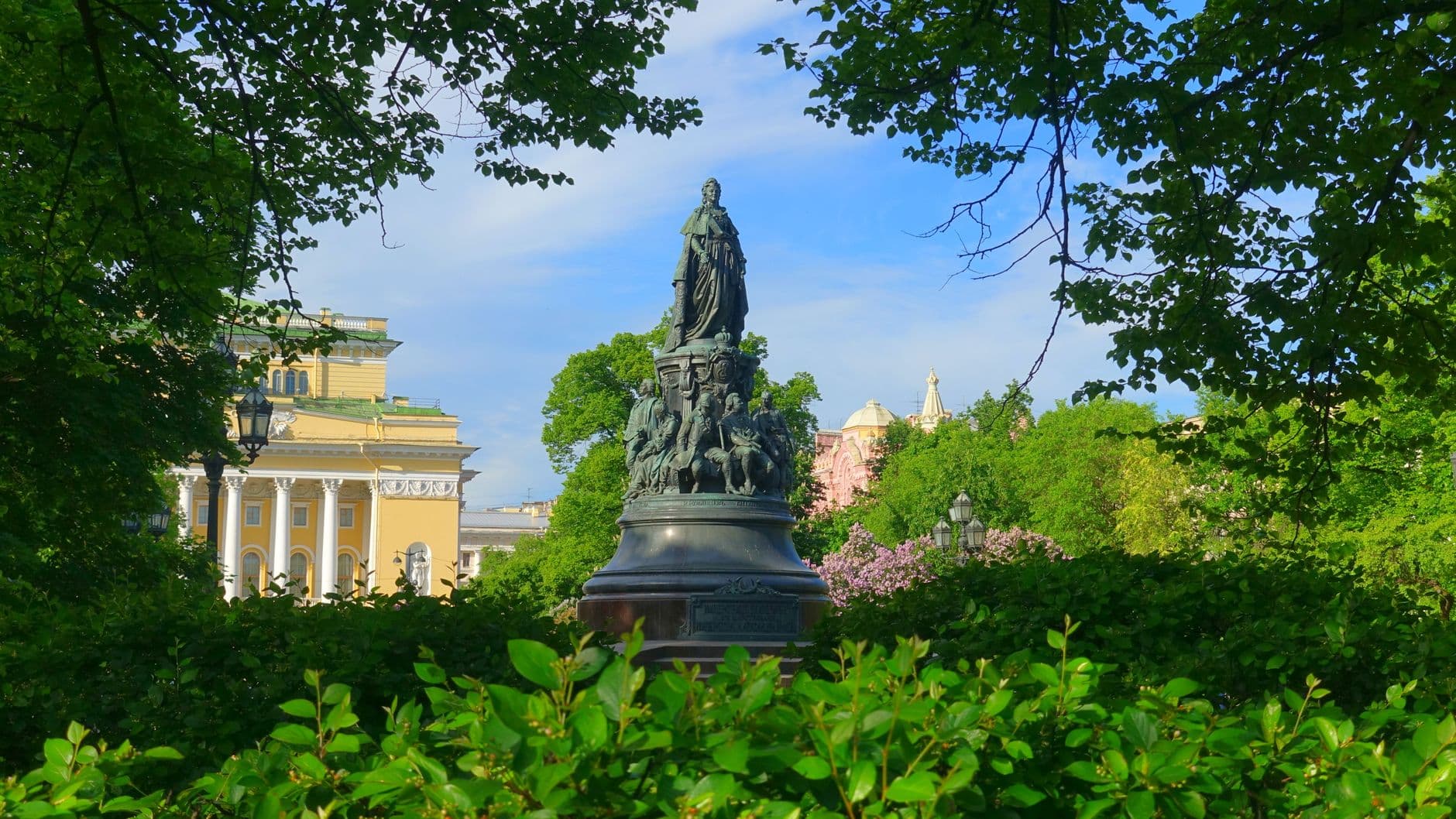
The theatre building includes a museum space on the third floor, accessible by guided tour, displaying historical costumes, set designs, photographs, and documents from famous productions. Tours must be arranged in advance through the theatre administration and typically conduct in Russian, though English-language tours may be available by special request. The surrounding Ostrovsky Square features a monument to Catherine the Great and the Russian National Library, creating a cultural cluster worth exploring before or after performances.
Accessibility features include ground-level entrance options, though the historic building's infrastructure presents some limitations for visitors with mobility challenges. Contacting the theatre in advance allows staff to arrange appropriate seating and assistance. Coat check is mandatory for outerwear during winter months, with a small fee. The theatre's location in central Saint Petersburg places it within walking distance of major hotels along Nevsky Prospekt and near numerous restaurants suitable for pre-theatre dining.
Combining the Alexandrinsky Theatre with Other Saint Petersburg Attractions
The theatre's central location makes it ideal for combining with other Saint Petersburg cultural sites in a single day. The Russian Museum, located in the nearby Mikhailovsky Palace (accessible via a 7-minute walk through the Russian Museum gardens), houses the world's largest collection of Russian art. Visitors can explore the museum's extensive galleries in the morning, then attend an evening performance at the Alexandrinsky, creating a full day of Russian cultural immersion.
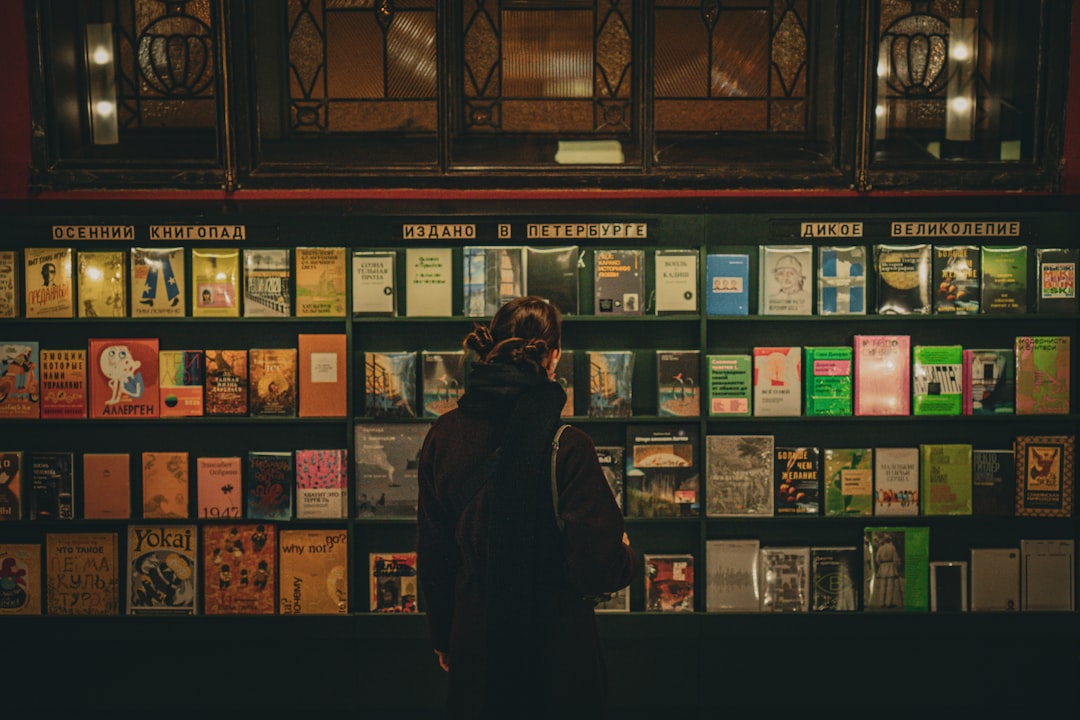
Nevsky Prospekt, Saint Petersburg's main thoroughfare, runs directly past Ostrovsky Square and offers endless exploration opportunities. The Kazan Cathedral stands 600 meters west, while the Anichkov Bridge and its famous horse sculptures lie 200 meters east. The Gostiny Dvor shopping arcade, a historic merchant complex, operates across the street from the theatre. Book lovers can visit the Singer House (Dom Knigi), Saint Petersburg's most famous bookstore, located 400 meters away at 28 Nevsky Prospekt.
For visitors interested in theatrical history, the Theatre Museum occupies a building on Rossi Street, directly behind the Alexandrinsky. This specialized museum displays Russian theatrical artifacts, costumes, and set designs spanning several centuries. The Vaganova Academy of Russian Ballet, training ground for Mariinsky Ballet dancers, also operates on Rossi Street, though interior visits require special arrangements. The Theatre Museum website provides information about exhibitions and visiting hours.
Evening performances at the Alexandrinsky create opportunities for post-theatre walks along illuminated Nevsky Prospekt, where the city's architectural landmarks appear particularly striking under night lighting. The nearby Fontanka River embankment offers pleasant walking routes, and several restaurants along Nevsky Prospekt and adjacent streets serve late dinners suitable for post-performance dining. The theatre district's concentration of cultural institutions allows visitors to design efficient itineraries maximizing their Saint Petersburg experience.
Why International Visitors Should Experience the Alexandrinsky Theatre?
Attending a performance at the Alexandrinsky Theatre provides international visitors with direct access to Russian cultural traditions that have shaped world theatre. Unlike museum visits, which present static historical artifacts, a theatrical performance offers living culture, demonstrating how Russian dramatic art continues to evolve while maintaining connections to its historical roots. The experience transcends language barriers through visual staging, emotional performances, and the theatrical atmosphere itself, allowing non-Russian speakers to appreciate elements of the production even without understanding every word.
The theatre's historical significance as the birthplace of Russian national drama adds depth to any performance. Sitting in the same auditorium where Gogol's and Chekhov's premieres occurred creates a tangible connection to literary history that readers of Russian literature particularly value. The building itself functions as a living monument to Russian neoclassical architecture, with Carlo Rossi's design principles visible in every proportion and detail. This architectural experience complements the performance, offering aesthetic value beyond the production itself.
For visitors seeking authentic cultural experiences rather than tourist-oriented entertainment, the Alexandrinsky delivers genuine Russian theatrical tradition. The audience composition, predominantly Russian theatregoers rather than international tourists, creates an authentic atmosphere. Observing Russian theatre etiquette, intermission customs, and audience responses provides cultural insights unavailable through guided tours or museums. The theatre represents Saint Petersburg's living cultural heritage, demonstrating how imperial-era institutions continue to function and remain relevant in contemporary Russian society.
The Alexandrinsky Theatre complements other Saint Petersburg attractions by offering evening programming when many museums close. This scheduling advantage allows visitors to maximize their daily itineraries, combining daytime museum visits with evening theatrical performances. The theatre's location on Ostrovsky Square, at the heart of Saint Petersburg's cultural corridor, makes it a natural component of any comprehensive visit to the city, providing both architectural splendor and performance art in a single venue.