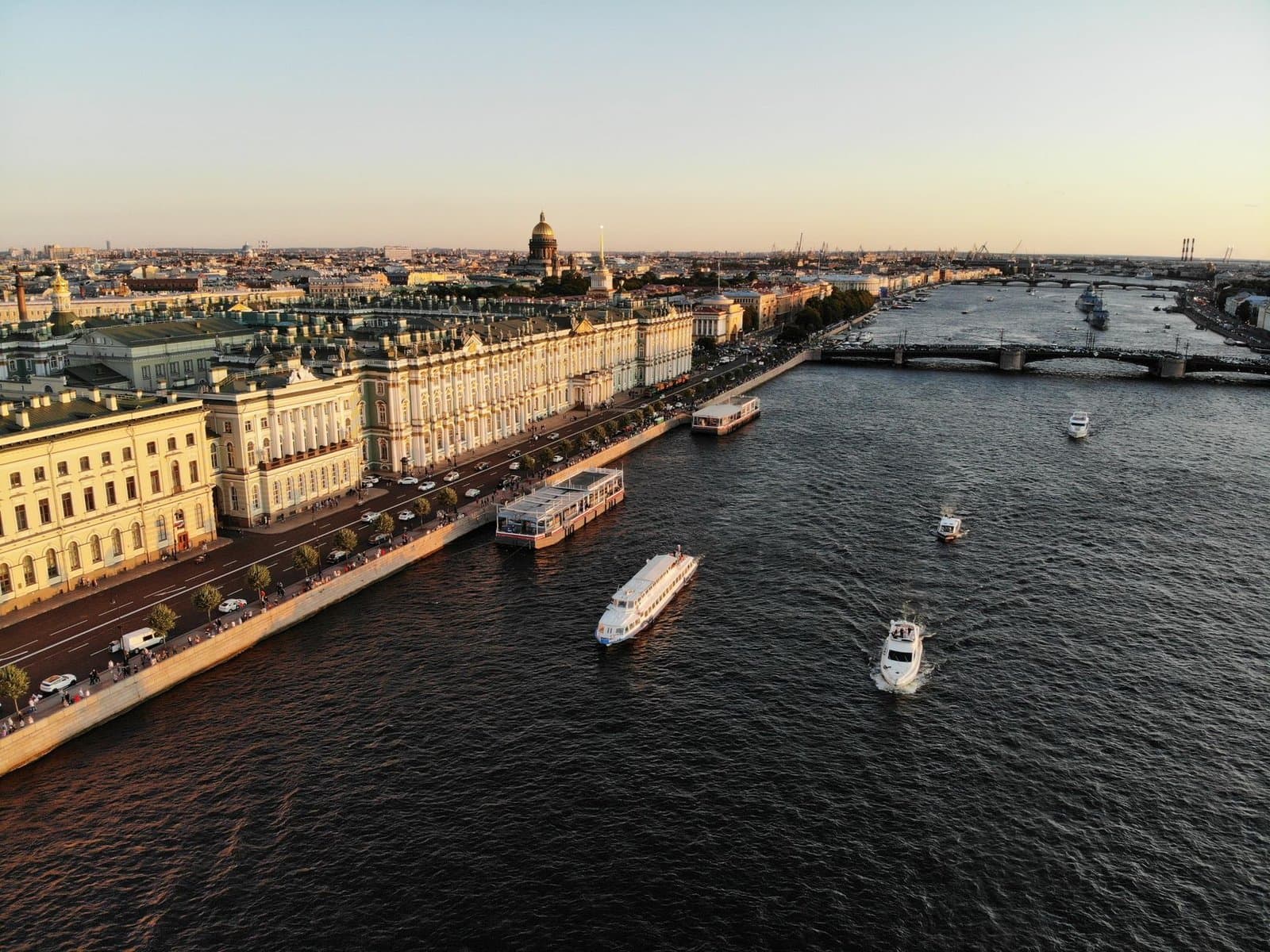

For about three weeks either side of the summer solstice, Saint Petersburg does not get dark. Not dim, not moonlit — the sky stays a deep blue that never turns black, and you can read a paper timetable outdoors at one in the morning. The city knows this and rearranges itself around it: the bridges lift, the embankments fill, the theatres run late, and nobody goes to bed at a sensible hour. Here is when it happens, what actually takes place, and the one mistake that strands visitors on the wrong side of the river until dawn.
The dates, and what "white night" actually means
Saint Petersburg sits at roughly sixty degrees north. In June the sun dips below the horizon but not far below it, so twilight never deepens into night — the technical term is civil twilight lasting until sunrise.
The city counts its true white nights from June 11th to July 2nd. The wider bright season, when evenings already feel endless, runs from late May to mid-July. The peak is the solstice around June 21st: the sun sets close to 22:25 and is back up by about 03:35, and the gap between is never properly dark.
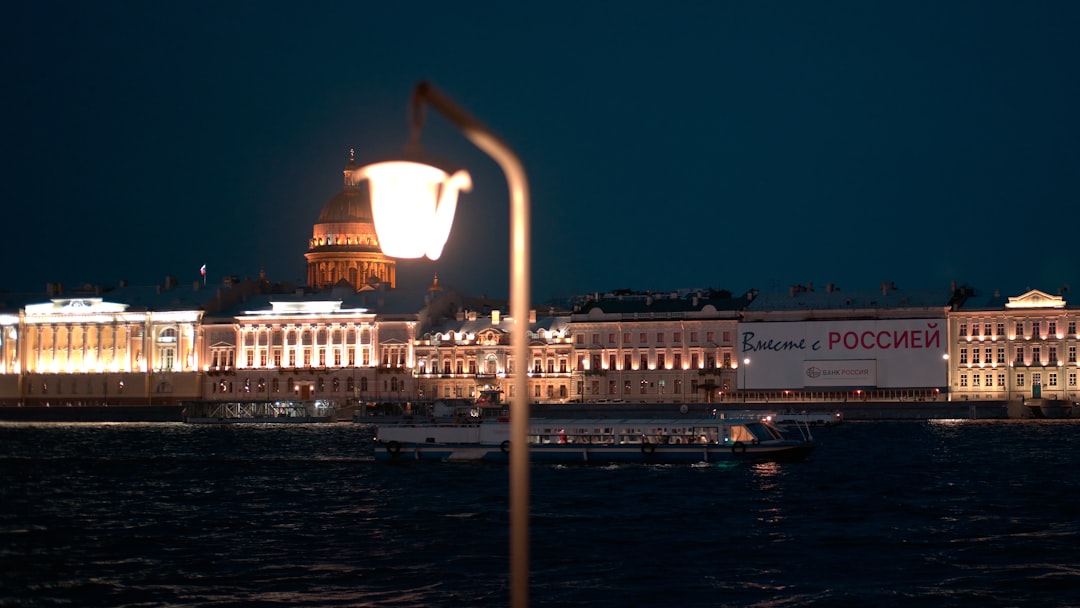
What this looks like in practice: at 23:00 the light is like a long overcast afternoon. At 01:00 the sky over the Neva turns a saturated blue that photographs far better than it looks to the eye. By 02:30 it is already brightening again.
The drawbridges: the schedule, the trap, and the way out
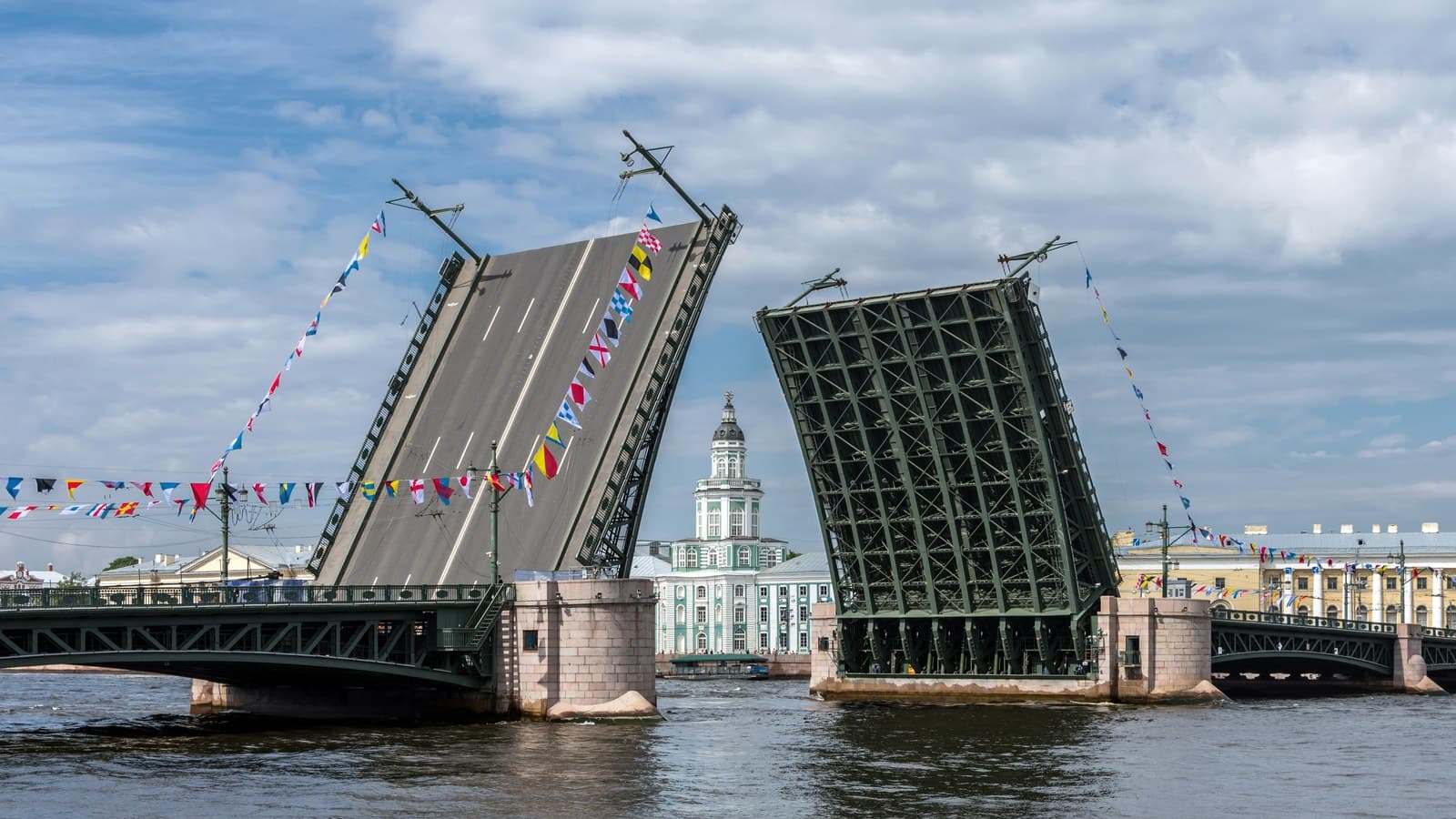
From April 10th to November 30th the Neva bridges lift at night to let ships through. This is the single most misunderstood thing about summer in Saint Petersburg, and it catches people out every year: once the spans are up, there is no crossing. Not by taxi, not by ride-hailing, not for money. The banks are simply separate until they come back down.
These are the 2026 times published by the city bridge authority. Traffic stops at the first figure and resumes at the second:
- Palace Bridge (the famous one, by the Hermitage) — 01:10–02:50, then again 03:10–04:55
- Trinity Bridge — 01:20–04:50, in one unbroken stretch
- Blagoveshchensky Bridge — 01:25–02:45, then 03:10–05:00
- Liteyny Bridge — 01:40–04:45
- Bolsheokhtinsky Bridge — 02:00–05:00
- Birzhevoy and Tuchkov (to Vasilievsky Island) — 02:00–02:55, then 03:35–04:55
The way out, if you get it wrong. Notice that Palace Bridge and Blagoveshchensky both come down for about twenty minutes between roughly 02:50 and 03:10. That short window is a real crossing opportunity, and locals use it. Trinity Bridge does not offer one — it stays up the whole time.
The other option is the Bolshoy Obukhovsky Bridge, the cable-stayed crossing on the ring road far downstream. It is built high enough that ships pass underneath, so it never opens at all. A taxi there and back is long and expensive, but it works at any hour.

Times shift slightly from year to year and the schedule is republished each season, so check the current night before you plan around it. And remember the metro: it stops around midnight and restarts near 05:30, which is exactly the stretch you might need it.
Scarlet Sails: the one night that is different
The white nights have a single peak event, and it is not aimed at tourists at all. Scarlet Sails is the city's school-leavers' celebration, and in 2026 it falls on the night of June 27th–28th. A tall ship under red sails comes down the Neva around midnight, followed by fireworks and a water show.
The central viewing area — Palace Square and the adjoining embankments — is ticketed and reserved for that year's graduates and their families. Everyone else watches from further along the river, which is free and still very good: the ship passes in full view from a long stretch of both banks.
Two practical points. The crowd is enormous and the centre is closed to traffic for hours, so walk in and plan to walk out. And it runs past the bridge-opening time, so decide which bank you want to end the night on before it starts.
Stars of the White Nights, and what else stays open
The Mariinsky Theatre runs its Stars of the White Nights festival across May, June and July — opera and ballet on a heavier schedule than the rest of the year, often with late curtains. It has been the anchor of the season since the early 1990s and tickets for the strongest nights go early.
Beyond that, the season is less about special programming than about ordinary things happening at strange hours: cafés on the embankments serving past midnight, boat operators running trips timed to the bridge openings, rooftop bars trading on the light rather than the view.