"A legal rooftop tour" is the most common phrase in St Petersburg's tourist advertising and at the same time the emptiest one. There is no law in Russia that permits taking groups onto the roofs of residential buildings. Which means there are no permitted rooftop walks: there are the ones the police have not yet turned up to, and the ones they have.
Why "legal roofs" do not exist
The roof of an apartment building is part of the common property of its owners. Only a general meeting of residents can dispose of it — not the management company, not whoever rents the attic, and certainly not a guide. The city authorities put it plainly: such tours are unlawful and dangerous.
So "we have an arrangement with the residents" means in practice that some of the residents do not object and the attic key was obtained through an acquaintance. While the neighbours stay quiet, the walk goes ahead. The moment someone calls the police, the participants are on a roof they have no right to be on, and the guide is the person who organised it.
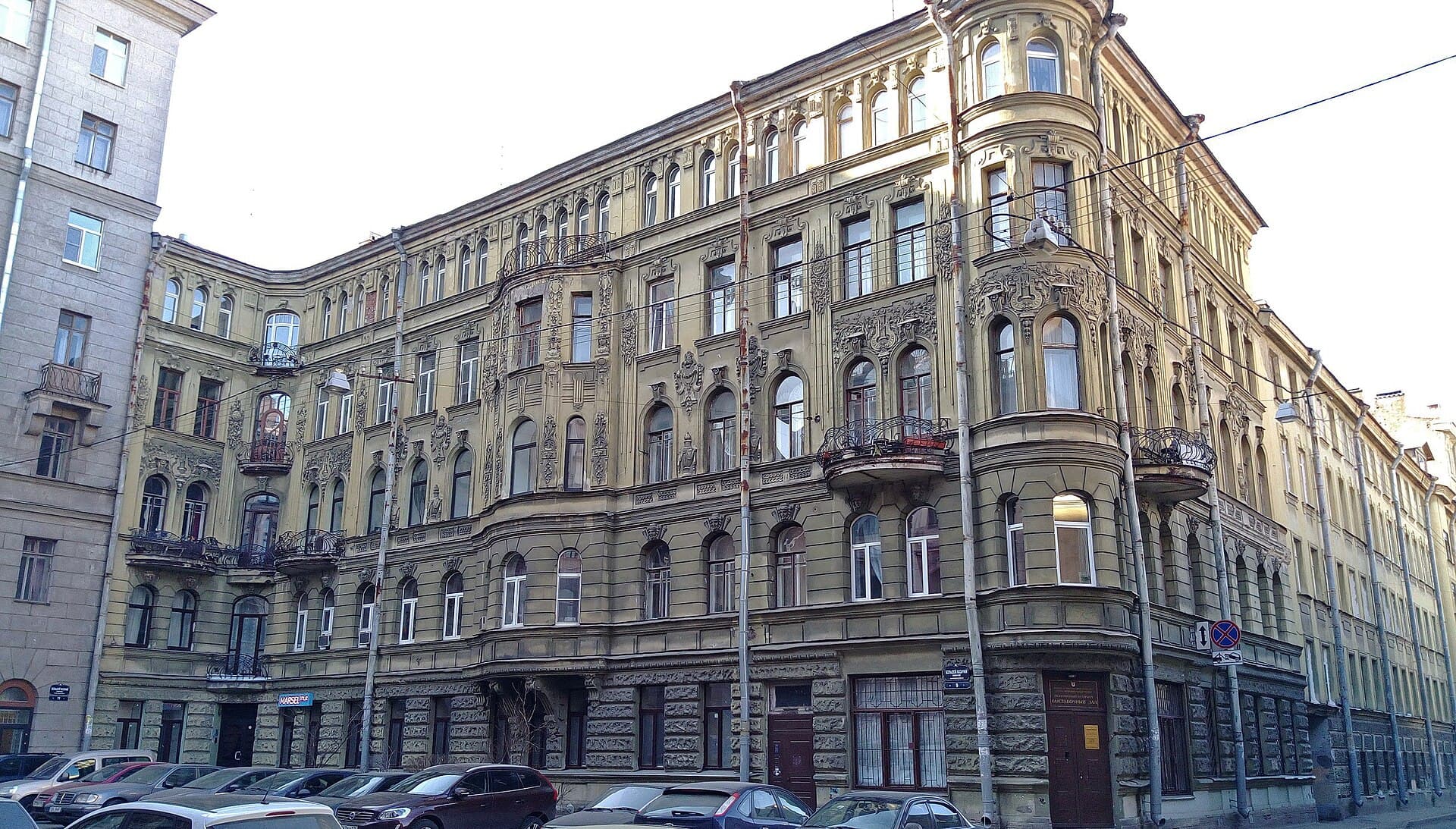
Historic buildings are a separate matter. Roofs in the centre of St Petersburg are almost all sheet metal, pitched, with old standing seams and a surface that turns slick after rain. There are no railings, because none were ever intended: the roof was designed for water and snow, not for people.
Red flags in a listing
If you do read a tour description, these are the signs to close the page on:
- the word "legal" with no explanation of what exactly is legal and on what grounds;
- a meeting point given as "in the courtyard, exact address by direct message" — that is what you do when the address cannot be published;
- "we go up the fire escape", "through the attic", "we have the key";
- a promise to "meet the sunrise on a pitched roof" — that is, in the dark, on sloping wet metal;
- no insurance and no registered company behind the tour.
There is exactly one sign of legitimacy in the other direction: the viewing platform has an owner, a ticket and opening hours. Not the guide — the site itself.
Where you can actually go up
St Petersburg has more than forty official viewing platforms, and between them they cover every high view the city has to offer.
The colonnade of St Isaac's Cathedral. A full circuit at height, from which the centre reads like a drawing: the Neva, the Admiralty, the roofs, the domes. A classic that does not wear out, and the only platform showing you the Petersburg you came for.
The bell tower of the Peter and Paul Cathedral. A viewing gallery on the second tier, a little over forty metres up, looking out over the Neva, the Spit of Vasilyevsky Island and the Admiralty. A different angle from St Isaac's, which is why it complements rather than repeats it.
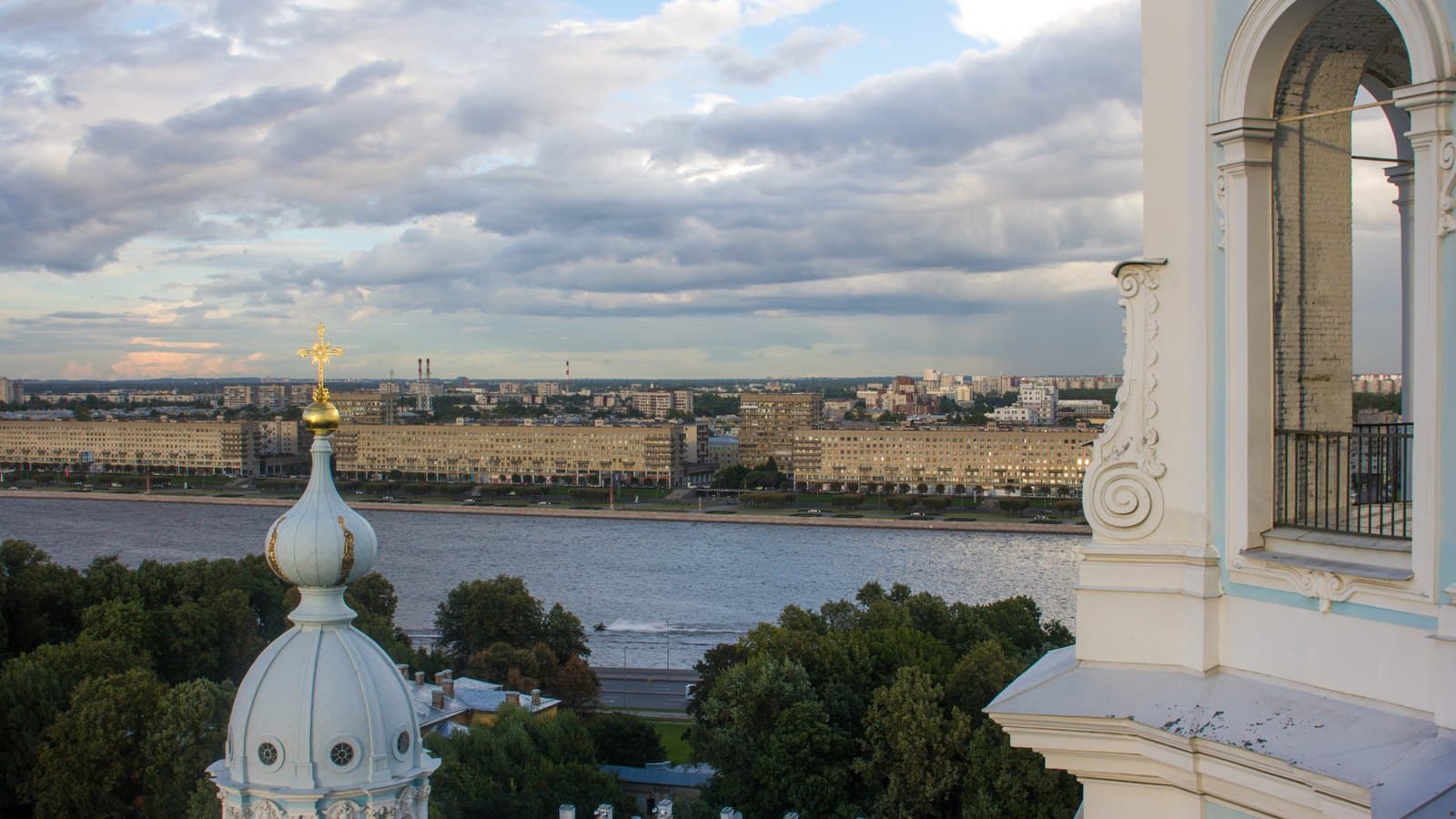
The belfry of the Smolny Cathedral. The highest viewing platform in the historic centre. The climb is on foot, close to three hundred steps — an honest warning rather than a boast. At the top: the whole city and the gulf.
The Loft Project Etagi on Ligovsky Prospekt. A properly equipped roof terrace with railings, an inexpensive all-day ticket and a view over the roofs of Ligovka. Exactly what people go on rooftop tours for, minus the attic and someone else's lock.
The Lakhta Center observation deck. The highest in Europe; access is with an organised group. This is no longer the historic centre but a panorama of the gulf and the city from a distance — a different genre, and a strong impression.
Choosing by purpose
For the postcard view of the centre, St Isaac's. For the Neva and the Peter and Paul Fortress in frame, Smolny or the bell tower. To sit on a roof among roofs, Etagi. For height as a thrill, Lakhta.
In autumn and winter high platforms have one peculiarity: it is always windier and colder up there than at street level, and some open sites close in ice or strong wind. Check the opening hours on the day of your visit, not the day before.
In short
The word "legal" in a rooftop tour listing means nothing: there is no one who can authorise such walks in residential buildings. The real alternative is not worse but better — the colonnade of St Isaac's, the Peter and Paul bell tower, the Smolny belfry, the Etagi roof and the Lakhta Center deck. All of them have a ticket, a railing and opening hours, which is precisely what someone else's roof does not.
Cover photo: view from the belfry of the Smolny Cathedral. Photo: Alexey Komarov, Wikimedia Commons, CC BY 3.0.