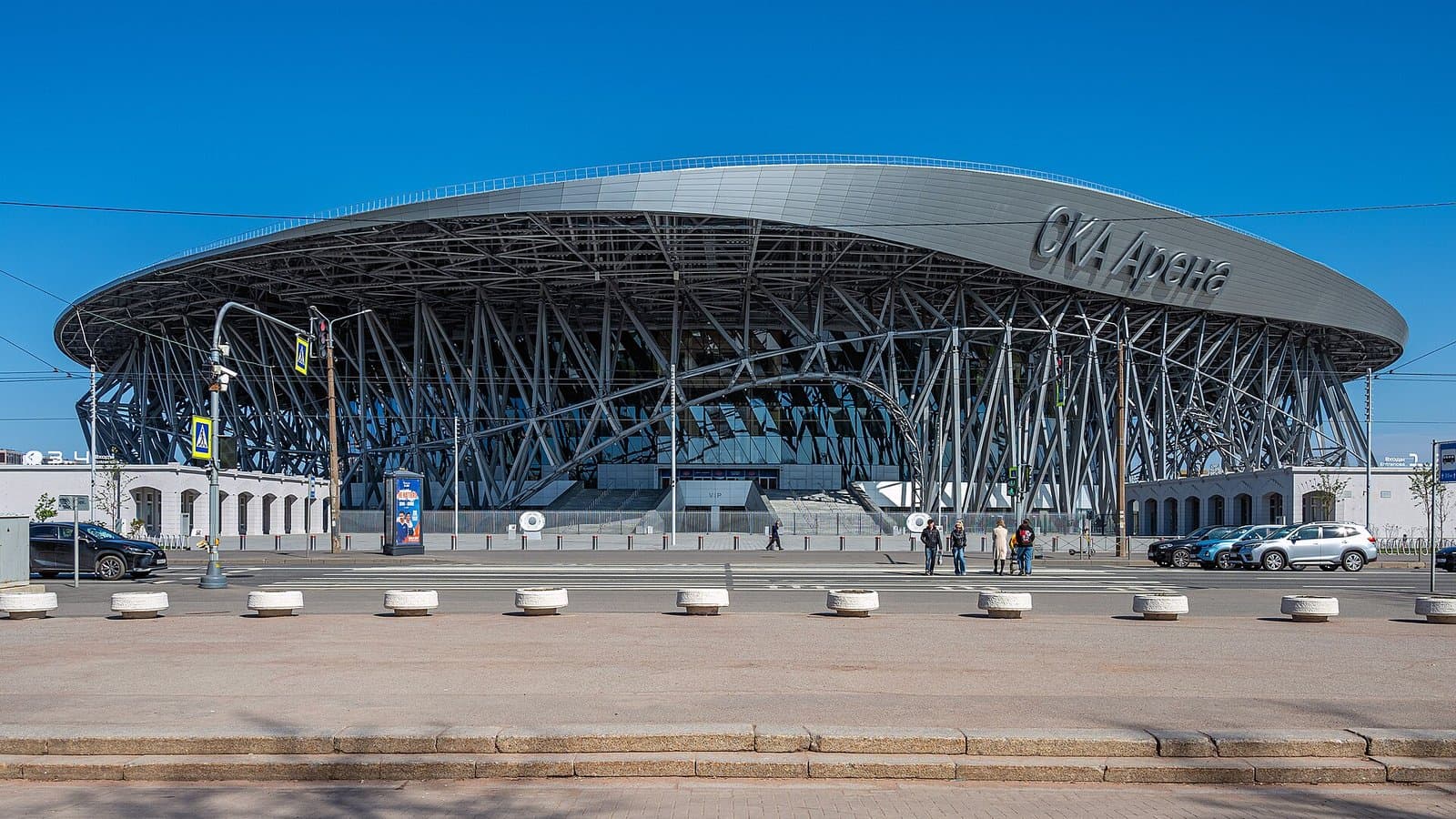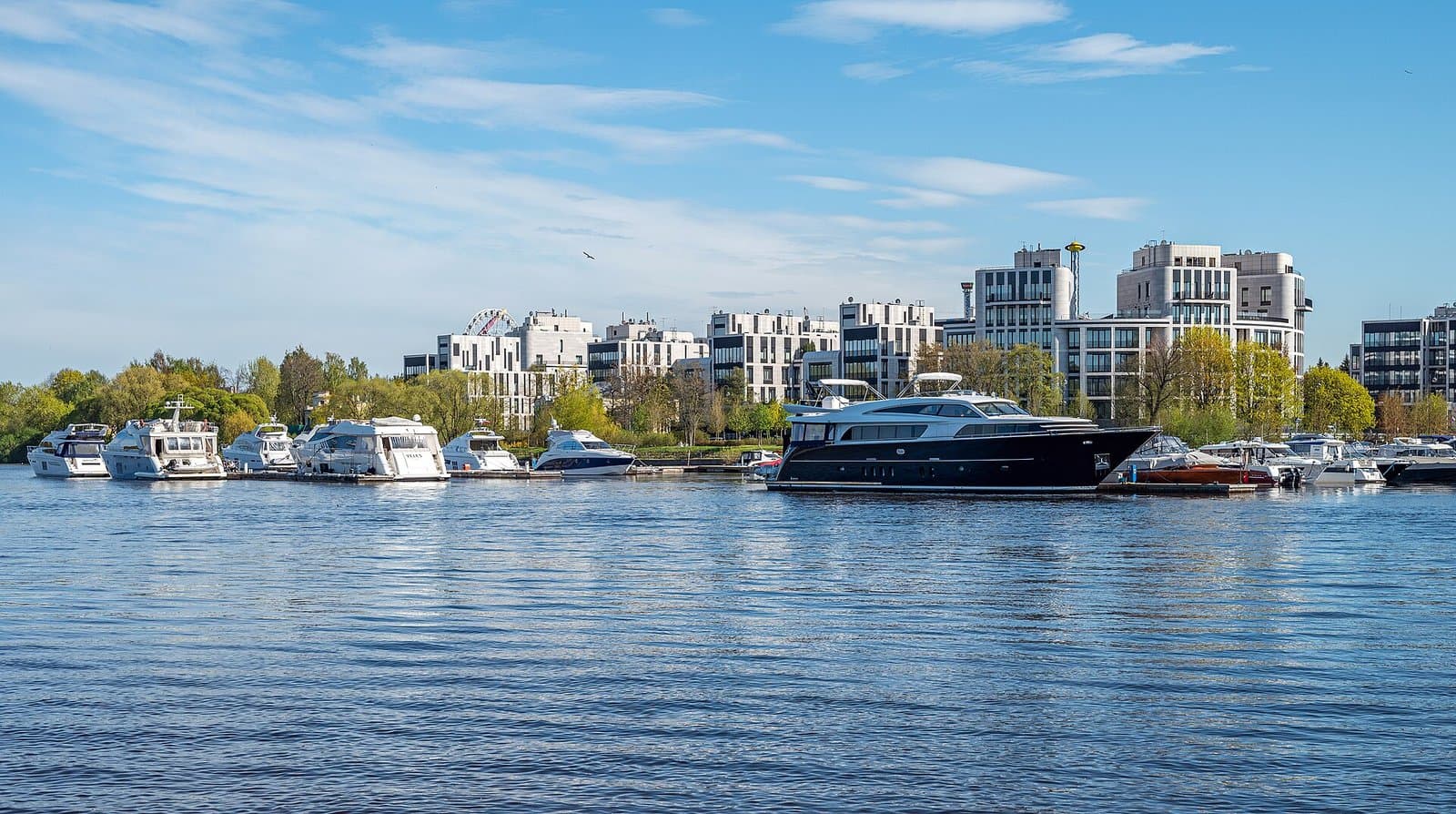
Gazprom Arena was built for the 2018 World Cup at the western tip of Krestovsky Island: 68,000 seats, a retractable roof, and a pitch that slides out of the stadium so the grass can grow in the sun. It is Zenit's home ground and a venue for big concerts. A first visit is almost an expedition — tickets, Fan ID, the journey, the exit queues. Here is how it works.
The stadium at the western tip of Krestovsky Island. Photo: Wikimedia Commons
How the stadium works
Designed by Japanese architect Kisho Kurokawa, it took ten years to build. According to the club, capacity for football is about 68,000, more for concerts. Three tiers of stands, a roof that closes in bad weather, and the pitch on a platform that rolls out behind the stadium — its best-known engineering feature.
The bowl with three tiers of stands. Photo: Wikimedia Commons
Tickets and Fan ID
Tickets are sold on Zenit's website and app. For league matches you need a Fan ID, issued in advance through the state services portal, sometimes with in-person confirmation; without it you will not be admitted. Touts sell unlinked tickets, but the Fan ID link makes them risky.
Where to sit
The side stands at the centre of the pitch, lower and middle tiers, give the best view; the upper tier is high but shows the whole pitch. The supporters' sectors behind the goals are standing, loud and full of chants — impressive, but not for children or a quiet watch. The club marks family sectors on the seating plan.
The pitch from a middle-tier side stand. Photo: Wikimedia Commons
Getting there
Zenit metro is right by the stadium; Krestovsky Ostrov metro is three kilometres away through the park. On match day Zenit station runs entry with restrictions and the park fills two hours before kick-off. Arrive an hour to ninety minutes early for security and the queues into the sectors.
Zenit station beside the stadium. Photo: Wikimedia Commons