Mushroom picking is a mass autumn habit around St Petersburg, and the suburban trains north of the city fill up with baskets every September weekend. If you want to try it, two things matter: where the trains go, and where picking is forbidden.
Three directions from Finlyandsky station
The Priozersk line is the classic one: Toksovo, Orekhovo, Sosnovo, Gromovo, Losevo, Petyayarvi. Sosnovo is the most popular stop and therefore the most picked over — walk three or four kilometres away from the platform. The fastest train to Priozersk takes about two hours; check the current timetable on the North-West Suburban Passenger Company site, because autumn schedules change and some services run only at weekends.
The Vyborg line — Roshchino, Kannelyarvi, Kirillovskoye — gives you dry pine forest with lingonberries, boletes and slippery jacks. The Ladoga line — Melnichny Ruchey, Borisova Griva, Ladozhskoye Ozero — is the closest, about an hour out, and wetter: more birch boletes and honey fungus on stumps.
Timing
Leave early: by nine in the morning the forest near the platforms is already being worked. More importantly, count backwards. In mid-October it gets dark in St Petersburg around six in the evening, and dusk arrives half an hour earlier under the trees. Aim to be back at the platform an hour before sunset, and check return times before you walk in — evening intervals stretch to well over an hour.
Where you must not pick
Russian forest law lets anyone walk in the forest and gather mushrooms free of charge for personal use, not for sale. Protected areas are the exception. The Yuntolovsky reserve inside St Petersburg, for instance, bans gathering plants and their parts, open fires and barbecues outright; breaking the regime of a protected area carries a fine of 3,000 to 4,000 roubles for individuals, plus confiscation.
Several reserves in the Leningrad Region charge admission: 200 roubles for Russian citizens at Lindulovskaya Grove near Roshchino, 140 roubles from 1 October to 30 April; 150 roubles at the Vyborgsky, Kurgalsky and Rakovye Ozera reserves, 100 from October. Paying lets you in; what you may do inside is set by each area's own regime, published by the regional protected areas directorate.
Rare species are a separate matter. Regional law fines individuals 2,000 to 5,000 roubles for picking protected fungi — here the violet webcap and hen-of-the-woods (Grifola frondosa). Matsutake sits on the federal list of especially valuable species, where the criminal code allows up to four years in prison and a fine of up to one million roubles. Common boletes, chanterelles and russulas are unrestricted for personal use.
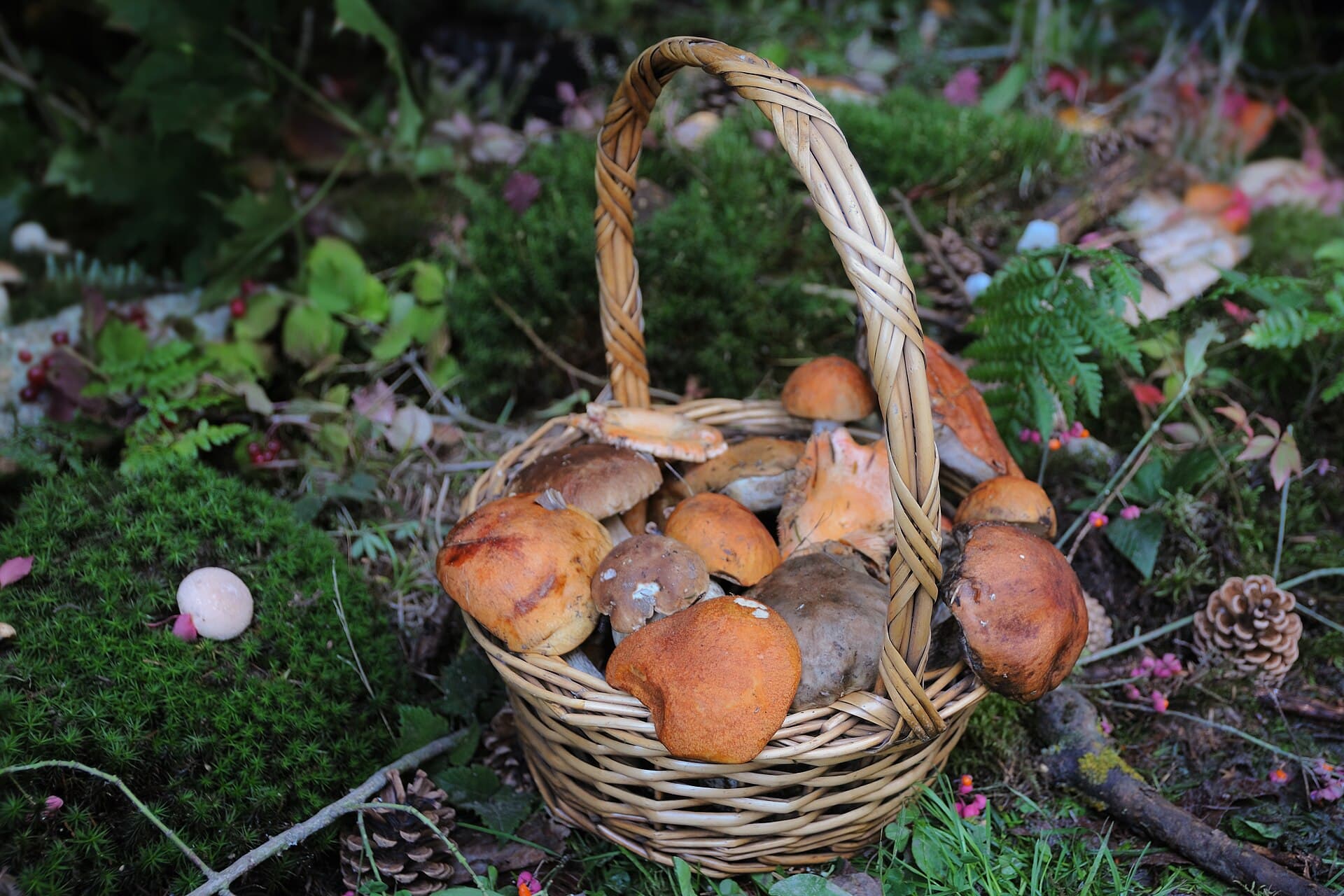
Take a basket rather than a bag, rubber boots, a power bank and an offline map: mobile coverage dies a kilometre from the platform.
Photo: AS Photography / Wikimedia Commons, CC BY 4.0