Every week someone arrives at a famous St Petersburg apartment building with a door code found online, and finds a notice on the gate instead: the residents have voted to switch to a new intercom, and old keys no longer work. Ten minutes away, a real nineteenth-century mansion is open to anyone with a ticket. Here is how to get inside legally.
Mansions that became museums
The easiest option is a mansion that is now a museum, with a cash desk and posted hours. The Rumyantsev Mansion at 44 English Embankment is a branch of the State Museum of the History of St Petersburg. An adult ticket costs 400 roubles; Russian students and pensioners pay 250. Besides the historic interiors, it holds a permanent display about communal apartments, the Soviet practice of splitting grand flats between several families.
If you plan several addresses, the museum sells a combined ticket valid for 14 days: 1,900 roubles from January to April and November to December, 2,300 roubles from 1 May to 31 October, when it also covers Oreshek Fortress.
Stieglitz Academy: book by phone
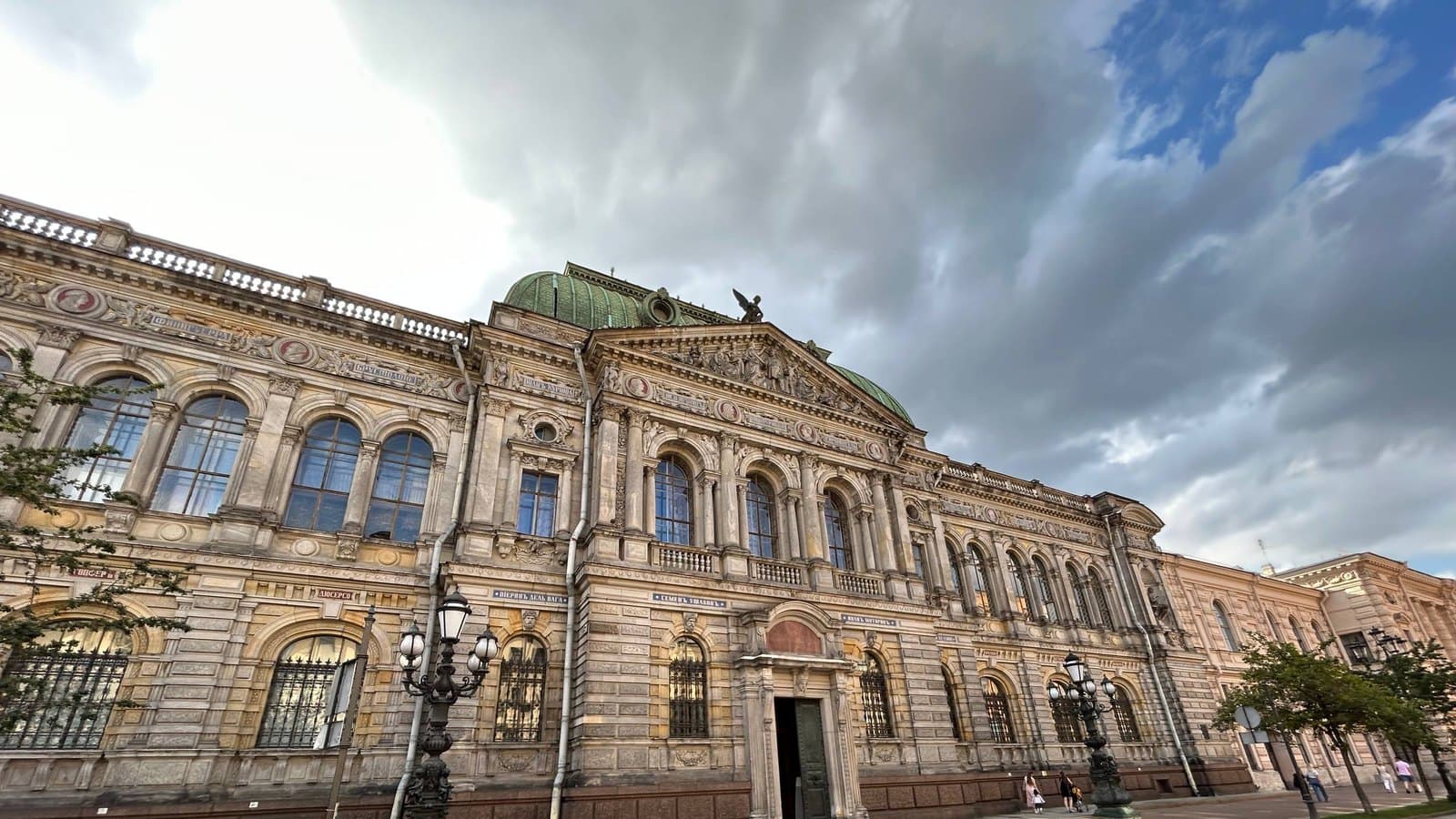
The Museum of Applied Arts at the Stieglitz Academy, 15 Solyanoy Lane, has the most theatrical interiors in the city: halls styled as an Italian palazzo and a Russian terem under a glass dome. A full ticket is 1,000 roubles, reduced 600, children under seven free. The museum is open Tuesday to Sunday and closed on Monday. Tickets are sold online, and phone bookings are accepted only Tuesday to Friday 11:00–17:00 and Saturday 11:00–16:00. Walking in unannounced rarely works.