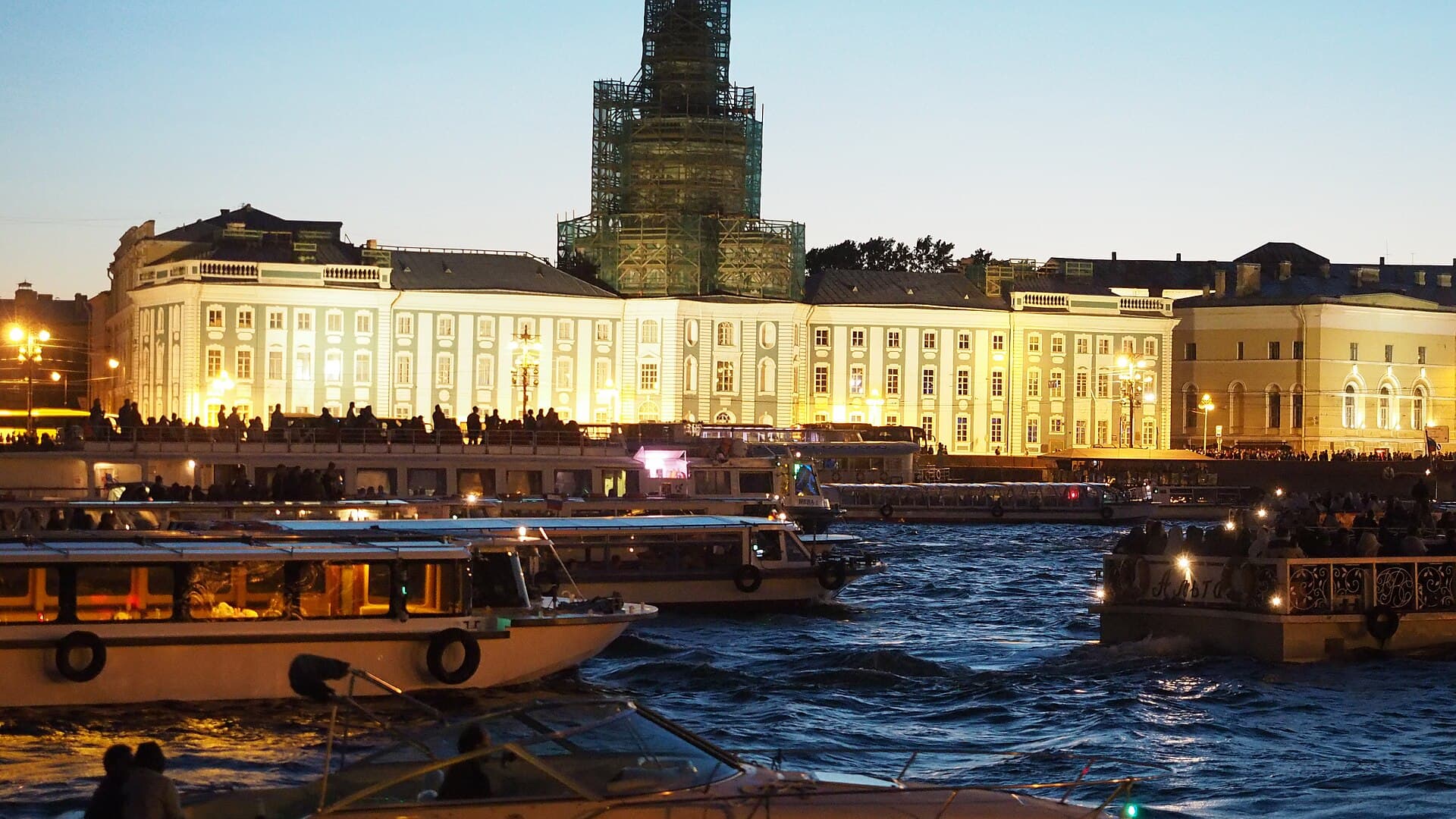
"From what age is the Kunstkamera okay?" is the question parents ask about this museum more than any other. There's no formal age limit — anyone can enter. But the real answer is more nuanced, because the Kunstkamera is two very different museums under one tower, and only one of them is the "scary" one everyone has heard about.
What's actually inside
Nine-tenths of the Kunstkamera is a large ethnographic museum: Japan, China, India, Africa, North America. Costumes, boats, masks, yurts — hours of browsing, genuinely interesting for a child from about five or six with no caveats at all. Only one hall holds Peter the Great's famous collection of anatomical specimens — the reason the museum is famous. And it's compact: this is not a "horror museum", it's one hall in a big building.
So — what age?
- under 6 — go confidently, just route through the ethnography: drums, boats and samurai armour never fail. The anatomy hall is easily bypassed via the neighbouring gallery;
- 6–10 — parental judgement zone. Children differ wildly here: some find the collection fascinating "science", others find it frightening. The honest trick: explain in advance that these are preserved medical specimens Peter I collected so doctors could learn — the "this is medicine, not a freak show" frame solves almost everything;
- from 10–12 — usually curiosity wins over fear, especially in science-minded kids. Plenty of teenagers later call this hall the most memorable thing they saw in St Petersburg;
- one overriding caveat: sensitivity matters more than age. You know your child better than any guide does.
Planning the visit
- the museum is an order of magnitude smaller than the Hermitage: an hour and a half to two hours is the comfortable norm with a child;
- in high season there can be an entry queue — buy tickets in advance on kunstkamera.ru and come at opening;
- the best hook for a kid is the great globe-planetarium and the tower: tell them this was the country's first observatory;
- the building stands on the Spit of Vasilyevsky Island — after the museum, the Neva embankment and the Rostral Columns continue the day by themselves.
If in doubt
The simple rule: when unsure, do the ethnography and save the anatomy hall "for later". The museum loses nothing — the ethnographic collection is one of the country's best, it just gets less press. And for rainy days with children we have a separate comparison of the aquarium, planetarium and water park.
In short: entry at any age, the famous hall when your child is ready — and the surest way to ruin it is dragging a frightened preschooler through by force. The Kunstkamera has stood there for three hundred years; it will wait.