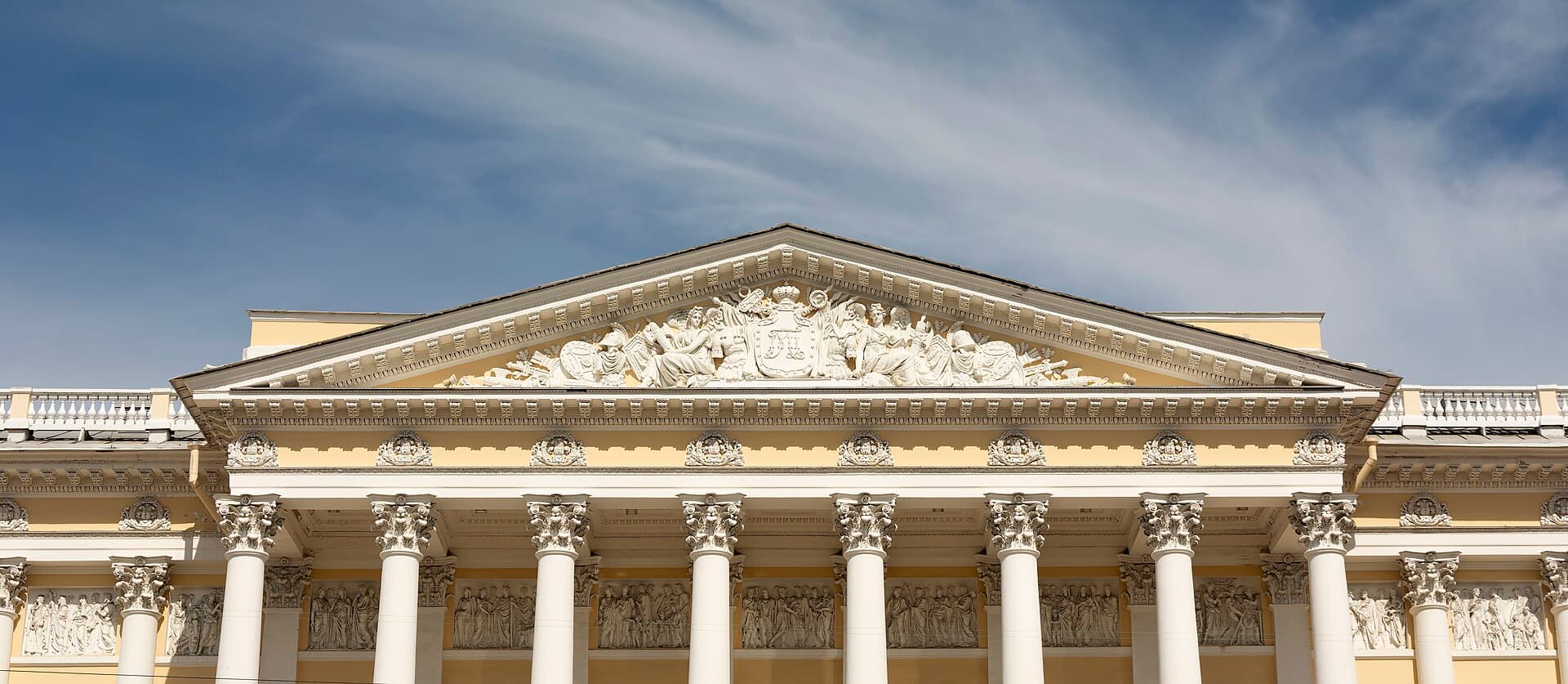
St Petersburg reveals itself in the evening — preferably in a hall full of people who love the stage. On 11 November the Manege, one of the city's main exhibition venues, hosted a lecture by theatre historian and critic Sergey Kozlov on the Union of Theatre Workers of Russia. Not the usual tourist programme, and that is exactly the point.
The subject sounds insider-ish at first: a professional union and a century and a half of paperwork. In practice it was a story about how actors built an institution of their own — one that supported them through changes of political regimes and historical upheavals, kept traditions alive and pushed Russian theatre forward, including abroad.
Author, licence, Wikimedia Commons
Why a talk about a union is worth your evening
Think about what holds a theatre together. Sets and costumes are visible; the systems behind them are not. Who protects actors' interests, keeps repertoires touring, carries the craft through hard decades? In St Petersburg — a city that lives on its stages — those questions are part of the city's biography, not theatre trivia.
A guide shows you facades and legends. An evening like this shows you mechanisms. You walk out reading the city differently: the theatre district stops being scenery and becomes a workplace with a long memory.
Author, licence, Wikimedia Commons
Who spoke
Sergey Kozlov is a theatre historian, critic and member of the Union of Theatre Workers of Russia — the kind of speaker who turns institutional history into a story people actually follow. For visitors without Russian theatre background, his lecture was the shortest possible entry into the subject.
Author, licence, Wikimedia Commons