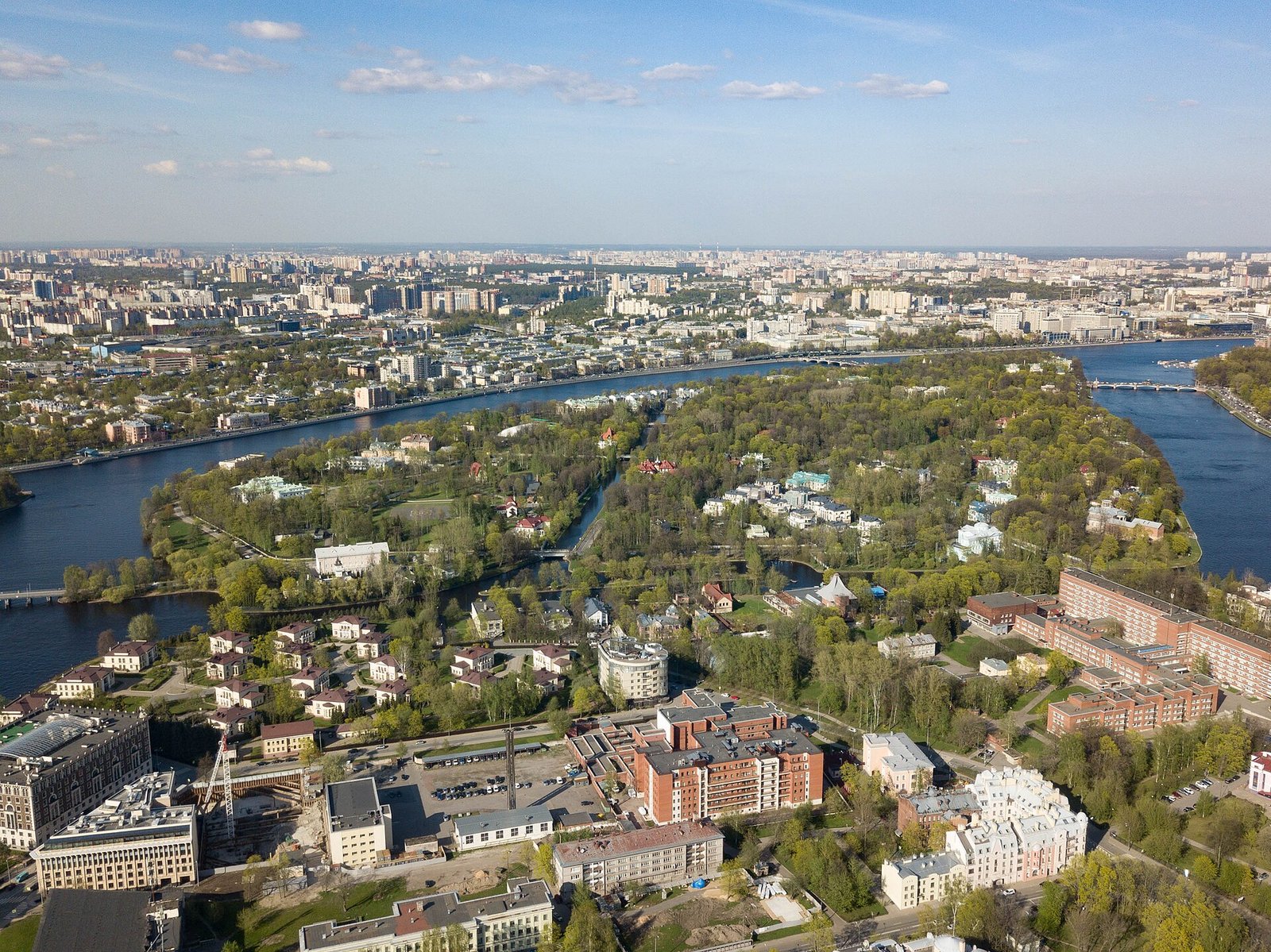
Between the Bolshaya and Malaya Nevka lies an island with almost no ordinary housing — only dachas, palaces and residences among trees. Kamenny was built up as the summer edge of the capital: a palace for the heir in the eighteenth century, Art Nouveau mansions in the early twentieth, sanatoriums and state dachas under Soviet rule. Half of it is behind fences, but the streets are open, and two hours here make one of the most unusual walks in the city.
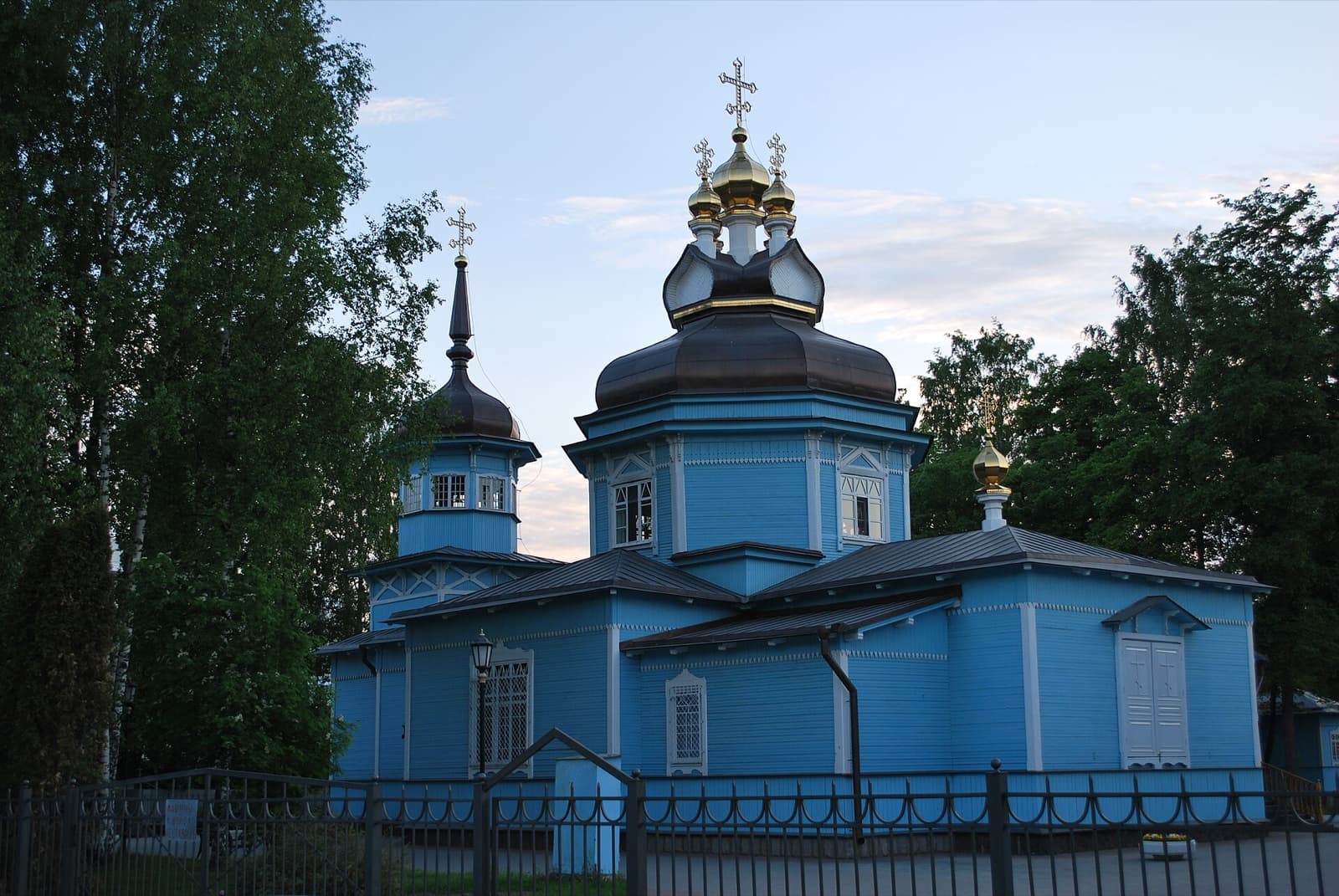
Felten's Gothic church by the Kamennoostrovsky Bridge. Photo: Wikimedia Commons
Church and palace by the bridge
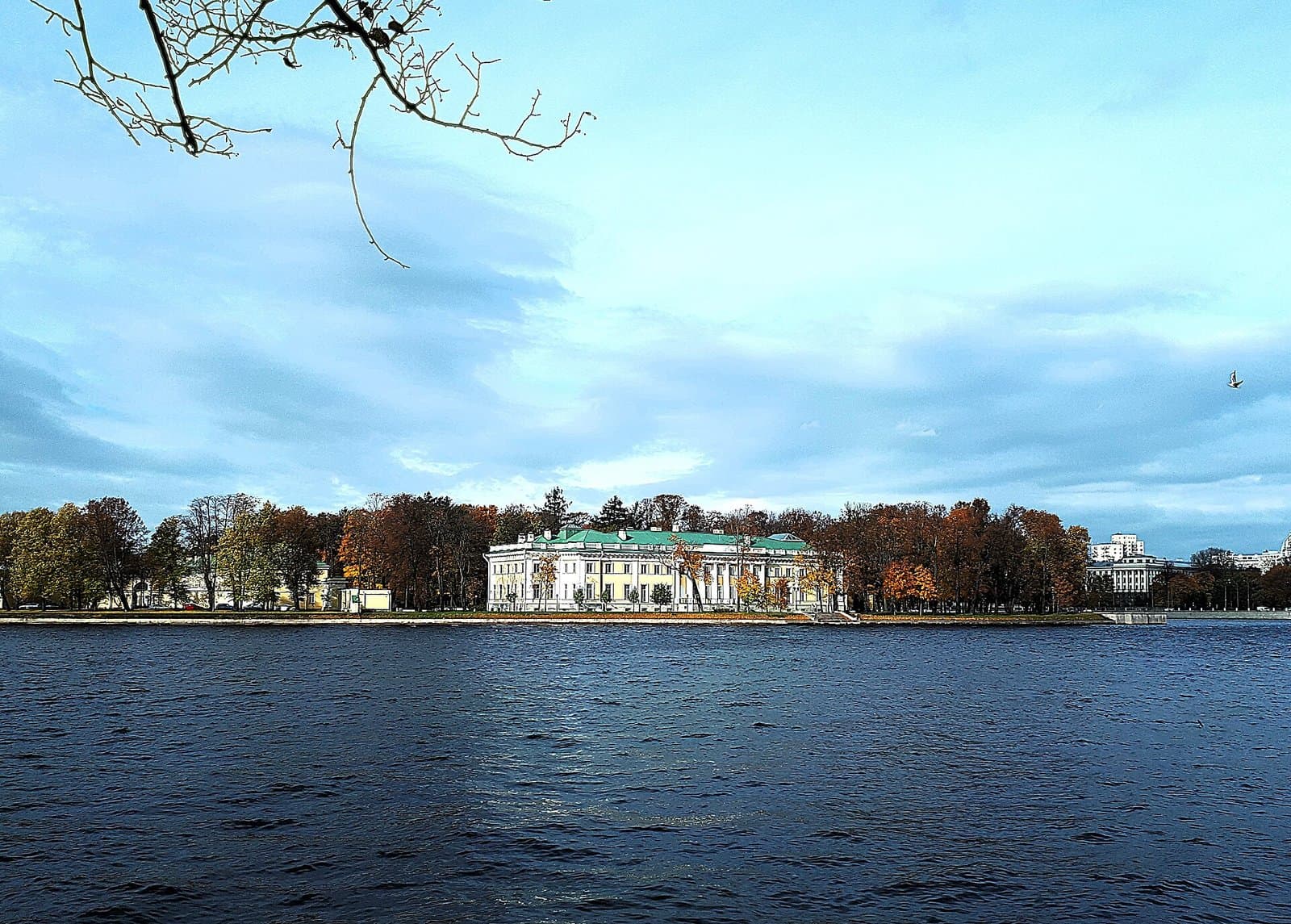
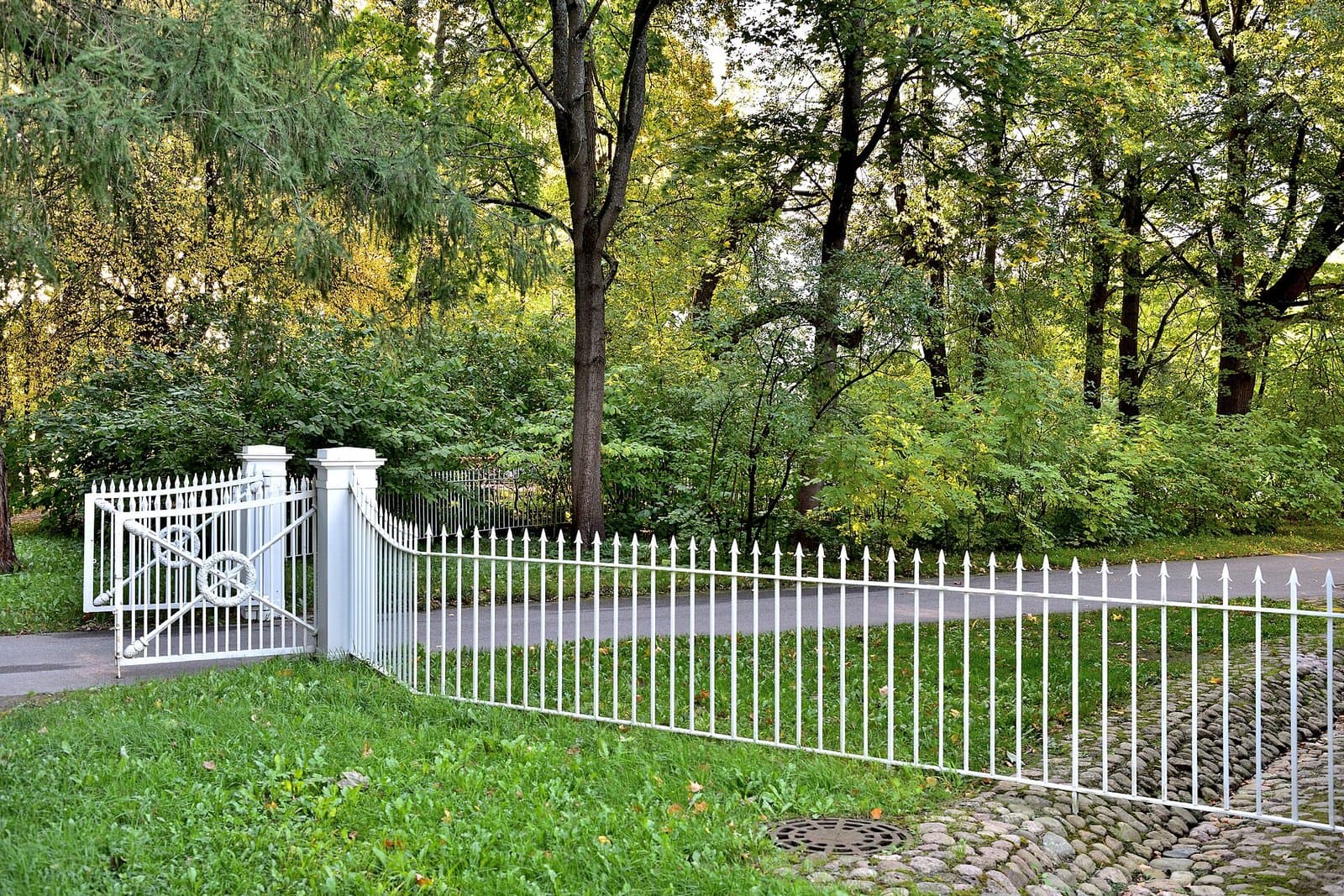
Enter from the Kamennoostrovsky Bridge. On the right is the church of St John the Baptist, Gothic, 1770s, by Yuri Felten: pointed windows, a spire, red brick. According to Kultura.rf it is one of the few examples of Catherine-era neo-Gothic in the city, and it is a working church. Behind it is the Kamennoostrovsky Palace, built in the 1770s–1780s for Grand Duke Paul: a classical palace with a portico facing the Malaya Nevka. It now houses an academy for schoolchildren; you cannot go in, but the facade and railings are visible from the embankment.
The palace of Paul I on the Malaya Nevka. Photo: Wikimedia Commons
Art Nouveau dachas
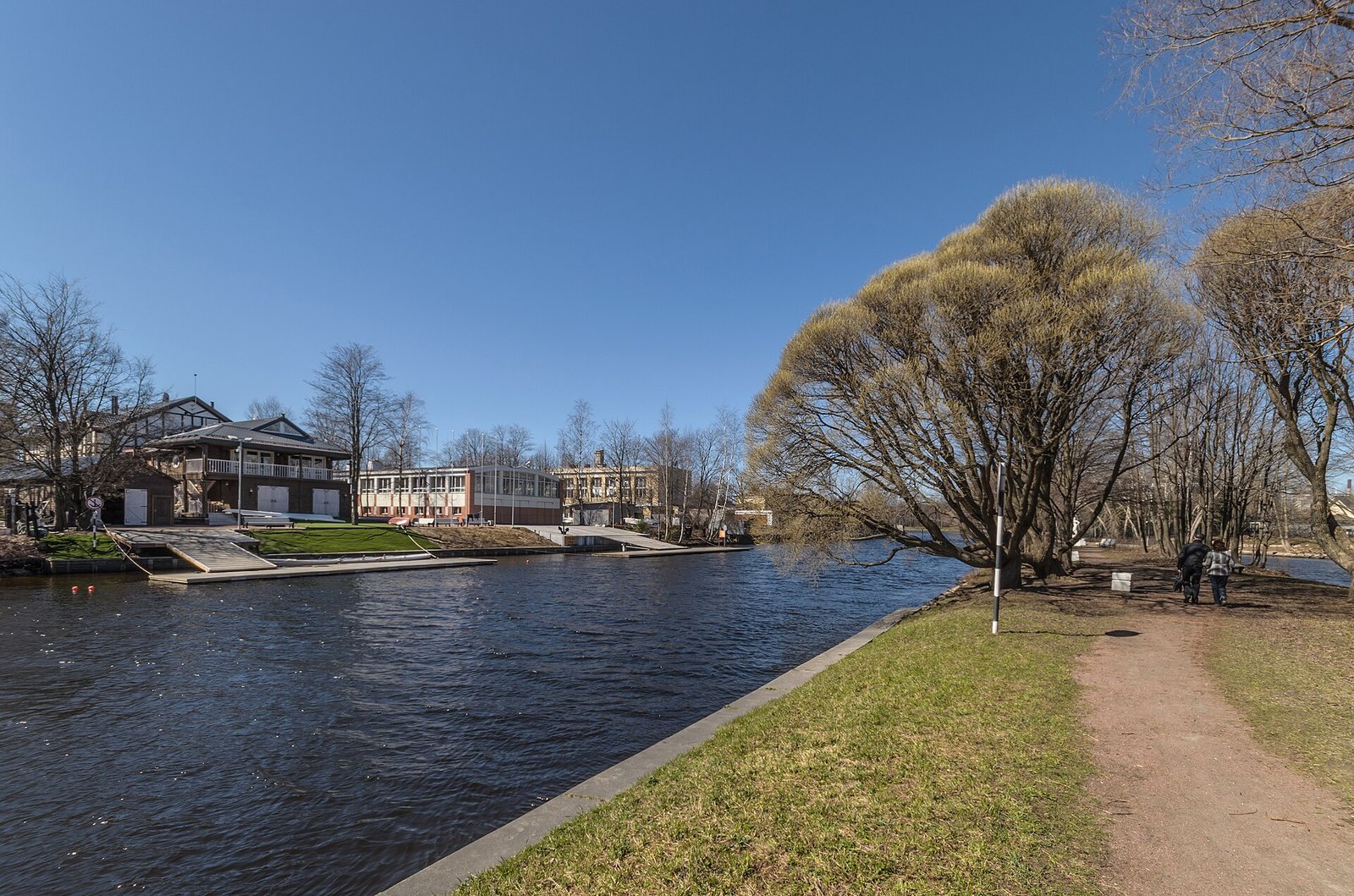
Walk west along the Malaya Nevka embankment. Here begin the dachas of the early twentieth century: wooden and stone mansions with turrets, bays and verandas. The best known are the Gausvald dacha (1898, one of the first Art Nouveau buildings in Russia, wooden, with a rounded tower), the Follenweider mansion known as the Teremok, and the Kleinmichel dacha with Gothic windows. Some are restored, some hidden behind solid fences.
The Gausvald dacha, early Art Nouveau of 1898. Photo: Wikimedia Commons
Early twentieth-century mansions along the island's embankments. Photo: Wikimedia Commons
The theatre and Peter's oak
In the middle of the island stands the Kamennoostrovsky Theatre, wooden, built in 1827 by Smaragd Shustov — the only surviving wooden theatre of its time in Russia. It is now the second stage of the Bolshoi Drama Theatre, and you can get inside by going to a performance.
The wooden theatre of 1827, now the BDT's second stage. Photo: Wikimedia Commons
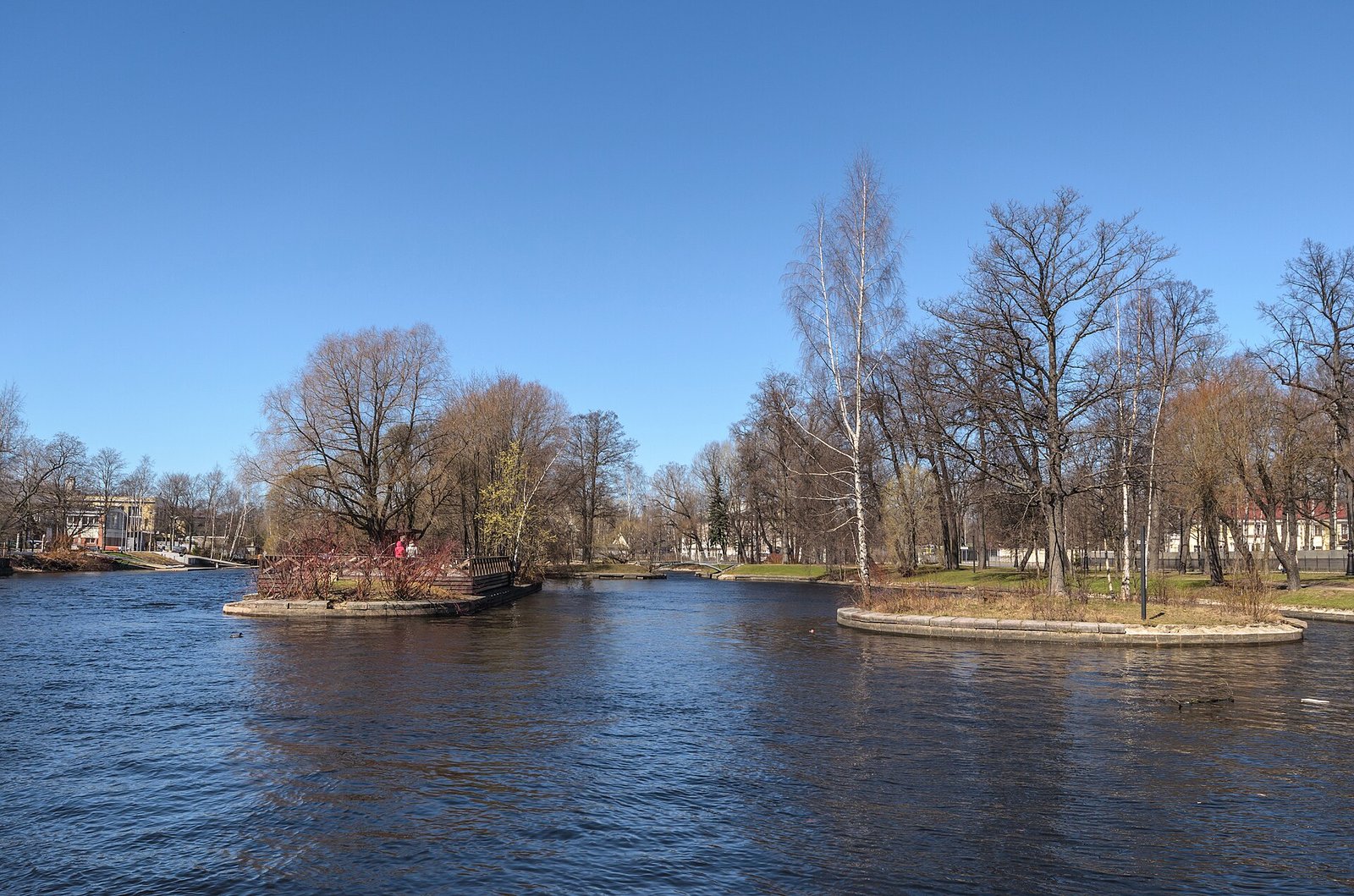
At the western point, where the Nevkas meet, stands an oak said to have been planted by Peter the Great. The city has several "Peter's trees" and each is disputed, but the spot is lovely: views across the water to Yelagin and Krestovsky.
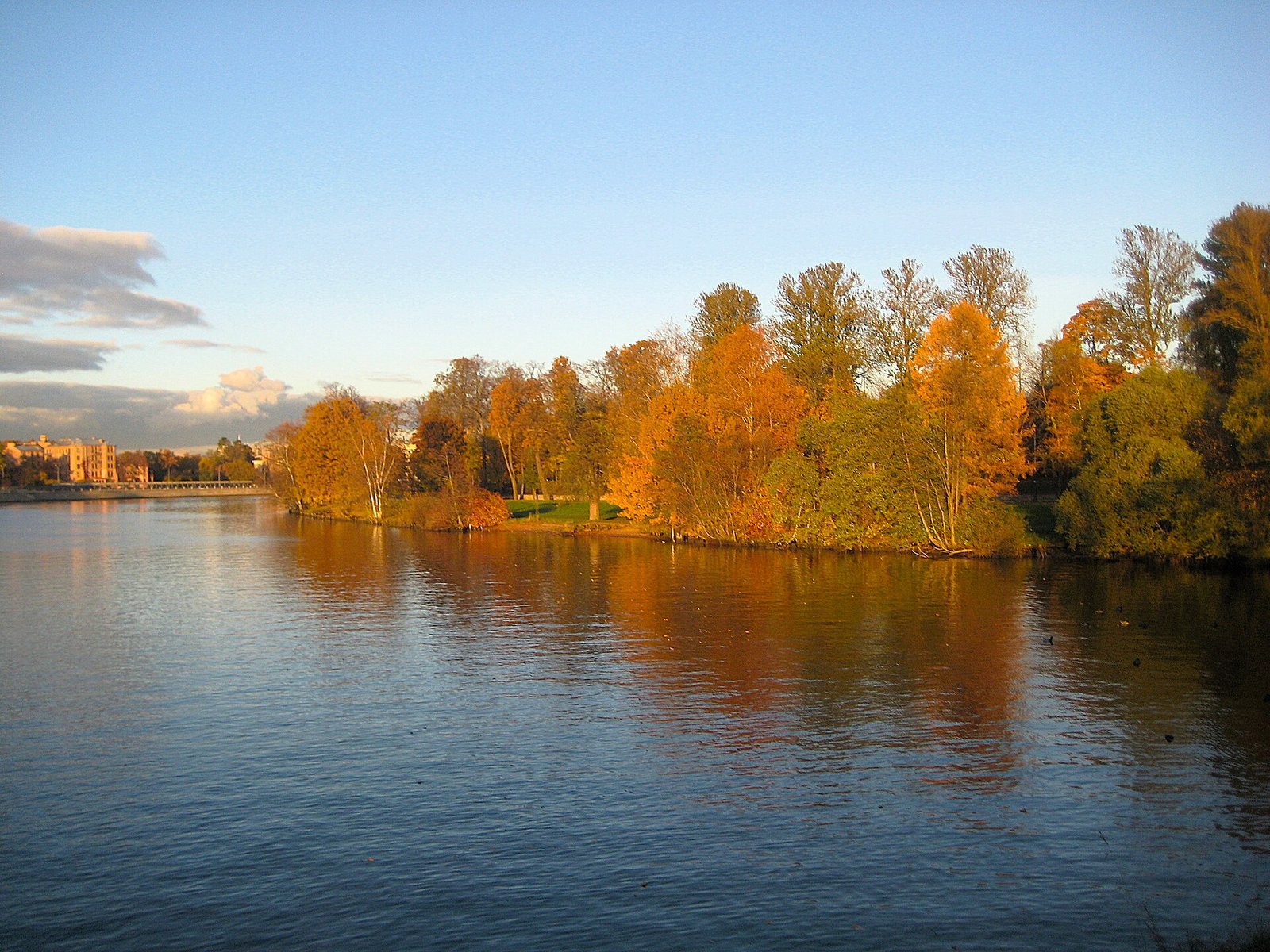
The island's point with Peter's oak and views over the Nevkas. Photo: Wikimedia Commons
The two-hour route
Kamennoostrovsky Bridge → church → palace (10 minutes) → Malaya Nevka embankment with the dachas (40 minutes) → theatre (10 minutes) → the point and the oak (20 minutes) → back through the middle of the island or along the Bolshaya Nevka to the Ushakovsky Bridge and Chernaya Rechka metro (30 minutes).
Getting there and away
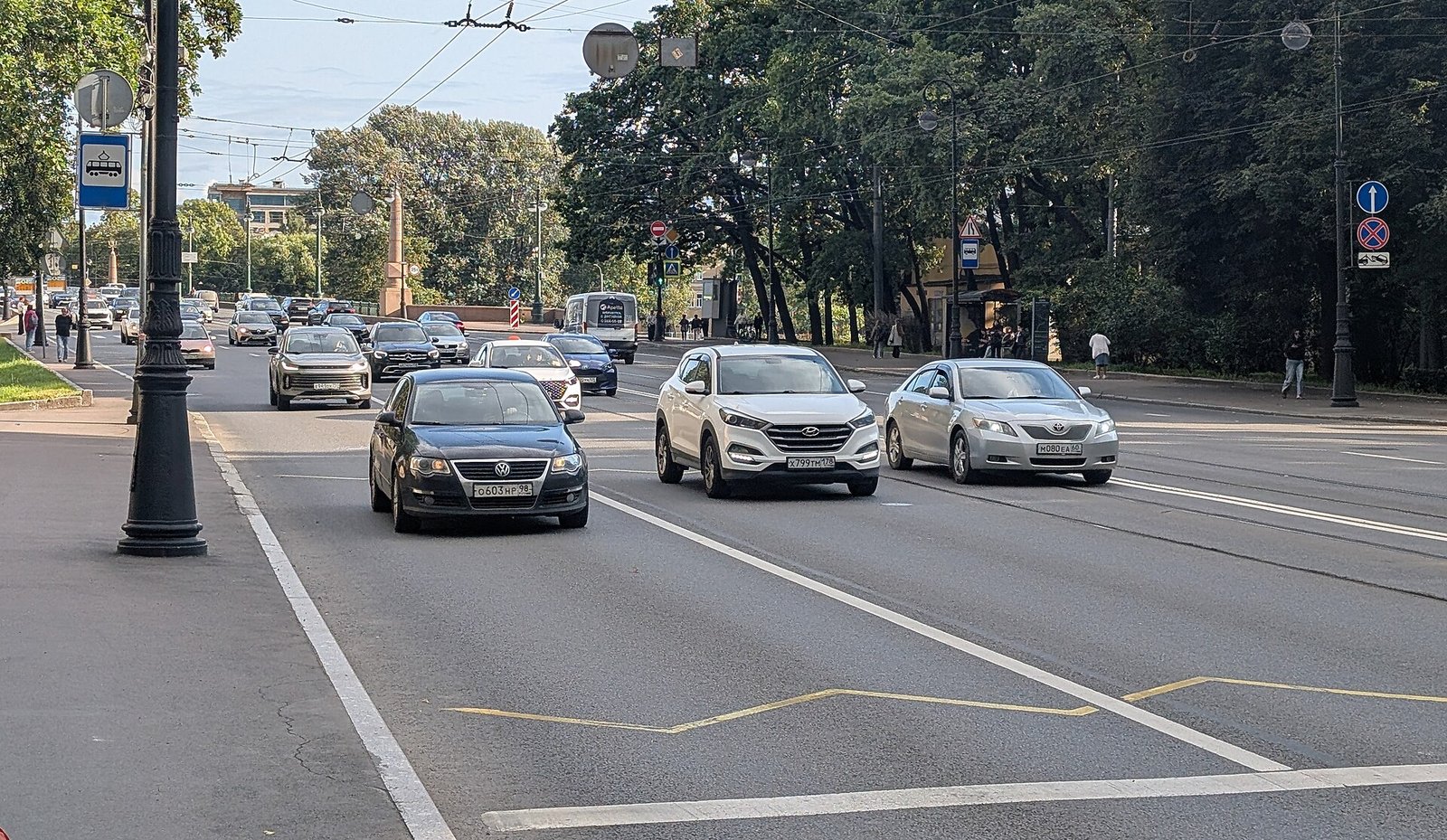
From Chernaya Rechka metro it is ten minutes across the Ushakovsky Bridge; from Petrogradskaya twenty minutes along Kamennoostrovsky Prospekt. There are no cafés to speak of and almost no transport on the island; with children or in the evening, book a transfer via RideClu to the Kamennoostrovsky Bridge — cars cannot stop everywhere inside.
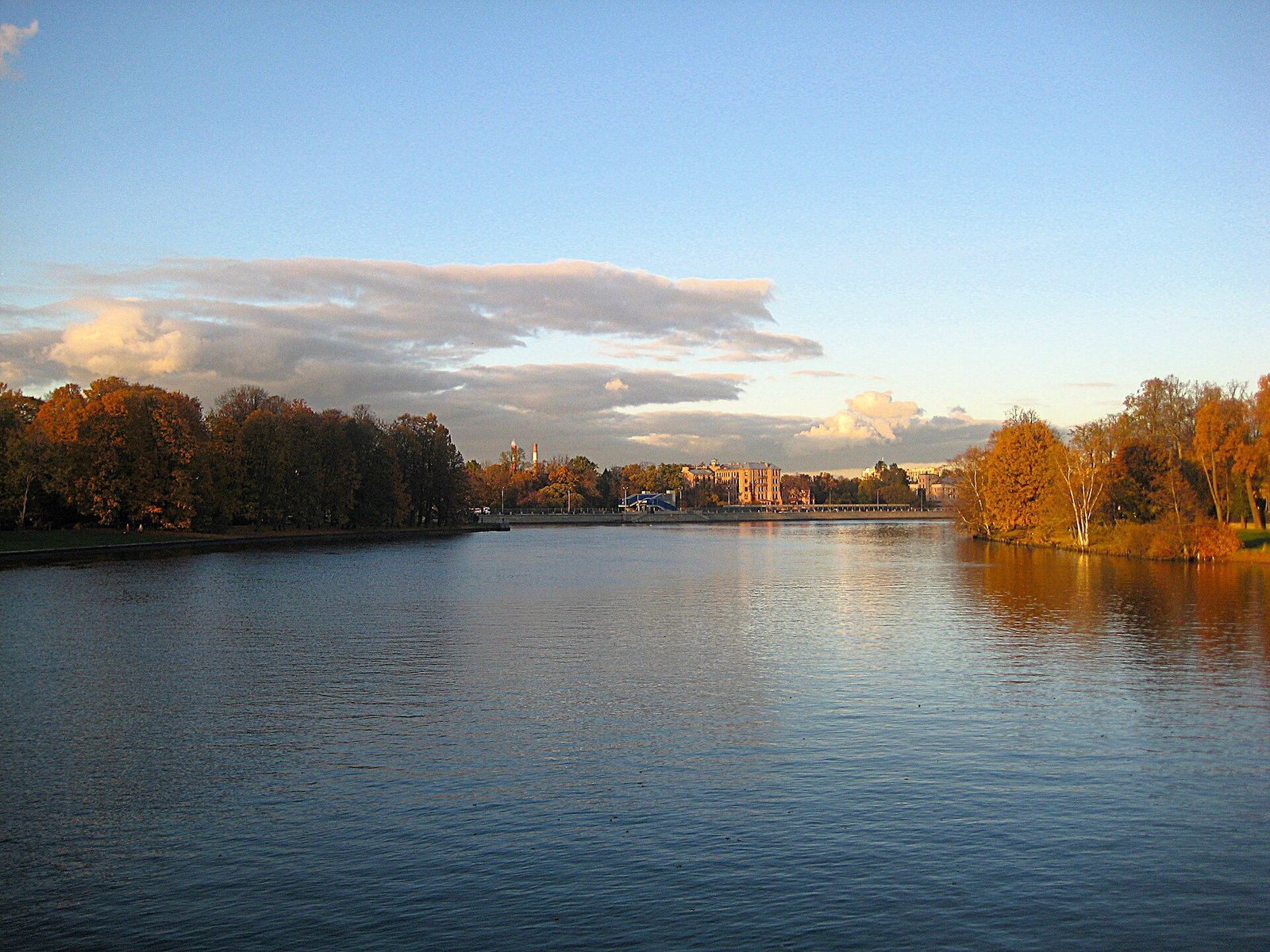
The Kamennoostrovsky Bridge, the entrance to the island. Photo: Wikimedia Commons
Where to stay
Nothing on the island itself is let short-term — these are residences. The nearest option is the Petrograd Side around Petrogradskaya and Chernaya Rechka: apartments there can be booked on Tutkakdoma, with Kamenny, Yelagin and Krestovsky a walk or one stop away.
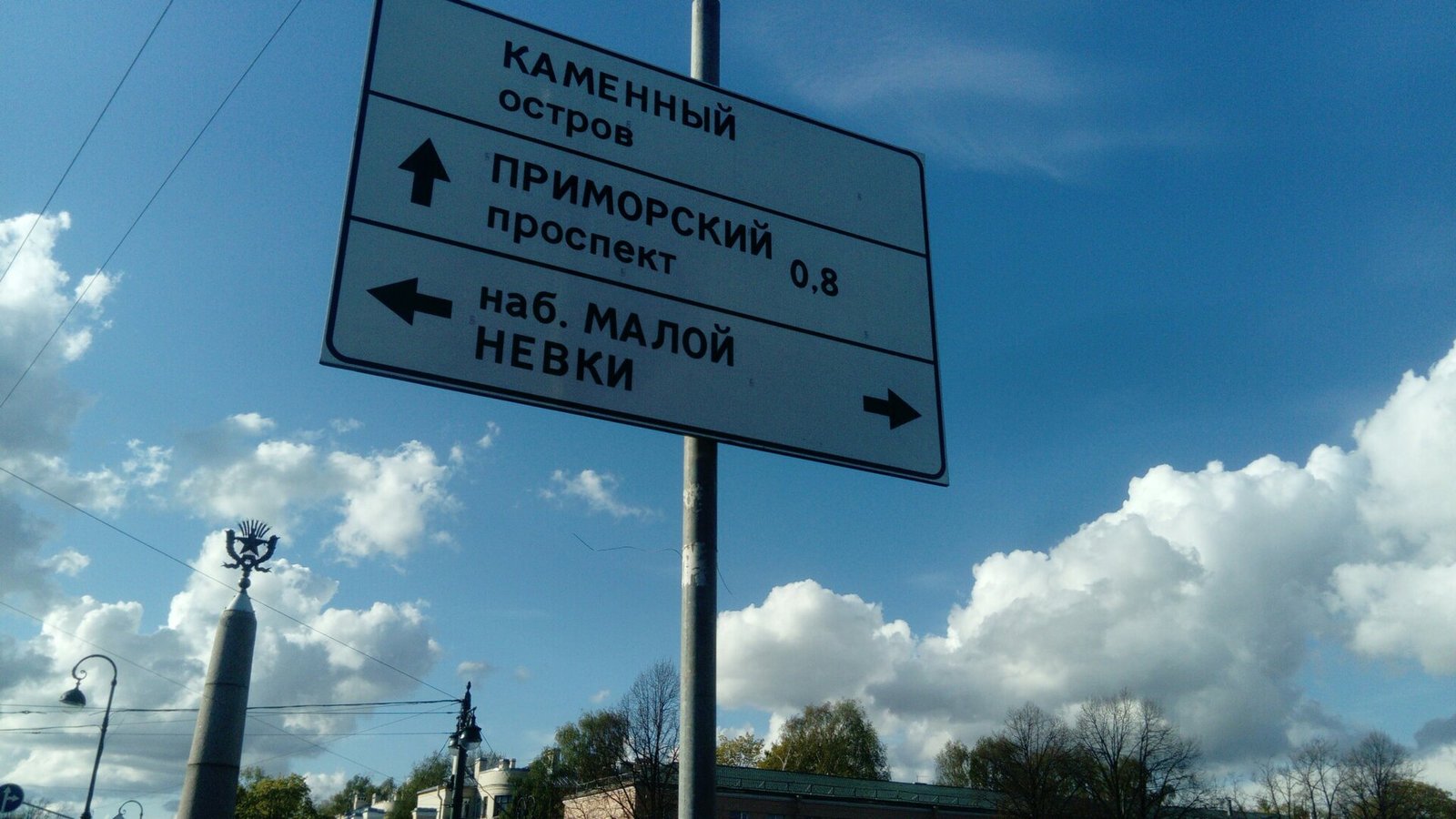
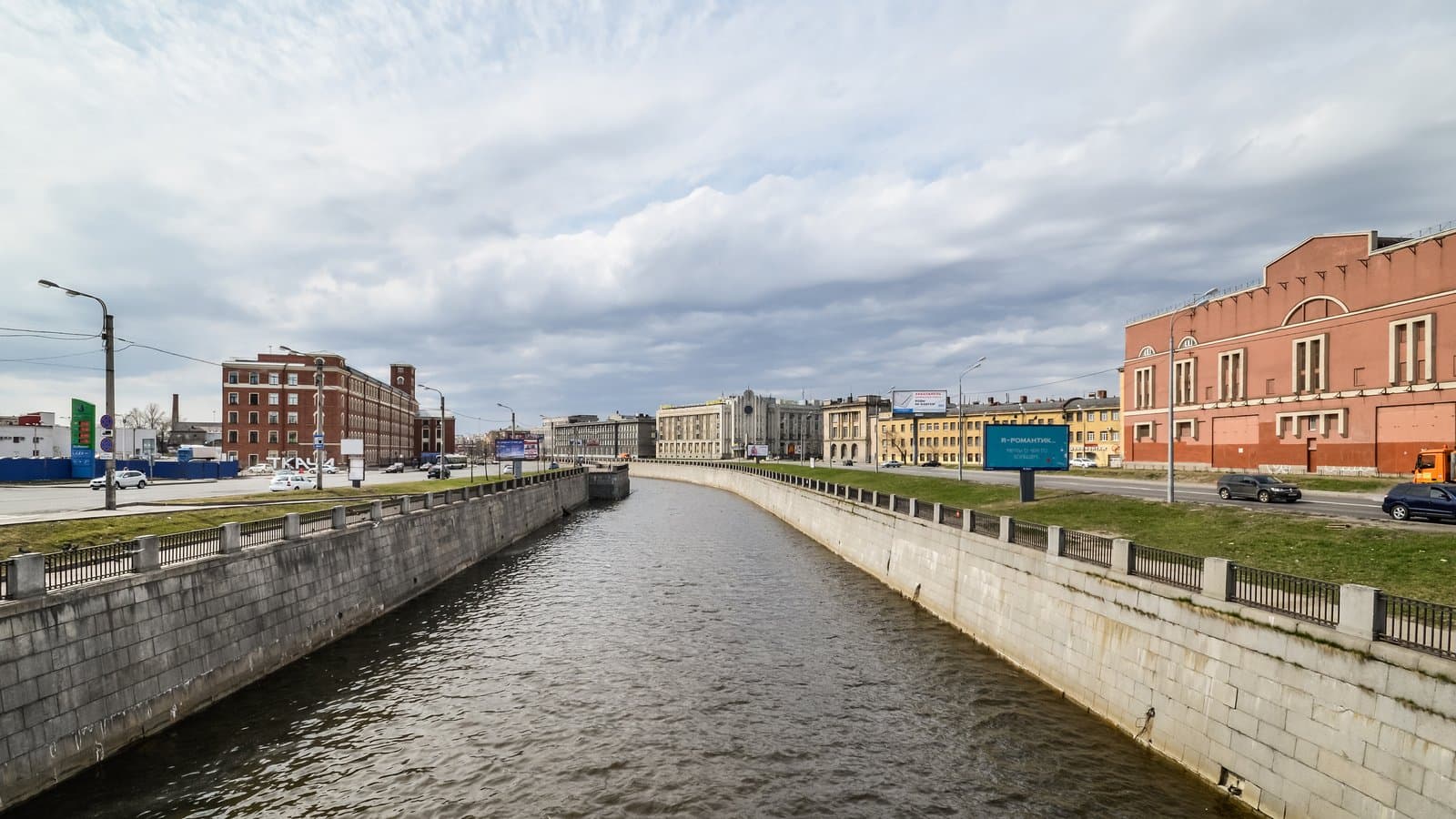
The Bolshaya Nevka embankment, the way back to the metro. Photo: Wikimedia Commons
Not for you if you want to go inside — almost everything is closed. For a walk "along fences with history", it is the best island in St Petersburg.
Checked on 22 October 2026 against Kultura.rf and the Citywalls database.
Cover photo: Фото: Александровы АГ, CC BY-SA 4.0, Викисклад