Shuvalov Park is an estate on the northern edge that people drive past on the way to their dachas. Yet here is a Gothic church on a hill, an eighteenth-to-nineteenth-century park with oddly shaped ponds, two Art Nouveau dachas and Parnassus Hill, from which you see the whole city. The palace is closed, but the park is open, and for half a day from the centre it is one of the richest trips north.
The main alley from the Vyborg Highway. Photo: Wikimedia Commons
The Shuvalovs and the Vorontsov-Dashkovs
Empress Elizabeth granted the Pargolovo lands to Count Pyotr Shuvalov in 1746; several generations shaped the estate, and in the nineteenth century it passed to the Vorontsov-Dashkovs. According to the Citywalls database, the park took its present form by the mid-nineteenth century: ponds, alleys, an artificial hill and a church on the rise.
The church of Saints Peter and Paul
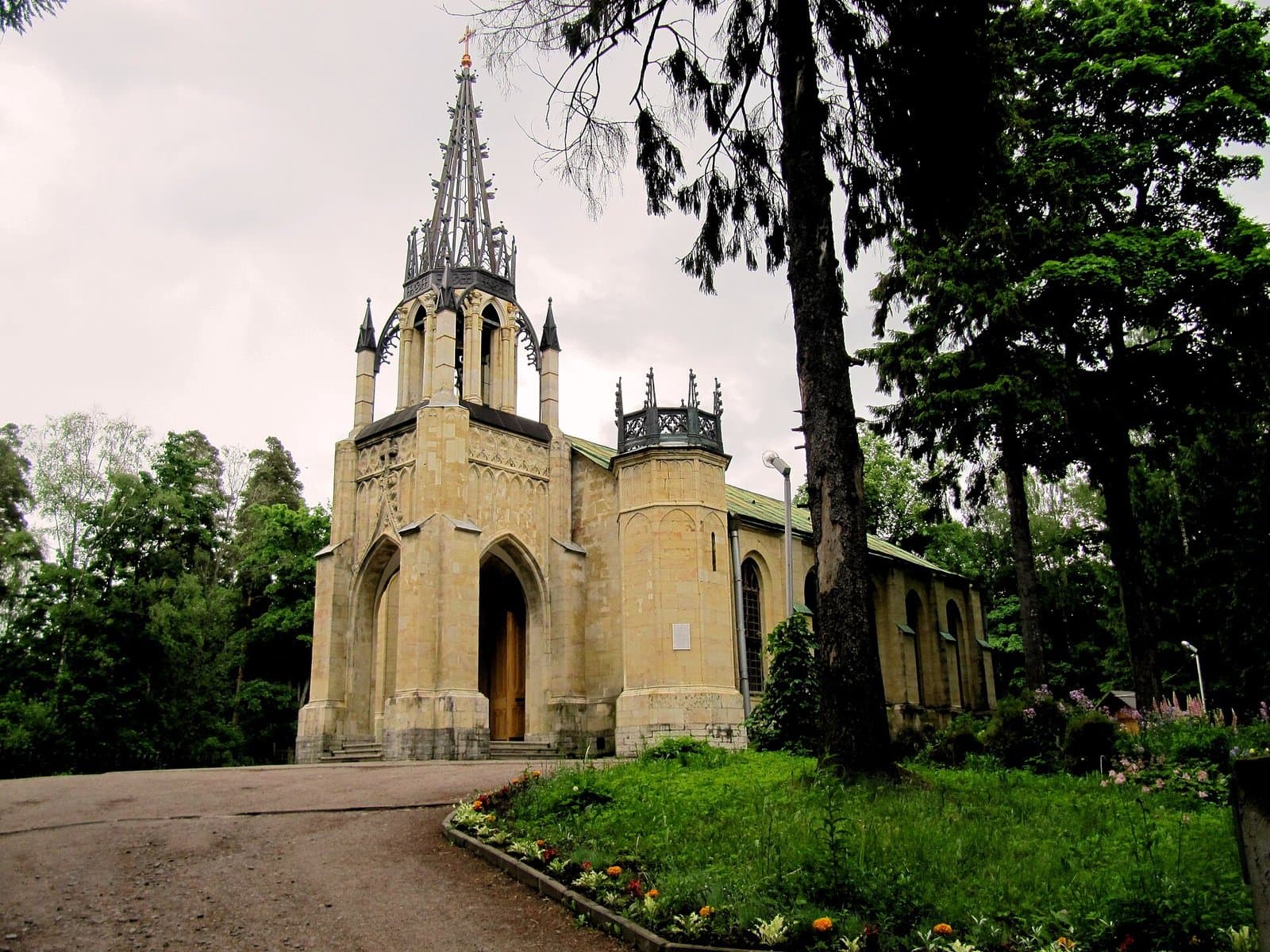
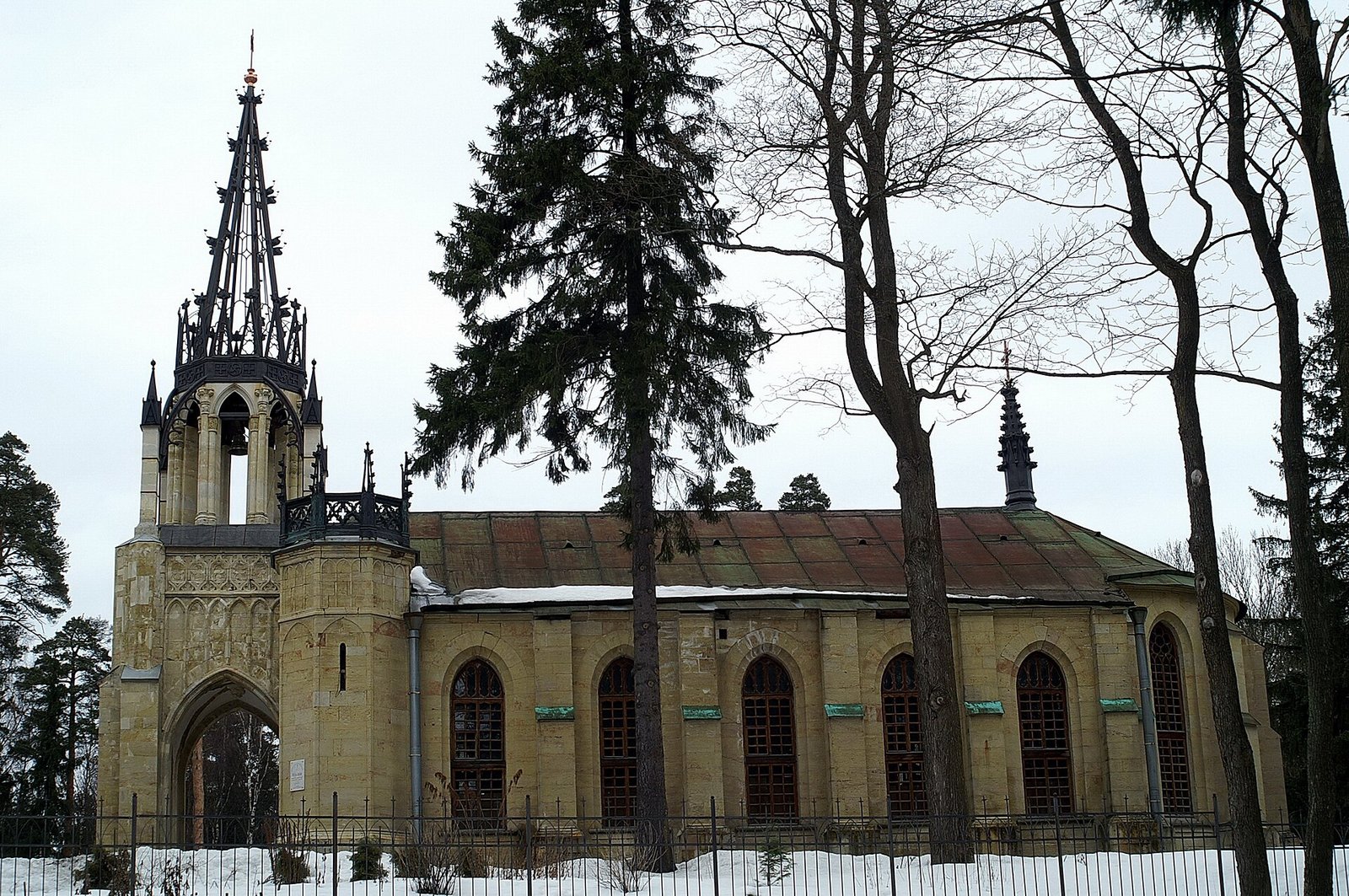
The park's main building is the church on the hill, 1830s, by Alexander Brullov, brother of the painter. It is neo-Gothic — pointed windows, pinnacles, an openwork spire — built as a family burial church. It is a working church, open by the parish timetable, reached by a staircase with a view over the park.
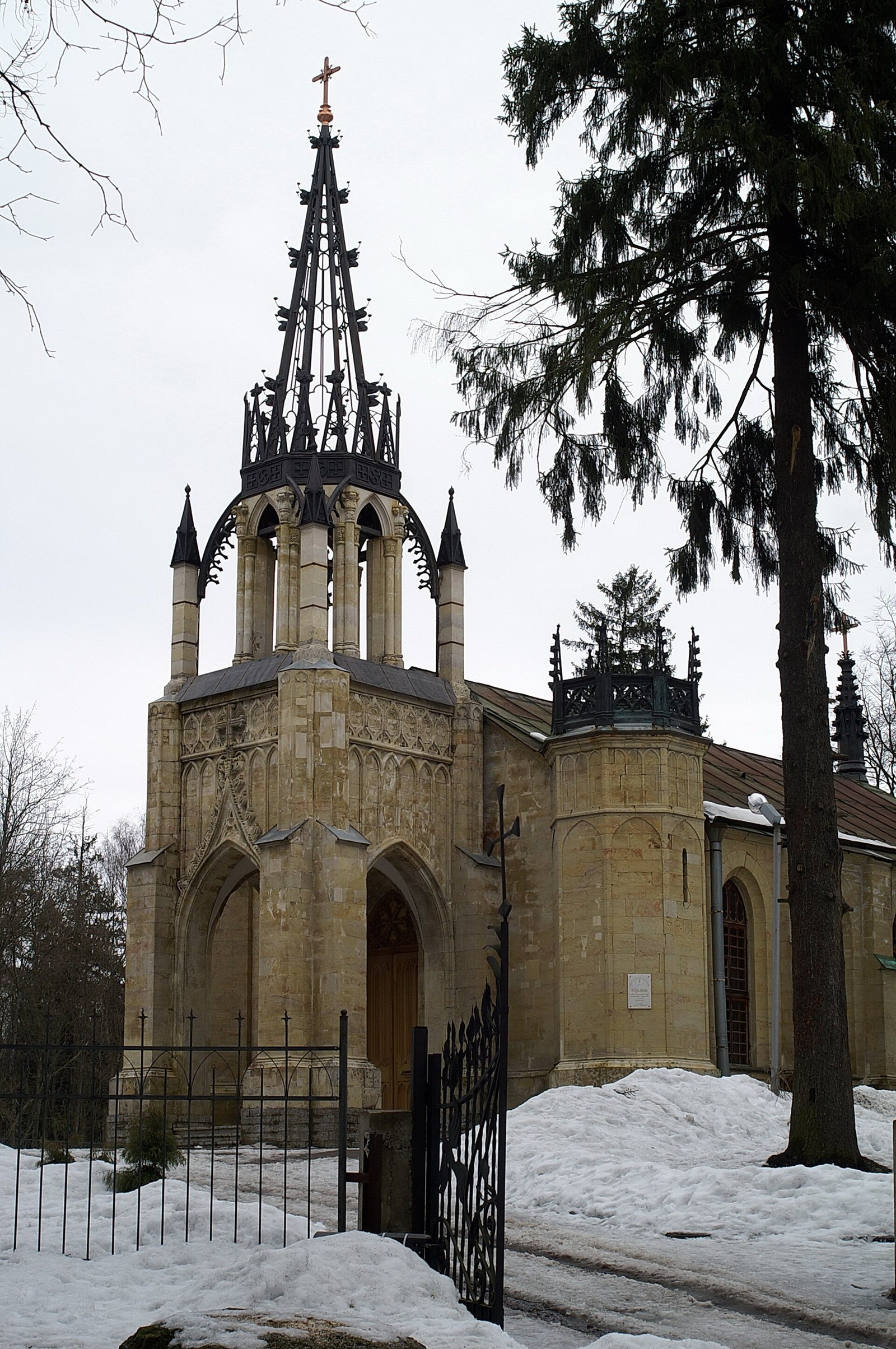
Brullov's Gothic church on the hill. Photo: Wikimedia Commons
Palace and dachas
The Great Palace of the Vorontsov-Dashkovs stands deep in the park — neoclassical, 1910s, built where the old house burned down. It now houses a research institute and is closed; view it from the alley. Nearby are the Yellow Dacha and the Small Dacha, wooden buildings with turrets in varying states of repair.
The early twentieth-century palace, closed but visible from the alley. Photo: Wikimedia Commons
The Yellow Dacha, a wooden estate building. Photo: Wikimedia Commons
Ponds and Parnassus
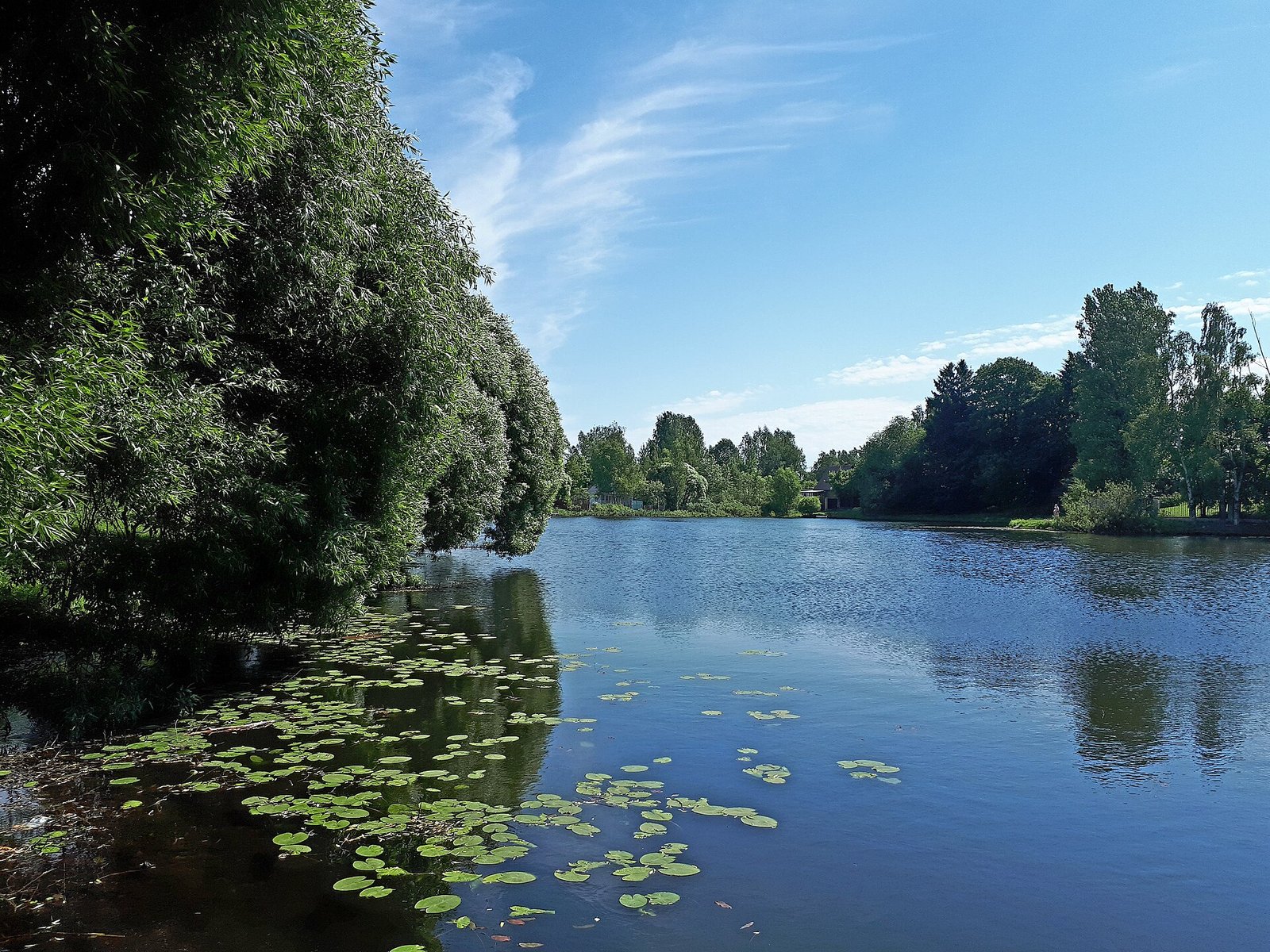
At the foot of the hill lie two ponds known as Napoleon's Shirt and Napoleon's Hat — shaped that way during the landscaping, and the names stuck. Above them rises the artificial Parnassus Hill, about 60 metres above sea level; from the top you see the north of the city and, on a clear day, the gulf. The climb takes ten minutes.
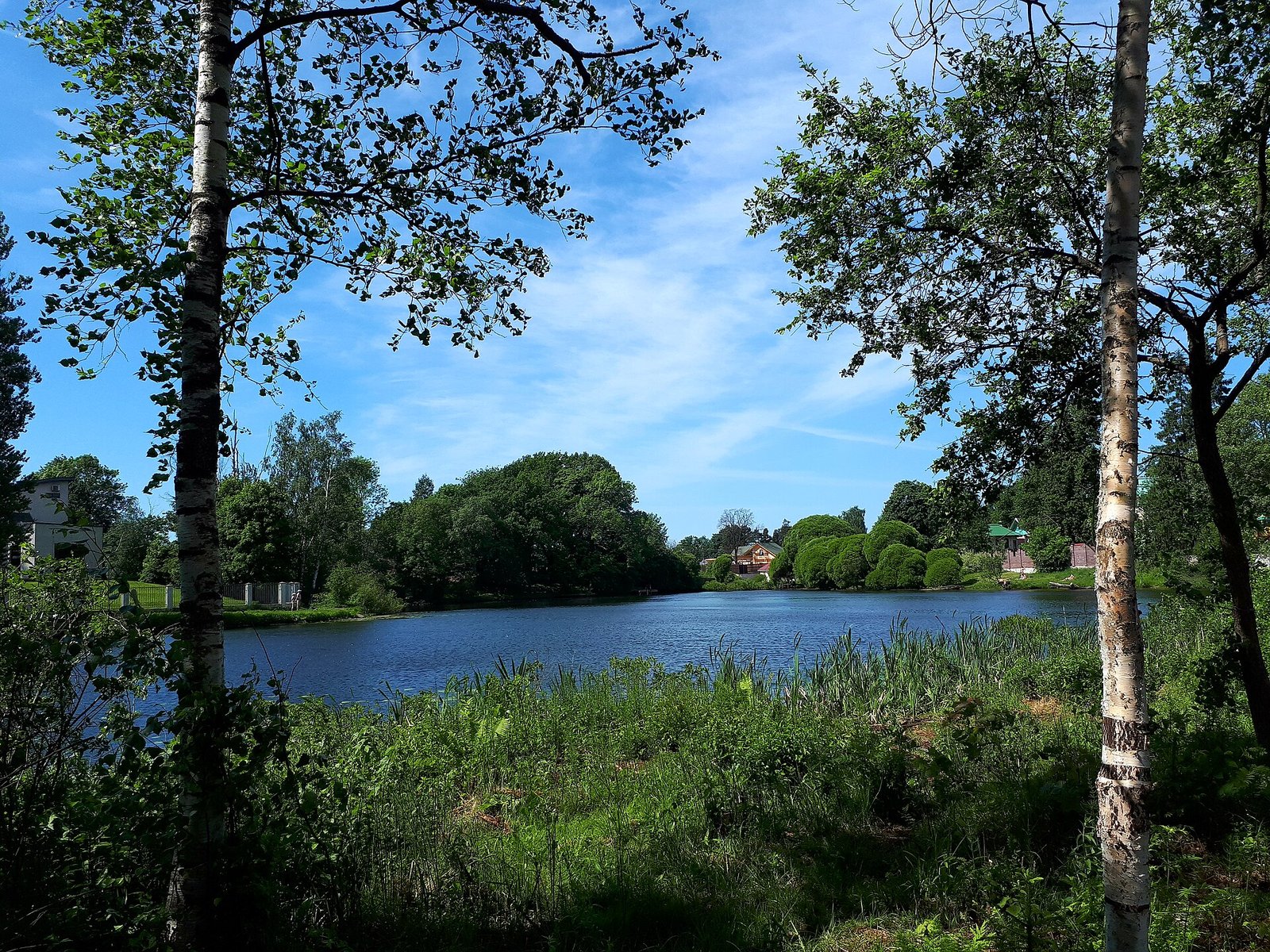
The ponds at the foot of Parnassus. Photo: Wikimedia Commons
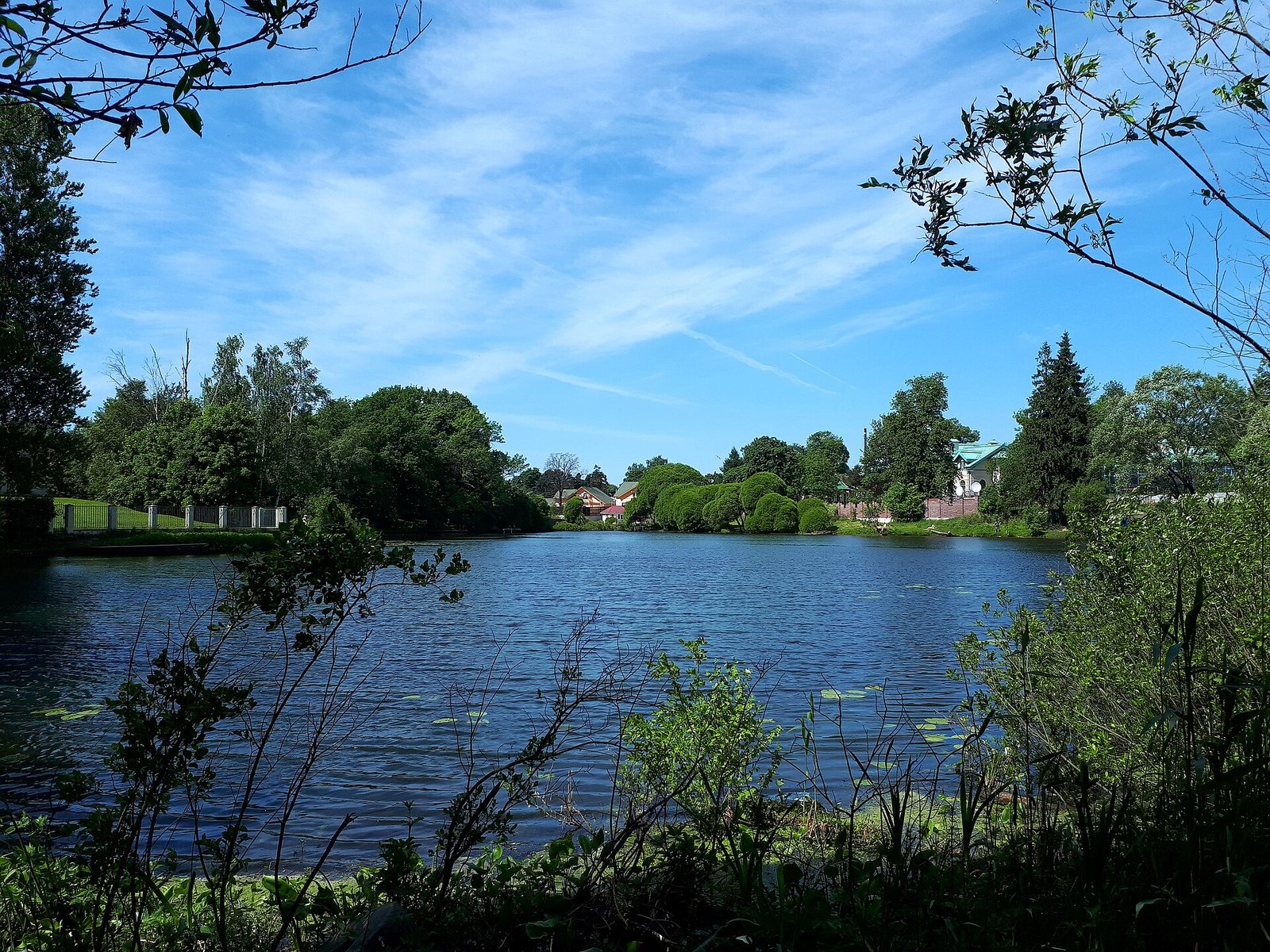
The view from Parnassus over northern St Petersburg. Photo: Wikimedia Commons
A half-day route
Entrance from the Vyborg Highway → main alley → church with the climb (30 minutes) → palace and dachas from outside (20 minutes) → ponds (20 minutes) → Parnassus (30 minutes) → back. Two to three hours unhurried. The park is not landscaped like a city park: paths are unpaved and muddy after rain — wear the right shoes.
Getting there
By train from Finlyandsky station to Pargolovo, 20–25 minutes, then 10–15 minutes on foot to the entrance; or by bus from Prospekt Prosveshcheniya or Parnas metro to the Shuvalov Park stop. With children, or if you want to add Levashovo Park and Osinovaya Roshcha, a car for half a day beats trains with changes: a transfer that waits can be booked via RideClu.
Pargolovo station, fifteen minutes' walk from the park. Photo: Wikimedia Commons
Where to stay
If you make the north your base — for Vyborg and the Karelian Isthmus, say — Pargolovo and Ozerki, with Prospekt Prosveshcheniya metro, are twenty minutes from Finlyandsky station. Apartments here can be booked on Tutkakdoma for less than the centre, with a bus to the park.
Autumn is the best season for the park. Photo: Wikimedia Commons
Not for you if you expect Peterhof — this is a wild park with no fountains or ticket office. But Brullov's Gothic and the view from Parnassus are worth the trip north.
Checked on 22 October 2026 against the Citywalls database and Kultura.rf.
Cover photo: Фото: Lilay, CC BY-SA 3.0, Викисклад