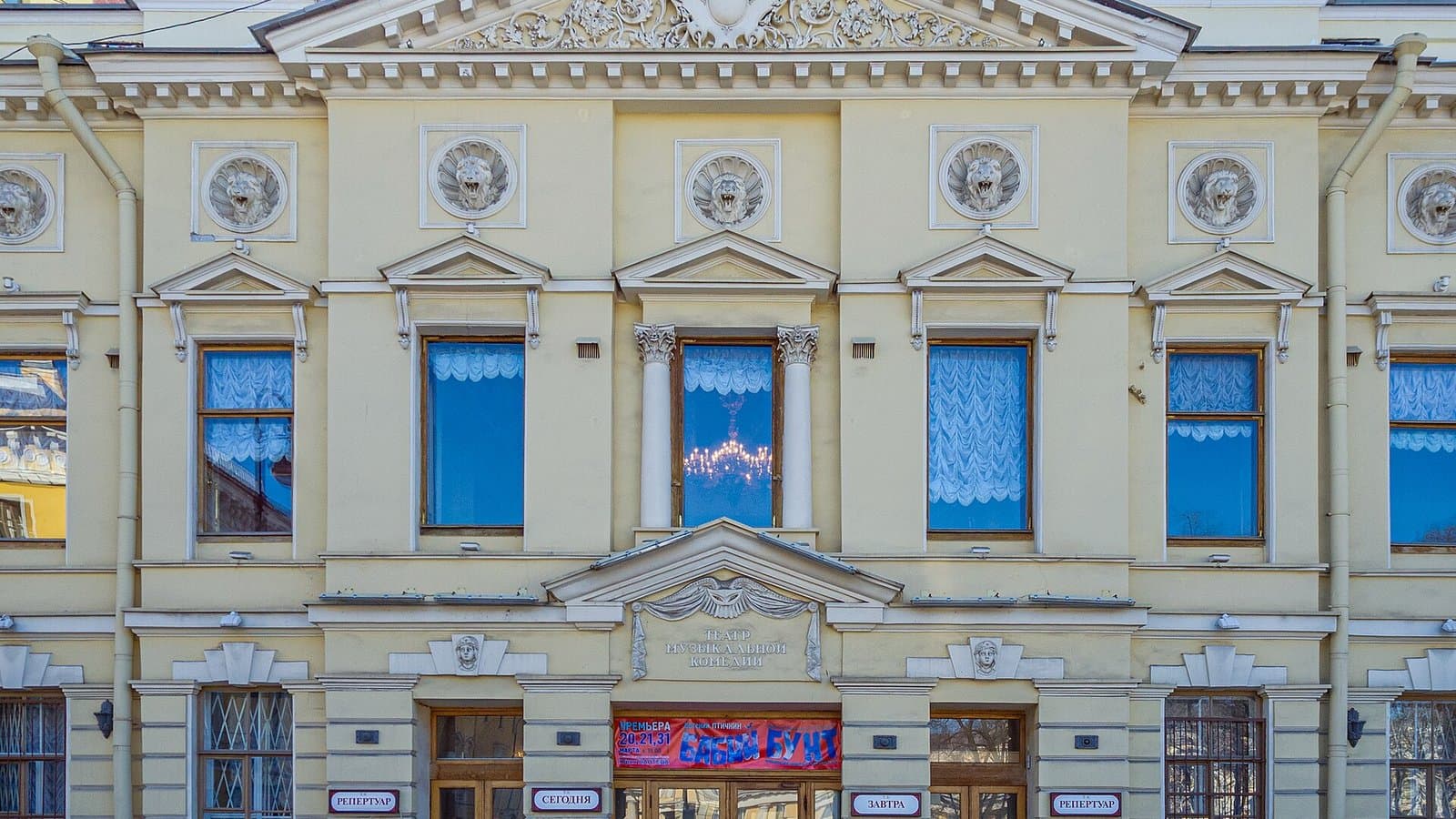
The Alexandrinsky is a theatre people visit twice: once for the building, once for a play. Carlo Rossi completed it in 1832 as the centrepiece of Ostrovsky Square, and the ensemble is one of the most complete pieces of Empire-style planning in St Petersburg: the theatre with its loggia and Apollo's chariot, the National Library to the side, and Rossi Street behind it, laid out with mathematical proportions. Inside is a five-tier hall in blue velvet and gold where Gogol, Ostrovsky and Chekhov sat through their own premieres.
The main facade with its loggia and the chariot of Apollo. Photo: Wikimedia Commons
Rossi's building
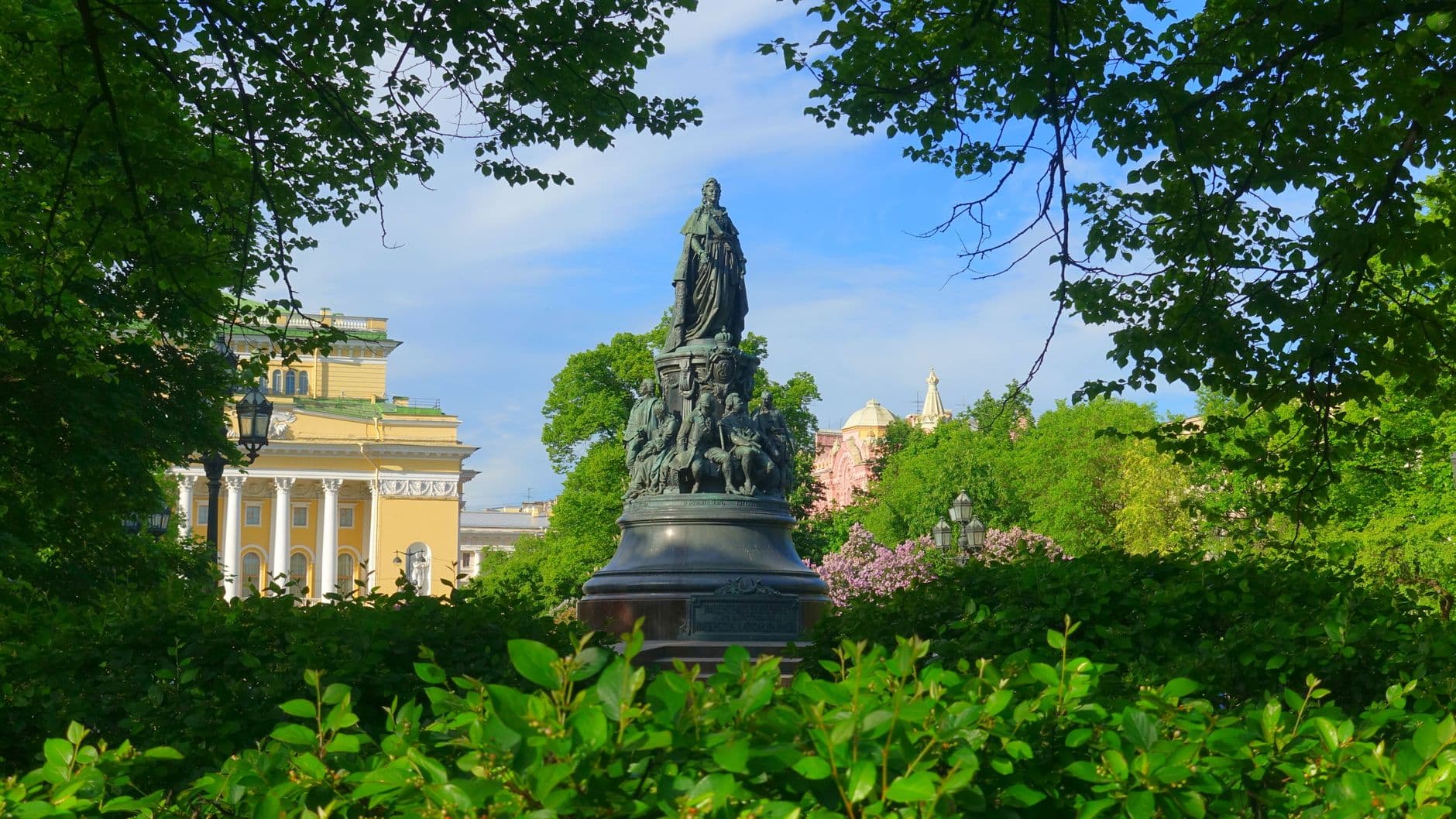
The theatre stands at the back of the square, behind the garden with the monument to Catherine II. The main facade is a loggia of six Corinthian columns topped by Stepan Pimenov's quadriga. According to the theatre, it opened on 31 August 1832 and was named after Empress Alexandra Feodorovna. Rossi designed everything around it too: the square, the two pavilions of the Anichkov Palace, and the street behind the theatre with two identical buildings. Walk around the back — Rossi Street, whose width equals the height of its buildings and whose length is exactly ten widths, is one of the most photographed spots in the city.
Rossi Street behind the theatre. Photo: Wikimedia Commons
The hall and its premieres
The auditorium has a stalls level, five tiers and the imperial box facing the stage. Here The Government Inspector premiered in 1836 with Gogol in the house, Ostrovsky's The Storm in 1859, and Chekhov's The Seagull famously flopped in 1896. The hall was last fully restored in the 2000s and is close to its nineteenth-century look.
The five-tier auditorium with the imperial box. Photo: Wikimedia Commons
What is on
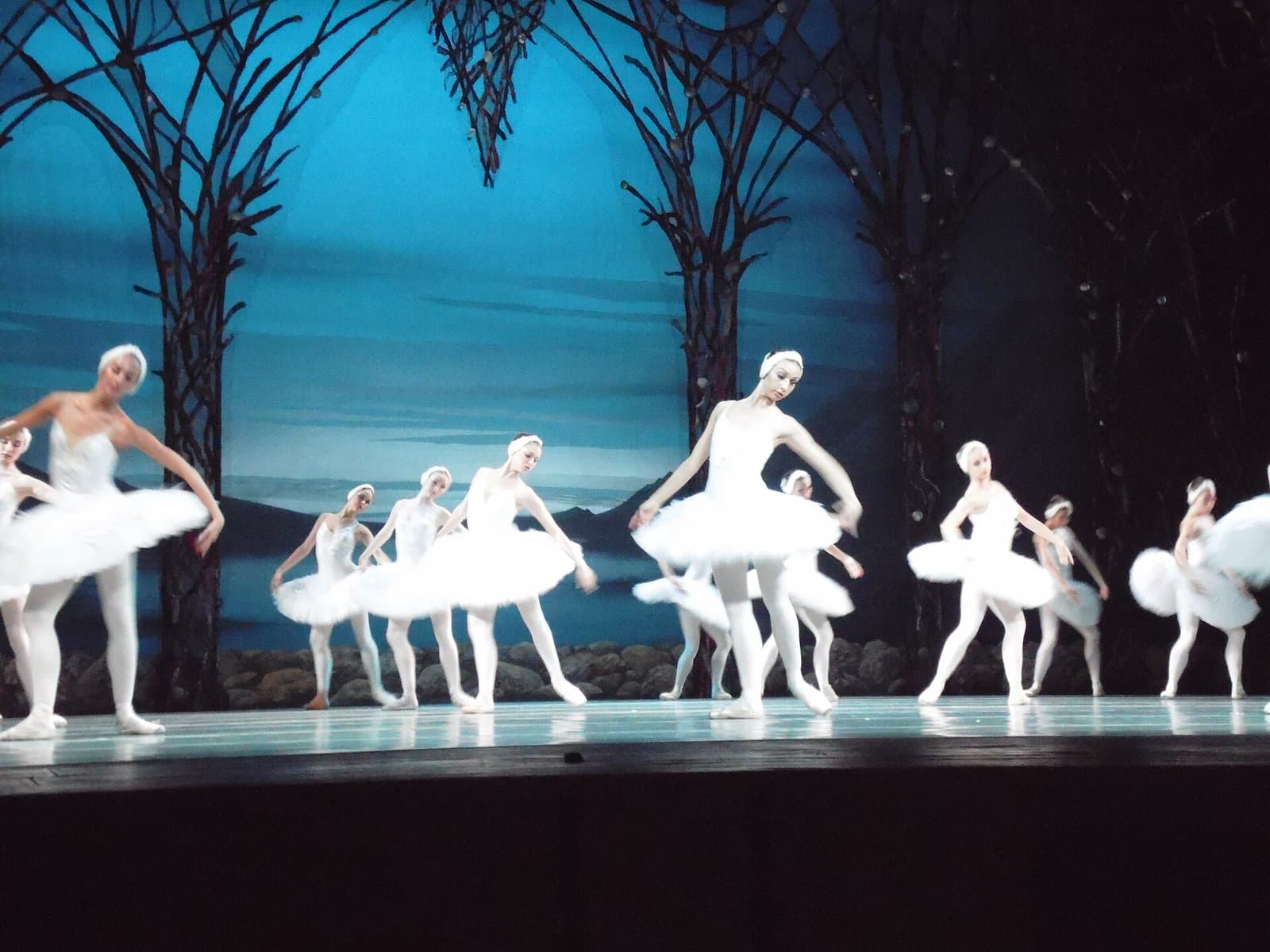
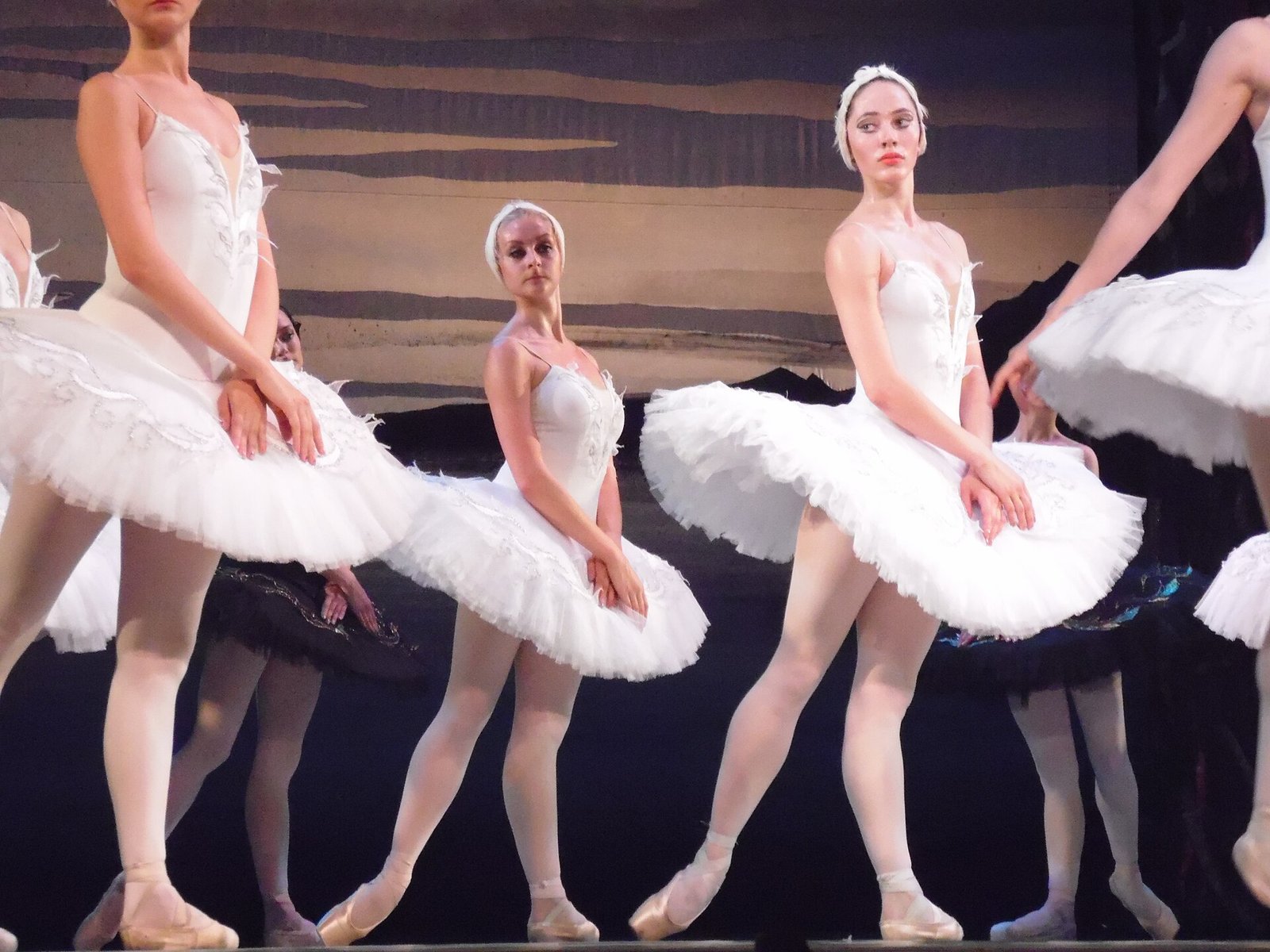
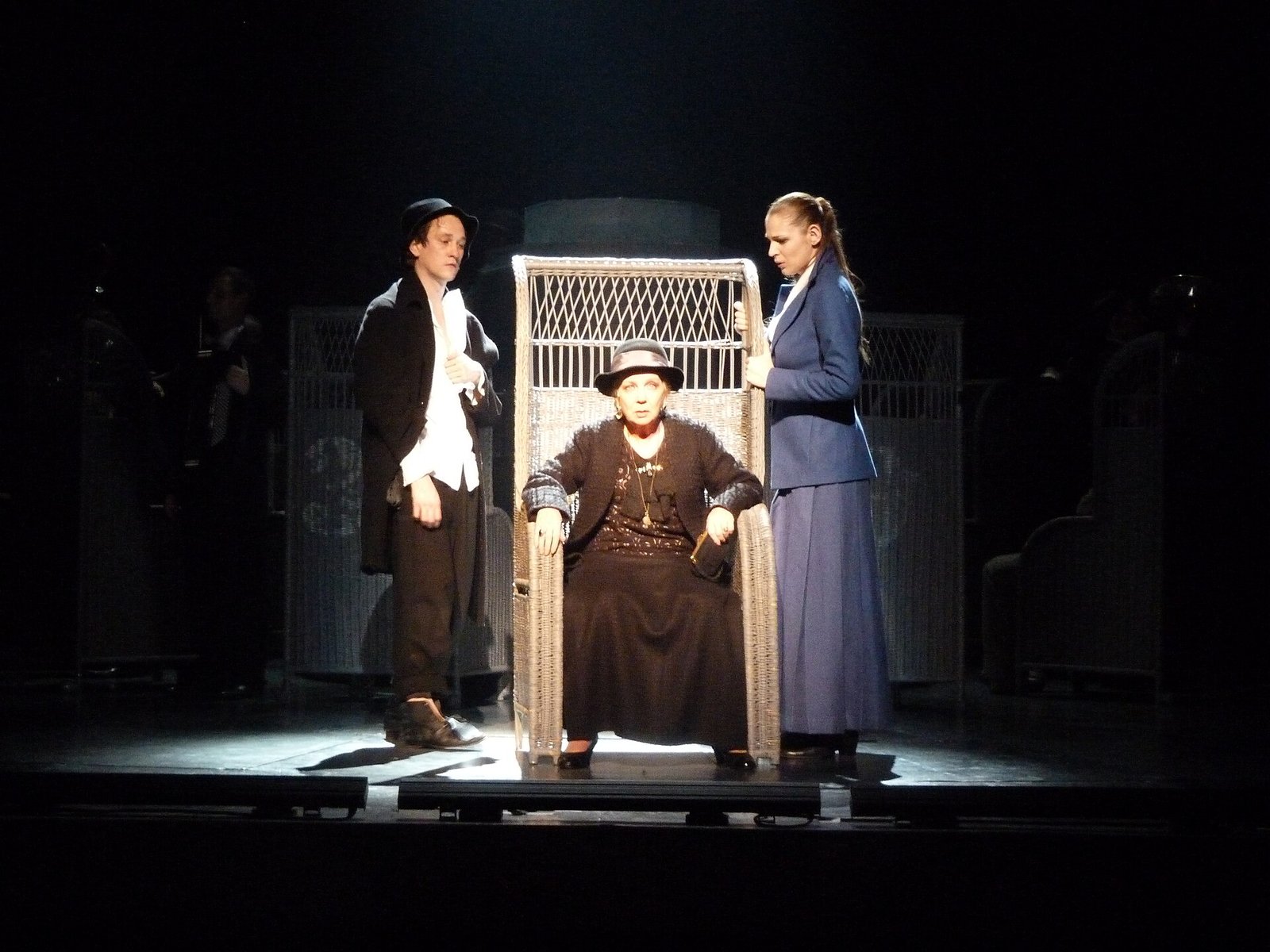
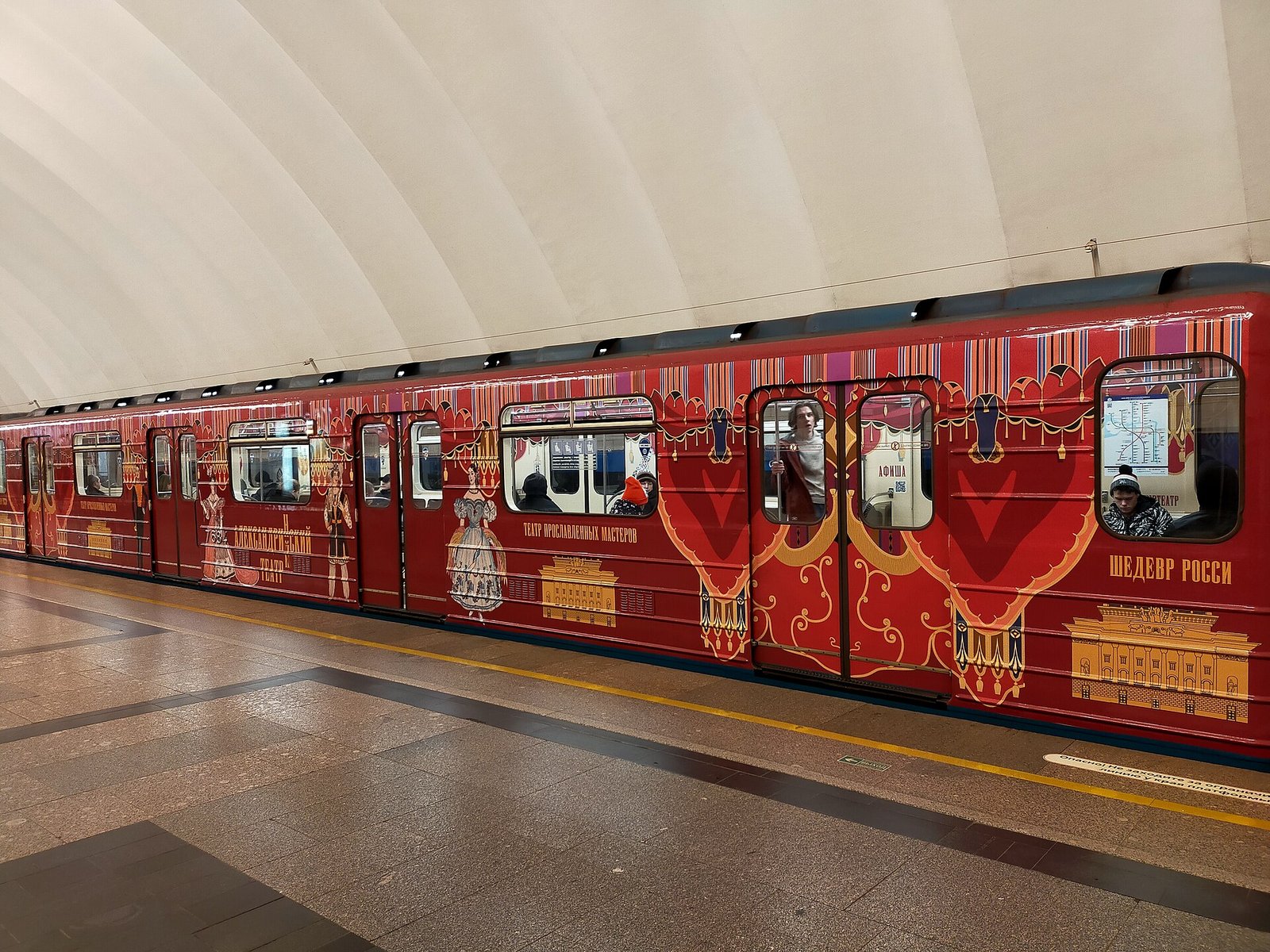
The Alexandrinsky is a director's theatre: the repertoire is classics in contemporary stagings plus work by guest directors. Large productions run on the historic stage; the New Stage on the Fontanka embankment hosts chamber pieces, experiments, lectures and concerts. The monthly programme is on the theatre's website, and popular titles sell out weeks ahead.
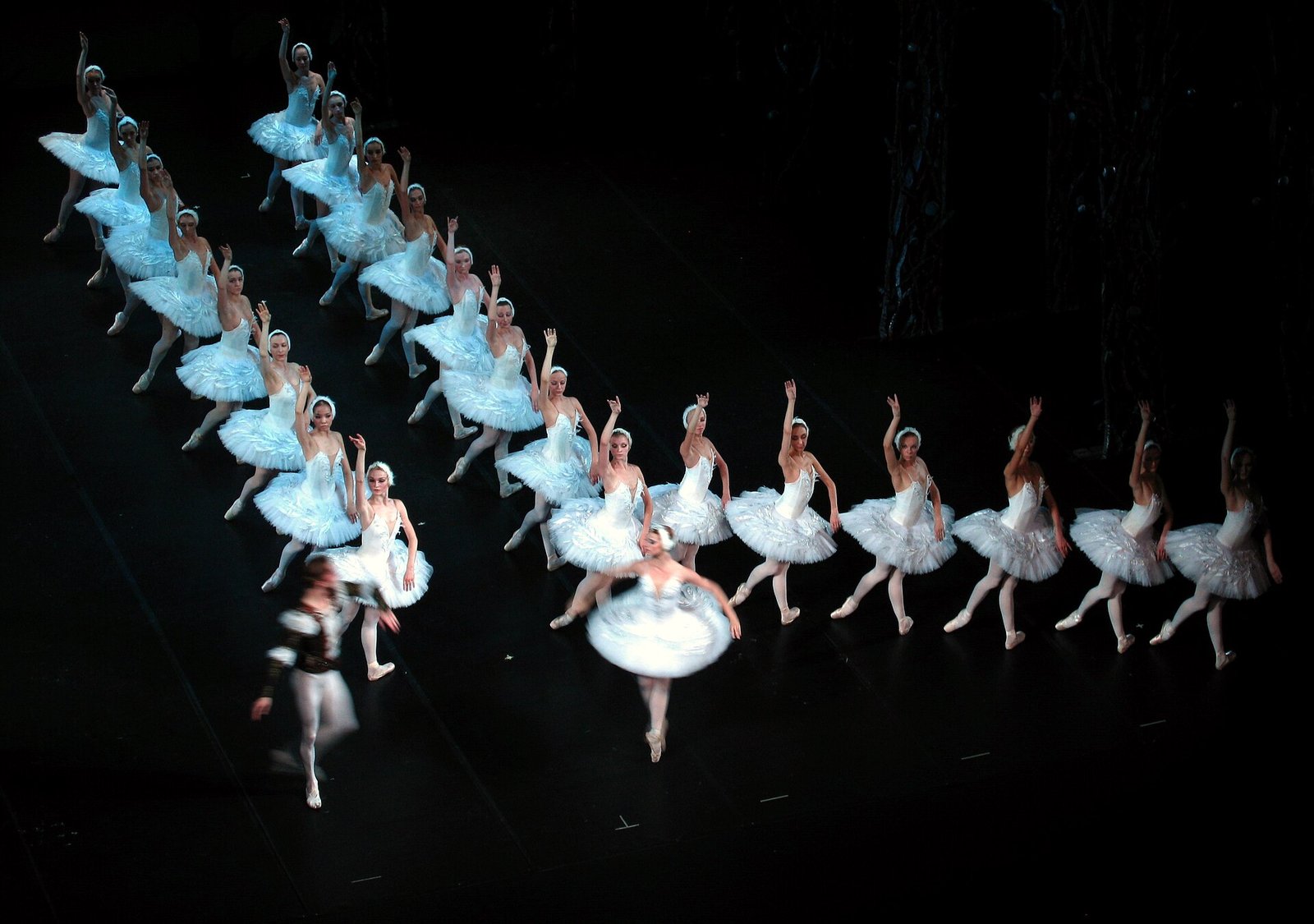
The historic stage. Photo: Wikimedia Commons
Choosing seats
Stalls rows five to twelve near the centre give the best view and sound. The dress circle (first tier) centre is arguably better still — a full view from above. The side boxes on every tier are beautiful but hide part of the stage. The top tiers are the cheapest, steep and high; skip them for a first visit.
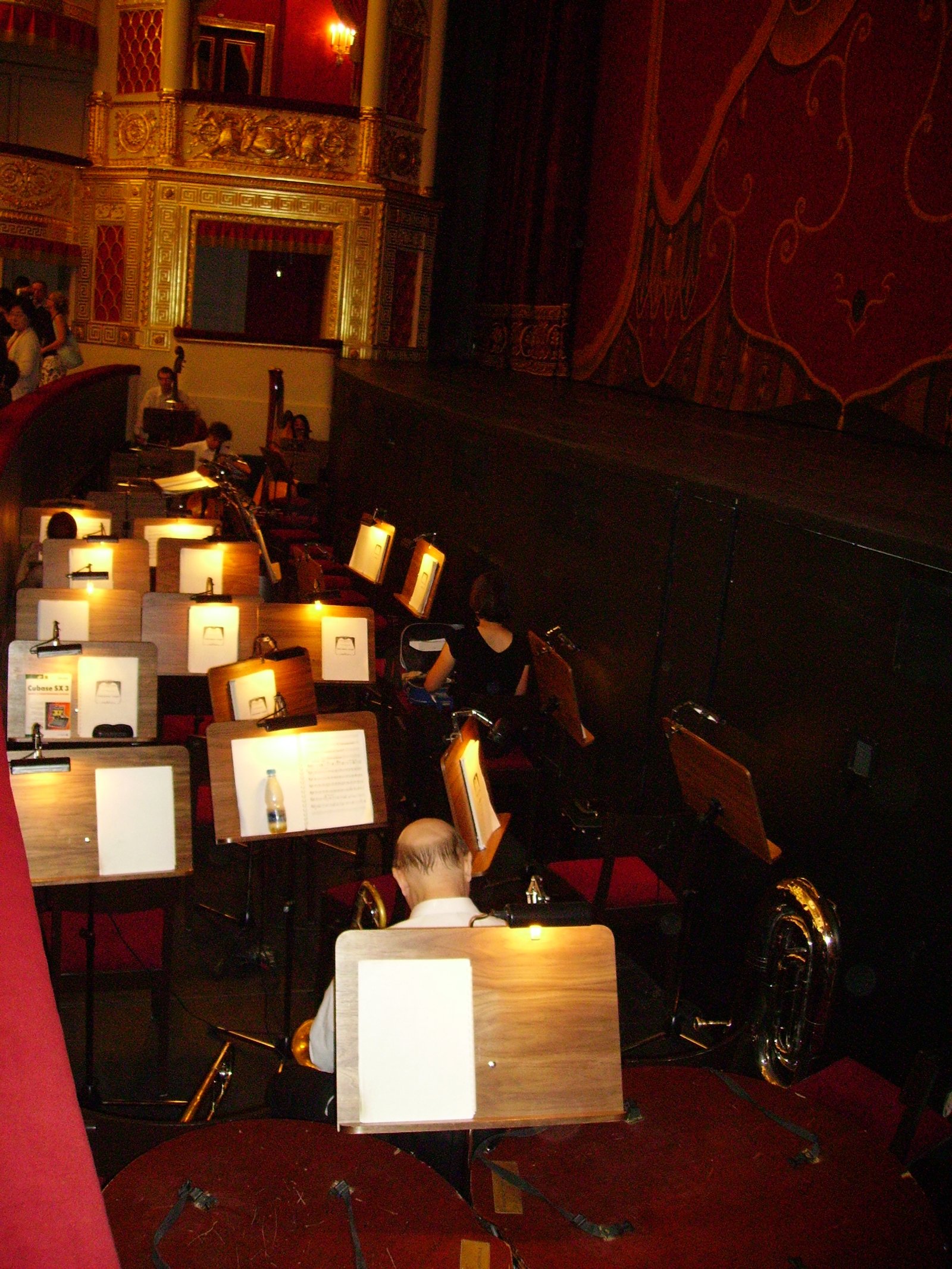
Dress circle boxes. Photo: Wikimedia Commons