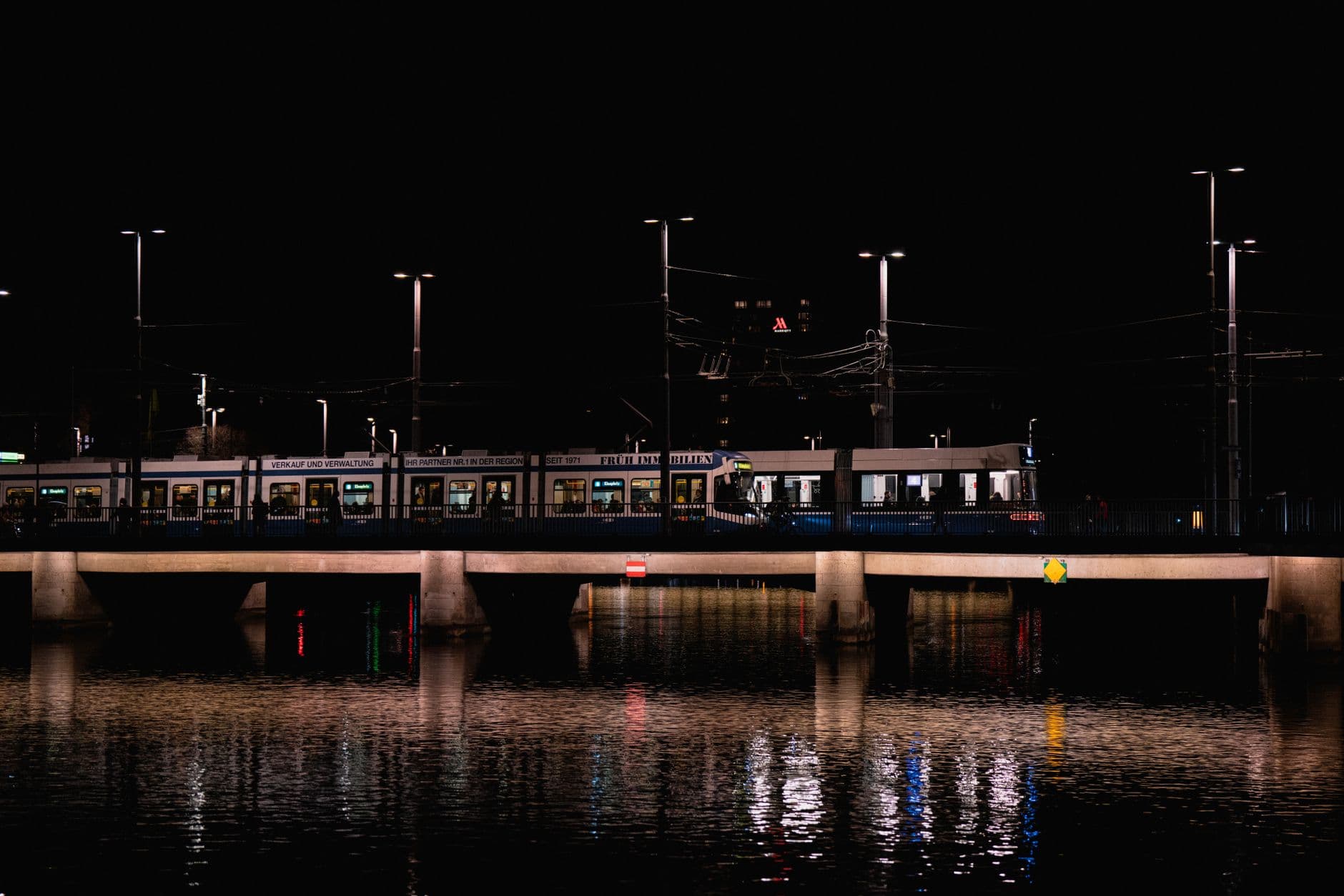
Spårvagnen i Saint Petersburg är inte en museal kuriositet utan ett fungerande transportmedel med ett omfattande nät. Det är också det bästa sättet att uppleva staden en dag när promenader inte är aktuellt: samma vy passerar förbi fönstret, fast du sitter ner och är torr.
Tre linjer ger dig tre olika versioner av staden. Börja med nummer 6.
Spårvagn 6 — över Neva till Vasilijön
Från Finljandskij-stationen till Ulitsa Korablestroitelej, tjugosex hållplatser. Den börjar på Vyborgsidan, korsar Neva, går genom Petrogradskij-distriktet och slutar på den västra udden av Vasilijön.
Det här är den bästa första spårvagnen i staden: den korsar vattnet, passerar genom tre stadsdelar med helt olika karaktär och slutar nästan vid viken. Om du bara tar en, ta den här.
Spårvagn 40 — den långa
Från Detskaja-gatan på Vasilijön till Tichoretskij Prospekt — fyrtiotvå hållplatser, via Baltiska varvet och Politechnitjeskaja. Rakt genom staden, från sydväst till norr.
Det här är en resa snarare än en utflykt: räkna med över en timme. Poängen är en annan här — på en enda tur ser du hur Saint Petersburg förvandlas från ett varvsområde på en ö till de norra bostadsområdena. Det finns nästan inget kejserligt centrum på den här linjen, och det är just dess värde när du tröttnat på Nevskij Prospekt.
Tjizjik — en spårvagn som skiljer sig från de andra
En separat linje i Krasnogvardejskij-distriktet, byggd och driven av ett koncessionsbolag istället för staden. Nya vagnar, egen spårbana och en märkbart tystare och mjukare färd.
Naturskönt är det inte — linjen går genom bostads- och industriområden i nordost. Men om du är nyfiken på hur en modern rysk spårvagn ser ut, är det här det tydligaste exemplet i landet. Tidtabell och karta finns på chizhik-lrt.ru.
Om spårvagnarna tröttar ut dig
På 77I Srednij Prospekt på Vasilijön ligger Museet för elektrisk transport, inrymt i ett gammalt spårvagnsdepå med verkliga vagnar från alla epoker. Det har betyget 4,9 av nästan fyratusenfemhundra omdömen, det finns ljudguide och närmaste tunnelbanestation är Gornyj Institut.
Ett förbehåll: den vanligaste kritiken i recensioner gäller öppettiderna — museet är inte öppet varje dag och stänger tidigt. Kolla tiderna på getmuseum.ru innan du ger dig iväg, annars kan resan till Vasilijön bli bortkastad.