Piter Pass
Blog
The Museum of Political History in the Kschessinska Mansion: what to see, ticket prices and how long to allow

The Museum of Political History in the Kschessinska Mansion: what to see, ticket prices and how long to allow

AS

di Anna Shaposhnikova

5 min di lettura•26 ottobre 2026
🏛️Storia e patrimonio🖼️Musei & Palazzi

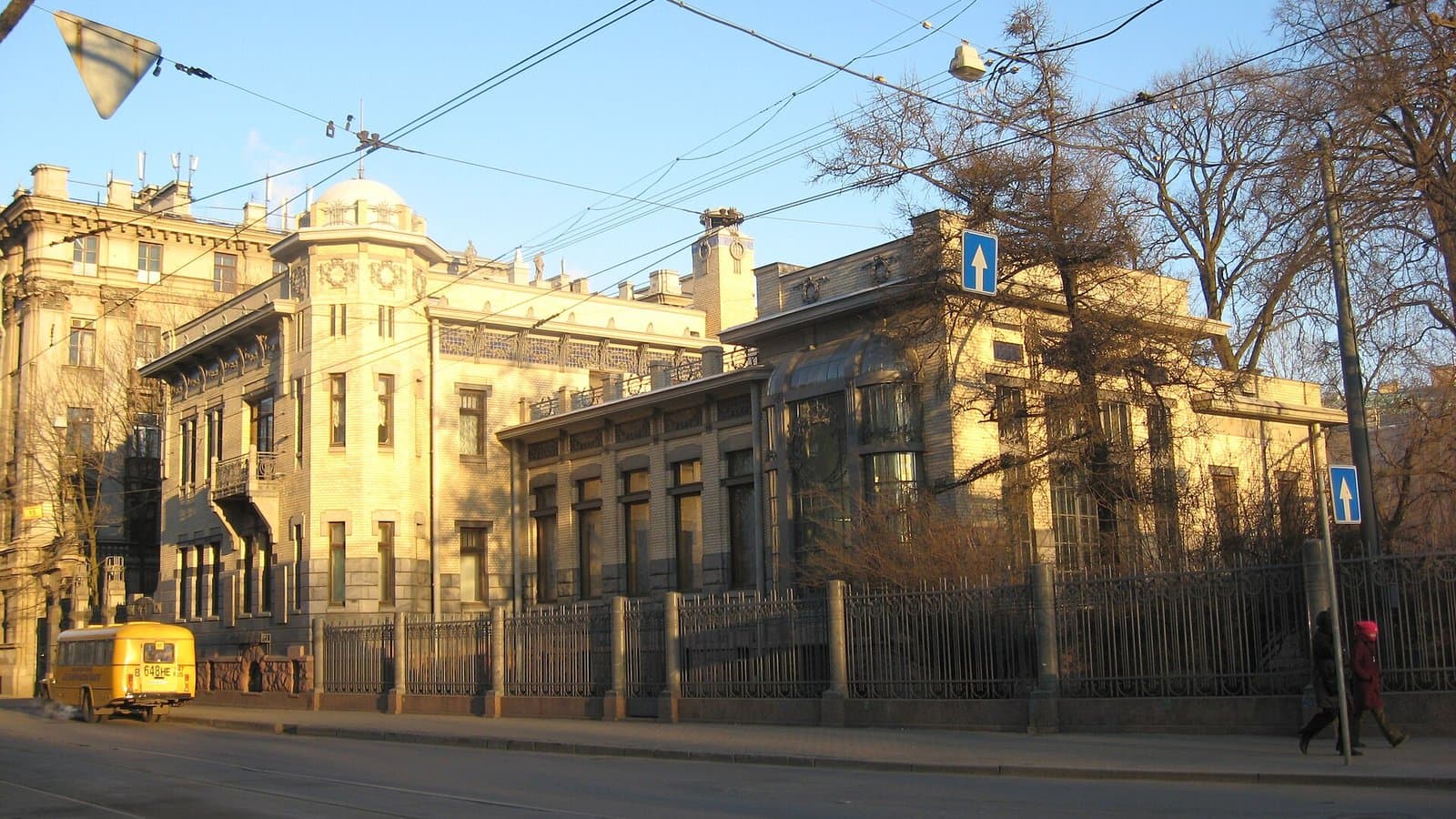
Anyone who has walked from Gorkovskaya metro towards the Peter and Paul Fortress knows the Kschessinska Mansion (Osobnyak Kshesinskoy): an asymmetric house of pale brick with a small tower, wrought-iron railings and a huge glazed bay window. It is one of the finest examples of St Petersburg Art Nouveau, and inside is the State Museum of Political History of Russia. In late October, when it is dark by half past five and the wind comes off the Neva, it makes a good half-day plan: indoors, close to the metro, with real interiors and a story most people only know from textbooks.

On 19 October 2026 we checked the museum's official website for opening hours, ticket prices for Russian citizens and foreigners, the October schedule of group tours, the visitor rules and which exhibitions are open in the Kschessinska and Brandt mansions. Check the site before you go: tour schedules are published month by month.

🏛 The mansion as an exhibit: von Gogen's Art Nouveau

The mansion of Mathilde Kschessinska, prima ballerina of the Mariinsky Theatre, was built in 1904–1906 to a design by the architect Alexander von Gogen. The museum itself calls the building "a kind of benchmark of the Art Nouveau style": a free asymmetric composition, graphic lines, volumes of different shapes and a rich palette of finishing materials. Walk around the outside before you go in: from Kuybysheva Street you see the glazed bay in its metal frame and the wrought-iron fence with its typical Art Nouveau pattern.

The glazed bay window of the Kschessinska Mansion and the wrought-iron fence

The glazed bay window of the Kschessinska Mansion and the wrought-iron fence — Photo: Margarita Zakaryan, Wikimedia Commons, CC BY-SA 3.0

The museum occupies two houses, not one. In 1955–1957 a new wing by the architect Nikolai Nadyozhin linked the Kschessinska Mansion to the neighbouring mansion of timber merchant Vasily Brandt (1909–1911, architect Robert Meltzer). So inside you move from the ballerina's Art Nouveau into a Stalin-era lobby and on to Brandt's oak staircases.

💃 The White Hall and the Kschessinska exhibition

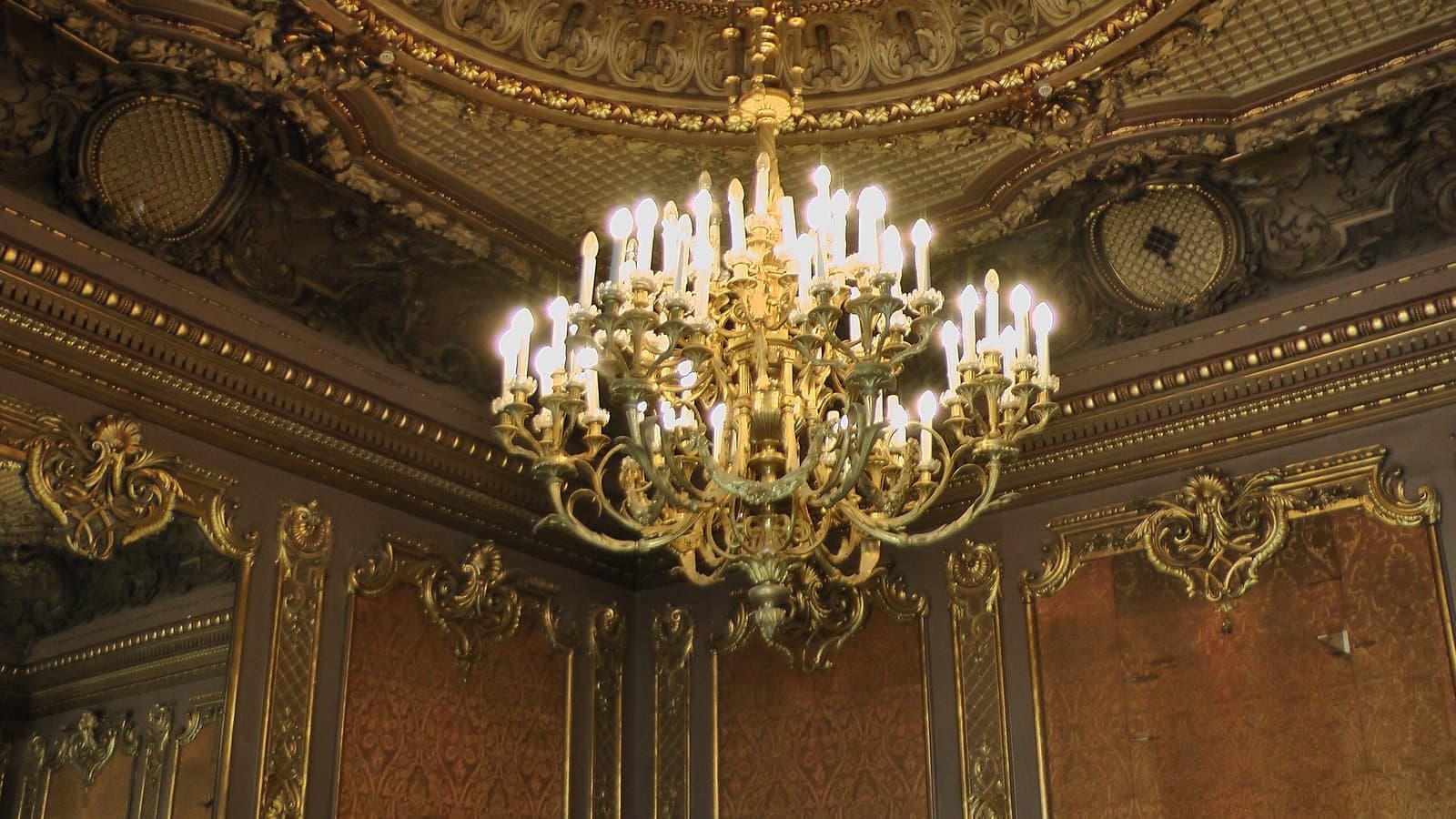
The heart of the mansion is the White Hall, where the ballerina held her receptions. The museum describes it as Classicism with touches of Russian Empire style: inlays of artificial marble, crystal chandeliers and sconces, parquet and mirrors. Fyodor Chaliapin, Anna Pavlova, Sergei Diaghilev and grand dukes of the Romanov family were guests here.

A state room of the mansion with mirrors, a fireplace and crystal chandeliers

A state room of the mansion with mirrors, a fireplace and crystal chandeliers — Photo: Potekhin, Wikimedia Commons, CC BY-SA 3.0

A permanent exhibition, "Mathilde Kschessinska: Fouetté of Fate", is devoted to her life: stage costumes, photographs, documents and family belongings. It is included in the standard ticket. If you want a guide, there is a tour with the same name; in October the museum runs it at 11:00, 14:00, 15:00, 16:00 and 18:30, including the White Hall. Tours are in Russian.

🚩 1917: Lenin's office and the balcony

In spring 1917, after the February Revolution, Kschessinska left the mansion; first soldiers of an armoured division moved in, then the Bolsheviks. According to the museum, from March to early July 1917 the Central and Petersburg Committees of the Bolshevik party and its Military Organisation worked here, and Lenin was a regular. The mansion's balcony is often called "Lenin's balcony"; the museum's website does not describe that episode separately, but the rooms themselves are preserved.

Lenin's office in the mansion, photographed in 2011

Lenin's office in the mansion, photographed in 2011 — Photo: sailko, Wikimedia Commons, CC BY-SA 3.0

On the first floor up, within the exhibition "Revolution in Russia. 1917–1922", are the memorial rooms of the party secretariat and "Lenin's Office". They were refitted in April 2025 with added historical detail, so they may look different from older photos.
Affitti brevi a San Pietroburgo

Лофт у реки Мойки

8 000 ₽ a notte · ≈ 89 € · ★ 4,82

3 notti · 24 000 ₽ in totale · ≈ 266 €

Vedi le offerte

al cambio della Banca di Russia del 24.10.2026 · powered by tutkakdoma

🏺 The main exhibition and "Fragile Politics"

The connecting wing holds the main exhibition "Man and Power in Russia in the 19th–21st Centuries": the ground floor starts with Alexander I and focuses on the reforms of Alexander II and Nicholas II, the upper floor covers the Soviet and post-Soviet years. The Brandt mansion shows the history of the USSR.

Make time for the new display "Fragile Politics" (Khrupkaya politika): more than 300 pieces of Soviet propaganda porcelain from the 1920s to the 1980s, shown as open storage. Guided tours of it run until 24 October at 16:30.

⏱ How long to allow and how to plan your visit

The museum is frank: to see everything properly you need a whole day. With 2–3 hours, pick one or two themes. A realistic autumn plan is the White Hall and the Kschessinska exhibition, the 1917 rooms and "Fragile Politics" — about two hours. If you are here for the architecture, the Kschessinska Mansion and the Brandt staircases are enough.

A scheduled group tour costs 650 roubles; the general tour runs at 11:00, 12:00, 15:00 and 16:00. An audio guide costs 350 roubles and is handed out against a 1,000-rouble cash deposit.

📍 What is nearby

The entrance is from Kronverksky Prospekt and the nearest station is Gorkovskaya metro; according to the museum, trams 6 and 40 and buses 28, 46 and 76 also stop here. Across the road is the Cathedral Mosque with its turquoise dome, and further on the Peter and Paul Fortress. For more interiors from the same era, see our list of mansions you can actually get inside.

🧭 Good to know

📌 In short

✅ The Museum of Political History of Russia is in the Kschessinska Mansion, 2–4 Kuybysheva Street, entrance from Kronverksky Prospekt, Gorkovskaya metro.

✅ Open Tue and Thu–Sun 10:00–18:00, Wednesday until 20:00, closed Monday.

✅ Tickets: 500 roubles for citizens of Russia and the EAEU, 700 roubles for foreigners, 250 concession; a group tour is 650.

✅ Highlights: the White Hall, the "Mathilde Kschessinska: Fouetté of Fate" exhibition, the 1917 rooms and the propaganda porcelain.

✅ Allow two to three hours and choose one or two themes.

The Kschessinska Mansion is a rare case where the building is as interesting as the collection: Art Nouveau outside, a ballroom inside and the rooms from which a party was run in 1917. Checked on 19 October 2026 against the official website of the State Museum of Political History of Russia: its pages on opening hours, ticket prices, the main building and its history, tour sessions, visitor rules and FAQ.

Cover photo: Sbarichev, Викисклад, общественное достояние (https://commons.wikimedia.org/wiki/File:Osobnyak_Kshesinskoy.jpg)

Post precedentePost successivo

Getting around Saint Petersburg

Airport (Pulkovo) and around-town transfers — fixed price, meet-and-greet driver.

Find a transfer

powered by rideclu.ru

Potresti essere interessato/a

La dimora Brusnitsyn: come visitarla, costi e cosa vedere sull'Isola Vasilievsky

La dimora Brusnitsyn: come visitarla, costi e cosa vedere sull'Isola Vasilievsky

La dimora dei mercanti Brusnitsyn al 27 di Kozhevennaya Line è accessibile solo tramite visite guidate: un fumoir moresc...

Blog
22 ottobre 2026
All'interno dei palazzi di San Pietroburgo: Biglietti da 400 rubli e porte che restano chiuse

All'interno dei palazzi di San Pietroburgo: Biglietti da 400 rubli e porte che restano chiuse

How to get inside historic St Petersburg interiors legally: museum mansions, the Stieglitz Academy and Brodsky flat — an...

Blog
26 settembre 2026
Il Museo del Pane di San Pietroburgo: dov'è, cosa vedere

Il Museo del Pane di San Pietroburgo: dov'è, cosa vedere

Il Museo del Pane ha lasciato Ligovsky Prospekt nel 2015 e ora occupa una casa in legno al numero 2 di via Mikhaylova, v...

Blog
21 ottobre 2026