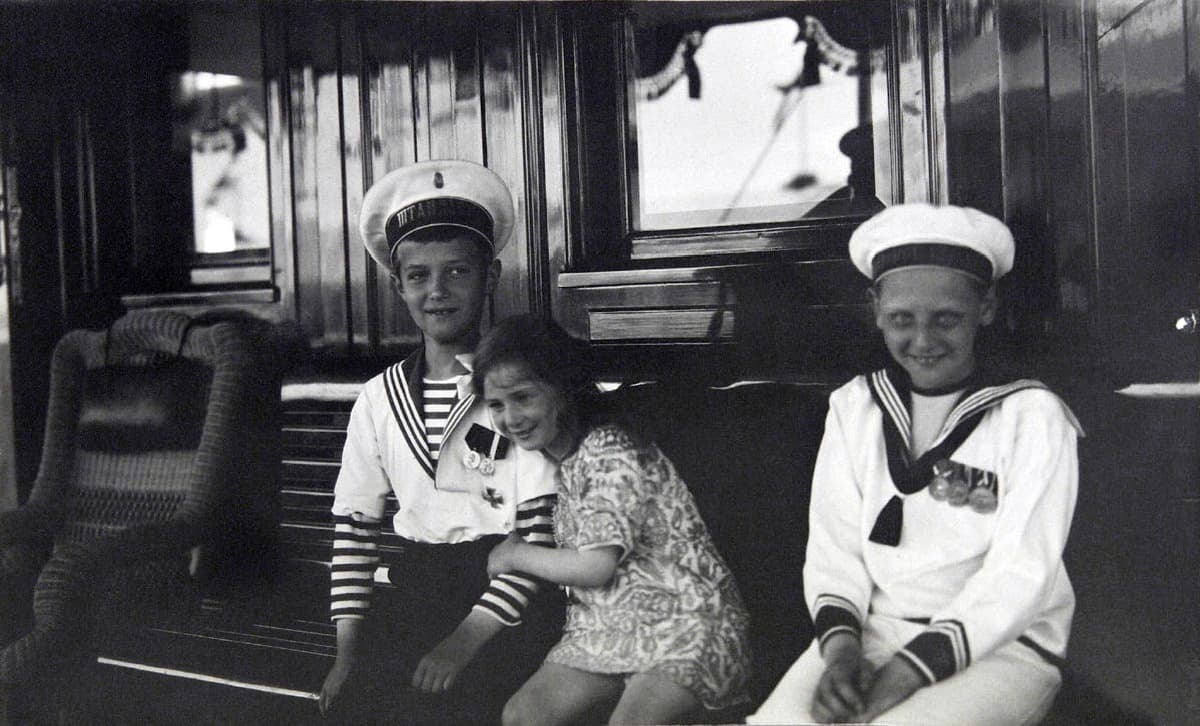
St Petersburg tells the story of Nicholas II's family often, and almost always through the ending — the abdication, the departure, Yekaterinburg. The new exhibition at the Museum of the History of St Petersburg comes at it from the other side. It is about the children: how they grew up, what they studied, what they played with, and what ordinary days looked like before history turned.
The show opens on 27 November. Alongside pieces from the museum's own holdings, the galleries include exhibits from the private collection of the Wolfson Book Gallery Museum of Enlightenment. On the evening of the same day the museum's lecture hall hosts a talk.
Why the children's angle works
Imperial exhibitions usually run on uniforms, orders and full-length portraits. This material is different: exercise books, textbooks, toys, photographs, letters. The objects are small, they ask to be looked at closely, and that is exactly why they hold attention longer than another ceremonial portrait.
The distance also collapses. Once you see the handwriting of a child learning to write, an abstract "imperial family" turns into specific people of a specific age. For a visitor to the city this is the easiest way into the Romanov story: you do not need to know the dynastic details in advance, you just need to look.
What the private collection adds
The real draw is the group of objects from the Wolfson Book Gallery collection. Private holdings rarely enter public galleries as a block — usually it is one or two pieces on loan. Here the museum notes specifically that items from this collection form a visible part of the display.
In practice that means some of these things may not be on public view again for years. A private collection goes back to its owner, and the next chance may simply not come. Check the closing date early rather than leaving the visit for "some time in winter."