A market in St Petersburg is not shopping — it is a format for an evening. You come to spend an hour and a half walking between stalls with a hot cup in your hand, look at the lights, and leave before your feet freeze. Treated that way, it makes a very good winter evening. Treated as a shopping trip, it disappoints.
The season runs through December and holds into the first days of January. There are several sites each year: the big one in the centre, plus smaller markets in courtyards, museums and cultural venues. Each announces its own opening date, and they do not line up.
The big market in the centre
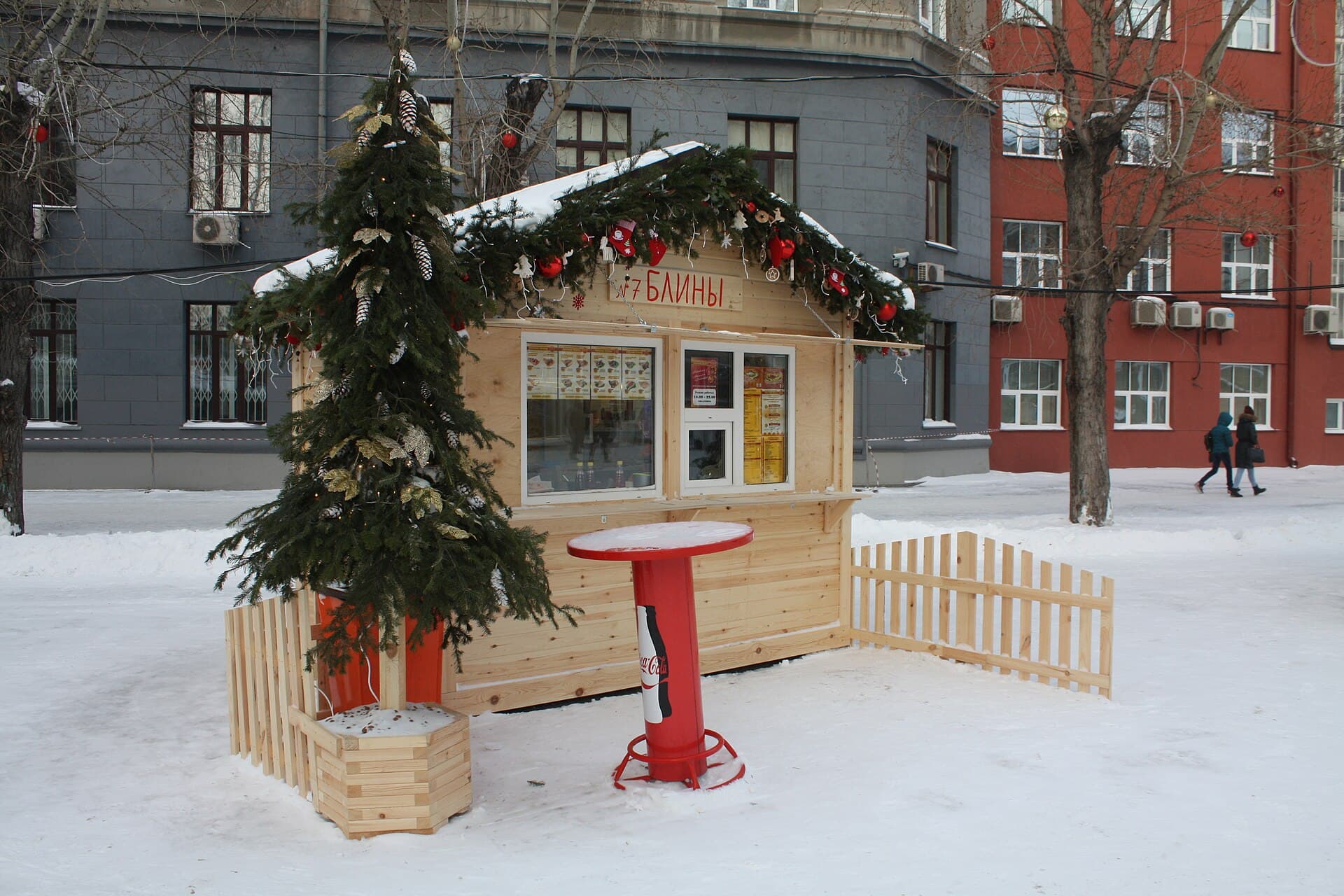
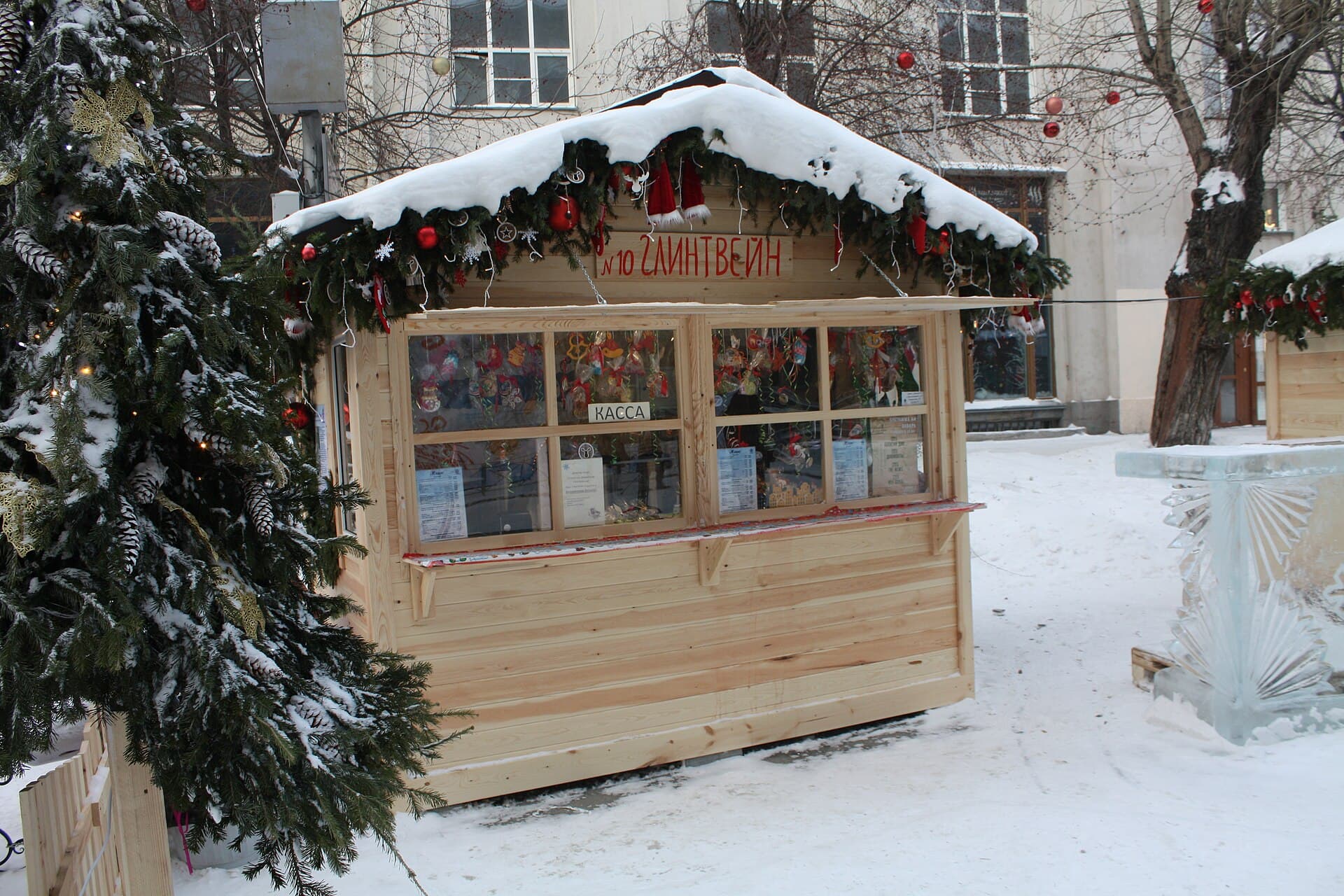
The main city market is rows of wooden huts, a stage, illuminations and a dense crowd. It runs for most of December and the first days of January, and it is the one people come to for the picture: lights, a tree, music, people.
The thing to know: on a weekend evening it is packed. The queue for a hot drink can take as long as the walk through the rows. If you want to see it calmly, go on a weekday or early in the day — the lights come on early in a northern winter, so "day" and "evening" differ by the size of the crowd rather than by daylight.
The smaller markets, which are often better
The second kind is small: courtyards of academies, museums and cultural centres. They run for a few days, they gather makers rather than chain sellers, and you can genuinely find something that exists nowhere else.
Why they are better:
- fewer people and shorter queues;
- the seller is usually the maker, so you can ask what something is made of;
- the range does not repeat from site to site;
- there is almost always an indoor part where you can warm up.
Why they are harder: they live for two or three days, so you have to catch the schedule.
What to buy besides mulled wine
The hot drink is part of the ritual, but it is not a reason to travel. What is worth your attention:
- handmade ceramics and tableware — the fairest trade between price and memory;
- candles and textiles — easy to pack, nothing breaks;
- gingerbread and baked goods — buy where the queue is local rather than touristic;
- handmade tree decorations — the December souvenir of this city;
- jewellery and small accessories — plenty of mass-produced filler, but real makers too.
Market prices run above shop prices almost everywhere. You are paying for the setting and for handwork, which is fine as long as you know it in advance.
Going with children
With children, a market works in daylight only. On a weekend evening the crowd is thick, a pushchair is hard work, and a child on your arm gets cold faster than you do.
What helps: arrive in the first half of the day, once the carousels and workshops have opened but before the crowd builds; note where the indoor part is; plan for an hour rather than three; and dress for standing still, not for walking.
Building a day around it
The market is the closing stop, not the whole day. A sensible shape: a museum or exhibition in the afternoon, a warm lunch, a walk through the centre at dusk, an hour and a half at the market, then dinner. You get the lights without standing in the cold for three hours.
If you are here for a few days and would rather not assemble the route yourself, it is easy to book an experience that includes a walk through the festive centre.
What to book ahead
Accommodation first: December weekends and the New Year dates go early in the centre, and the closer to the holidays, the thinner the choice. A dinner table after the market is worth booking too.
Tickets for the markets themselves are usually not needed — entry to the city sites is free. Smaller markets inside museums and academies can be the exception, so check that particular courtyard's rules the day before.
Cover photo: К.Артём.1, CC BY-SA 4.0, Викисклад