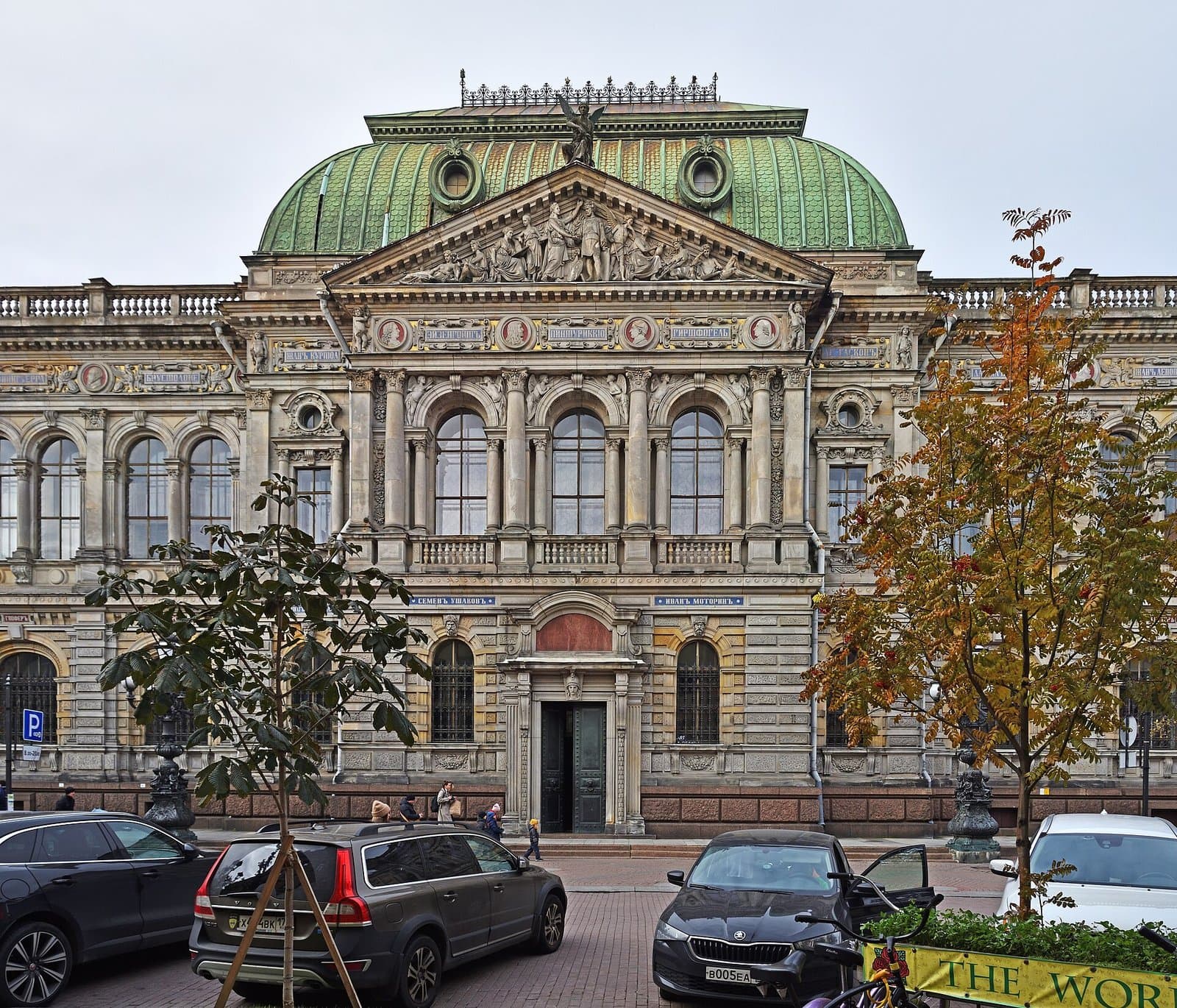
Solyanoy Lane is a block most people cut through on the way from Liteyny to the Summer Garden. Yet in two hours you can see three different St Petersburgs here: a sumptuous museum of applied art inside the Stieglitz Academy, a siege museum with a reconstructed 1942 room, and the Baroque Panteleimon church, a memorial to Peter's naval victories. The name comes from the Salt Town, eighteenth-century salt warehouses.
The great hall under the glass dome, the museum's centrepiece. Photo: Wikimedia Commons
The Stieglitz Academy museum
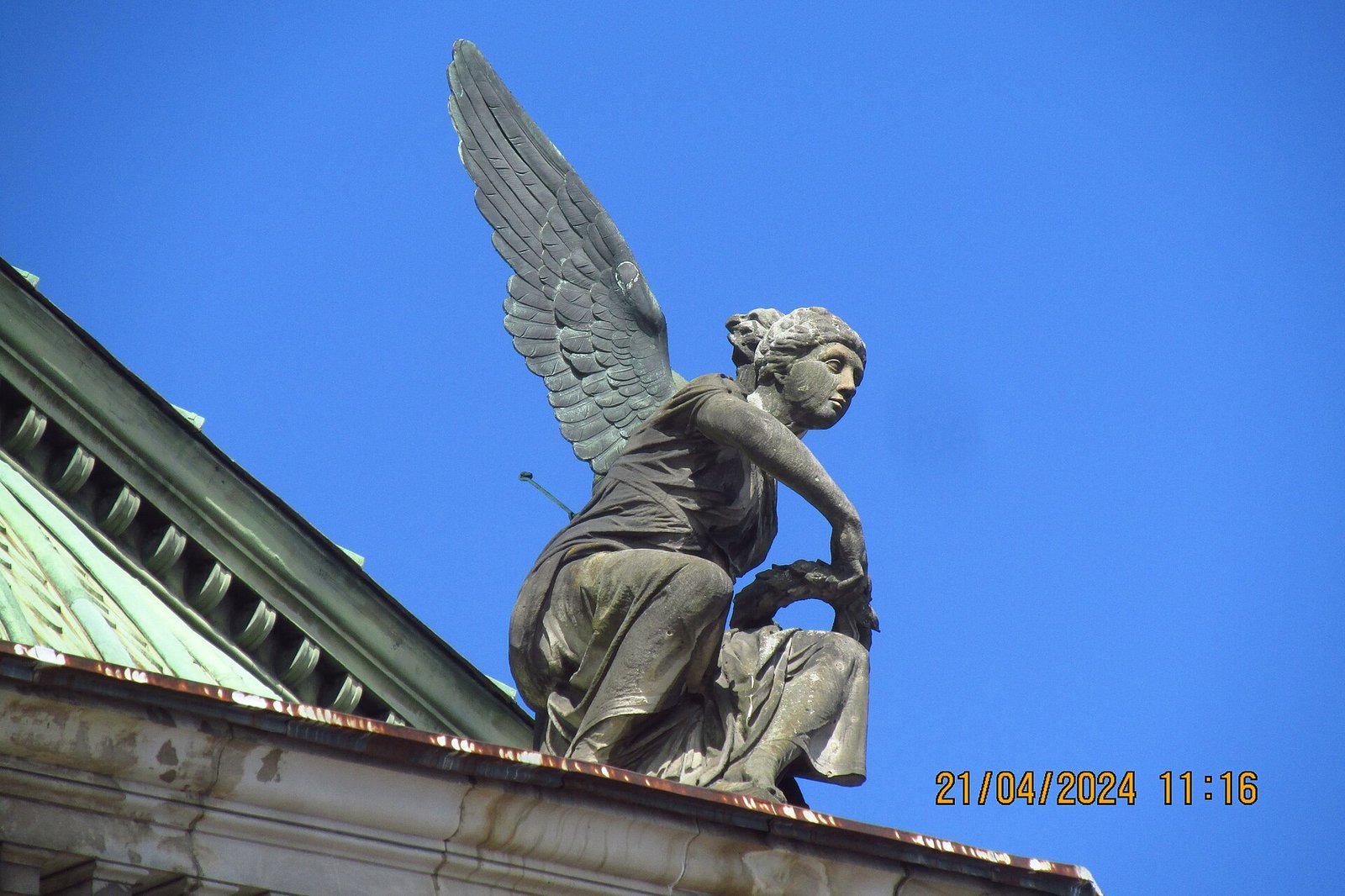
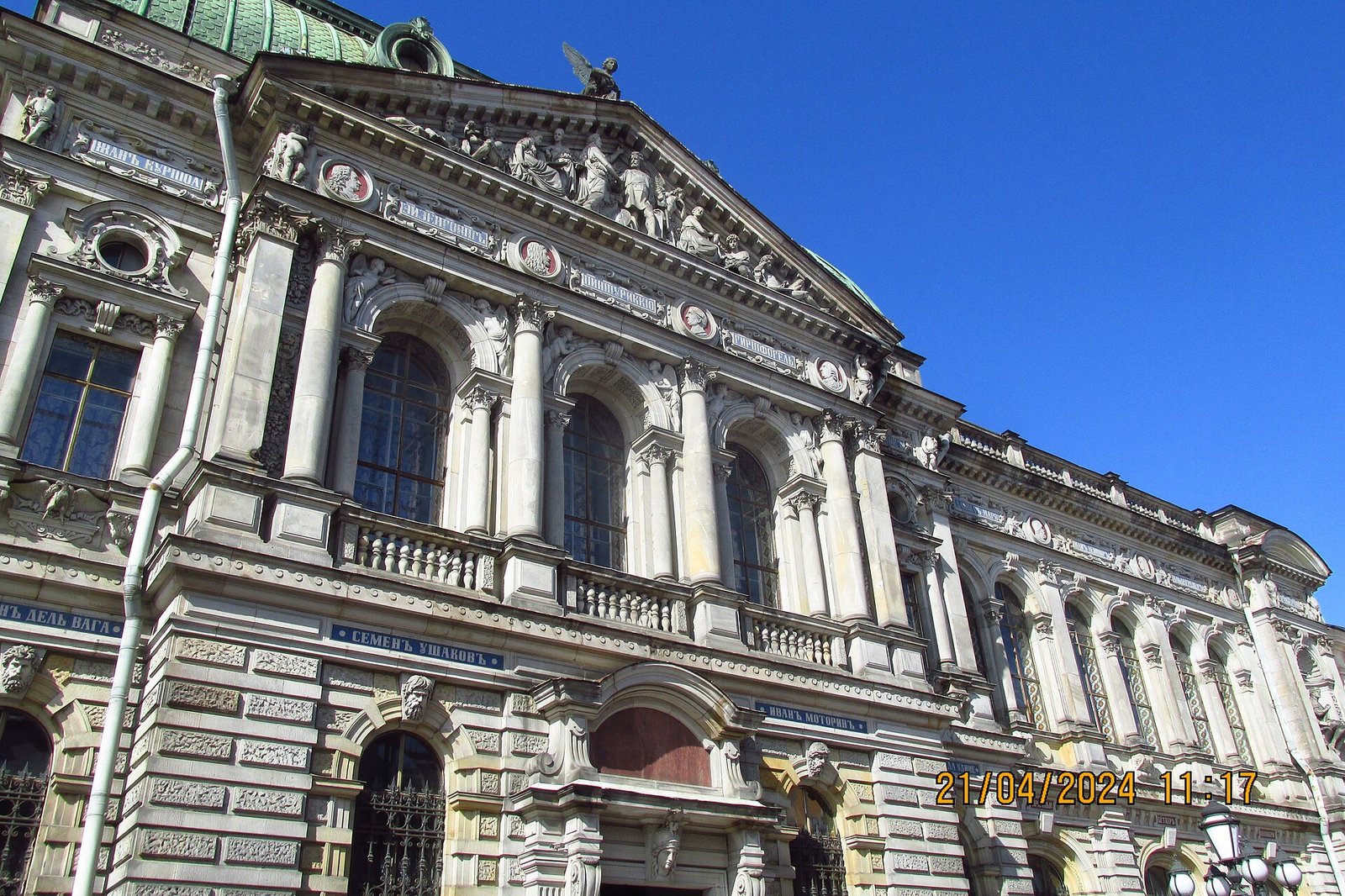
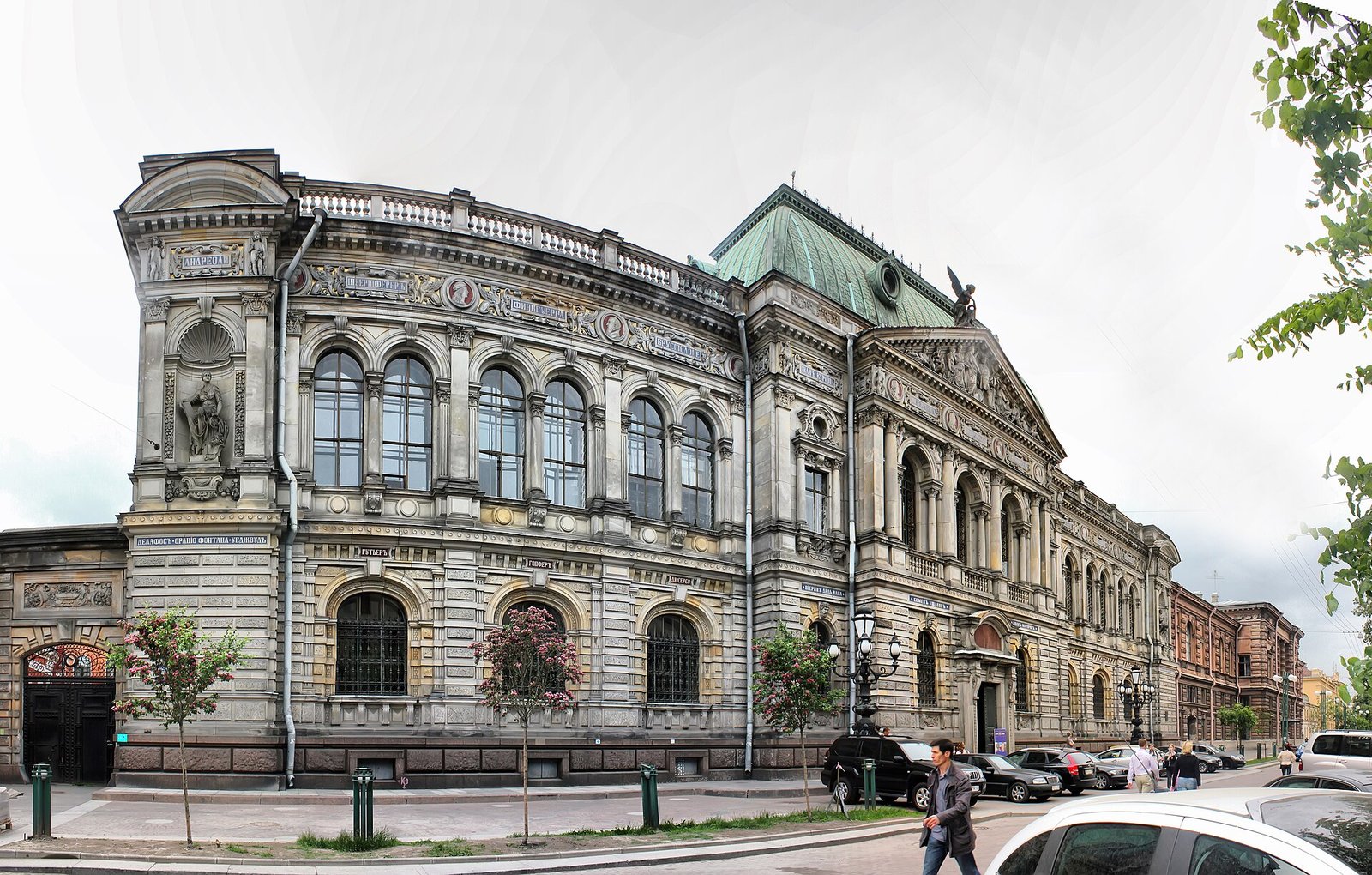
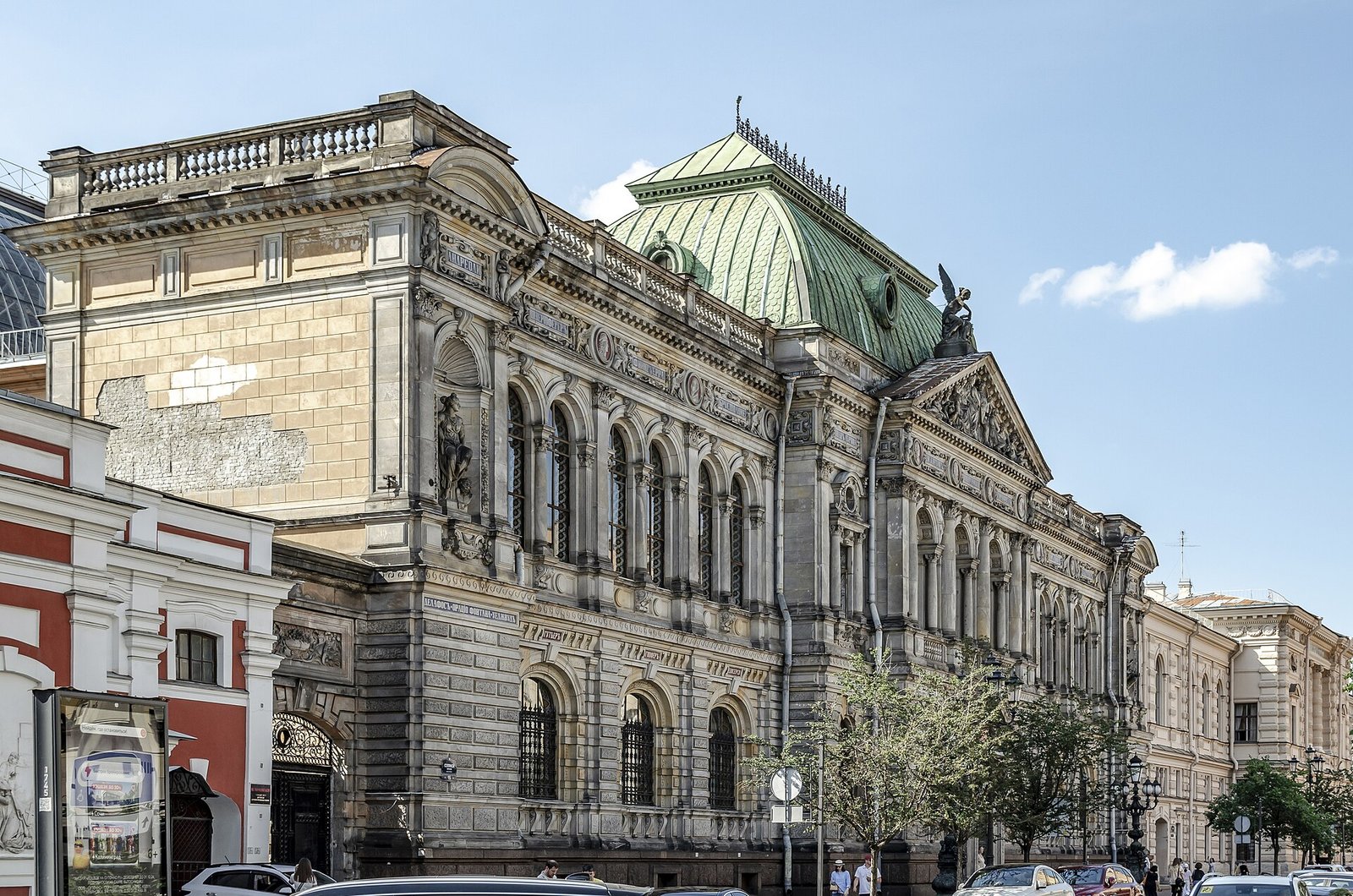
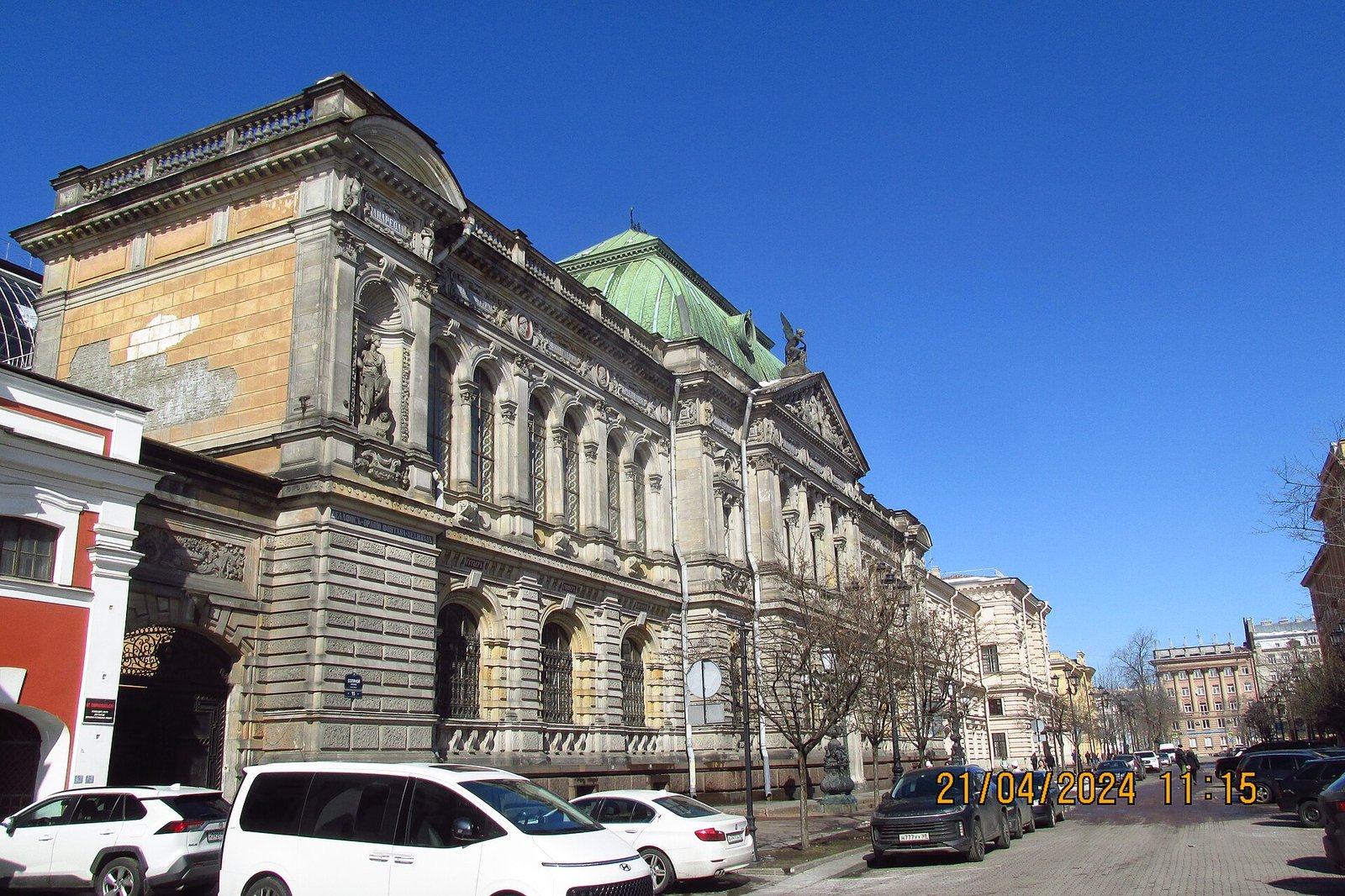
The academy of art and industry founded by Baron Stieglitz in 1876 stands at 13 Solyanoy Lane. Its museum of applied art is a palace of the 1890s by Maximilian Messmacher: a great exhibition hall under a glass dome, galleries and rooms each decorated in the style of its era — Renaissance, Baroque, Gothic. According to the academy, the collection spans furniture, porcelain, textiles and metalwork from the Middle Ages to Art Nouveau. Getting in is harder than at an ordinary museum: it is a working university, the museum opens on a limited timetable and often only with a guided tour. Check the days and book ahead — it is worth the effort.
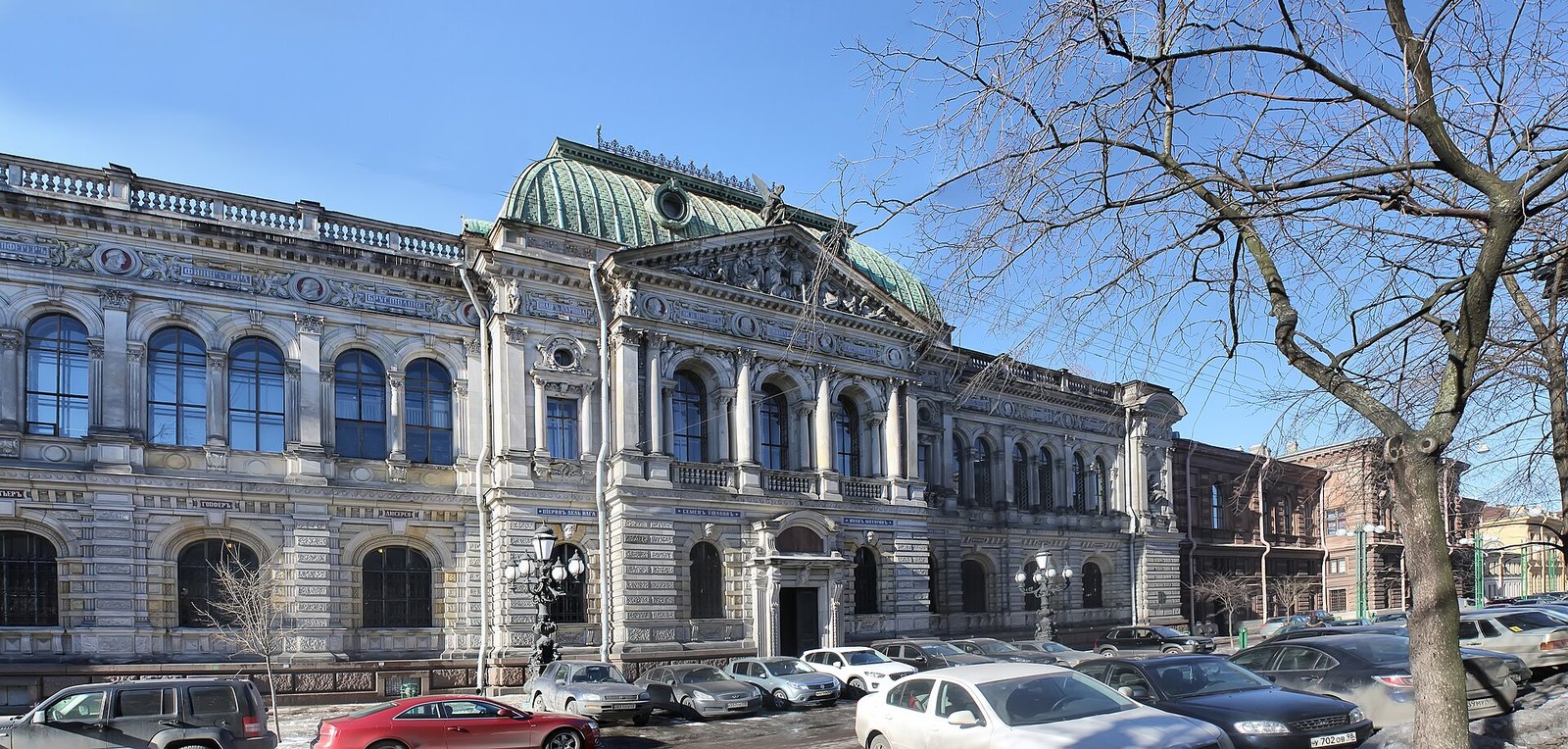
The halls are decorated in the styles of the periods they show. Photo: Wikimedia Commons
Museum of the Defence and Siege of Leningrad
A few doors along, at number 9, is the Siege Museum. It opened in 1944 as an exhibition, was closed in 1949 under the "Leningrad Affair" and revived in 1989. The displays were renewed in the 2010s: documents and belongings of siege survivors, a reconstructed room and bakery, the defence map, newsreel, the Road of Life. It keeps normal hours; allow an hour to ninety minutes.
The entrance to the Siege Museum on Solyanoy Lane. Photo: Wikimedia Commons
A reconstructed siege-era room. Photo: Wikimedia Commons
The Panteleimon church
On the corner of Solyanoy and Pestelya stands the church of St Panteleimon, 1730s, built to commemorate the navy's victories at Gangut and Grengam, both won on the saint's day. Anna-era Baroque, still in use, with memorial plaques for the Gangut victories on the facade. Modest inside, but the story matters: it is one of the city's first naval memorials.
The Panteleimon church, a memorial to the victories of 1714 and 1720. Photo: Wikimedia Commons
The Summer Garden and Peter
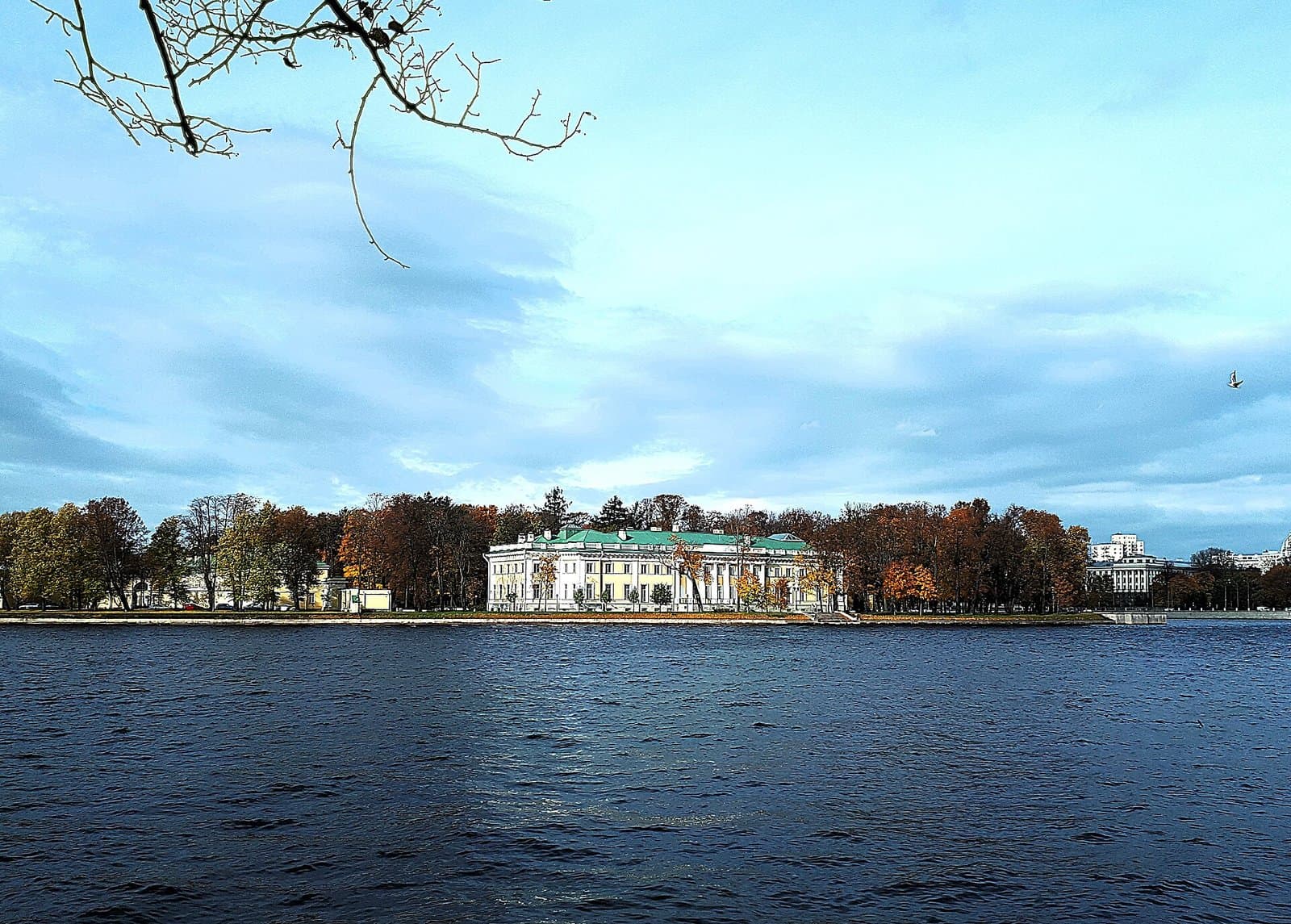
The lane leads to the Fontanka opposite the Summer Garden; by the Panteleimon Bridge stands a monument to Peter I. From here it is ten minutes to the Summer Palace and the Mikhailovsky Castle — the natural end of the route is the garden in season, or the embankment.
The Panteleimon Bridge where the lane meets the Fontanka. Photo: Wikimedia Commons