Kolomyagi is a historic district in the north of Saint Petersburg where, a kilometre from Udelnaya metro, the city suddenly turns into a village: private wooden houses, narrow lanes without pavements, a sky-blue timber church and a count's manor with a pond. Thirty minutes from the centre, and it feels like the dacha suburb it was a century ago. Here is what to see, how the children's railway works, and how to behave in a place where people simply live.
Why there is a village inside the city
Kolomyagi has been known since the early 18th century. In the 19th century the estate passed to General Nikitin and then to his daughter, who married Count Orlov-Denisov — hence the Nikitinskaya streets and the manor. By the end of the century it was a dacha resort with a hundred-odd houses, several times more residents in summer than in winter, amateur theatre and the area's first football club. The settlement became part of Leningrad in 1930, but the tower blocks passed it by, and today it is an officially recognised historic area of the Primorsky district with its own municipality and low-rise streets intact.
A two- to three-hour walk
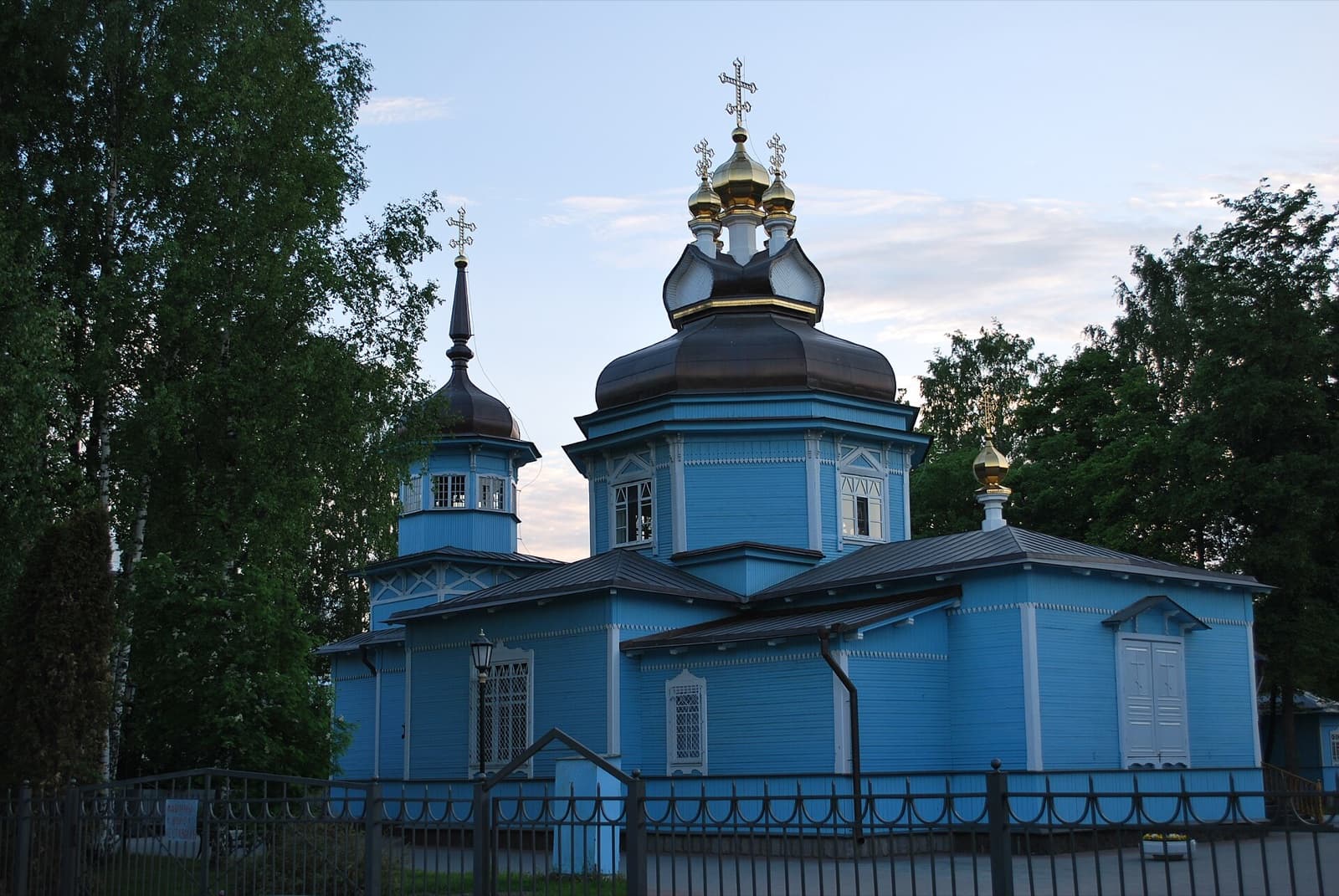
Church of St Demetrius of Thessaloniki (1-ya Nikitinskaya Street, 1). A wooden church built in 1905–1906 to a design by Alexander Vseslavin, the architect of the Chapel of St Xenia at Smolensky Cemetery. The village raised the money itself; Count Orlov-Denisov gave the land and a large donation. It is a working parish with daily services, so photograph the blue walls and white fretwork from outside and be discreet if you step in.
The Orlov-Denisov manor and the Count's Pond (Glavnaya Street, 32). The manor house of 1839–1841 in late classicism is attributed to architect Alexei Gornostaev; together with its park and ponds it is a federally listed heritage ensemble. After 1917 it served as warehouses, a club, a cinema, a hostel and a boarding school; in 2011 it was sold to a private company that never restored it, and in 2020, according to the city heritage committee, it passed to a new owner with a plan for a public space with a restaurant, a tea house and an ice rink. Restoration started in 2021 and no completion date has been announced — the house stands behind fencing. The park, however, was rebuilt by the city and reopened on 5 September 2019: the pond, the dam and the footbridge are free to walk and the best place in Kolomyagi to sit by the water.
The Artists' Village. In the late 1980s sculptors and painters — Dmitry Kaminker, Viktor Danilov, Leonid Kolibaba and others — moved into old wooden houses in Ozerki, Shuvalovo and Kolomyagi; the association was formally registered in 1991. The studios and their sculpture gardens are on and around Ryabinovaya Street, but they are private homes: you get inside during festivals and open days announced by the association itself. From the street you can see sculptures over the fences, which is enough to understand the name.
Chapel of St Elizabeth of Thuringia (Ryabinovaya Street, 18). A Catholic chapel at the house of Monsignor Hartmut Kania and the Caritas charity centre, built in 1996–1997 by architects Arsenyev and Shpiryonok. A small building whose windows form one huge cross — the unexpected stop on the route. Directories list Sunday Mass; check with the parish.
The children's railway
The Malaya Oktyabrskaya Children's Railway opened on 27 August 1948. It has two lines, and the northern one runs here: from Ozyornaya station by the Ozerki suburban platform and Ozerki metro (Eliseyevskaya Street, 20, building 1) to Yuny station on Verbnaya Street in Kolomyagi. Two kilometres of track, eight minutes in the carriage, diesel locomotives — and the conductors, station attendants and assistant drivers are schoolchildren: it is a training railway where kids learn railway trades.
الحقيقة الأساسية: الخط الشمالي يعمل فقط في الصيف، من يونيو إلى أغسطس، من الخميس إلى الأحد، مع أول قطار من أوزيرنايا في الساعة 10:00 ثم كل خمسين دقيقة تقريبًا. موسم 2026 على هذا الخط قد انتهى؛ الموسم القادم يفتح في يونيو 2027. الخط الجنوبي، كوبتشينو — بوشكين، يعمل حتى نهاية سبتمبر، مع عطلة نهاية الأسبوع الأخيرة لعام 2026 في 26-27 سبتمبر. تباع التذاكر في المحطات؛ الأسعار والجدول الزمني الحالي على موقع السكك الحديدية، ويتم إلغاء القطارات في حالة الحرارة فوق 28 درجة مئوية، أو العواصف، أو الأمطار الغزيرة.
الوصول، الطعام، والآداب
أقرب مترو هو أوديلنايا: حوالي كيلومتر، خمس عشرة دقيقة سيرًا على الأقدام عبر حديقة أوديلني أو على طول الشوارع، إلى الكنيسة؛ من بيونيرسكايا يبعد كيلومترًا ونصف. شارع ريا بينوفايا يبعد كيلومترين عن أوديلنايا، وحافلة على طول بروسبكت كولوميياجسكي تقصر المسافة — تحقق من تطبيق الملاحة لمعرفة رقم المسار. لا يوجد مكان للركن: الأزقة ضيقة والمواقف بجوار المنازل مخصصة للسكان. كولوميياجي لا يوجد بها مقاهي تقريبًا ولا مراحيض عامة على الإطلاق، لذا تناول الطعام وتوقف بالقرب من المترو قبل أو بعد المشي. إذا كنت تخطط للإقامة في شمال المدينة، فإن أماكن الإقامة حول حديقة أوديلني وبروسبكت كوميندانتي يبدو أرخص بشكل ملحوظ من وسط المدينة، والانتقال سيأخذك إلى أي نقطة على المسار دون تغيير.
كولوميياجي ليست متحفًا. تحت كل فيديو حول الحي، يطلب السكان المحليون نفس الشيء: لا تحولوه إلى فيبورغ مزدحم آخر. لذا: لا تنظروا إلى النوافذ أو فوق الأسوار، ولا تخطوا على قطع أراضي خاصة للتصوير، حافظوا على الهدوء في المساء، لا تركنوا عند البوابات، وأبقوا الكلاب مقيدة — الكلاب الموجودة في الأفنية خلف الأسوار تتفاعل مع كل شيء. بهذه الطريقة، تبقى القرية داخل المدينة قرية.