Why Visit Veliky Novgorod from Saint Petersburg?

Veliky Novgorod stands as one of Russia's oldest cities, founded in 859 and serving as the birthplace of Russian statehood and Orthodox Christianity in the region. Located 190 kilometers south of Saint Petersburg, this UNESCO World Heritage Site preserves medieval architecture, frescoes, and fortifications that predate Moscow's rise to power. The city offers a complete contrast to Saint Petersburg's imperial grandeur, showcasing wooden churches, ancient monasteries, and the imposing Novgorod Kremlin that witnessed nine centuries of Russian history.

Why Visit Veliky Novgorod from Saint Petersburg?

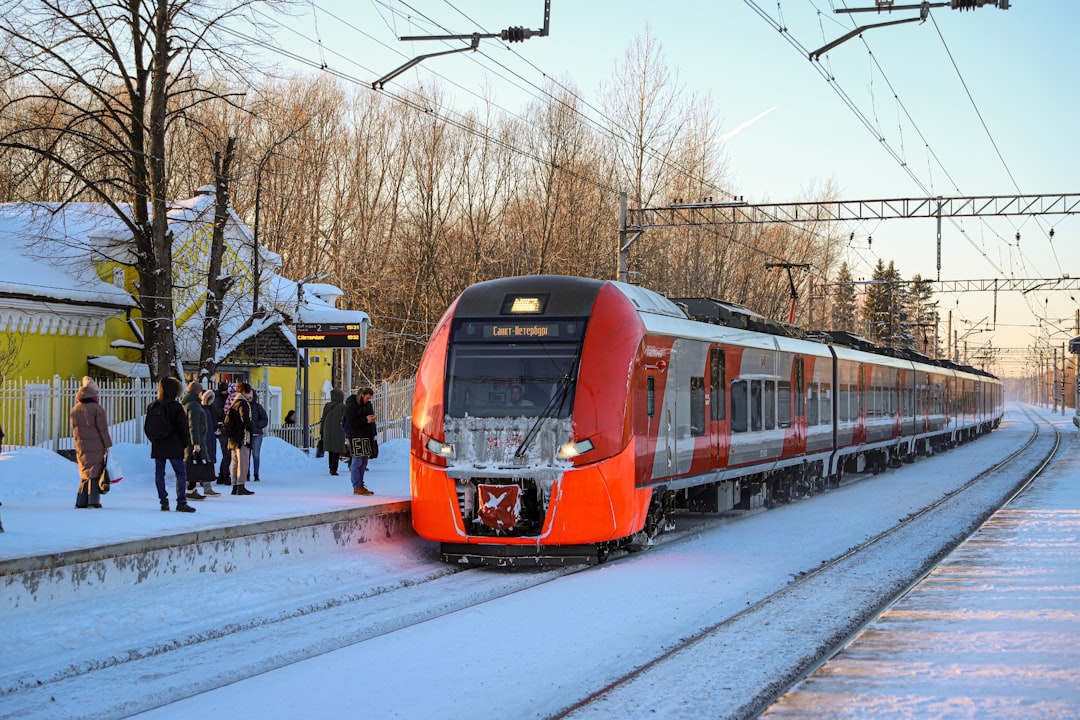
The journey takes approximately three hours each way on the modern Lastochka train, making it feasible as a day trip while staying in Saint Petersburg. Travelers depart from Moskovsky Railway Station (nearest metro: Ploshchad Vosstaniya on Line 1 or Mayakovskaya on Line 3) and arrive at Novgorod-on-Volkhov station, within walking distance or a short bus ride to the historic center. The compact layout of Veliky Novgorod's main attractions allows visitors to explore the Kremlin, Saint Sophia Cathedral, Yaroslav's Court, and the Museum of Wooden Architecture in a single day.

Spring through early autumn offers the most comfortable weather for walking tours, though winter visits provide dramatic snow-covered views of the medieval walls and churches. The city receives far fewer international tourists than Saint Petersburg, allowing for quieter exploration of its historical monuments. Most signage includes English translations at major sites, and the Novgorod Museum maintains informative displays about the city's role in medieval trade routes connecting Scandinavia to Byzantium.

How Do You Take the Lastochka Train to Veliky Novgorod in 2026?

The Lastochka train operates daily between Saint Petersburg's Moskovsky Railway Station and Novgorod-on-Volkhov station. For a 2026 day trip, the morning service departs at 07:26 and arrives at 10:36, with an early-evening return around 18:06 reaching Saint Petersburg about 20:55. Check the current schedule and book tickets through Russian Railways, as departure times may vary seasonally. The journey covers 190 kilometers in approximately 2 hours 50 minutes to 3 hours 10 minutes.

How Do You Take the Lastochka Train to Veliky Novgorod in 2026?

Tickets can be purchased online through the Russian Railways website, at ticket counters in Moskovsky Railway Station, or through automated kiosks accepting credit cards. Booking several days in advance ensures seat availability, particularly during summer weekends and Russian holidays. The Lastochka trains feature comfortable seating, air conditioning, and onboard toilets, with both standard and business class options available. Passengers should arrive at the station 20-30 minutes before departure to locate the correct platform and carriage.

From Novgorod-on-Volkhov railway station, the historic center lies approximately 3 kilometers north. Bus routes 7 and 7a connect the station to Sennaya Ploshchad near the Kremlin, with tickets purchased from the driver. Alternatively, taxis wait outside the station for fixed-price rides to the center. The return train typically departs in the early evening, allowing 6-7 hours of sightseeing time in Veliky Novgorod before heading back to Saint Petersburg.

The Novgorod Kremlin: Russia's Oldest Fortress

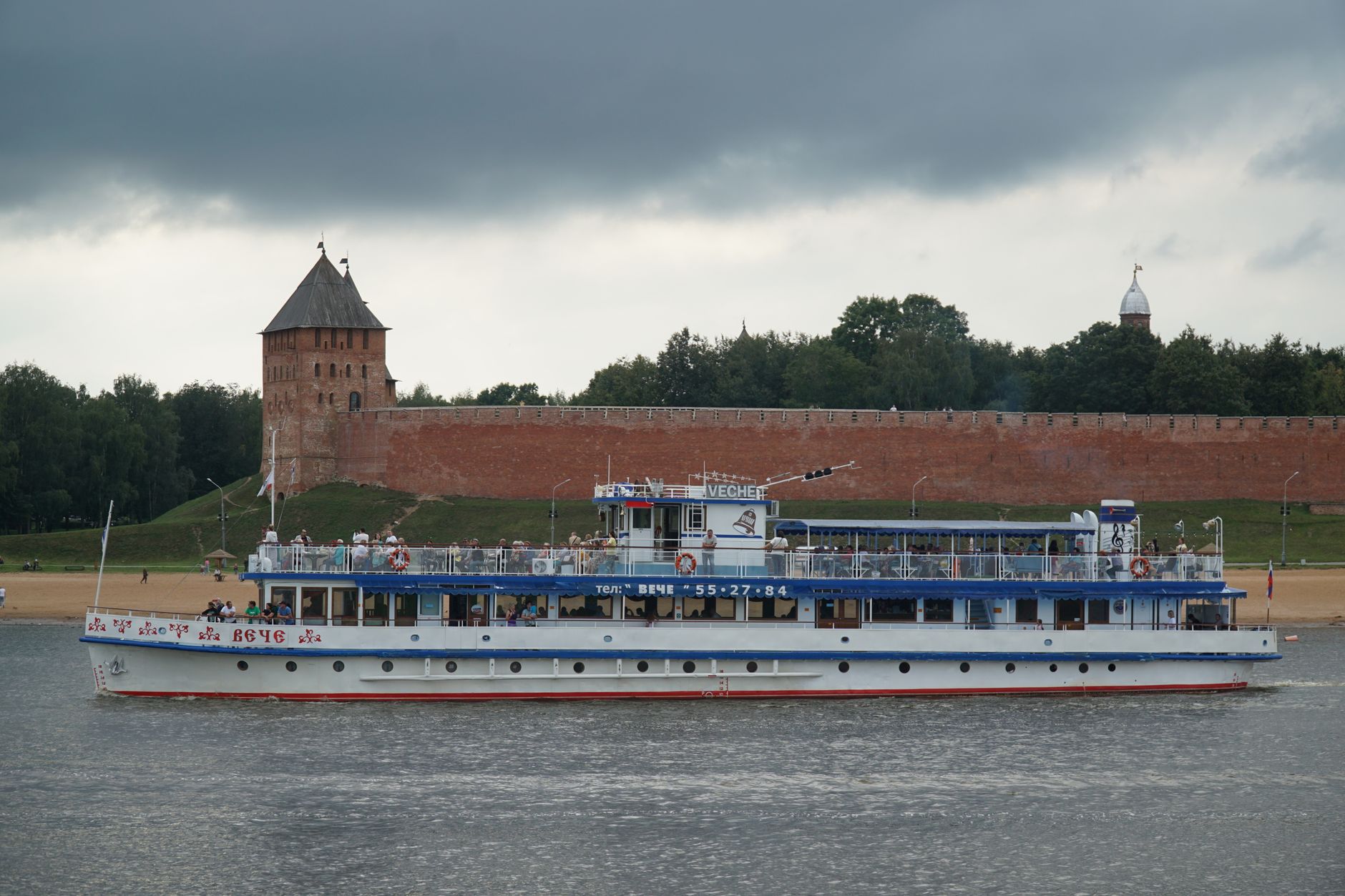
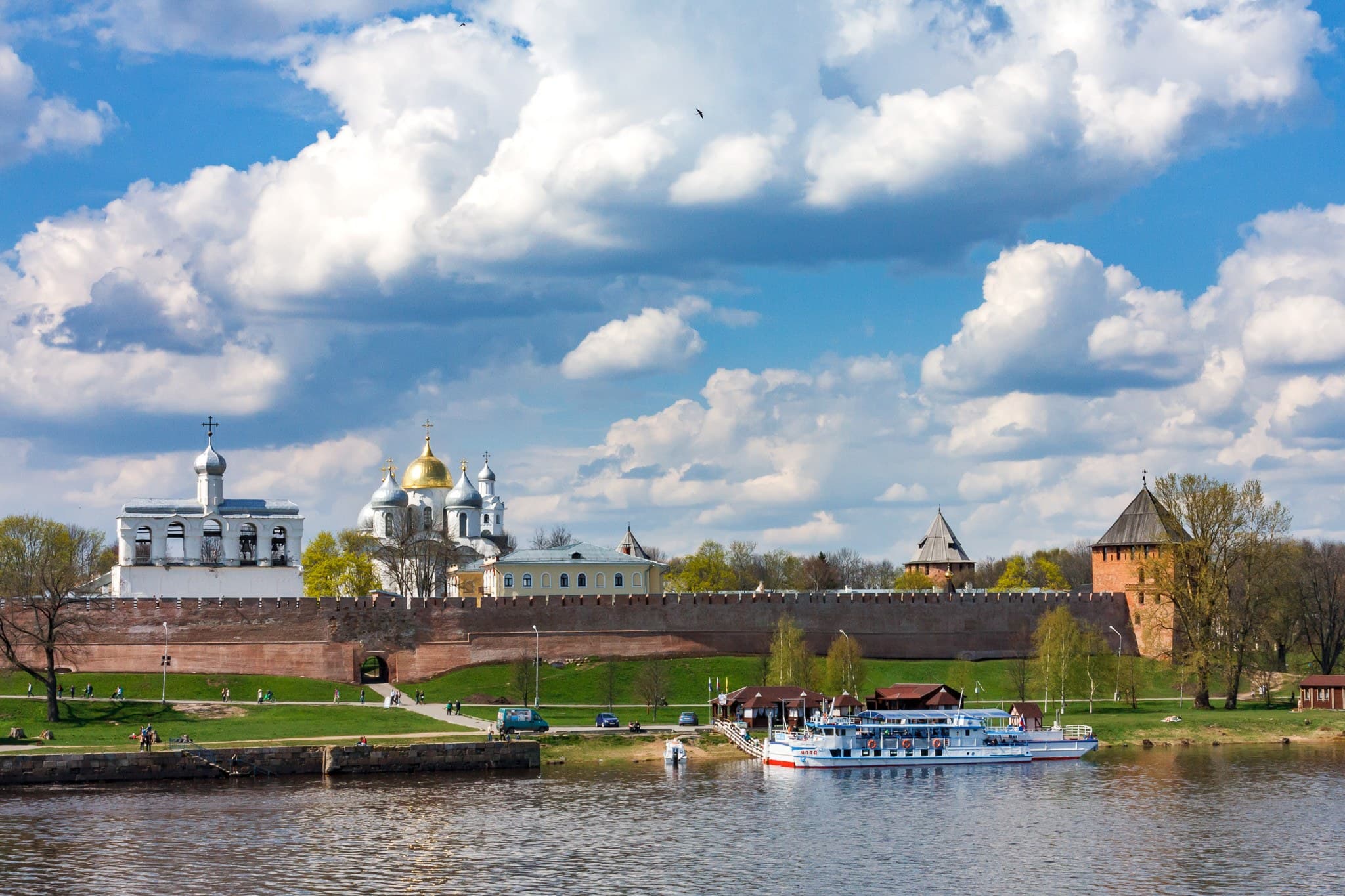
The Novgorod Kremlin, officially called the Detinets, represents Russia's oldest surviving fortress, with sections dating to 1044 when Prince Vladimir Yaroslavich commissioned the first earthen ramparts. The current red-brick walls and towers were constructed between the 15th and 17th centuries, enclosing 12 hectares along the Volkhov River's western bank. Nine of the original twelve towers remain standing, including the 41-meter Kokui Tower that offers panoramic views of the city and surrounding countryside for visitors willing to climb its interior stairs.

The Novgorod Kremlin: Russia's Oldest Fortress

The fortress walls stretch 1,487 meters in circumference and reach heights of 8-15 meters, with thickness varying from 3.6 to 6.5 meters at the base. Visitors enter through several gates, with the main entrance near the Millennium of Russia Monument, a massive bronze sculpture erected in 1862 depicting 129 figures from Russian history. Walking the perimeter path along the walls provides views of both the interior grounds and the Volkhov River, with interpretive signs explaining the defensive features and historical battles that tested these fortifications.

Inside the Kremlin grounds, the Museum of History, Architecture and Art occupies several buildings and displays archaeological finds from medieval Novgorod, including birch bark manuscripts that revealed details of daily life in the 11th-15th centuries. The museum complex includes the Faceted Chamber (Granovitaya Palata), a Gothic-style hall built in 1433 that served as the archbishop's reception room and now houses exhibitions of medieval decorative arts. Admission tickets cover entry to multiple buildings within the Kremlin complex; check Novgorod Museum for current pricing and opening hours.

Saint Sophia Cathedral and Its Ancient Frescoes

Saint Sophia Cathedral dominates the Kremlin's center as the oldest stone church in Russia, constructed between 1045 and 1050 by Prince Vladimir Yaroslavich and Archbishop Luke. The five-domed structure follows Byzantine architectural principles, with thick walls, narrow windows, and a cruciform interior plan that creates excellent acoustics for Orthodox chanting. The cathedral measures 27 meters wide, 24.8 meters long, and reaches 38 meters to the top of its central golden dome, which bears a distinctive cross topped with a dove sculpture.

Saint Sophia Cathedral and Its Ancient Frescoes

The interior preserves fragments of 11th and 12th-century frescoes, though many original paintings were destroyed during various conflicts and restorations over nine centuries. The most significant surviving works include the fresco of Emperor Constantine and Empress Helena in the Martinian Chapel, dating to approximately 1108. The cathedral's iconostasis features icons from the 15th and 16th centuries, and the bronze Korsun Gates at the west entrance display 48 relief panels depicting biblical scenes, created in Magdeburg around 1152-1156.

The cathedral functions as an active Orthodox church, with services held regularly that visitors may observe respectfully. Photography inside is typically prohibited, and modest dress is required (covered shoulders and knees for women, long pants for men). The bell tower adjacent to the cathedral houses a small exhibition about the cathedral's history and restoration efforts. Entrance to the cathedral grounds is included with Kremlin admission, though donations are appreciated for the cathedral's maintenance.

What Else Should You See in Veliky Novgorod?

Yaroslav's Court (Yaroslavovo Dvorishche) occupies the eastern bank of the Volkhov River opposite the Kremlin, accessible via the pedestrian footbridge. This medieval marketplace and princely residence area contains several churches from the 12th-16th centuries, including the Cathedral of St. Nicholas (1113), one of the oldest surviving structures in the complex. The Church of the Transfiguration on Ilyina Street, located a short walk northeast, preserves frescoes by the Byzantine master Theophanes the Greek, painted in 1378 and representing some of medieval Russia's finest religious art.

What Else Should You See in Veliky Novgorod?

The Vitoslavlitsy Museum of Wooden Architecture, located 4 kilometers south of the city center, displays traditional wooden buildings relocated from surrounding villages. The open-air museum features 22 structures including churches, peasant houses, mills, and barns dating from the 16th to 19th centuries, arranged in a village layout that demonstrates rural life in the Novgorod region. Bus route 7 or taxis reach the museum from the city center, and the site requires 1-2 hours to explore properly.

The Monument to the Millennium of Russia, standing 15.7 meters tall in the Kremlin's central square, commemorates the 1,000th anniversary of Rurik's arrival in 862. Sculptor Mikhail Mikeshin designed the monument with three tiers depicting 129 historical figures including rulers, military leaders, writers, and artists who shaped Russian history. The monument survived Nazi occupation during World War II when German forces planned to dismantle it for transport to Germany, but Soviet forces liberated the city before this occurred.

St. George's Monastery, located 5 kilometers south of the city center near the Vitoslavlitsy Museum, dates to 1030 and contains the Cathedral of St. George (1119) with remarkable 12th-century frescoes. The monastery complex requires additional travel time but offers insight into monastic life and medieval religious architecture. Visitors with limited time should prioritize the Kremlin, Saint Sophia Cathedral, and Yaroslav's Court, which form the core UNESCO World Heritage Site and can be thoroughly explored in 4-5 hours.

Practical Information for Your Veliky Novgorod Day Trip

Most visitors allocate 6-7 hours in Veliky Novgorod between train arrivals and departures, sufficient for the Kremlin, Saint Sophia Cathedral, Yaroslav's Court, and a meal in the historic center. The compact layout allows walking between major sites, with the Kremlin to Yaroslav's Court requiring only a 5-minute walk across the footbridge. Comfortable walking shoes are essential, as paths include cobblestones and uneven surfaces around medieval structures.

Restaurants and cafes cluster near the Kremlin and along Bolshaya Moskovskaya Street, offering Russian cuisine including local specialties. The city center contains ATMs and exchange offices, though bringing sufficient rubles from Saint Petersburg is advisable. Public restrooms are available within the Kremlin complex and at major museums, typically requiring a small fee. English is less commonly spoken than in Saint Petersburg, so having key phrases in Russian or a translation app proves helpful.

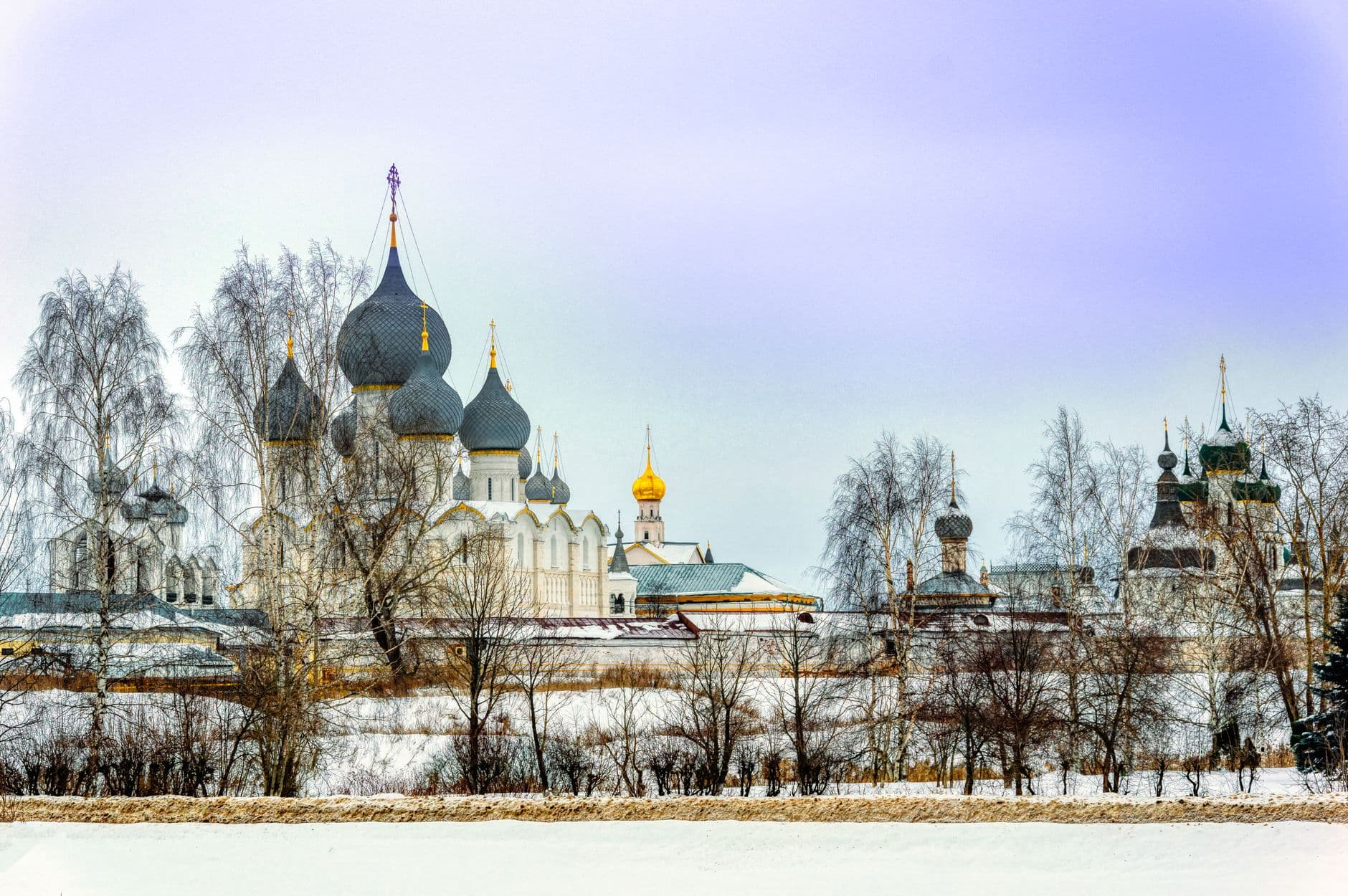
Weather in Veliky Novgorod typically runs slightly cooler than Saint Petersburg, particularly near the river. Spring (April-May) and autumn (September-October) bring unpredictable conditions, so layered clothing and rain gear are recommended. Summer (June-August) offers the longest daylight hours and warmest temperatures, though afternoon thunderstorms occur occasionally. Winter visits (December-February) require warm clothing, as temperatures frequently drop below -10°C, but the snow-covered medieval architecture creates memorable photographic opportunities.

AttractionLocationApproximate Visit TimeNotes
Novgorod KremlinWestern bank, city center2-3 hoursIncludes walls, towers, museums, and grounds
Saint Sophia CathedralInside Kremlin30-45 minutesActive church; modest dress required
Yaroslav's CourtEastern bank, across footbridge1-1.5 hoursMultiple medieval churches
Vitoslavlitsy Museum4 km south of center1-2 hoursRequires bus or taxi; wooden architecture
Millennium MonumentKremlin central square15-20 minutesPhoto opportunity and historical context

Combining Veliky Novgorod with Your Saint Petersburg Itinerary

A Veliky Novgorod day trip works best scheduled mid-week when train availability is better and crowds are smaller at both the departure station and destination. The full-day excursion requires approximately 12-13 hours including train travel, making it unsuitable for travelers with limited time in Saint Petersburg who should prioritize the Hermitage, Peterhof, and other major city attractions. Those staying 5-7 days in Saint Petersburg can comfortably include this excursion without missing essential city sights.

The trip complements Saint Petersburg's 18th and 19th-century imperial architecture by showing medieval Russian history and Orthodox culture predating Peter the Great's founding of Saint Petersburg in 1703. Visitors interested in Russian history, religious art, or UNESCO World Heritage Sites find Veliky Novgorod particularly rewarding. The contrast between Saint Petersburg's planned European-style boulevards and Novgorod's organic medieval layout demonstrates different periods of Russian architectural and urban development.

Travelers using the Piter Pass should note that the pass covers Saint Petersburg attractions but not the train fare or admission tickets in Veliky Novgorod, which require separate payment. Budget approximately 1,500 rubles per person for a round-trip Lastochka ticket. Entry to the Kremlin grounds is free (open roughly 6:00 to midnight); a combined ticket for the museums inside costs around 800 rubles, and the Vitoslavlitsy Museum of Wooden Architecture charges about 300 rubles for an adult. Allow additional funds for meals and local transport. The investment provides access to Russia's earliest surviving architecture and a deeper understanding of the historical foundations that preceded Saint Petersburg's imperial era.